Artwork
The Sacrifice of Noah
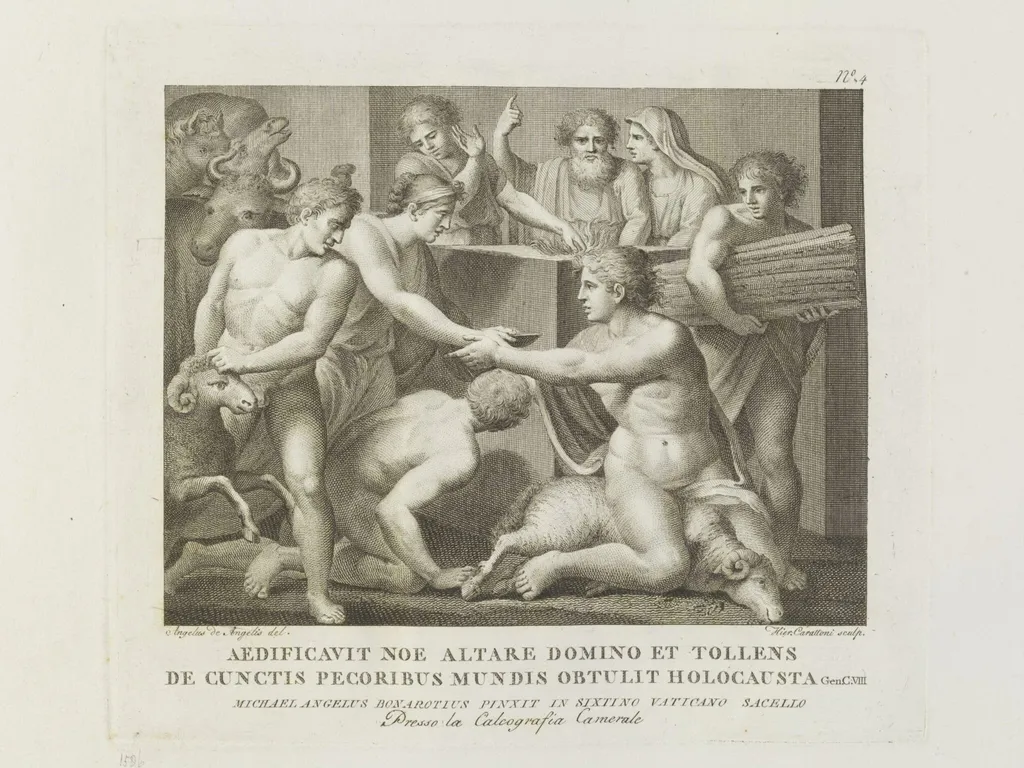
The Sacrifice of Noah is a print by Girolamo Carattoni. It dates from 1850 and is held in the collection of the Victoria and Albert Museum.
About this work
Overview
Created in 1850 by Girolamo Carattoni, this print is a reproductive work based on Michelangelo’s fresco of Noah’s sacrifice.
Created in 1850 by Girolamo Carattoni, this print is a reproductive work based on Michelangelo’s fresco of Noah’s sacrifice. Rendered in ink on paper, it translates the monumental composition into a smaller, accessible format. The scene captures the moment after the flood when Noah offers animals in gratitude, framed by a group of witnesses. Carattoni’s technique emphasizes dramatic contrasts, adapting the original’s grandeur for the medium of print.
Subject & Meaning
The image illustrates Noah’s act of thanksgiving following the biblical flood, as described in Genesis. He kneels before an altar, presenting a sacrificial animal while others observe. The figures, dressed in archaic garments, convey solemn reverence. The Latin inscription confirms the narrative, anchoring the scene in scriptural tradition. The composition underscores themes of divine covenant and human humility in the face of catastrophe.
Technique & Style
Carattoni employs strong chiaroscuro to model forms and direct attention, using deep shadows and selective highlights to sculpt the figures. The lines are precise yet expressive, capturing texture in fabric, skin, and stone. The style reflects 19th-century printmaking conventions, blending Renaissance compositional principles with a heightened sense of theatricality. The lighting is artificial and directional, enhancing emotional gravity without naturalism.
History & Provenance
The print was produced during a period of renewed interest in Renaissance art, when reproductive prints served as educational tools. Carattoni, an Italian engraver, specialized in translating frescoes into print. This work likely circulated among collectors and academies, helping disseminate Michelangelo’s imagery beyond the Sistine Chapel. No record of its original commission survives, but its production aligns with mid-19th-century artistic reproduction practices.
Context
In the 1850s, European artists and publishers frequently reinterpreted Old Testament scenes to appeal to religious and classical tastes. Carattoni’s print responds to this trend, positioning Michelangelo’s vision as authoritative. The emphasis on dramatic lighting and solemn ritual reflects Romantic-era sensibilities, even as the subject remains rooted in biblical narrative. Such prints bridged sacred imagery and public education in an age before photographic reproduction.
Legacy
Though not widely exhibited today, the print remains a document of 19th-century print culture and the enduring influence of Michelangelo. It exemplifies how Renaissance compositions were repurposed for mass circulation, shaping public perception of biblical art. Its technical precision and emotional tone offer insight into how historical imagery was reimagined for new audiences, preserving visual narratives across centuries.
Artist & collection
Artist
These prints show biblical scenes in the late 1700s to early 1800s style. You’ll find *The Deluge*, *Noah and his Sons*, *The Sacrifice of Noah*, and *Holy Family and St. John*. The prints mix dramatic moments with soft…

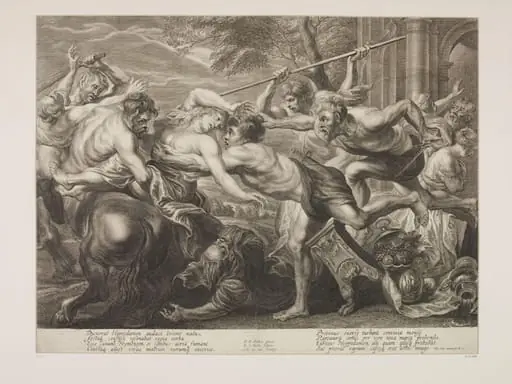 The Rape of Hippodamia
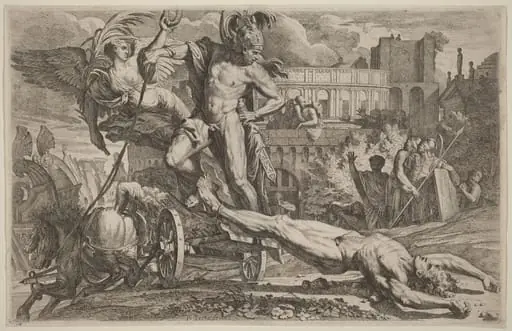 Achilles Dragging the Body of Hector
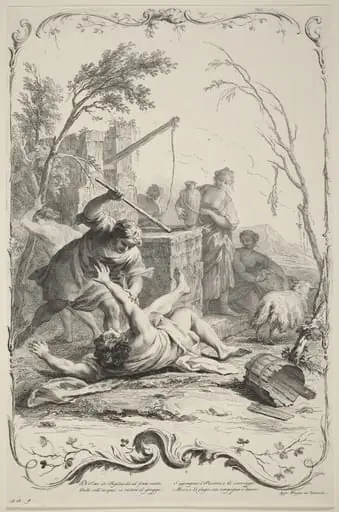 Moses Striking a Shepherd
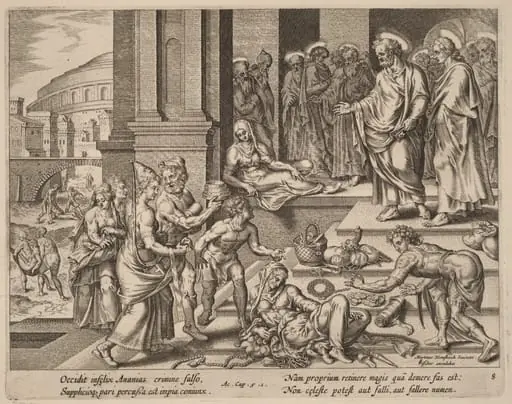 The Deaths of Ananias and Sapphira
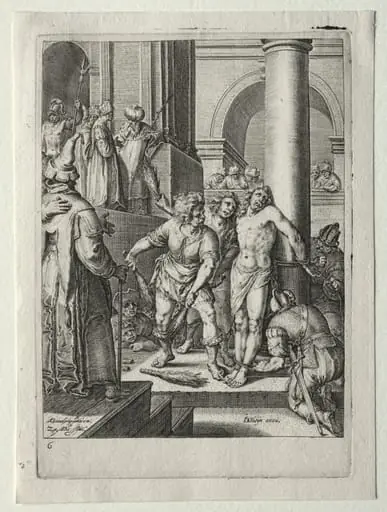 Passion Set: Flagellation of Christ
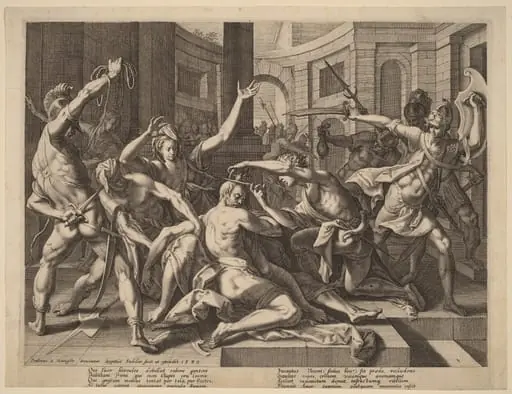 Delilah Cutting Samson's Hair
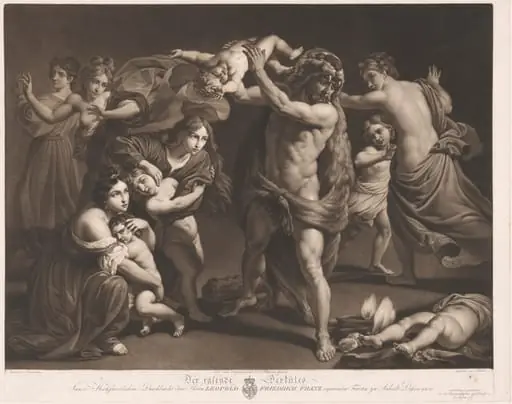 Der rasende Herkules (Raging Hercules)
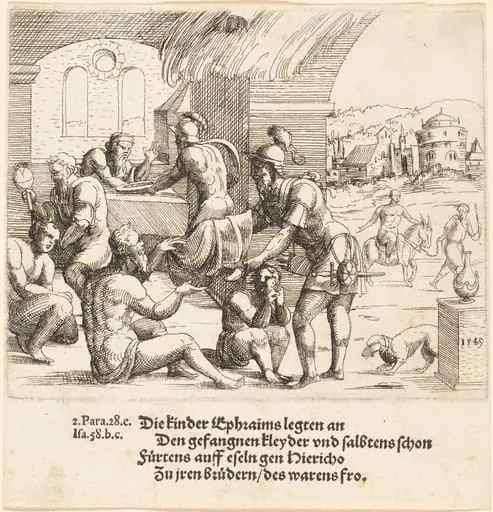 The Men of Ephraim Care for their Captives and Return Them to Jerico
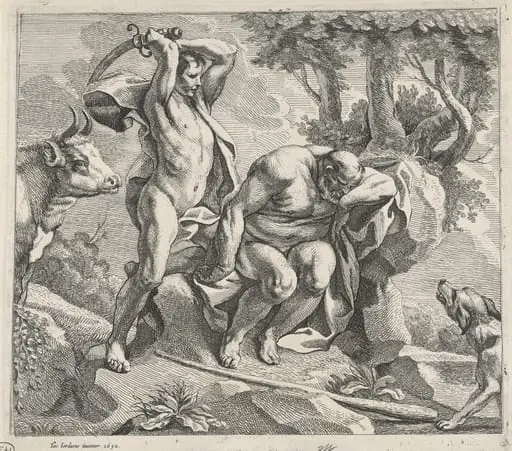 Mercury Killing Argus
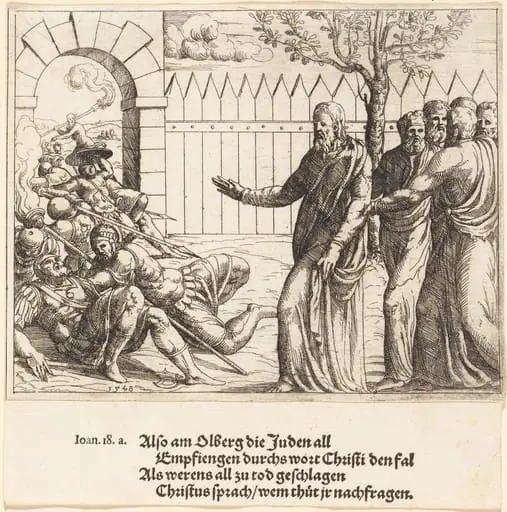 Jesus Identifies Himself before the Arrest
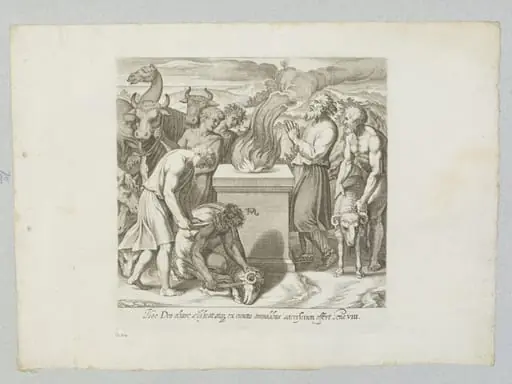 Noah sacrificing to God