Artwork
Jesus Identifies Himself before the Arrest
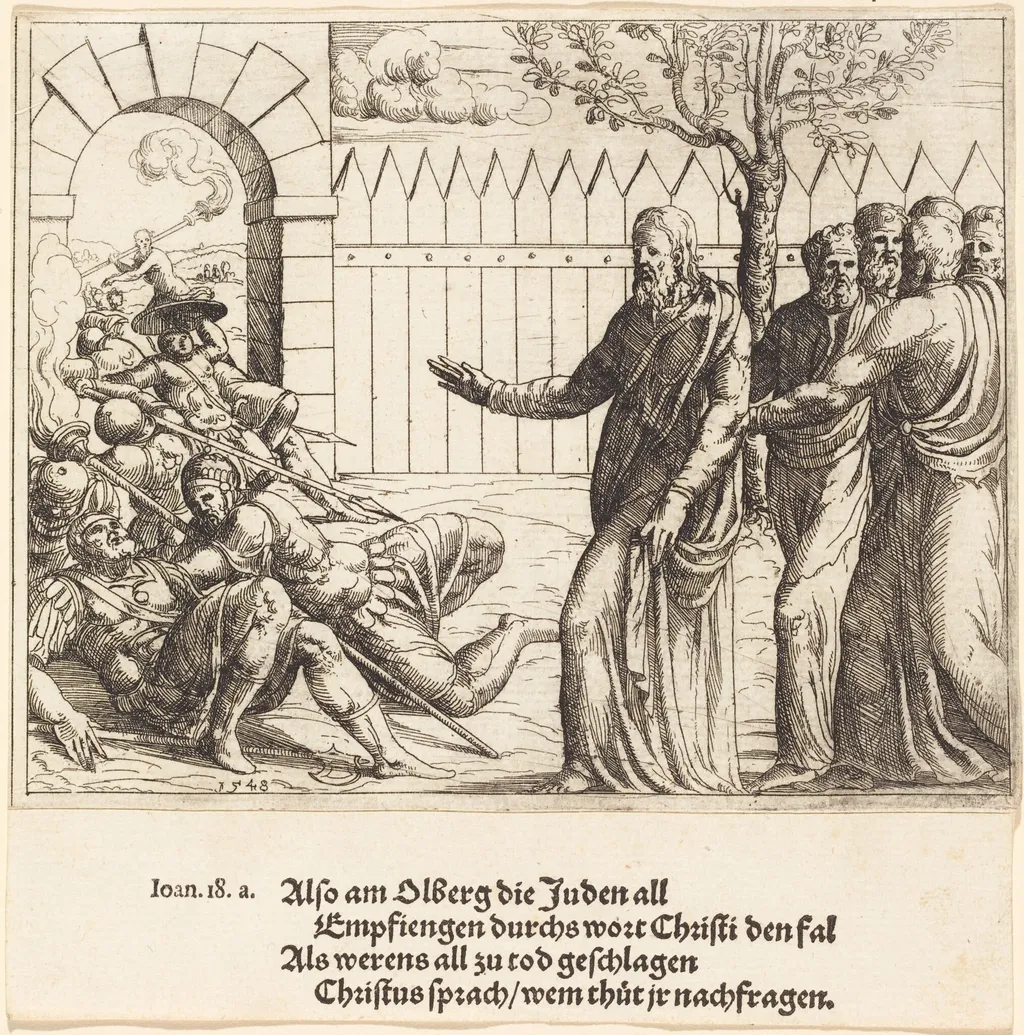
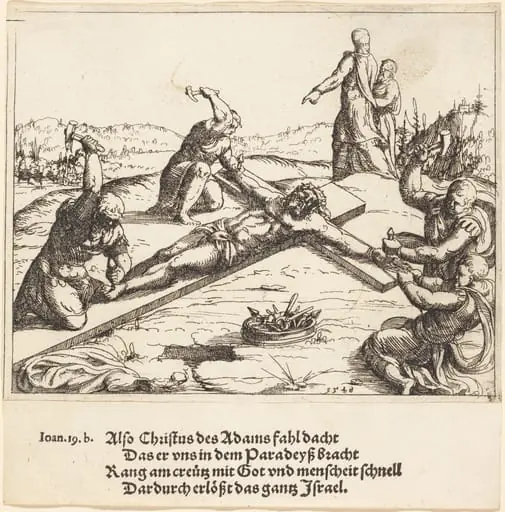
Jesus Identifies Himself before the Arrest is an ink print by the Renaissance artist Augustin Hirschvogel. It dates from 1548 and is held in the collection of the National Gallery of Art.
About this work
Overview
Jesus Identifies Himself before the Arrest is an etching created by Augustin Hirschvogel in 1548. The work is a black-and-white print that showcases the artist's skill in capturing tense scenes with detailed lines.
Subject & Meaning
The etching depicts a dramatic scene where a man points to a cross with a crown of thorns, drawing the attention of surrounding figures. The presence of a walled city and a domed building in the background adds depth to the narrative, which is further hinted at by the German text below the image.
Technique & Style
Hirschvogel's etching is characterized by sharp, detailed lines that convey movement and drama. The work reflects the etching techniques of the period and is associated with the Danube School, a regional artistic movement known for its landscape traditions.
History & Provenance
Augustin Hirschvogel, a German artist, mathematician, and cartographer, produced Jesus Identifies Himself before the Arrest during a prolific period of etching between 1545 and 1549, when he created thirty-five small landscape etchings.
Context
The etching is a product of the Danube School, a group of 16th-century artists active in Bavaria and Austria, known for their landscape etchings.
Artist & collection
Artist
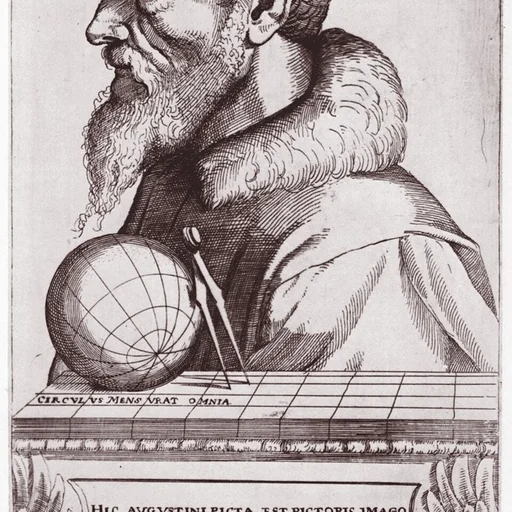
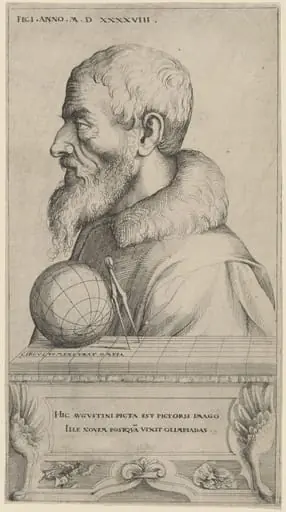
Augustin Hirschvogel (1503 – February 1553) was a German artist, mathematician, and cartographer known primarily for his etchings.

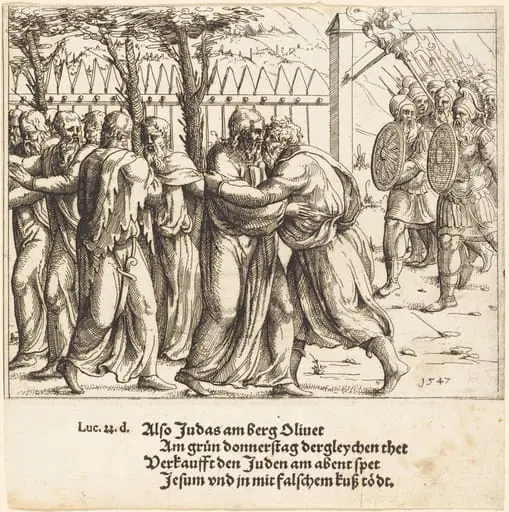 The Kiss of Judas
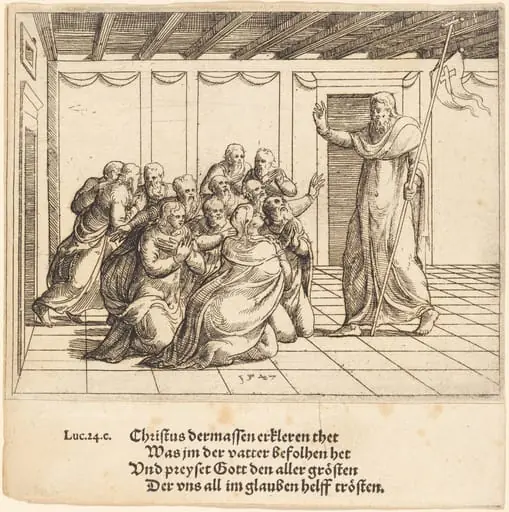 Christ Appears to the Apostles
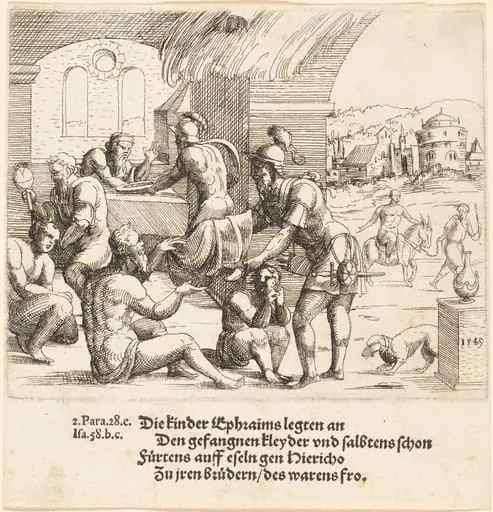 The Men of Ephraim Care for their Captives and Return Them to Jerico
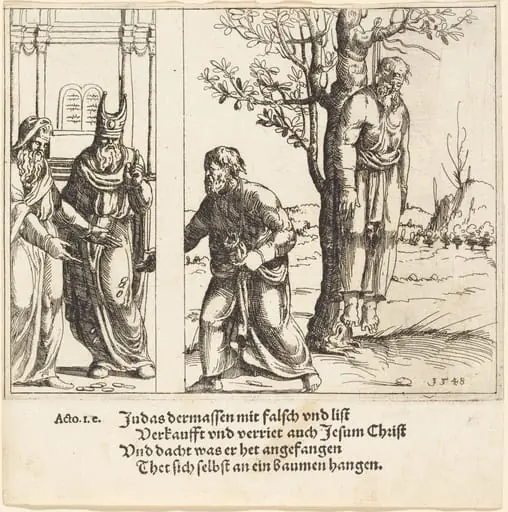 Judas Returns the Thirty Pieces of Silver
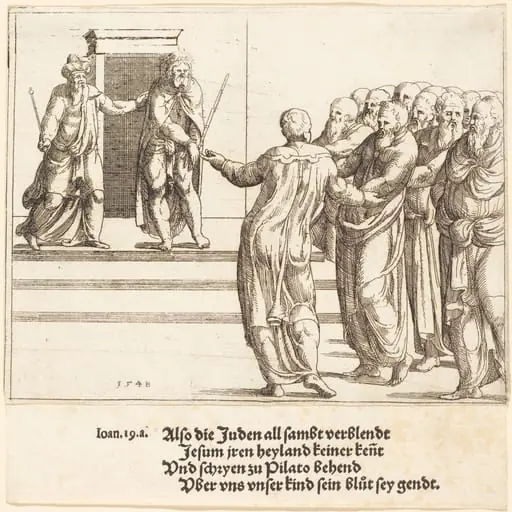 Ecce Homo, and the Jews Deny Christ
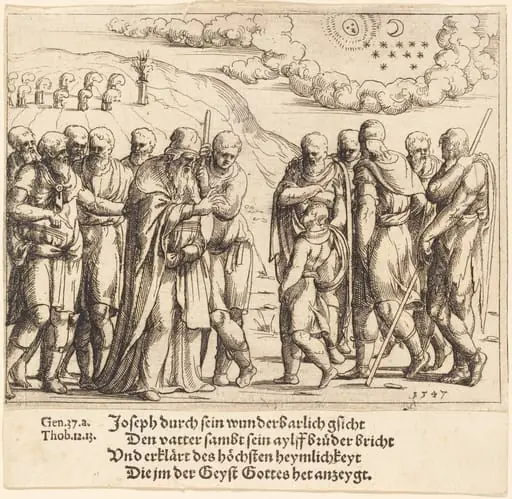 Joseph Recounts His Dreams
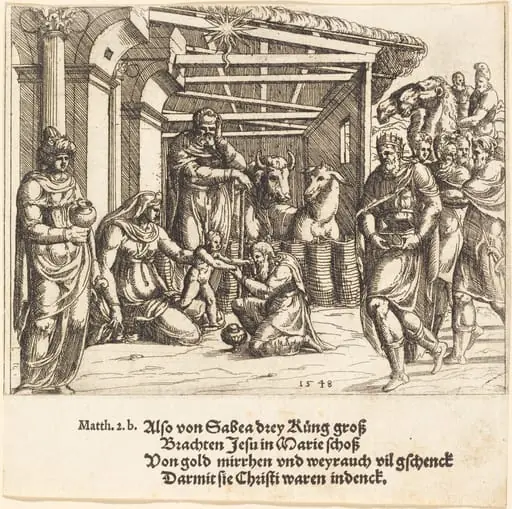 The Adoration of the Magi
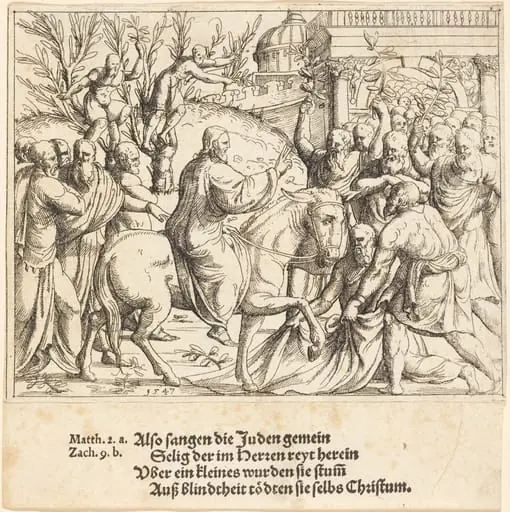 The Entry into Jerusalem
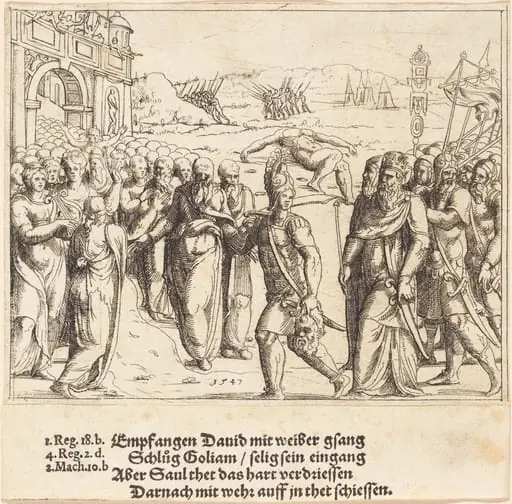 David is Welcomed after Killing Goliath, and Saul's Jealousy
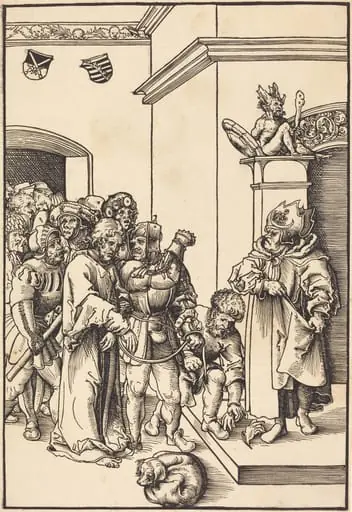 Christ before Annas