Artwork
David with the Head of Goliath
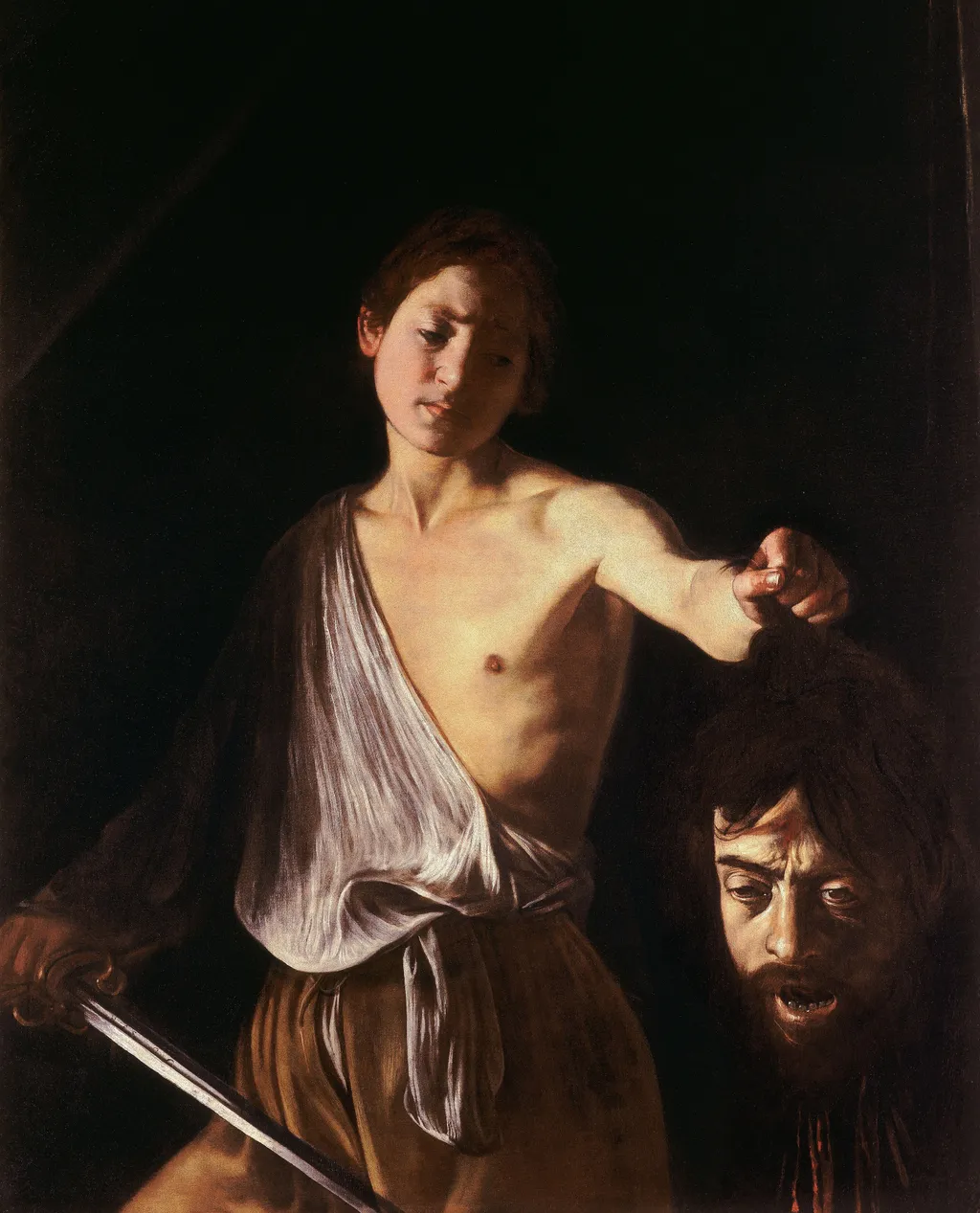
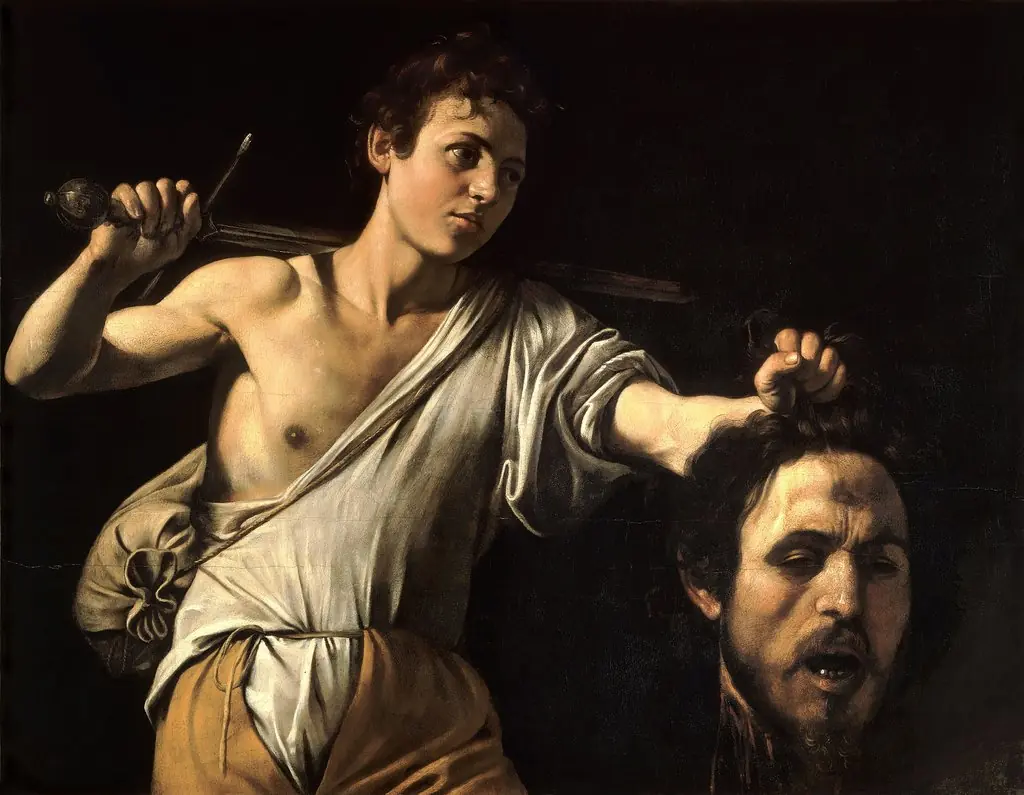
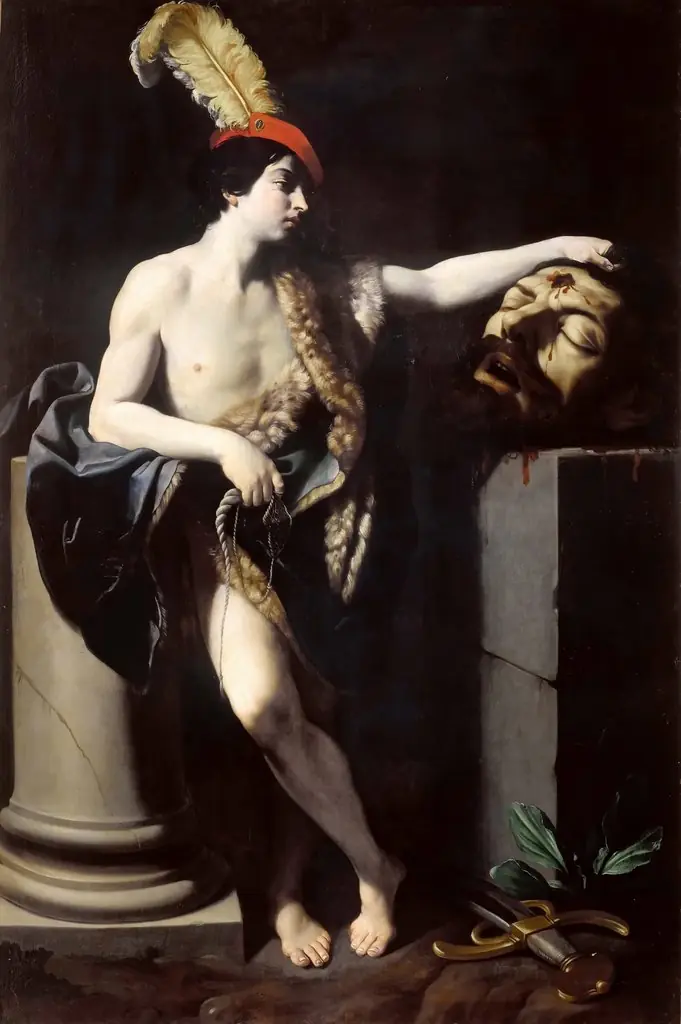
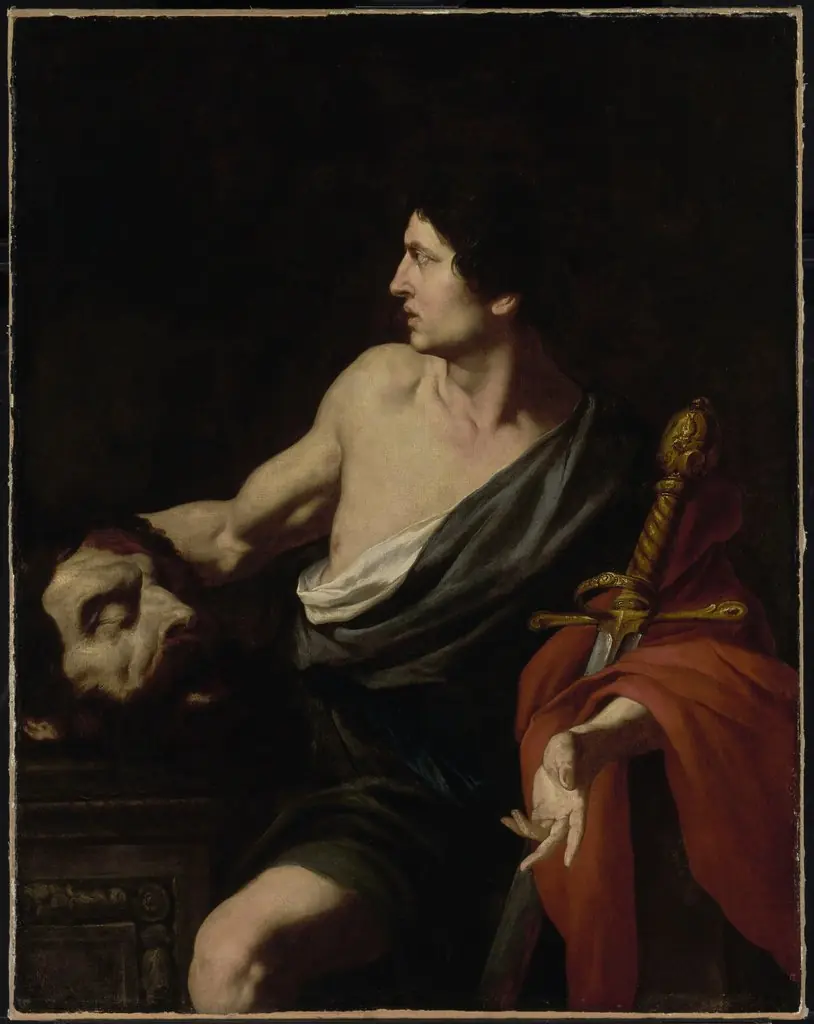
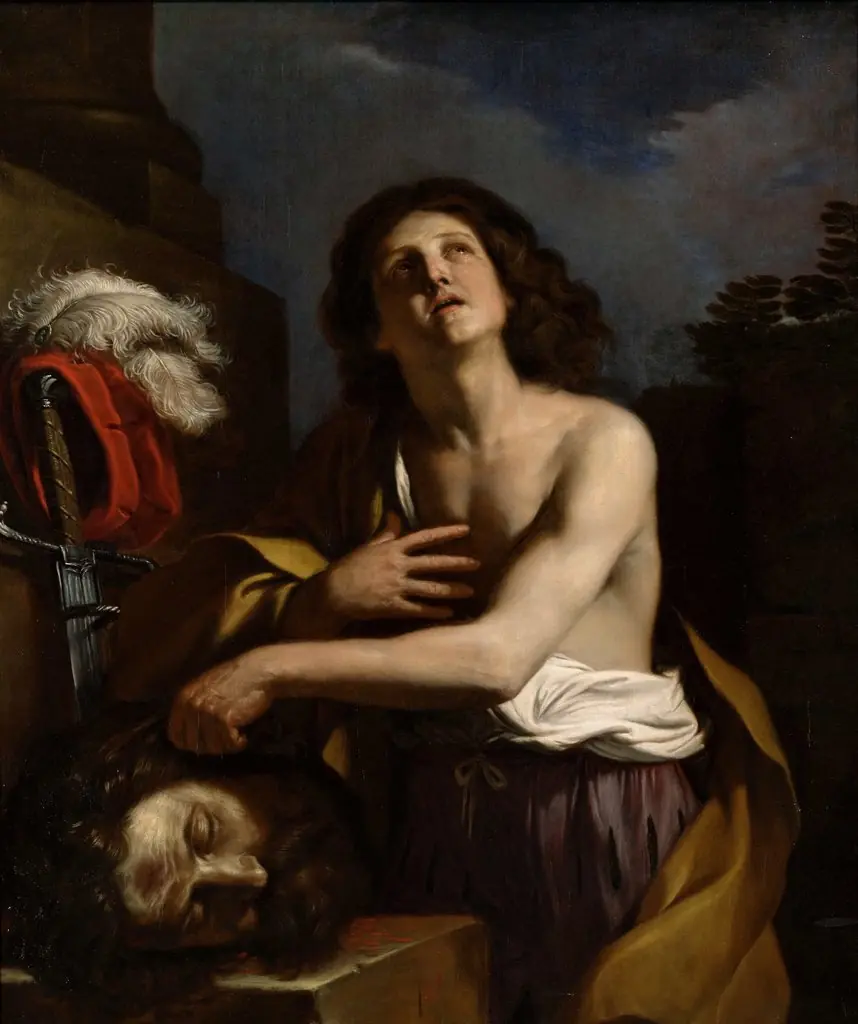
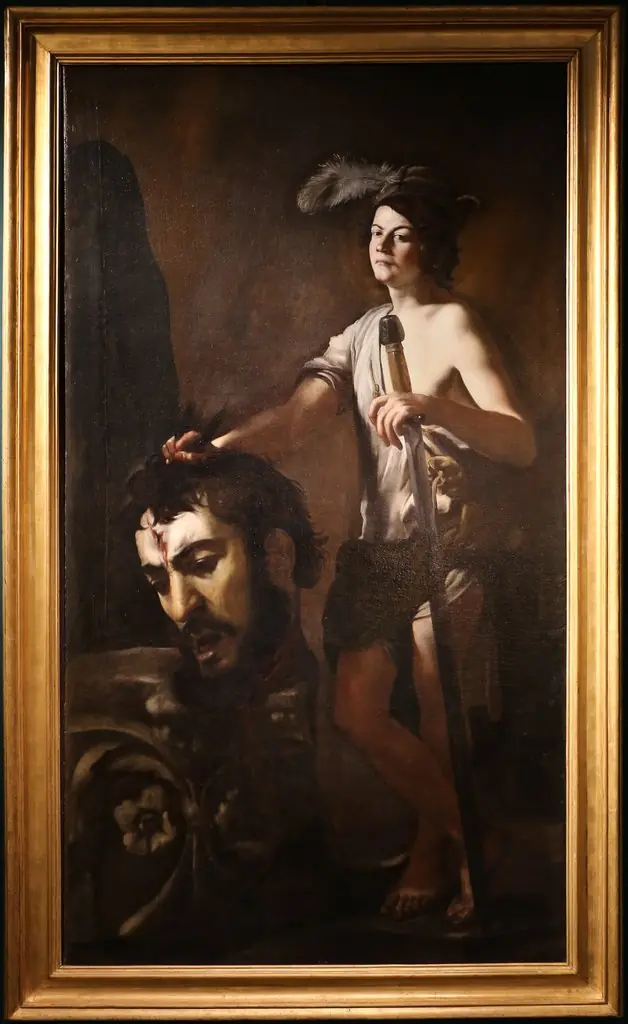
David with the Head of Goliath is an oil painting by the Baroque artist Caravaggio. It dates from 1605 and is held in the collection of the Borghese Collection.
About this work
Overview
The work is one of three known treatments of this subject by the artist, distinguished by its psychological depth and the inclusion of self-portraiture.
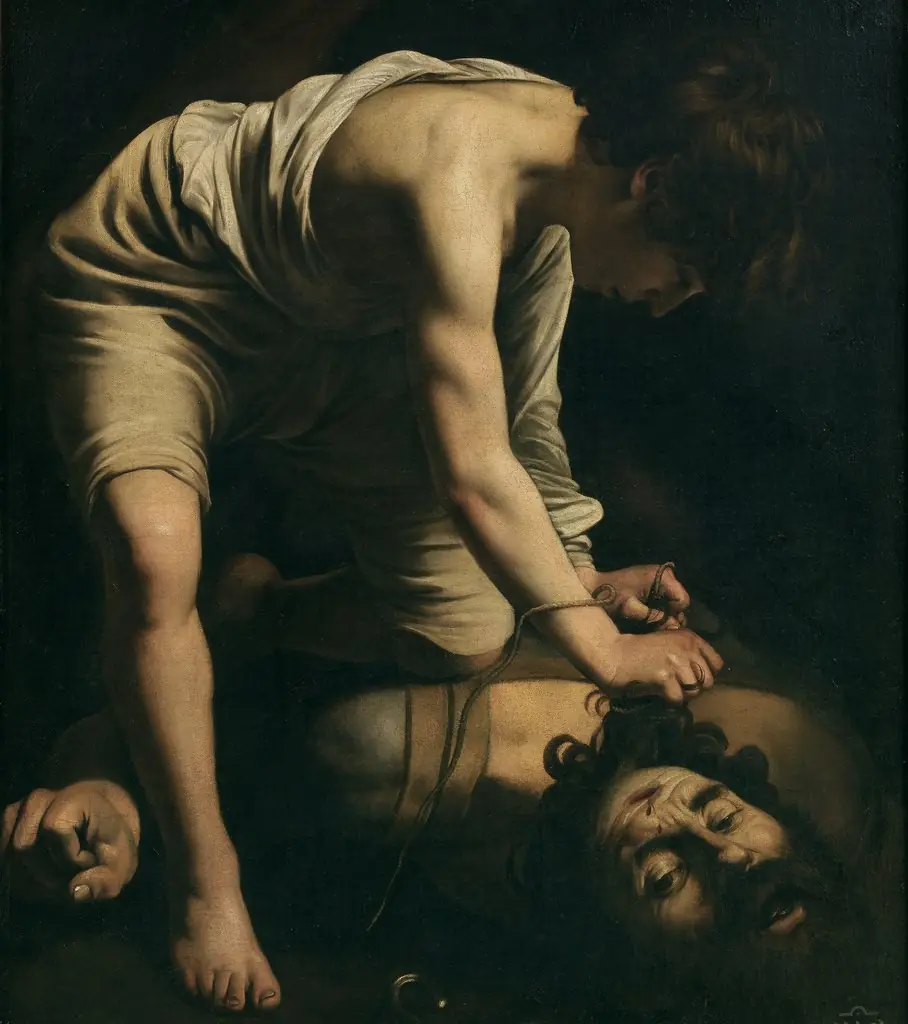
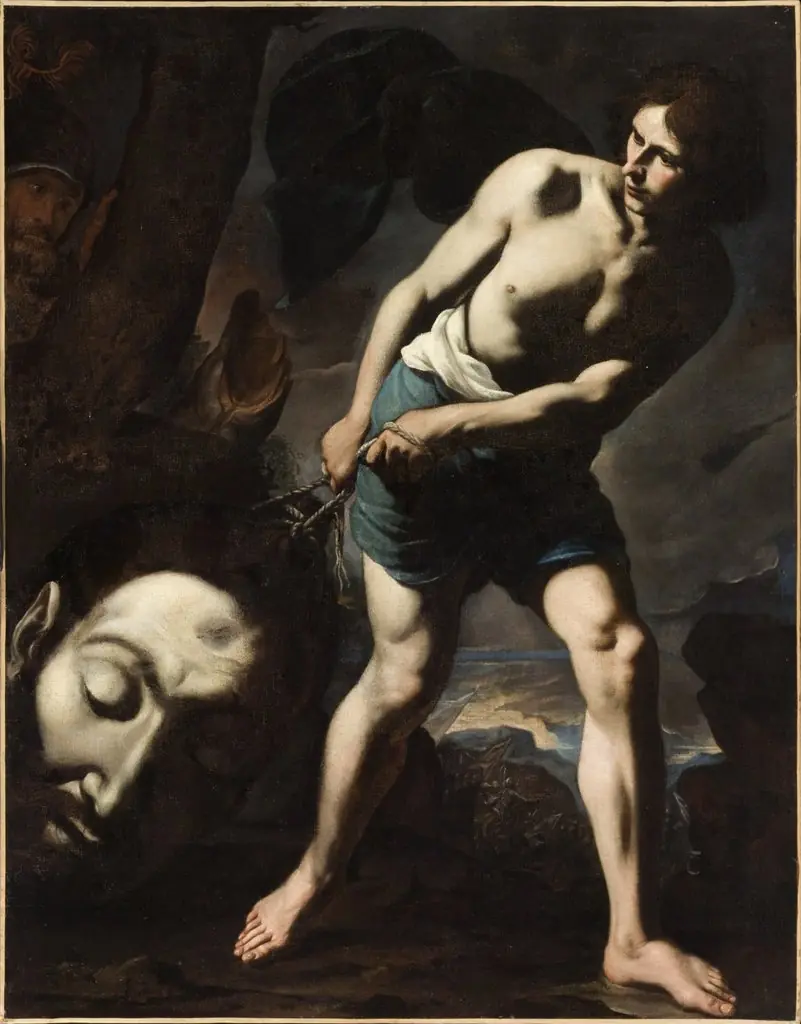
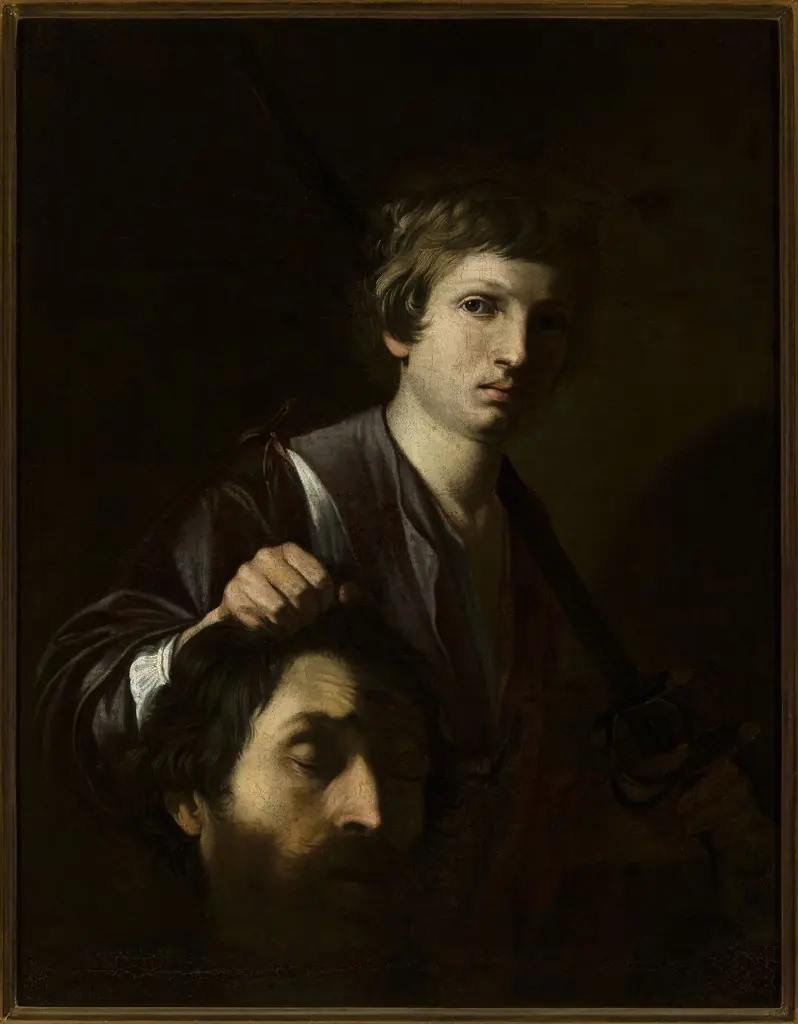
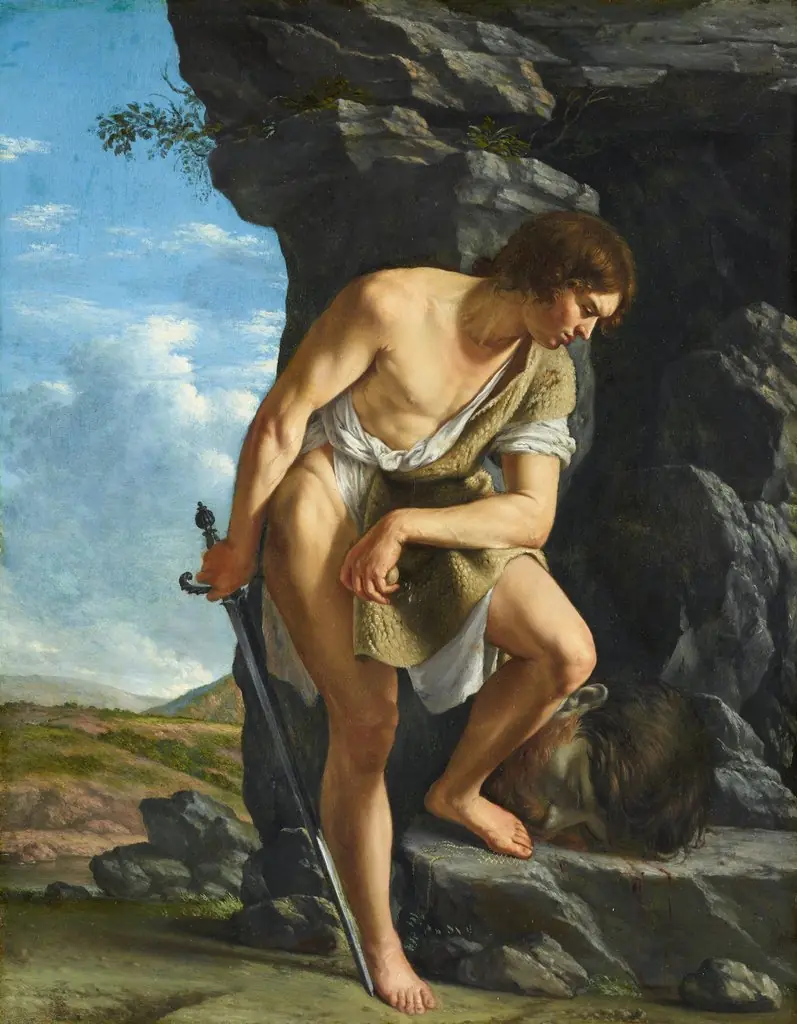
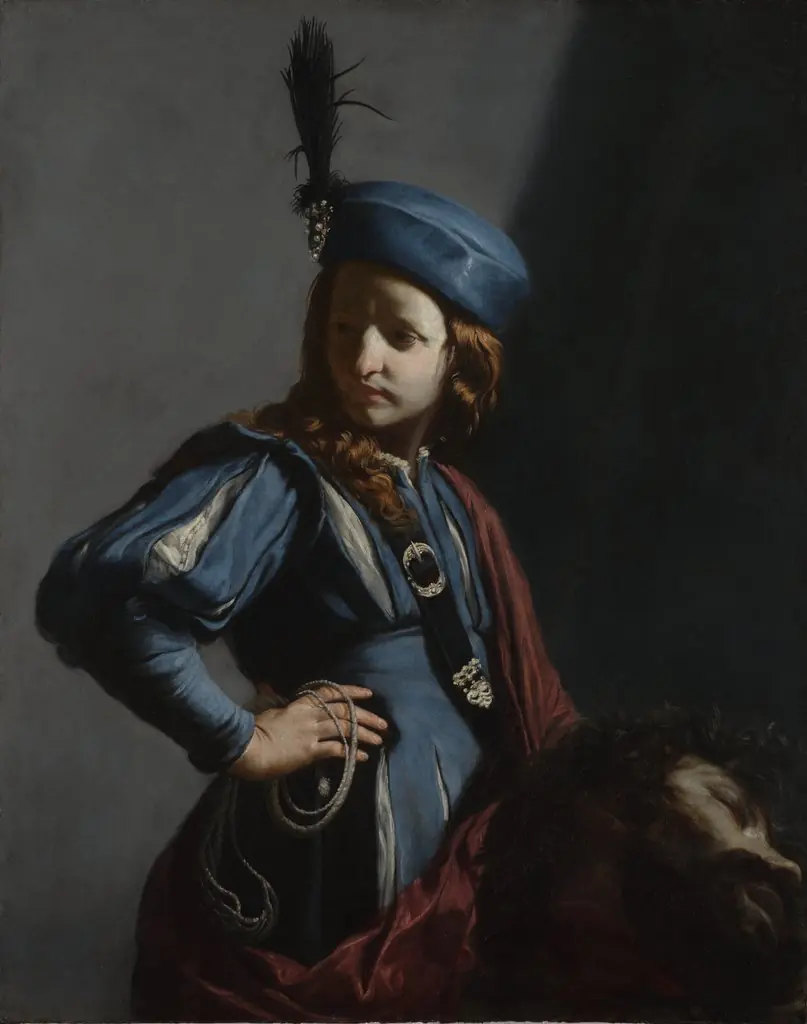
Caravaggio’s oil painting David with the Head of Goliath depicts the biblical youth holding the severed head of his defeated foe. Executed between 1605 and 1610, it resides in the Galleria Borghese in Rome. The work is one of three known treatments of this subject by the artist, distinguished by its psychological depth and the inclusion of self-portraiture. The dark, intimate setting and dramatic lighting reflect Caravaggio’s signature style, emphasizing emotional tension over narrative spectacle.
Subject & Meaning
Rather than celebrating victory, Caravaggio portrays David as somber and introspective, his gaze fixed on Goliath’s lifeless face. The emotional ambiguity suggests a moment of moral reckoning rather than triumph. The inscription H-AS OS on the sword is read as an abbreviation for 'humilitas occidit superbiam'—humility conquers pride—reinforcing the theme of moral victory over brute force. The painting transforms a familiar biblical tale into a meditation on guilt and consequence.
Technique & Style
Caravaggio employs stark chiaroscuro to model form and heighten emotional intensity. Light falls sharply from the left, illuminating David’s bare torso and Goliath’s pale, blood-streaked face while plunging the background into near-black. The blood trails naturally from the neck, not pooled on a surface, intensifying the visceral realism. Brushwork is controlled yet immediate, capturing texture in skin, fabric, and metal with unflinching precision.
History & Provenance
The painting entered the collection of Cardinal Scipione Borghese by 1650 and has remained in the family’s holdings since. Scholarly consensus places its creation between 1605 and 1610, though earlier versions exist in Madrid and Vienna. Its presence in the Borghese collection suggests it was commissioned or acquired during Caravaggio’s time in Rome, possibly as a personal or penitential work, given the artist’s turbulent circumstances at the time.
Context
Caravaggio painted this during a period of personal crisis following his flight from Rome after killing a man in 1606. The self-portrait as Goliath, paired with his young assistant Cecco as David, introduces a layer of autobiographical guilt. The choice to depict David as both victor and mourner, and Goliath as a mirror of the artist, reflects a broader Baroque interest in inner turmoil and the ambiguity of justice.
Legacy
This painting influenced later artists through its psychological realism and unidealized human portrayal. Its fusion of religious narrative with intimate, almost confessional emotion set a precedent for Baroque introspection. The identification of Caravaggio as Goliath has made the work a focal point in discussions of artist identity, moral accountability, and the intersection of personal and sacred history in early modern art.
Own this work as a print
Artist & collection
Artist
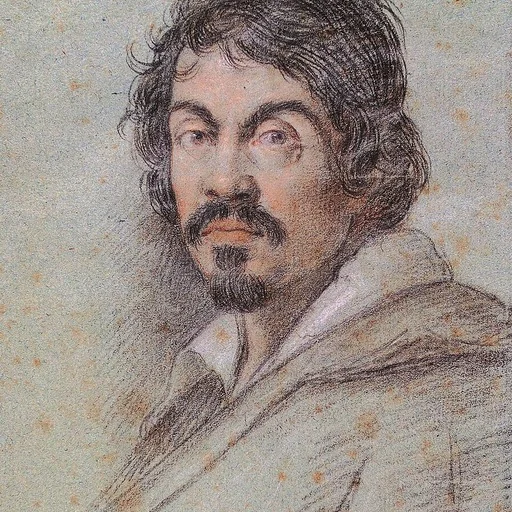
Michelangelo Merisi da Caravaggio (also Michele Angelo Merigi or Amerighi da Caravaggio; 29 September 1571 – 18 July 1610), known mononymously as Caravaggio, was an Italian painter active in Rome for most of his artistic life.