Artwork
Scenes of Daily Life, Roads and Paths: Mail Route (Scènes de la vie quotidienne, Route et Chemins: Route de Poste)
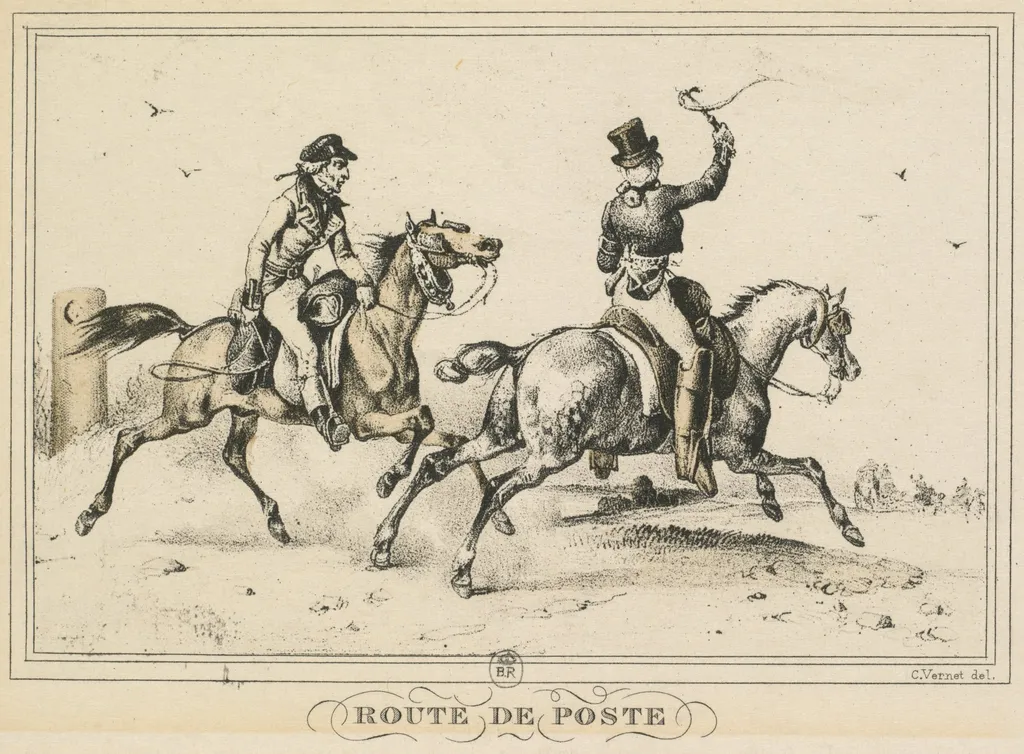
Scenes of Daily Life, Roads and Paths: Mail Route (Scènes de la vie quotidienne, Route et Chemins: Route de Poste) is a print by the Romanticist artist Carle Vernet. It dates from 1817 and is held in the collection of the Cleveland Museum of Art.
About this work
Overview
Created in 1817 by Carle Vernet, this print is part of a series titled Scenes of Daily Life, Roads and Paths. It depicts a modest postal wagon traversing a rural road, pulled by two weary horses. The scene captures a routine moment of 19th-century transportation, emphasizing the quiet persistence of labor over dramatic spectacle. The work is held in the collection of The Cleveland Museum of Art.
Subject & Meaning
The title, Route de Poste, anchors the image in the practical infrastructure of the era, honoring the unseen workers who sustained postal service.
The print illustrates a mail carrier and his assistant on a provincial route, their task implied rather than dramatized. The whip and reins suggest control amid fatigue, while the dusty path and slow progress evoke the physical demands of communication networks before industrialization. The title, Route de Poste, anchors the image in the practical infrastructure of the era, honoring the unseen workers who sustained postal service.
Technique & Style
Vernet employed fine linear ink work to define form and movement, with minimal shading to suggest texture and depth. The composition is restrained, focusing on the figures and wagon against an open landscape. Horses are rendered with anatomical accuracy, their posture conveying exhaustion without sentimentality. The style reflects a documentary impulse, aligning with the observational tendencies of early 19th-century French printmaking.
History & Provenance
The print was produced as part of a series documenting French rural life, likely commissioned for wider circulation among middle-class audiences. It entered The Cleveland Museum of Art’s collection in the 20th century, following standard acquisition practices for European graphic works. Its preservation reflects institutional interest in everyday subjects from the post-Napoleonic period.
Context
In the 1810s, France was rebuilding its infrastructure after years of war, and postal routes were vital for civic cohesion. Vernet’s series responded to a growing public interest in the mechanics of daily life, distinct from grand historical or mythological themes. This work aligns with broader trends in French art that valued observation over idealization, anticipating later realist movements.
Legacy
Though not widely exhibited today, the print contributes to a body of work that documented the rhythms of pre-industrial transport. It stands as a quiet record of labor and mobility in early 19th-century France, offering insight into how ordinary tasks shaped national connectivity. Its significance lies in its unembellished portrayal of a functional, overlooked aspect of society.
Artist & collection

Artist
Antoine Charles Horace Vernet, better known as Carle Vernet, was a French painter, the youngest child of painter Claude-Joseph Vernet and the father of painter Horace Vernet.

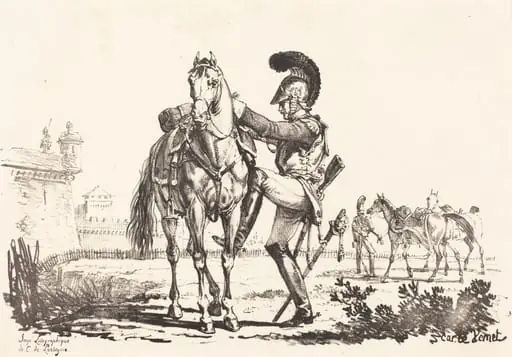
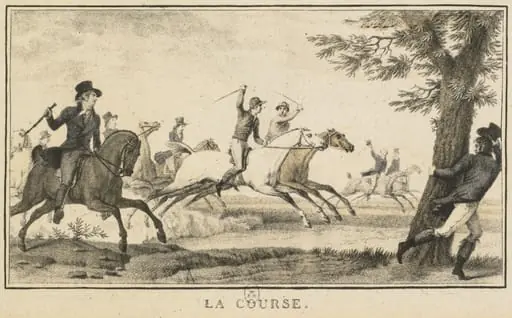 Racing Scenes: The Race (Scènes Hippiques: La course)
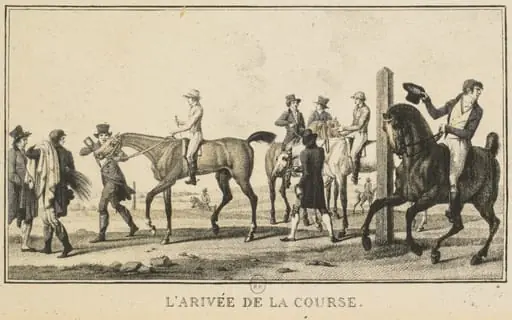 Racing Scenes: A Horse Arriving at the Race (Scènes Hippiques: Cheval arrivant de la chasse)
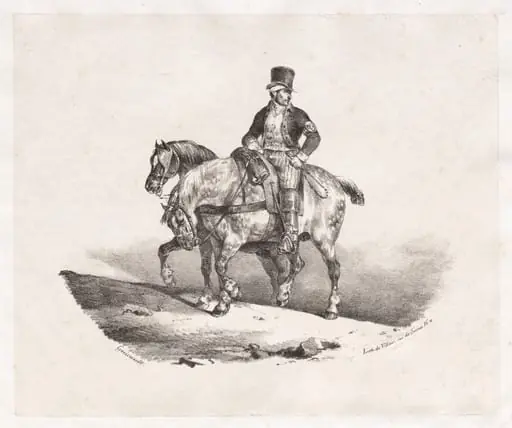 Postman or Two Harnessed Horses
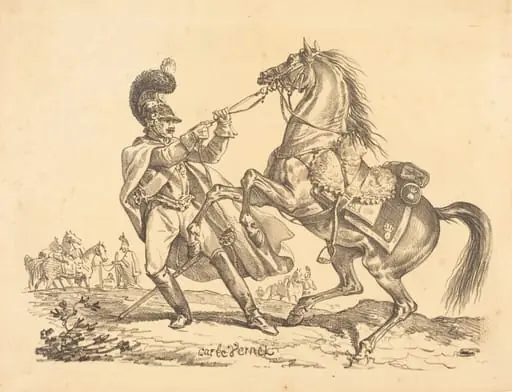 Cuirassier retenant son cheval qui se cabre
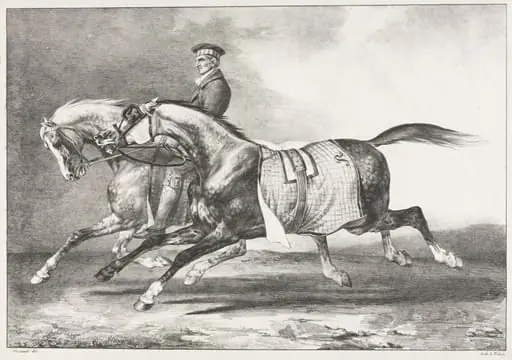 Two Dappled Horses Exercising
 Youths and a Horse
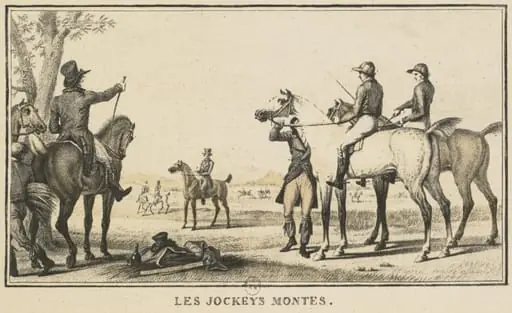 Racing Scenes: The Jockey Mounting the Horse (Scènes Hippiques: Le jockey montant a cheval)
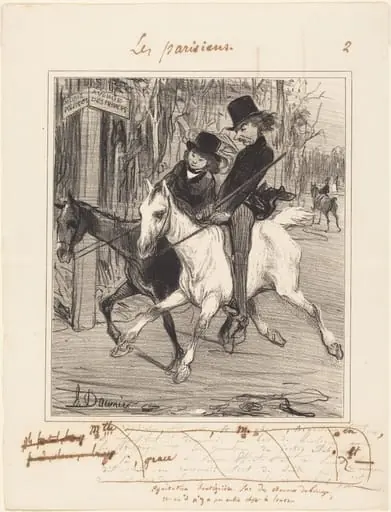 Équitation boutiquière
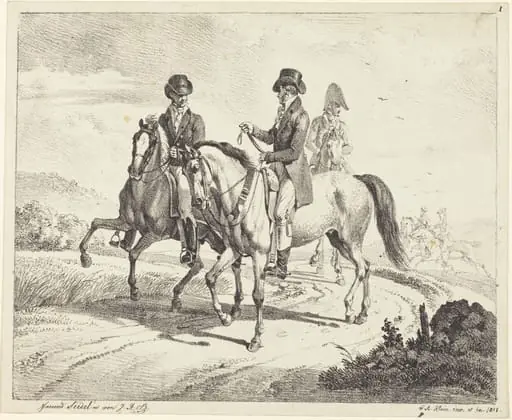 Outing on Horseback
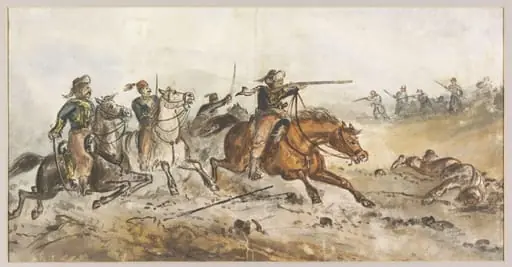 Turkish irregular cavalry charging Russian infantry