Artwork
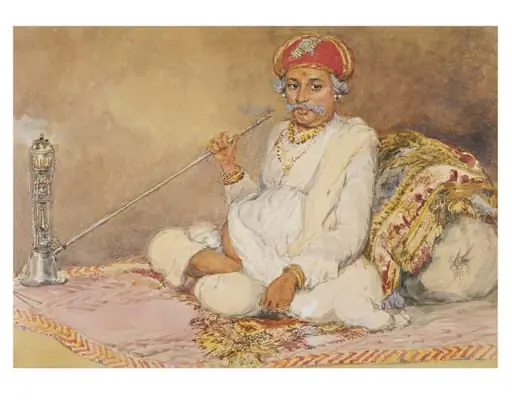
Portrait of Tara Chand, the court painter
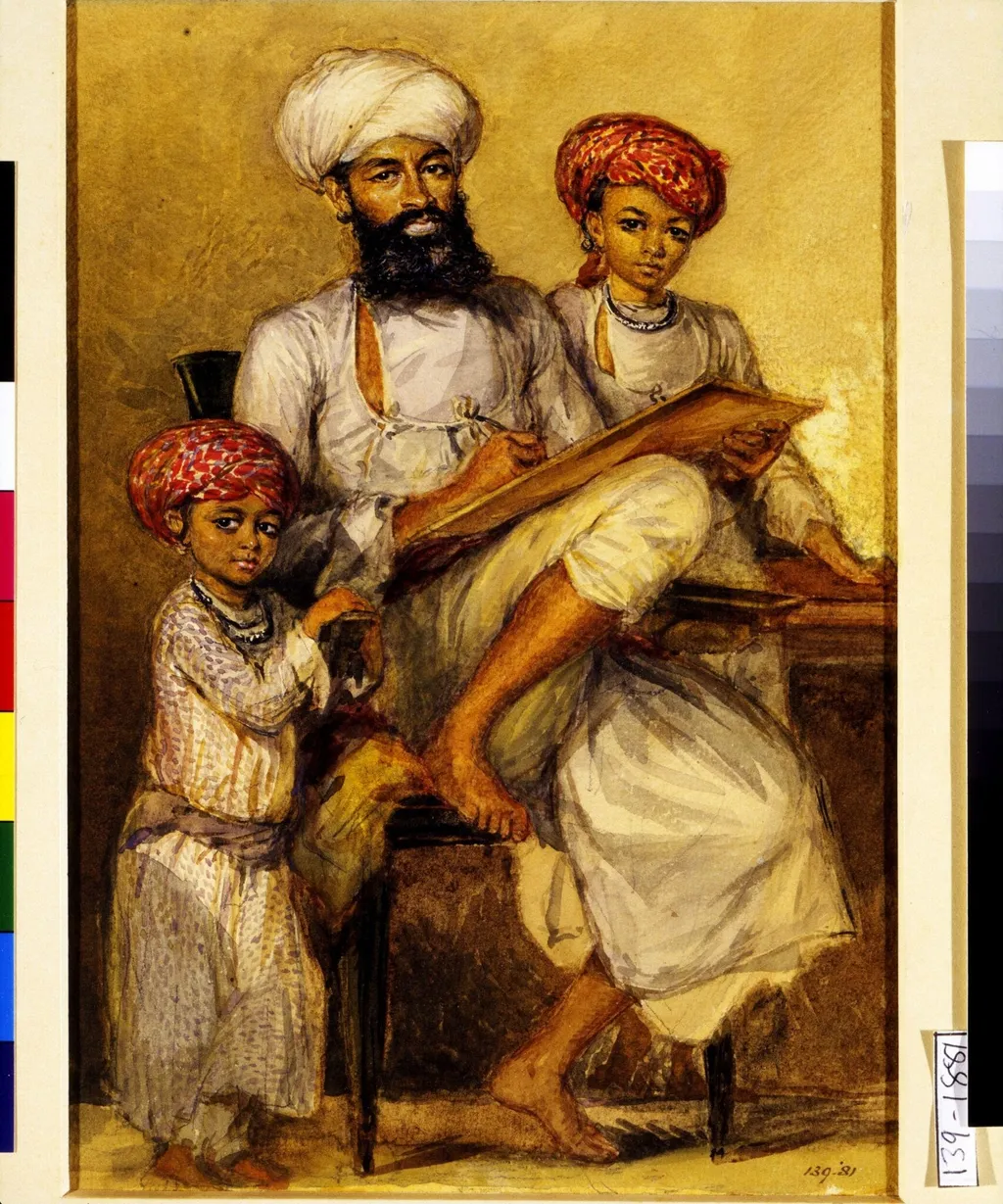
Portrait of Tara Chand, the court painter is a paint painting by the Patna School of Painting artist William Carpenter. It dates from 1851 and is held in the collection of the Victoria and Albert Museum.
About this work
Overview
His portrait of Tara Chand, court painter to the Maharana of Udaipur, reflects his immersion in Indian society.
William Carpenter, a British artist raised in a family of art professionals, traveled to India in the early 1850s, where he spent several years documenting the lives of local elites and artisans. His portrait of Tara Chand, court painter to the Maharana of Udaipur, reflects his immersion in Indian society. Carpenter frequently adopted local dress and engaged directly with his subjects, distinguishing his work from that of many contemporaries who viewed India through a colonial lens.
Subject & Meaning
Tara Chand, depicted seated with his two children beside him, holds a drawing board on his knee, suggesting he is in the act of sketching. The composition implies a quiet exchange between artist and subject: Carpenter, the foreign painter, is being observed and recorded by Tara Chand, a native artist trained in courtly traditions. This mutual gaze underscores a rare moment of artistic reciprocity, where both men are creators engaged in the act of representation.
Technique & Style
Carpenter employed a restrained, observational realism, emphasizing texture and posture over idealization. The rendering of Tara Chand’s garments, the grain of the wooden chair, and the soft modeling of the children’s faces reflect careful attention to detail. The lighting is even and naturalistic, avoiding dramatic contrasts. This approach aligns with mid-19th-century British academic realism, yet its subject matter and intimate setting depart from conventional portraiture of the era.
History & Provenance
Carpenter arrived in India in 1850, following his brother Percy, and spent years traveling across the subcontinent, from Sri Lanka to Kashmir and into the Punjab and Afghanistan. He returned to England by 1856, later relocating to Boston before settling again in London, where he died in 1899. The portrait of Tara Chand was likely painted during his time in Rajasthan, where he had access to the court of Udaipur and developed relationships with local artists.
Context
During the mid-19th century, British artists in India often portrayed royalty and colonial officials, but Carpenter’s focus on indigenous artisans was unusual. His willingness to live among his subjects and adopt their customs positioned him as an atypical observer. This portrait reflects a broader, though limited, trend of cultural curiosity among some British travelers, who sought to document local life beyond the framework of imperial dominance.
Legacy
Carpenter’s body of work offers a rare visual record of Indian artists at work during the colonial period. His portraits of court painters and local figures provide insight into the continuity of indigenous artistic traditions amid British influence. While not widely celebrated in mainstream art history, his images remain valuable for their unromanticized depiction of cross-cultural artistic exchange in 19th-century India.
Artist & collection
Artist
William Carpenter (1818–1899) was an English watercolour artist. He travelled for six or seven years in the 1850s painting scenes of India, its people and its life. The Victoria and Albert Museum bought over 280 of his…

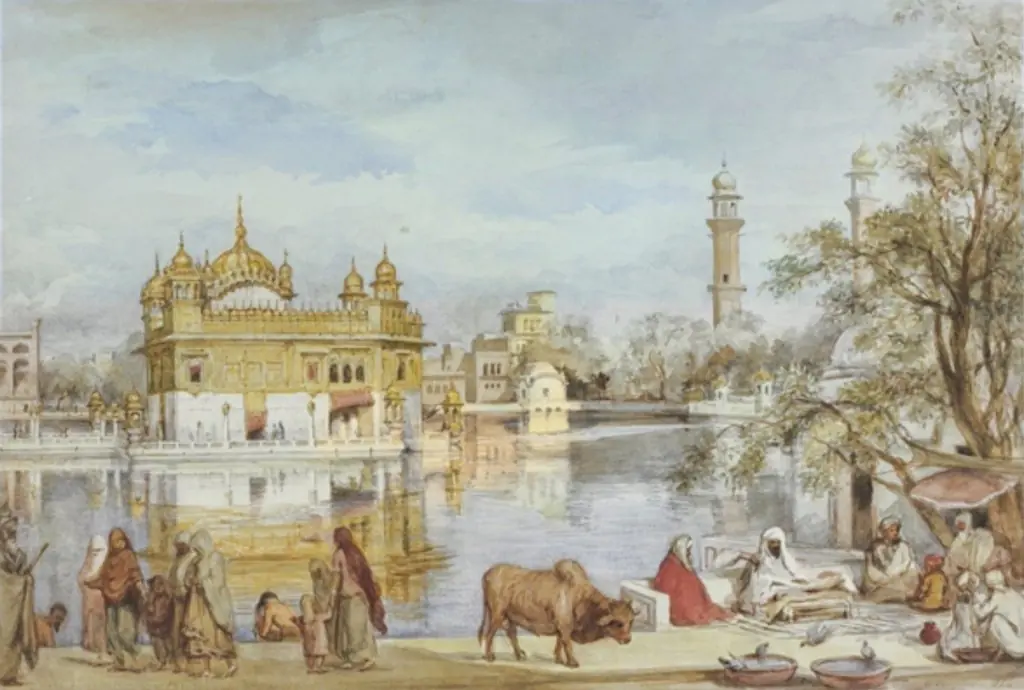 The Golden Temple, Amritsar
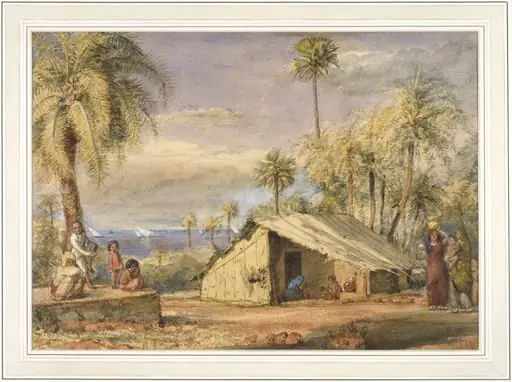 Toddywallah's hut in a grove of date palms near Breach Candy, Bombay
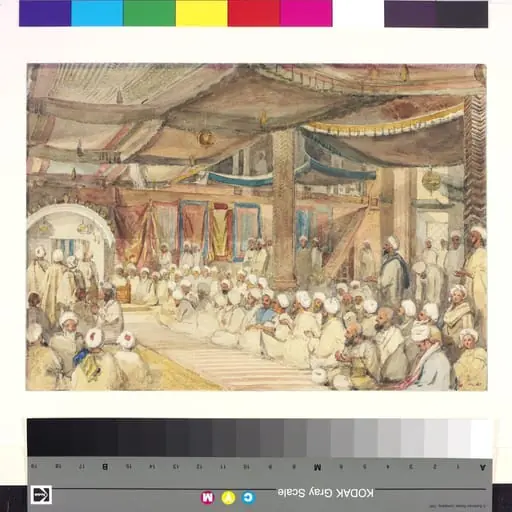 Interior of Shah Hamadan's Masjid during a religious ceremony
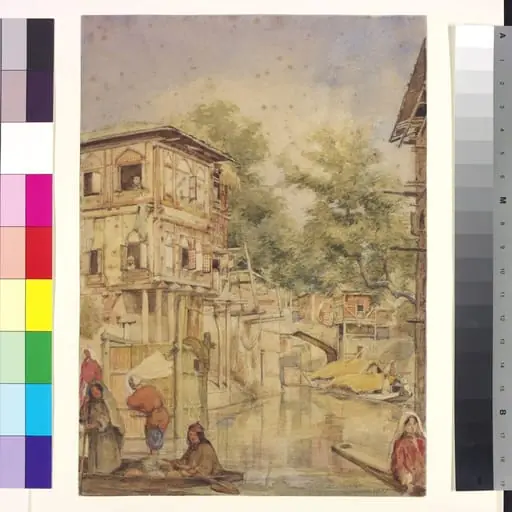 On the Mar Canal at Srinagar, Kashmir
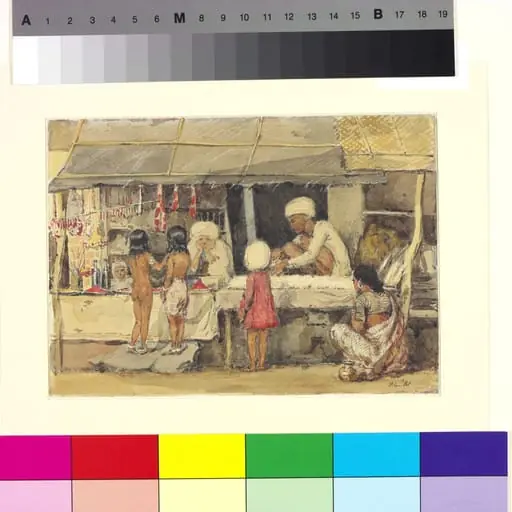 Shops for colours and flowers used at festivals, Sadr bazaar, Pune
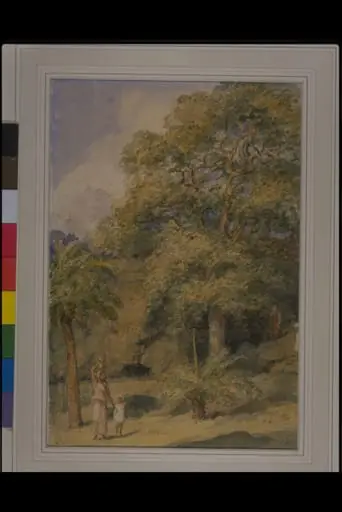 Study of a tamarind tree and date palms near Sir William Yardley's house at Breach Candy, Bombay
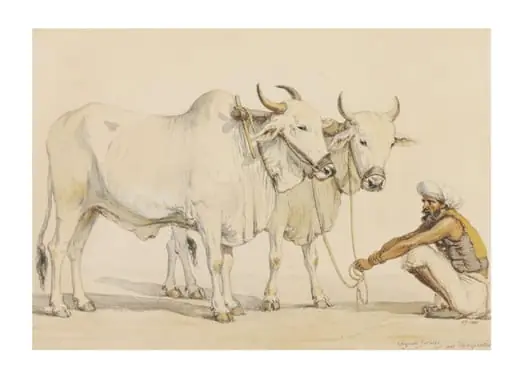 Two harnessed bullocks from Gujarat with their keeper
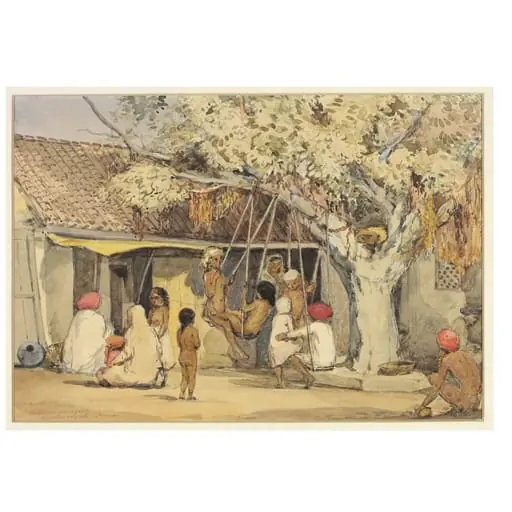 Children swinging Sudder bazaar. Poona