Artwork
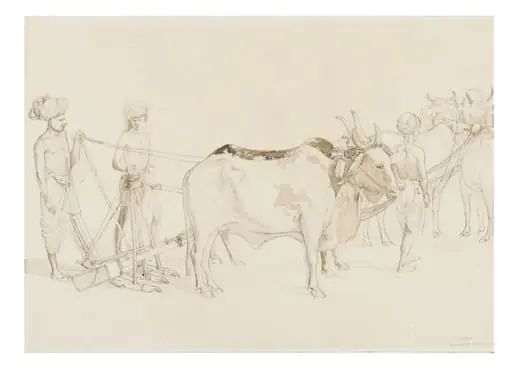
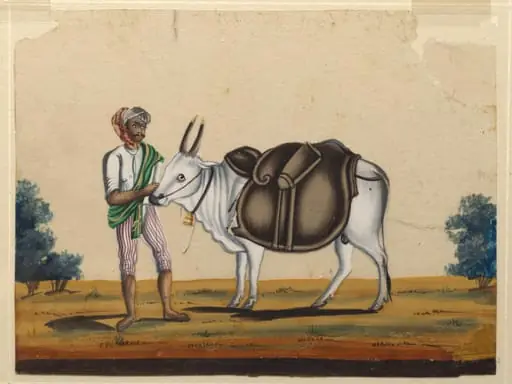
Two harnessed bullocks from Gujarat with their keeper
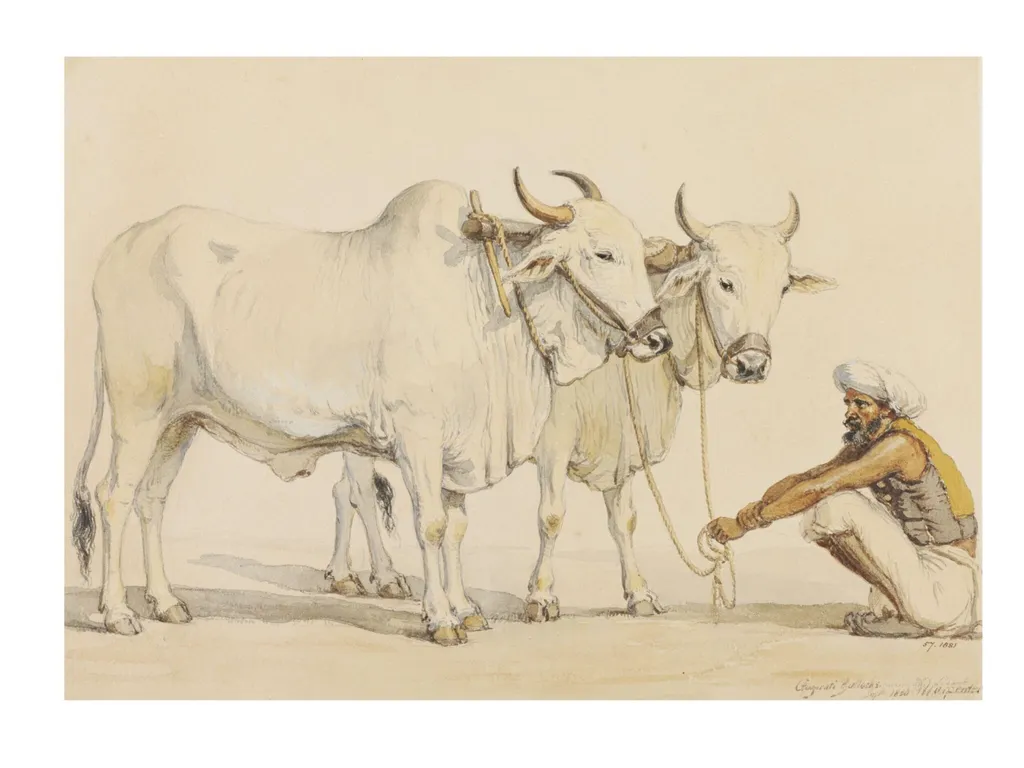
Two harnessed bullocks from Gujarat with their keeper is a paint painting by the Patna School of Painting artist William Carpenter. It dates from 1850 and is held in the collection of the Victoria and Albert Museum. The work portrays a pair of yoked bullocks standing side by side, attended by a man who holds the reins.
About this work
He focused on daily life—people, animals, streets—with quick, bright strokes that feel alive.
You see two strong bullocks yoked side by side with a man holding their ropes. The light catches the animals’ dusty hides and the keeper’s simple clothes. A few brush strokes make the muscles under their skin feel real.
Carpenter painted this in 1850 while traveling India for six years. He focused on daily life—people, animals, streets—with quick, bright strokes that feel alive. The bullocks aren’t posed; they look ready to walk.
This reminds me of a simpler style than later artists. Look up William Carpenter next.
Overview
The work portrays a pair of yoked bullocks standing side by side, attended by a man who holds the reins. Sunlight illuminates the dust‑laden hides of the animals and the modest attire of the keeper, while swift brushwork suggests the tension of the muscles beneath their skin. The composition captures a moment of ordinary rural activity in mid‑nineteenth‑century Gujarat.
Subject & Meaning
The painting records a commonplace scene of agrarian labor, emphasizing the relationship between the draught animals and their handler. By presenting the bullocks in a ready‑to‑move stance, the artist highlights the vitality of everyday work and the reliance of local economies on such animal power.
Technique & Style
Executed in watercolor, the piece employs a limited palette of warm earth tones. Rapid, confident strokes convey both the texture of the animals’ coats and the atmospheric light. The handling of colour and line reflects a restrained romanticism, favoring immediacy over elaborate detail.
History & Provenance
Created in 1850 while the artist was travelling through western India, the painting formed part of a larger body of work documenting daily life across the subcontinent. After the artist’s return to England, his Indian watercolors were published in a leading illustrated newspaper and later exhibited in a solo show at the South Kensington Museum, where the entire collection was acquired by the Victoria and Albert Museum.
Context
The artist, a graduate of the Royal Academy Schools, spent six years (1850‑1856) traversing regions from Bombay to Afghanistan. His itinerant experience informed a series of works that combined accurate observation of local customs with a light, romanticized palette, distinguishing his approach from later, more formal colonial depictions.
Artist & collection
Artist
William Carpenter (1818–1899) was an English watercolour artist. He travelled for six or seven years in the 1850s painting scenes of India, its people and its life. The Victoria and Albert Museum bought over 280 of his…

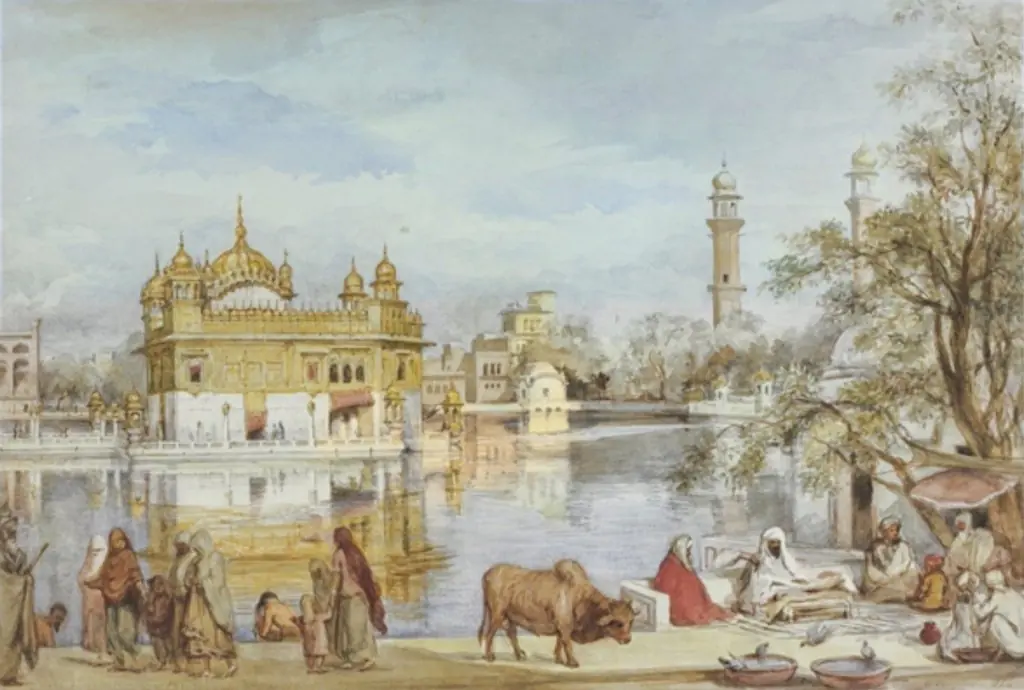 The Golden Temple, Amritsar
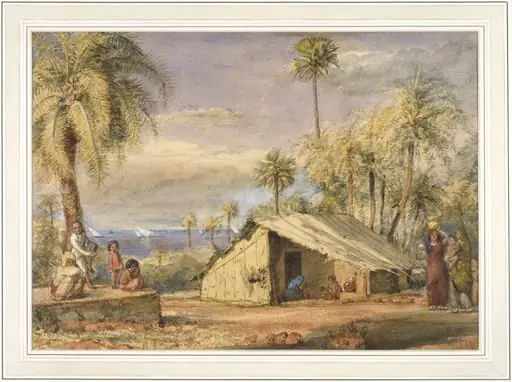 Toddywallah's hut in a grove of date palms near Breach Candy, Bombay
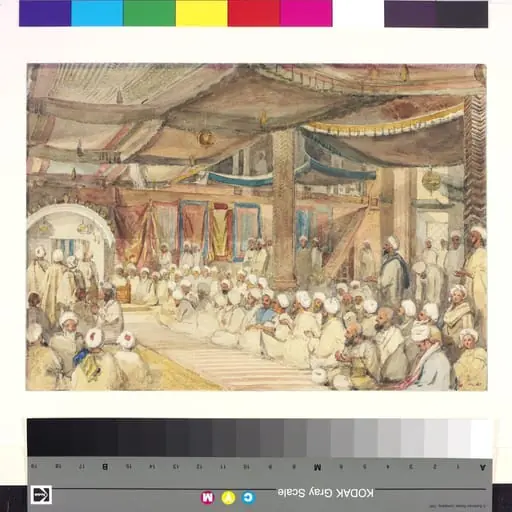 Interior of Shah Hamadan's Masjid during a religious ceremony
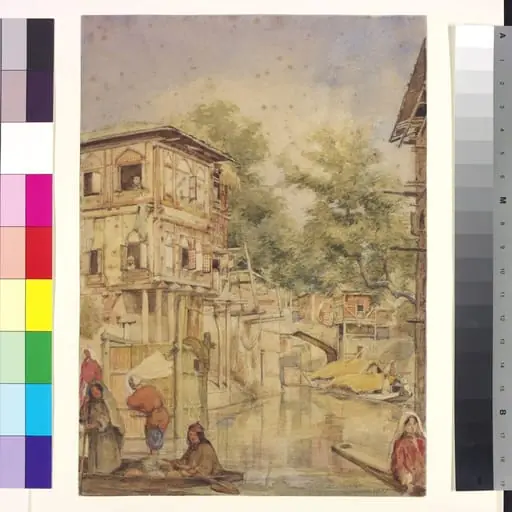 On the Mar Canal at Srinagar, Kashmir
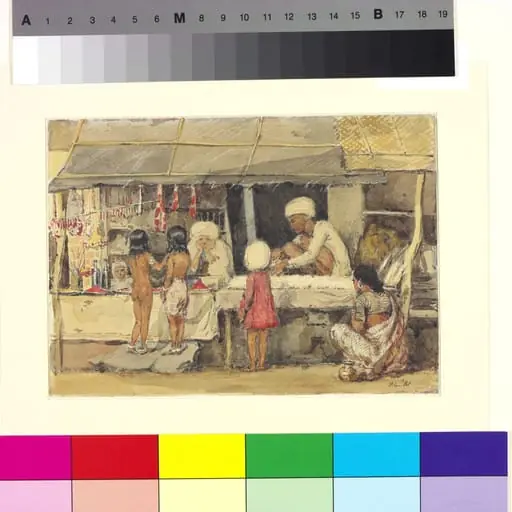 Shops for colours and flowers used at festivals, Sadr bazaar, Pune
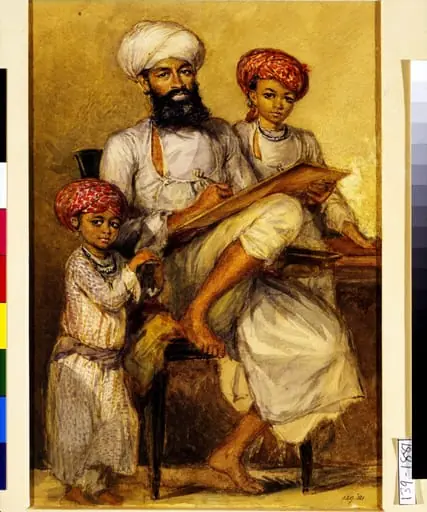 Portrait of Tara Chand, the court painter
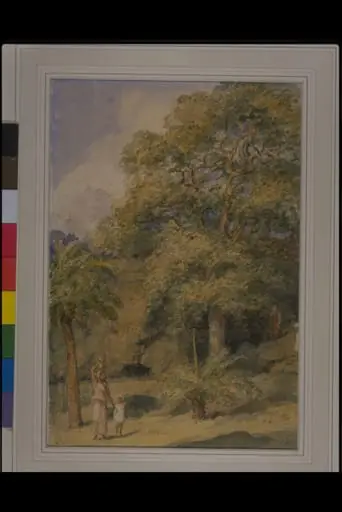 Study of a tamarind tree and date palms near Sir William Yardley's house at Breach Candy, Bombay
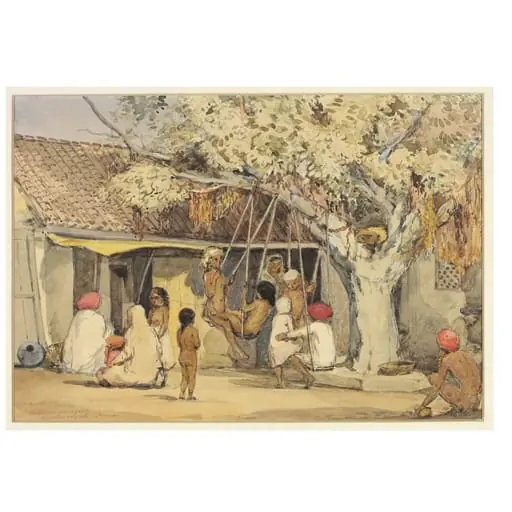 Children swinging Sudder bazaar. Poona