Artwork
Daulat Rao of Mandhata
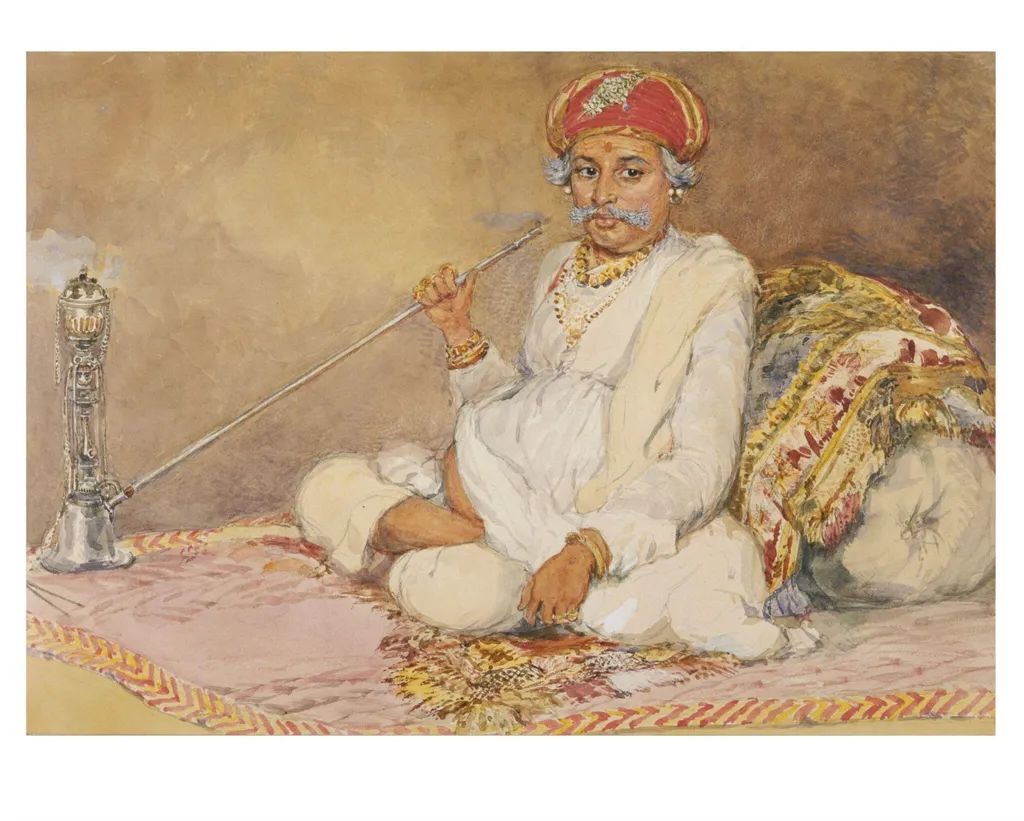
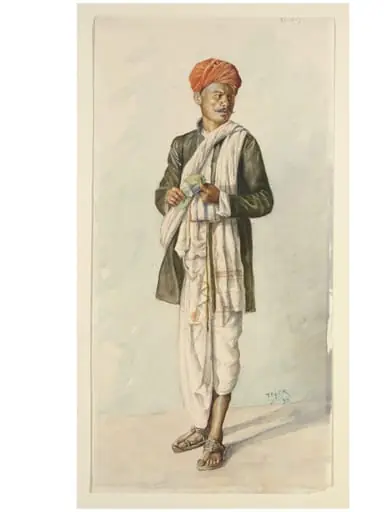
Daulat Rao of Mandhata is a paint painting by the Impressionist artist William Carpenter. It dates from 1851 and is held in the collection of the Victoria and Albert Museum.
About this work
This painting shows Daulat Rao of Mandhata by British artist William Carpenter. Made in March 1851, it’s an oil portrait from his time in India.
Carpenter arrived in Bombay in 1850 and traveled widely, painting local rulers in their own settings. He often dressed in Indian clothes and sketched across the region.
Check out more works by William Carpenter at the Victoria and Albert Museum.
Overview
The work was produced during the British artist William Carpenter’s Indian sojourn, when he was commissioned to record local rulers in their own surroundings.
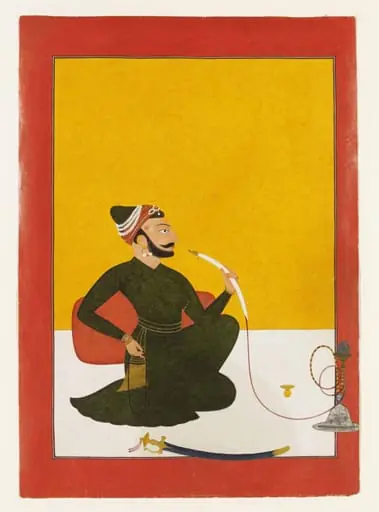
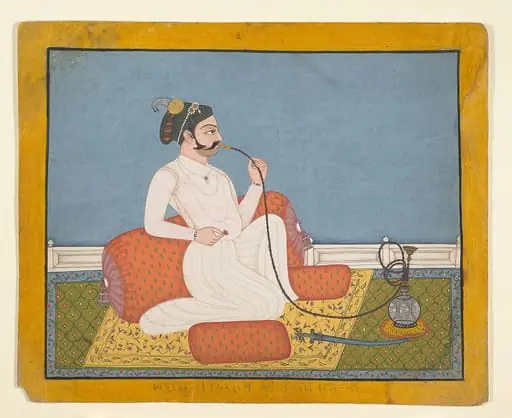
The oil portrait, executed in March 1851, depicts Daulat Rao, hereditary custodian of the temples in Mandhata, a town in the Nirmar District of the Central Provinces. The sitter is shown seated, smoking a huqqa, a detail that emphasizes his status and personal habit. The work was produced during the British artist William Carpenter’s Indian sojourn, when he was commissioned to record local rulers in their own surroundings.
Subject & Meaning
Daulat Rao, as the temple custodian, occupied a position of religious and regional authority. By portraying him in a relaxed pose with a huqqa, Carpenter highlights both the ruler’s personal leisure and the cultural practices of the elite in mid‑nineteenth‑century central India. The painting thus serves as a visual record of the intersection between governance, ritual, and everyday life.
Technique & Style
Carpenter employed a realistic approach typical of British portraiture, rendering the figure with careful attention to facial features and the intricate details of costume. The oil medium allows a rich palette, especially in the depiction of textiles and the smoky atmosphere surrounding the huqqa, underscoring the artist’s interest in texture and material culture.
History & Provenance
William Carpenter arrived in Bombay in 1850, traveling extensively across the subcontinent, from Sri Lanka to Kashmir, and later to Rajasthan. The portrait was likely painted in Daulat Rao’s palace and remained in private hands before entering the museum collection. Carpenter returned to England in 1856, later residing in Boston before settling again in London, where he died in 1899.
Context
The work belongs to a broader series of Indian portraits created by Carpenter, who, like many contemporary British artists, documented the rulers and daily life of the regions he visited. His practice of wearing Indian dress while sketching reflects a degree of immersion that informed the authenticity of his depictions.
Own this work as a print
Artist & collection
Artist
William Carpenter (1818–1899) was an English watercolour artist. He travelled for six or seven years in the 1850s painting scenes of India, its people and its life. The Victoria and Albert Museum bought over 280 of his…

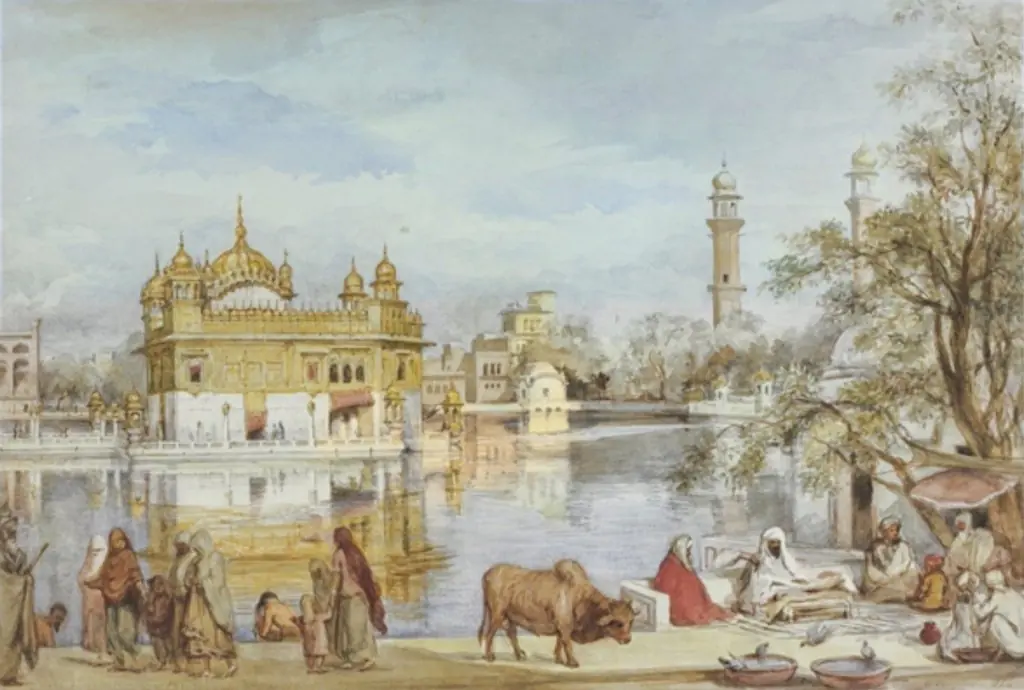 The Golden Temple, Amritsar
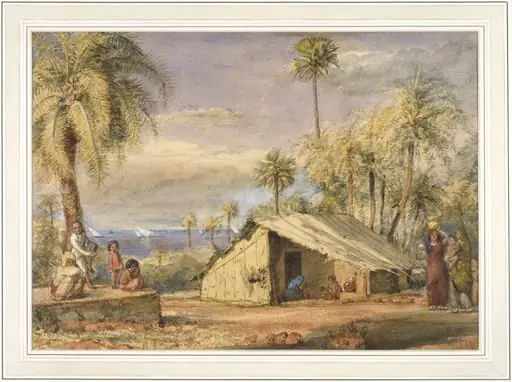 Toddywallah's hut in a grove of date palms near Breach Candy, Bombay
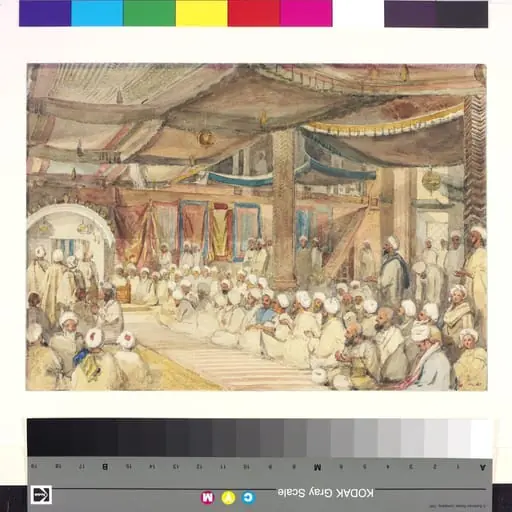 Interior of Shah Hamadan's Masjid during a religious ceremony
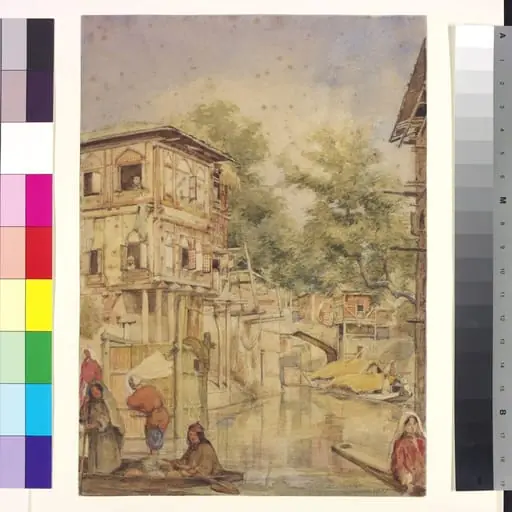 On the Mar Canal at Srinagar, Kashmir
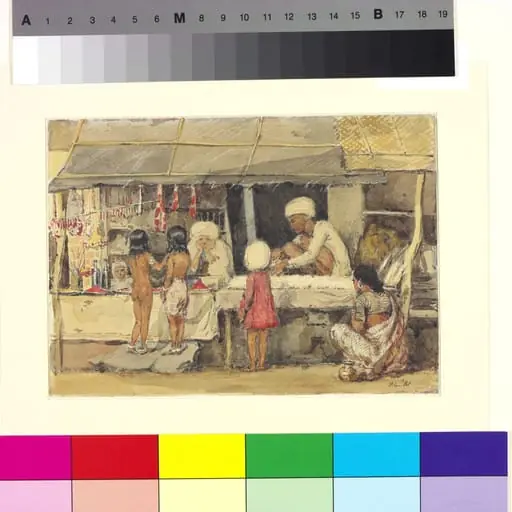 Shops for colours and flowers used at festivals, Sadr bazaar, Pune
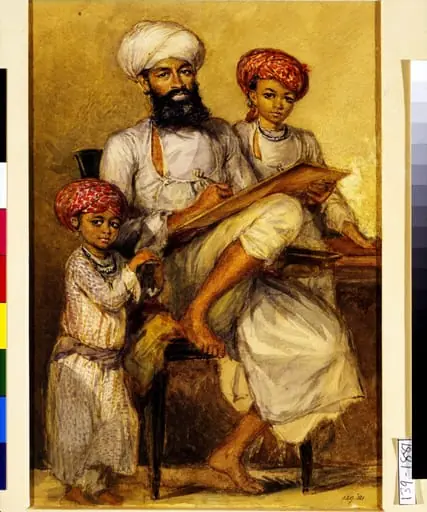 Portrait of Tara Chand, the court painter
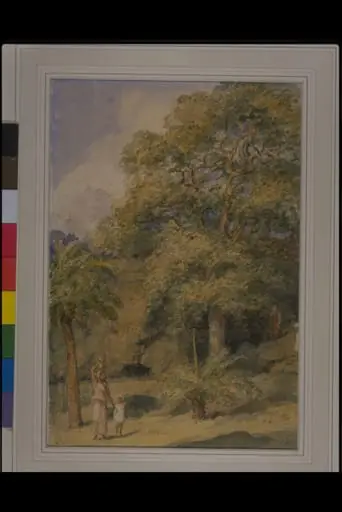 Study of a tamarind tree and date palms near Sir William Yardley's house at Breach Candy, Bombay
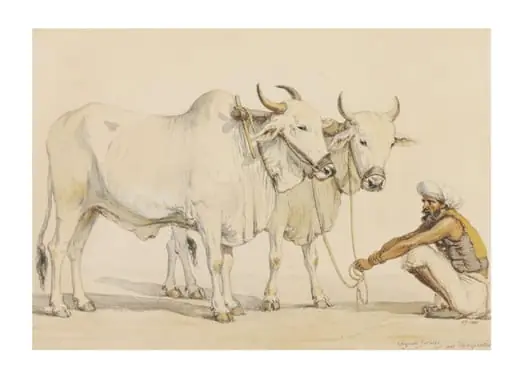 Two harnessed bullocks from Gujarat with their keeper