Artwork
The Golden Temple, Amritsar
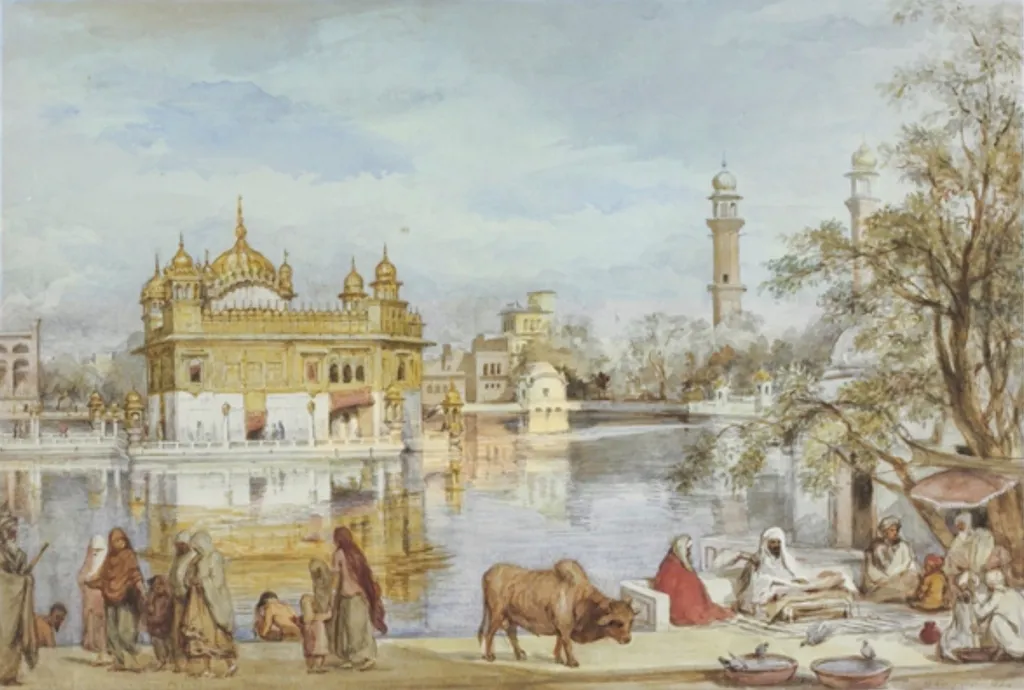
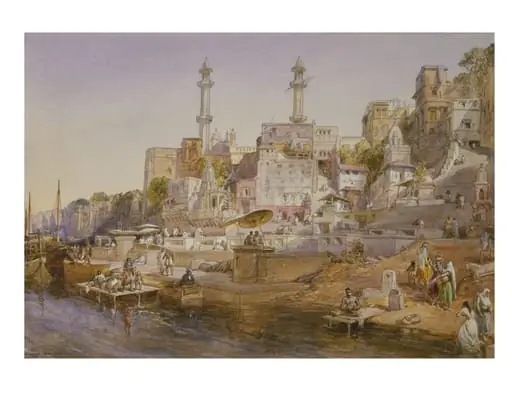
The Golden Temple, Amritsar is an unspecified painting by the Orientalist artist William Carpenter. It dates from 1854 and is held in the collection of the Victoria and Albert Museum.
About this work
Overview
William Carpenter, an English water‑colourist, produced the painting *The Golden Temple, Amritsar* in 1854. Executed during his extended residence in India, the work records a prominent Sikh shrine and its surrounding environment. It now forms part of the Victoria and Albert Museum’s collection, which holds a substantial number of Carpenter’s Indian scenes.
Subject & Meaning
The composition depicts the Golden Temple, the holiest gurdwara of Sikhism, set amid the bustling urban landscape of Amritsar. By focusing on the temple’s gleaming dome and reflective pool, Carpenter emphasizes the site’s spiritual centrality while also capturing the everyday activity that surrounds it, offering a visual record of mid‑nineteenth‑century religious life.
Technique & Style
Rendered in transparent water‑colour, the painting showcases Carpenter’s delicate handling of light and atmosphere. Fine washes convey the shimmer of the temple’s gold plating and the surrounding sky, while precise line work defines architectural details. The approach aligns with the Orientalist aesthetic, wherein European artists employed meticulous observation to portray exotic locales.
History & Provenance
Created during Carpenter’s six‑ to seven‑year tenure in India, the work remained in private hands before entering the Victoria and Albert Museum’s holdings. The museum’s acquisition of the piece is part of a larger purchase of over 280 of Carpenter’s Indian paintings, consolidating his visual documentation of the subcontinent for public access.
Context
This painting reflects that trend, offering a European perspective on a sacred Indian site while contributing to contemporary visual knowledge of the region.
Carpenter’s Indian period coincided with a broader 19th‑century European fascination with the East, known as Orientalism. Artists traveled to colonies and distant lands, producing images that catered to Western curiosity about foreign architecture, customs, and landscapes. This painting reflects that trend, offering a European perspective on a sacred Indian site while contributing to contemporary visual knowledge of the region.
Own this work as a print
Artist & collection
Artist
William Carpenter (1818–1899) was an English watercolour artist. He travelled for six or seven years in the 1850s painting scenes of India, its people and its life. The Victoria and Albert Museum bought over 280 of his…

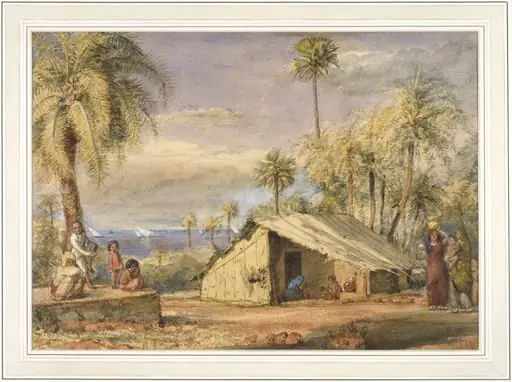 Toddywallah's hut in a grove of date palms near Breach Candy, Bombay
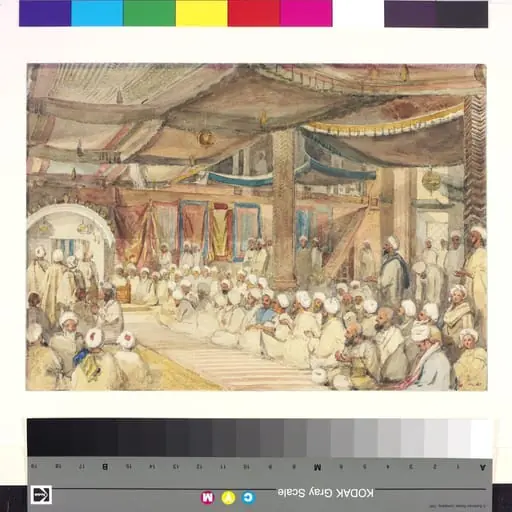 Interior of Shah Hamadan's Masjid during a religious ceremony
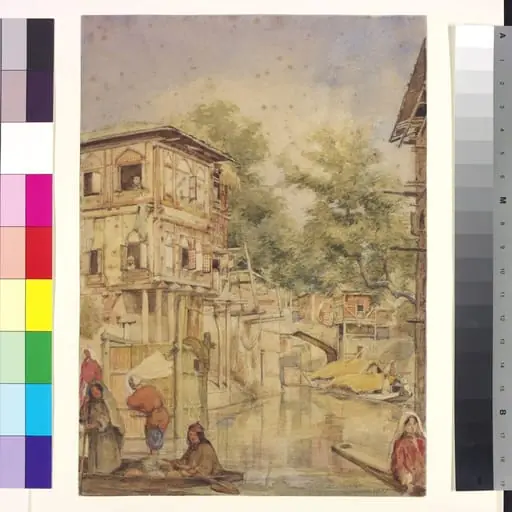 On the Mar Canal at Srinagar, Kashmir
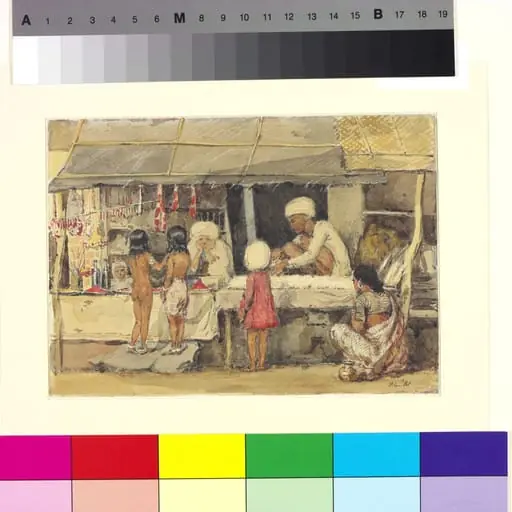 Shops for colours and flowers used at festivals, Sadr bazaar, Pune
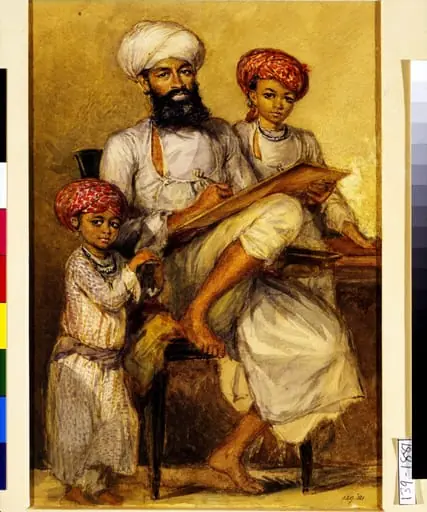 Portrait of Tara Chand, the court painter
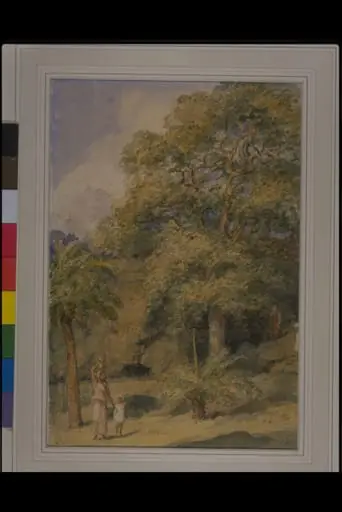 Study of a tamarind tree and date palms near Sir William Yardley's house at Breach Candy, Bombay
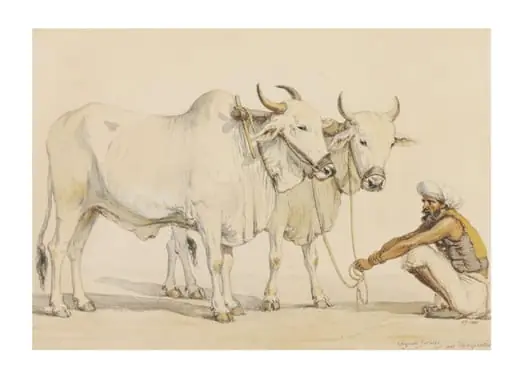 Two harnessed bullocks from Gujarat with their keeper
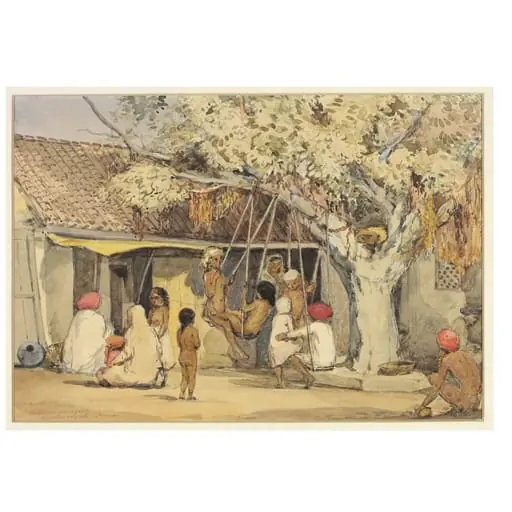 Children swinging Sudder bazaar. Poona
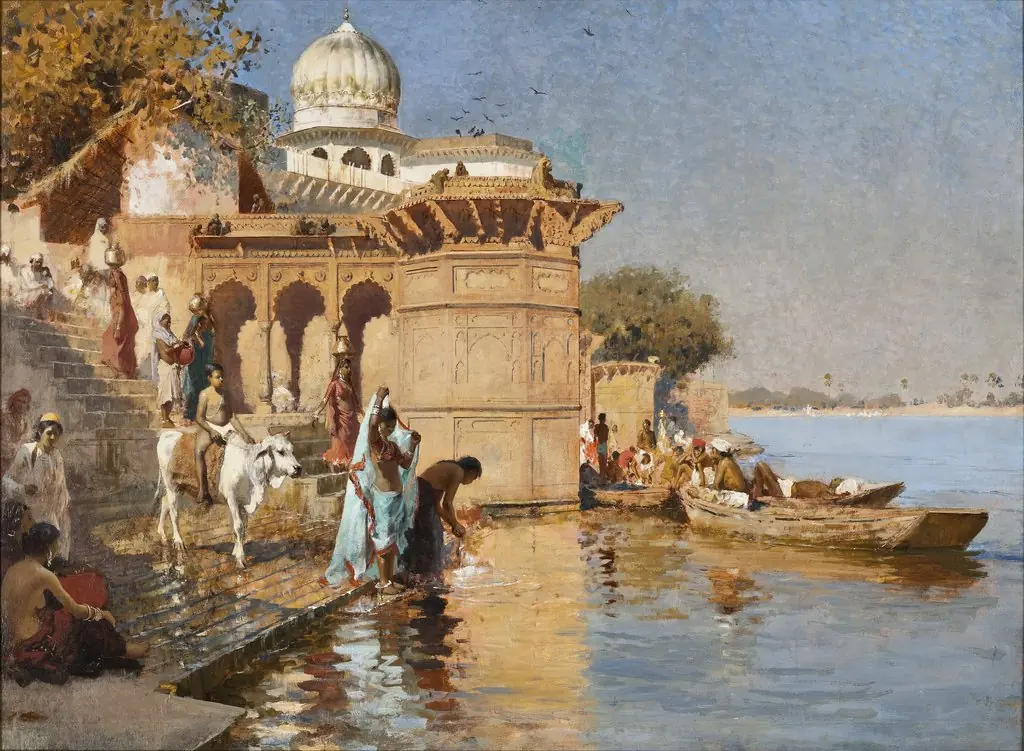 Along the Ghats, Mathura
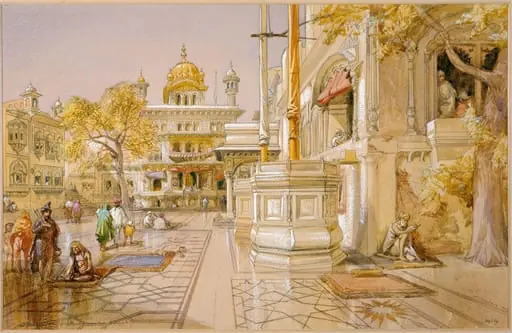 Akal Boonga at the Golden temple. Umritsar. Punjaub
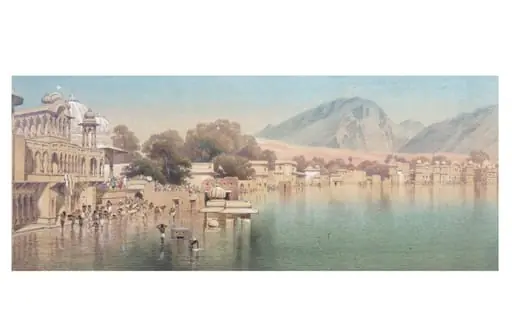 View of Pushkar Lake and the bathing ghats, near Ajmer
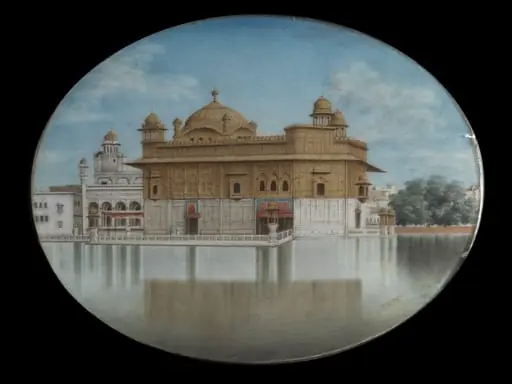 One of Sixteen views of monuments in Delhi, Agra, Amritsar, Lucknow and South India.
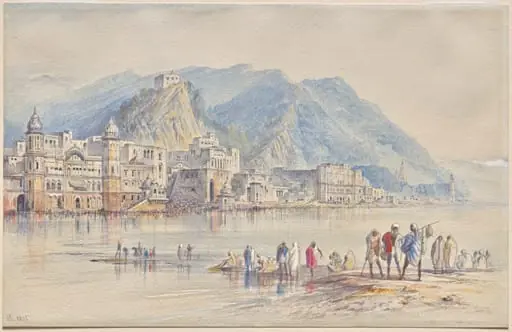 Hardwar, India
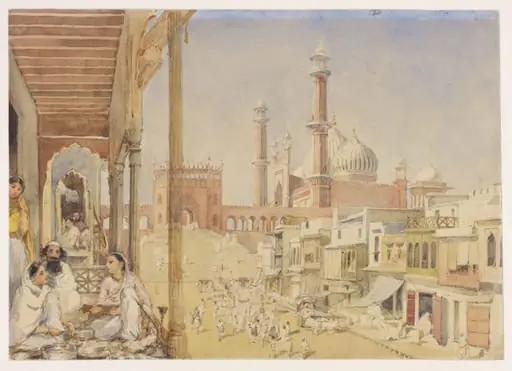 View of the Jami Masjid, Delhi
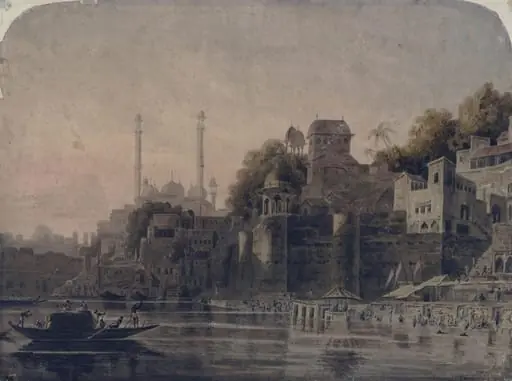 Benares on the Ganges
 The Mosque of Aurangzeb and Panchganga Ghat from the Ganges, Benares.