Artwork
The tomb of Mucdoom Sahib
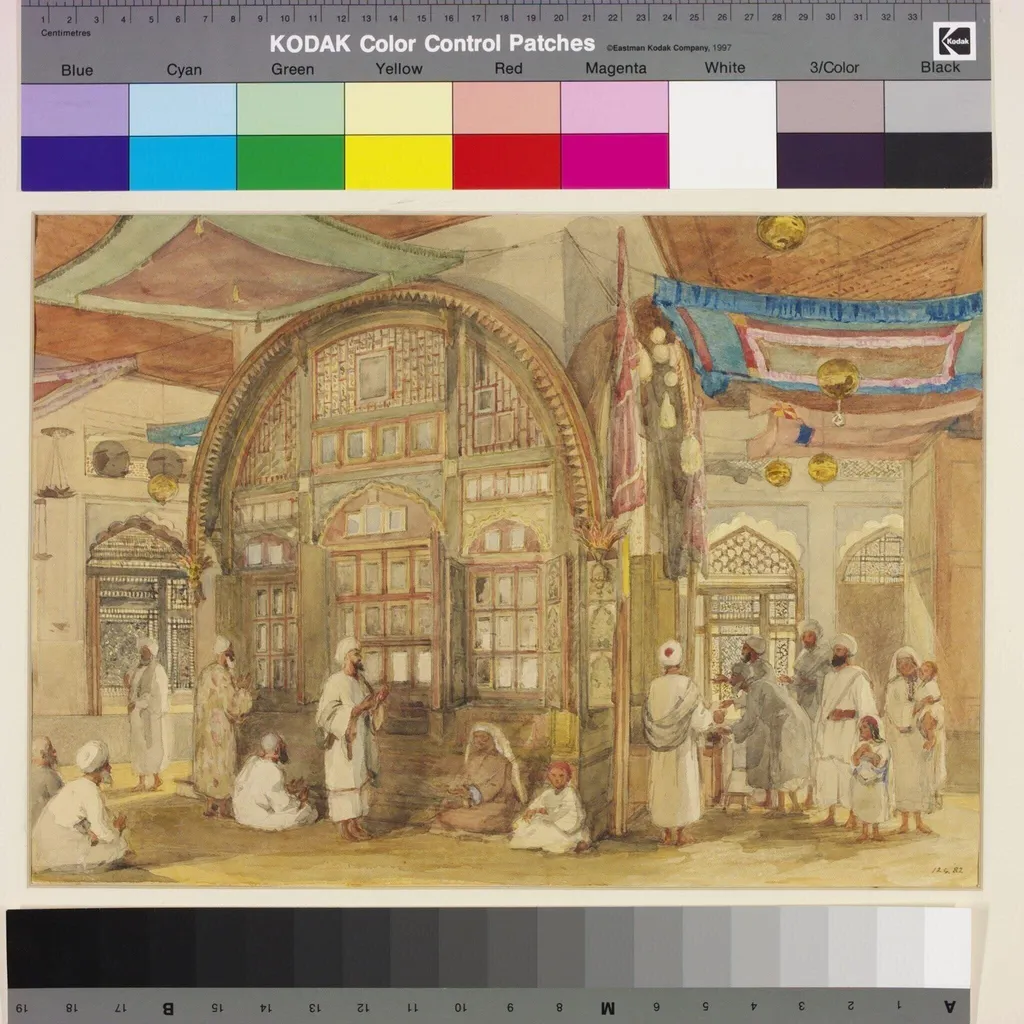
The tomb of Mucdoom Sahib is a paint painting by the Patna School of Painting artist William Carpenter. It dates from 1855 and is held in the collection of the Victoria and Albert Museum.
About this work
Overview
Carpenter, an English artist resident in India between 1850 and 1856, recorded daily scenes during his stay in the region.
Painted in 1855 by William Carpenter, this work depicts the tomb complex of Mucdoom Sahib in Kashmir. Carpenter, an English artist resident in India between 1850 and 1856, recorded daily scenes during his stay in the region. The painting was acquired by a museum in 1888 as part of a larger purchase of his Indian works, valued at £500. It reflects his interest in documenting local architecture and social life with observational precision.
Subject & Meaning
The scene centers on the tomb of Mucdoom Sahib, father of Sheik Imam-u-din, a governor under Sikh administration in Kashmir. Rather than emphasizing religious grandeur, the painting captures the tomb as a lived space—people gather in its courtyard, children play, and daily conversation unfolds. The focus on ordinary activity suggests a quiet reverence for the site as part of community life, not merely a monument.
Technique & Style
Carpenter employed loose brushwork and a restrained palette to convey the warmth of late afternoon light. Soft, naturalistic tones enhance the sense of atmosphere, with golden hues illuminating figures in light clothing. Arched doorways and patterned walls are rendered with suggestive detail rather than rigid precision. The composition avoids theatricality, favoring an unposed, documentary feel that invites the viewer into the moment.
History & Provenance
Created during Carpenter’s extended stay in Kashmir (1854–55), the painting was among many works he produced while traveling across India. In 1888, the Victoria and Albert Museum acquired a group of his Indian sketches and paintings for £500, securing this piece in a public collection. Its inclusion reflects 19th-century British institutional interest in ethnographic visual records from the subcontinent.
Context
Painted during the waning years of Sikh rule in Kashmir, the work captures a moment of cultural transition. The presence of local dress, architectural details, and communal activity reflects a society still rooted in its traditions despite colonial influence. Carpenter’s approach—observing rather than idealizing—aligns with a broader trend among British artists documenting Indian life with increasing attention to authenticity.
Legacy
The painting remains a quiet example of 19th-century topographical art that prioritizes observation over spectacle. It contributes to a visual archive of Kashmiri life during a period of political change, offering insight into how sacred sites functioned within daily routines. Its preservation in a major museum underscores its value as a historical record rather than a decorative object.
Artist & collection
Artist
William Carpenter (1818–1899) was an English watercolour artist. He travelled for six or seven years in the 1850s painting scenes of India, its people and its life. The Victoria and Albert Museum bought over 280 of his…

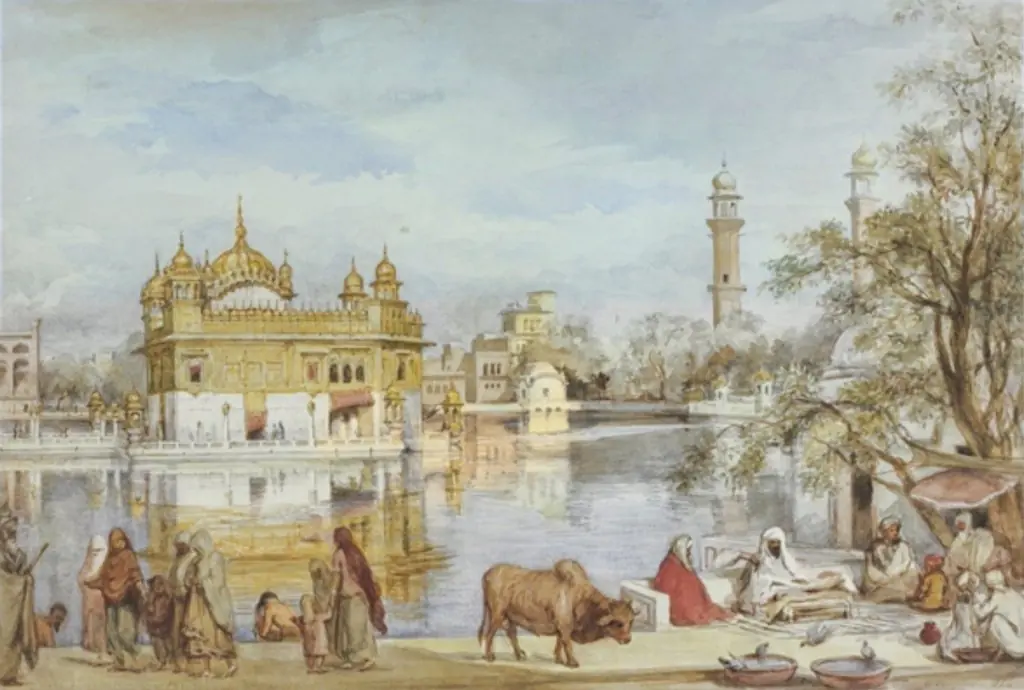 The Golden Temple, Amritsar
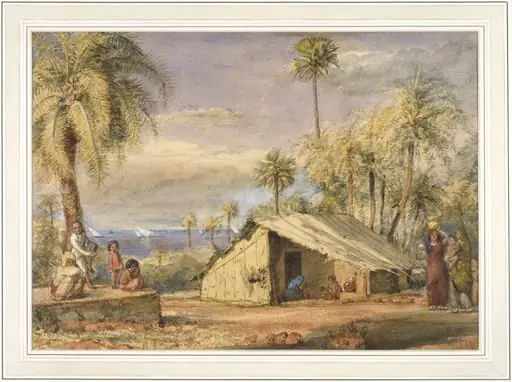 Toddywallah's hut in a grove of date palms near Breach Candy, Bombay
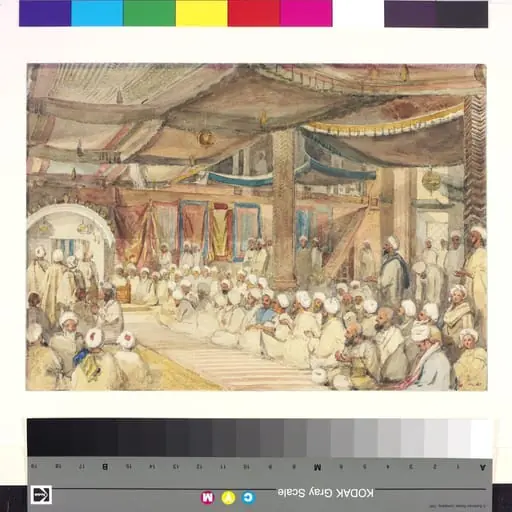 Interior of Shah Hamadan's Masjid during a religious ceremony
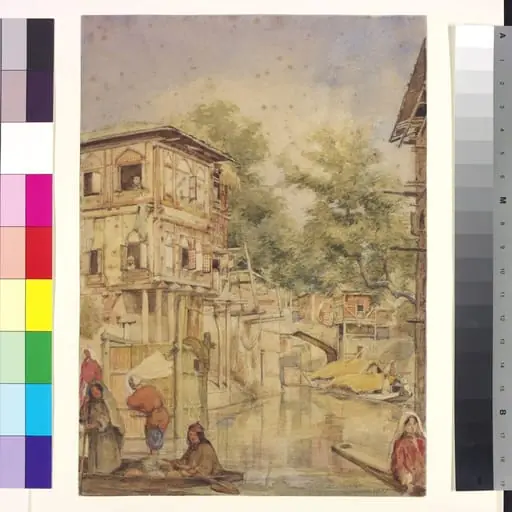 On the Mar Canal at Srinagar, Kashmir
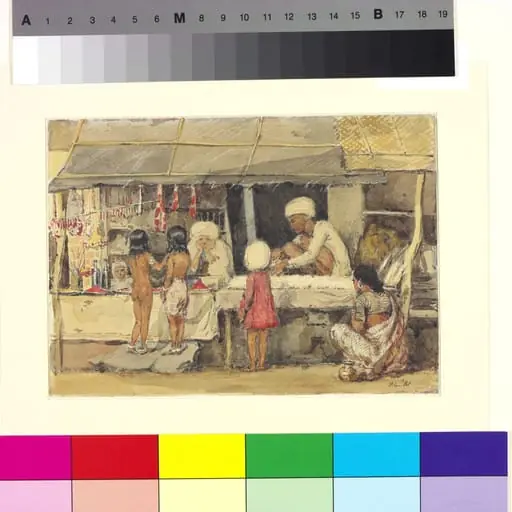 Shops for colours and flowers used at festivals, Sadr bazaar, Pune
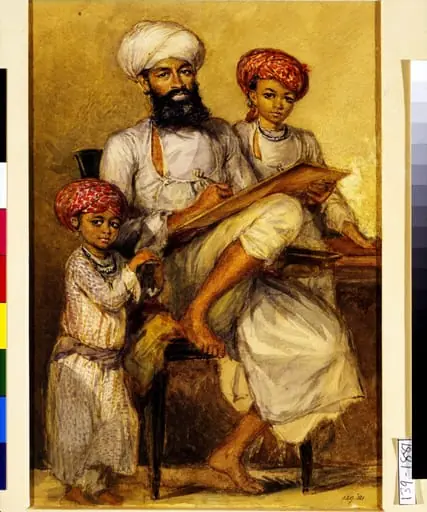 Portrait of Tara Chand, the court painter
 Study of a tamarind tree and date palms near Sir William Yardley's house at Breach Candy, Bombay
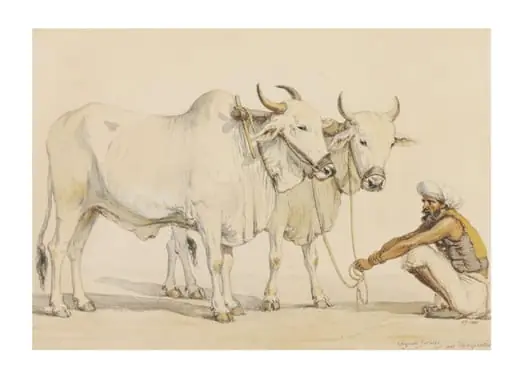 Two harnessed bullocks from Gujarat with their keeper
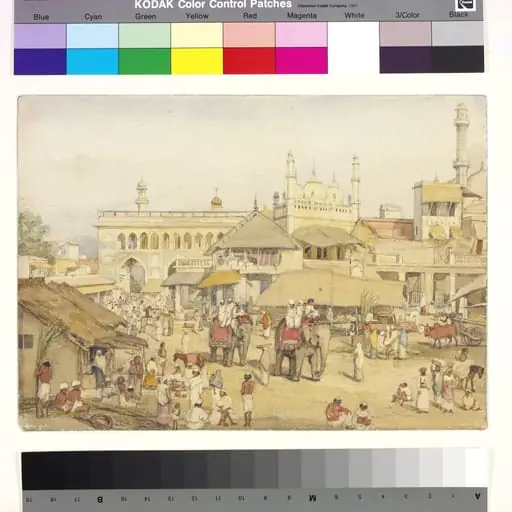 Street scene with gateway and a mosque, Lucknow
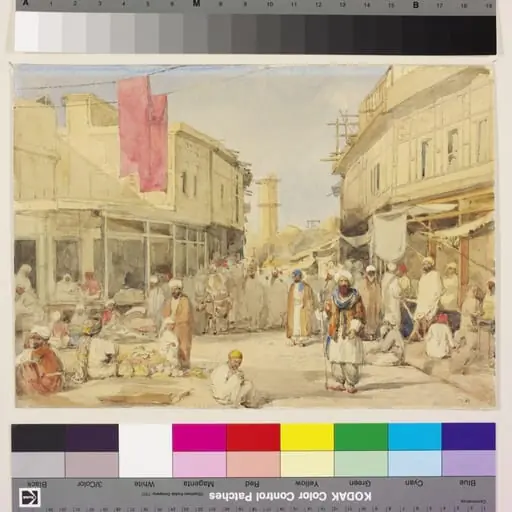 Street scene in Peshawar
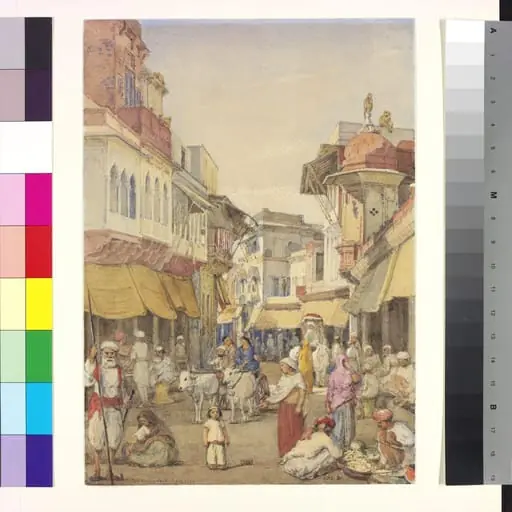 Untitled
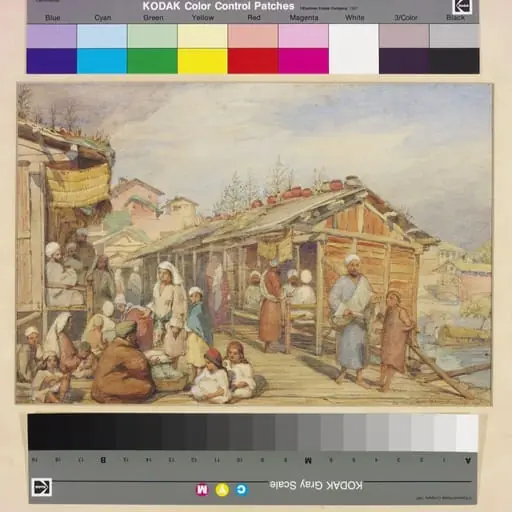 On the second bridge at Srinagar, Kashmir
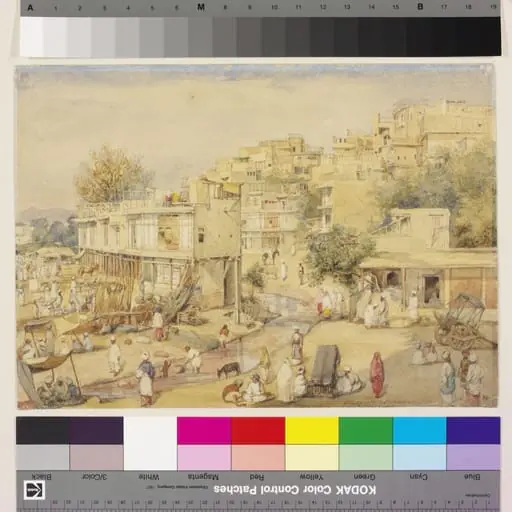 View of houses adjoining a stream, Peshawar
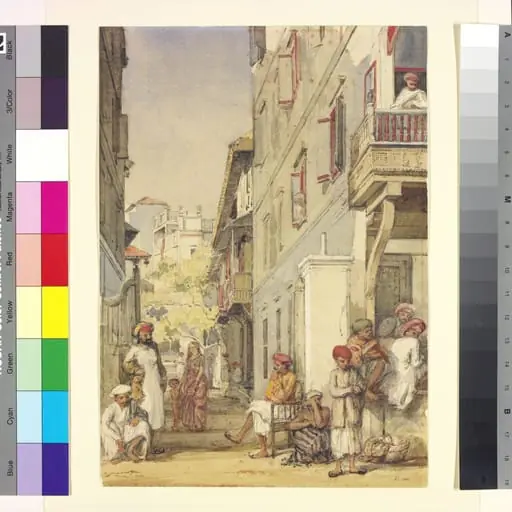 A street in Bombay; Ram Lals house
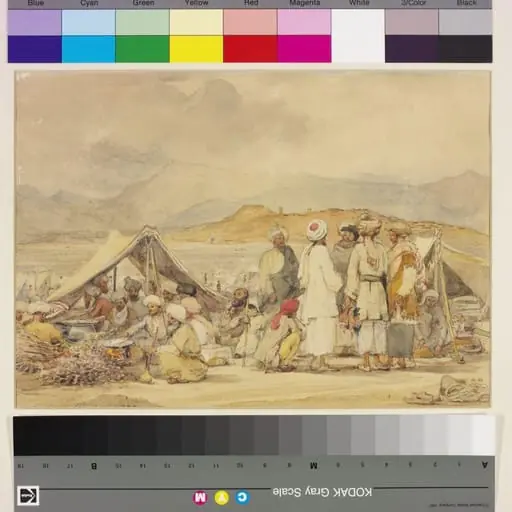 Camp bazaar near Kaie, Miranzai
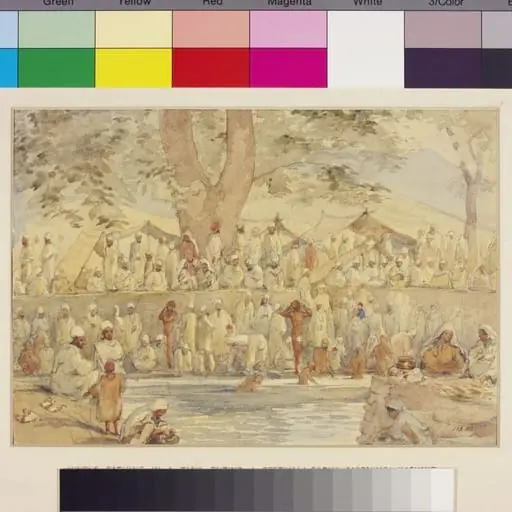 Hindus bathing in the early morning during a festival in Kashmir
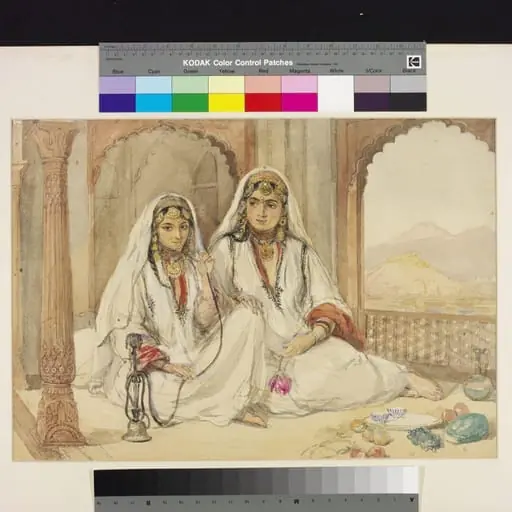 Two natch girls, Kashmir
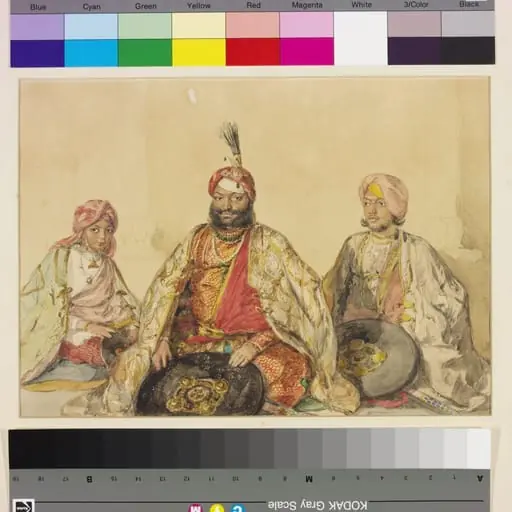 Nawab Sheik Imam-u-din, late Governor of Kashmir