Artwork
The Hog-nose Snake (Boa contortrix)
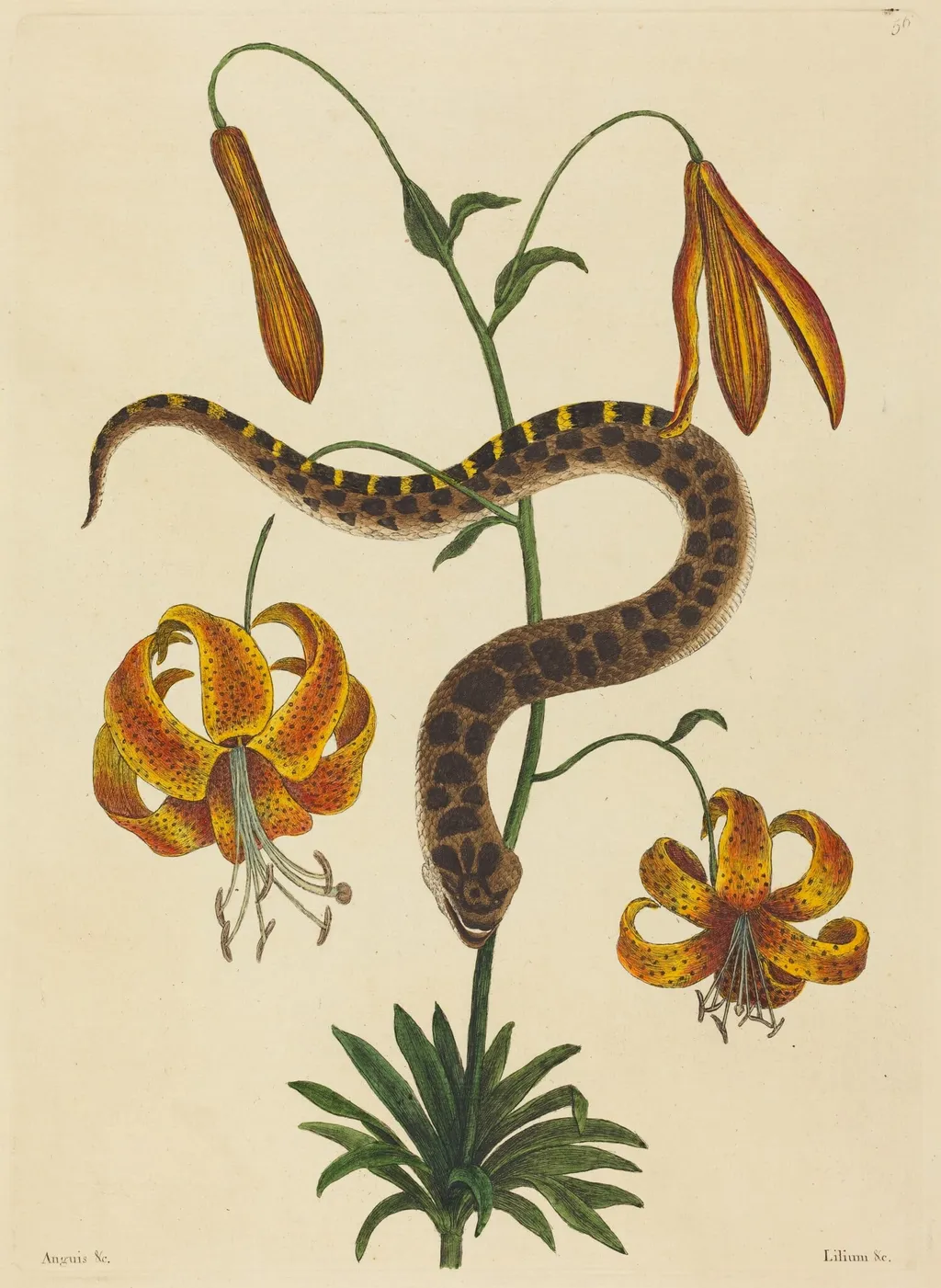
The Hog-nose Snake (Boa contortrix) is an ink print by the Baroque artist Mark Catesby. It dates from 1737 and is held in the collection of the National Gallery of Art.
About this work
Overview
The Hog-nose Snake (Boa contortrix) is a hand-colored etching and engraving on laid paper, created by English naturalist Mark Catesby in 1737. It is one of 220 plates in his *Natural History of Carolina, Florida and the Bahama Islands*, a pioneering work documenting the region's wildlife.
Subject & Meaning
The print depicts a Hog-nose Snake coiled around a plant with yellow, orange, and red flowers. The snake's brown body with black spots and yellow stripes is rendered in detailed realism, set against the plant's long, thin leaves and stems. The composition highlights Catesby's focus on accurate natural history illustration.
Technique & Style
Executed in etching and engraving with meticulous hand coloring, the work showcases a Baroque-influenced style through its detailed textures, patterns, and muted color palette (dominated by browns, greens, and yellows). The level of realism reflects the scientific intent of the piece.
History & Provenance
Published between 1729 and 1747, *The Natural History of Carolina, Florida and the Bahama Islands* was the first comprehensive flora and fauna catalog of the region. This specific plate, from 1737, contributes to the work's historical significance in early American natural history documentation.
Context
Created during the Baroque period, the piece aligns with the era's emphasis on detailed realism. As part of a broader scientific project, it also reflects 18th-century European interest in exploring and documenting New World natural history.
Legacy
The Hog-nose Snake plate, along with Catesby's entire *Natural History*, has had a lasting impact on the field of natural history illustration, influencing later artists and scientists with its blend of scientific accuracy and aesthetic appeal.
Artist & collection

Artist
Mark Catesby (24 March 1683 – 23 December 1749) was an English naturalist who studied the flora and fauna of the New World.

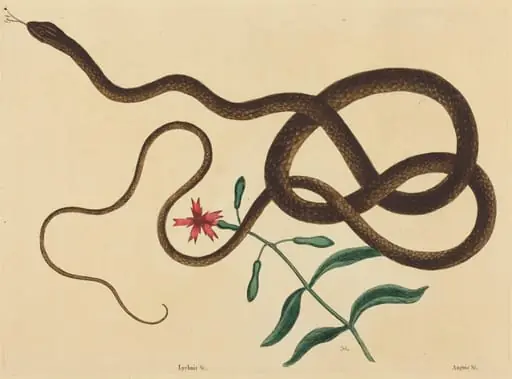
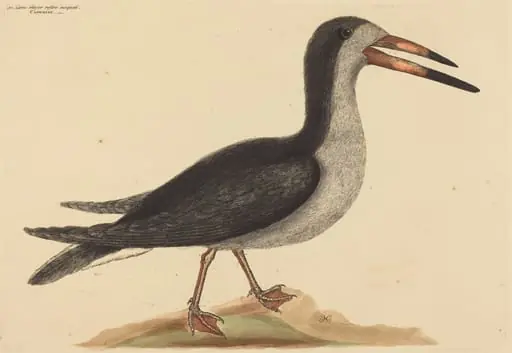
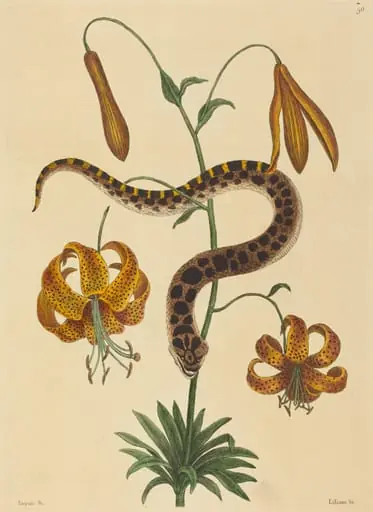 The Hog-nose Snake (Boa contortrix)
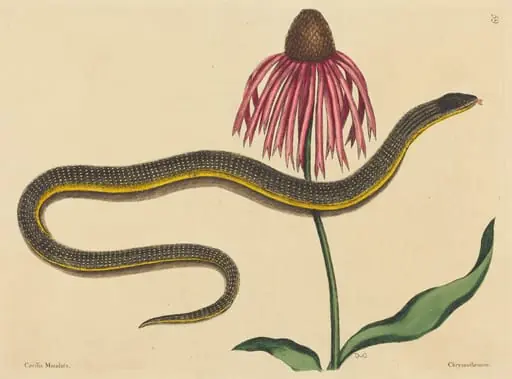 The Glass Snake (Anguis ventralis)
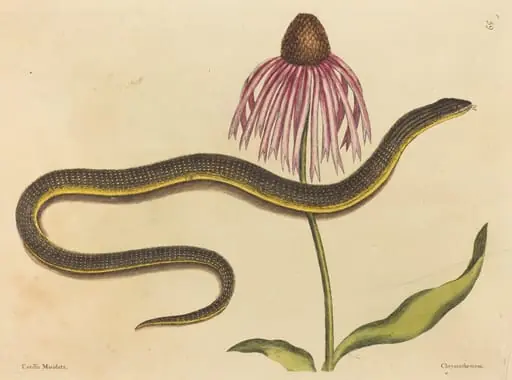 The Glass Snake (Anguis ventralis)
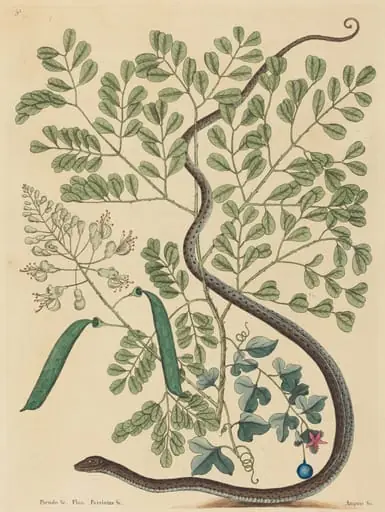 The Spotted Ribbon Snake (Coluber nebulosus?)
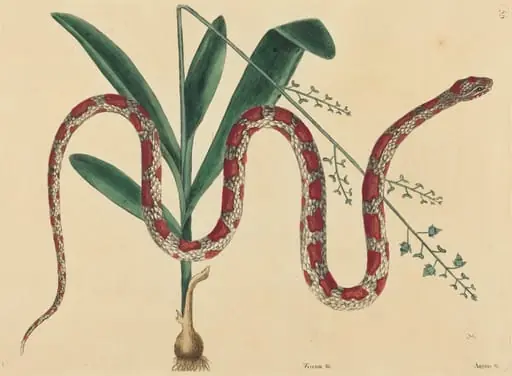 The Corn Snake (Coluber fulvius?)
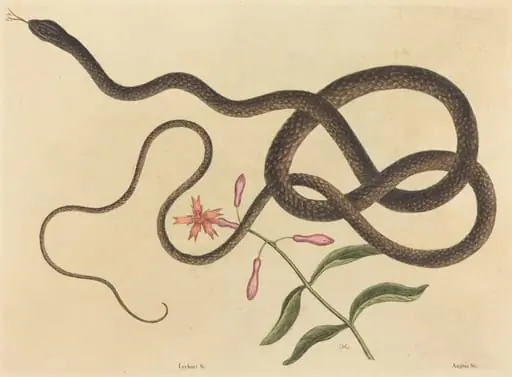 The Coach-whip Snake (Coluber flagellum)
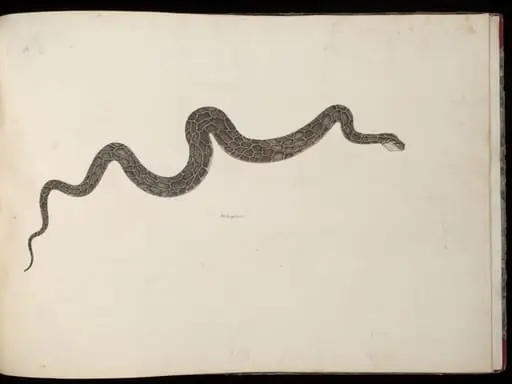 Snake
Snake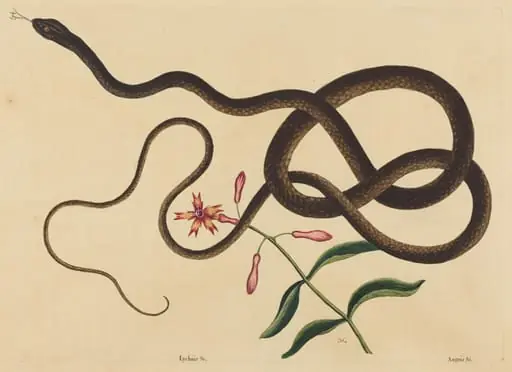 The Coach-Whip Snake (Coluber flagellum)
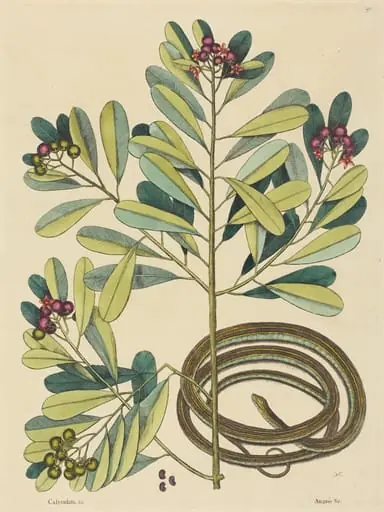 The Ribbon Snake (Coluber saurita)
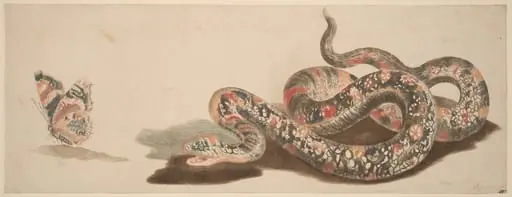 Snake and Butterfly
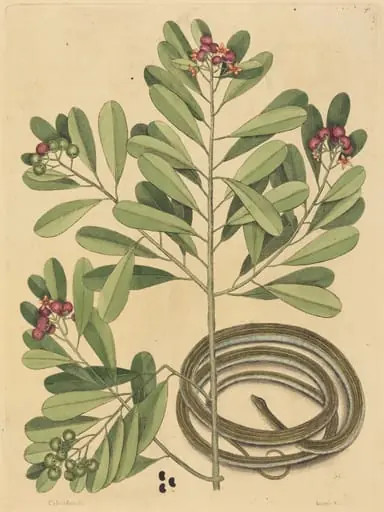 The Ribbon Snake (Coluber saurita)