Artwork
The Hog-nose Snake (Boa contortrix)
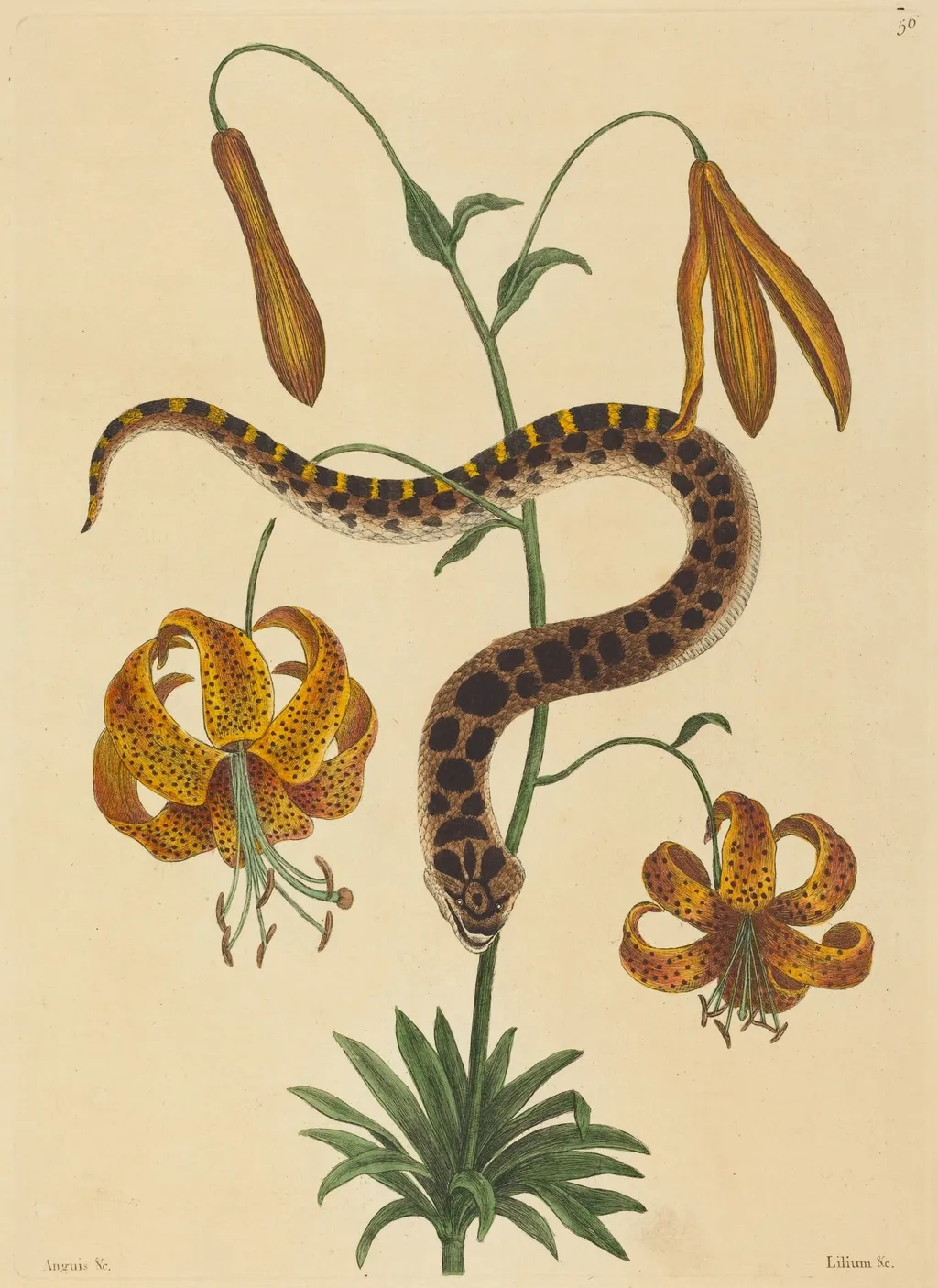
The Hog-nose Snake (Boa contortrix) is an ink print by the Baroque artist Mark Catesby. It dates from 1737 and is held in the collection of the National Gallery of Art.
About this work
Overview
Created in 1737, this hand-colored etching and engraving is part of Mark Catesby’s multi-volume *Natural History of Carolina, Florida and the Bahama Islands*.
Created in 1737, this hand-colored etching and engraving is part of Mark Catesby’s multi-volume *Natural History of Carolina, Florida and the Bahama Islands*. It represents one of the earliest systematic visual records of North American flora and fauna produced by a European naturalist. The plate was printed on laid paper and individually colored by hand, reflecting the labor-intensive methods of early scientific illustration.
Subject & Meaning
The image portrays a hog-nose snake coiled around a flowering stem, its body forming a sinuous S-shape with the head angled downward. The snake’s brown and yellow patterning is rendered with precision, alongside yellow flowers marked with dark spots and accompanying leaves. The composition suggests ecological presence rather than threat, emphasizing the animal’s integration into its environment as a subject of natural observation.
Technique & Style
Catesby employed etching and engraving to achieve fine linear detail, then applied watercolor by hand to add lifelike coloration. The background remains a muted beige, directing focus to the snake and plant. The rendering balances scientific accuracy with aesthetic grace, avoiding dramatic tension in favor of quiet observation. Textural contrasts between scales, petals, and foliage are subtly indicated through line and tone.
History & Provenance
Catesby produced this plate during and after his travels in the American colonies between 1712 and 1726. The work was published in London as part of a two-volume natural history, the first of its kind to document North American species based on direct field study. Original impressions were distributed to European scientific societies and collectors, establishing Catesby’s reputation as a pioneer in American natural history illustration.
Context
In the early 18th century, European interest in New World biodiversity was growing, yet few visual records existed. Catesby’s project filled this gap by combining field sketches with engraved plates, countering speculative or inaccurate depictions common in earlier natural histories. His work preceded Linnaean classification and offered a grounded, observational model for naturalists across Europe.
Legacy
Catesby’s illustrations influenced subsequent generations of natural history artists and scientists, including Audubon. His method of depicting animals within their habitats set a precedent for ecological representation. Though taxonomic names have changed—*Boa contortrix* is now *Heterodon platirhinos*—the plate remains a significant artifact of early American naturalism and the intersection of art and science.
Artist & collection

Artist
Mark Catesby (24 March 1683 – 23 December 1749) was an English naturalist who studied the flora and fauna of the New World.

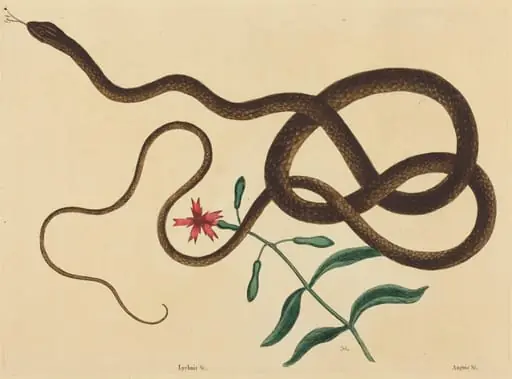
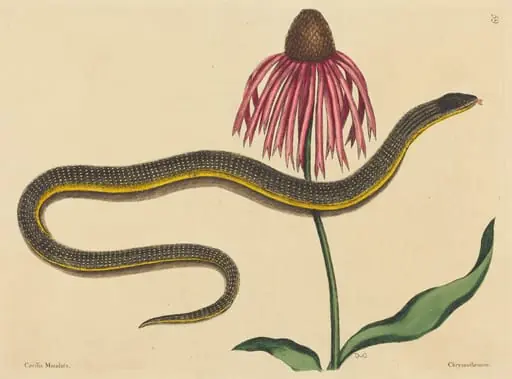 The Glass Snake (Anguis ventralis)
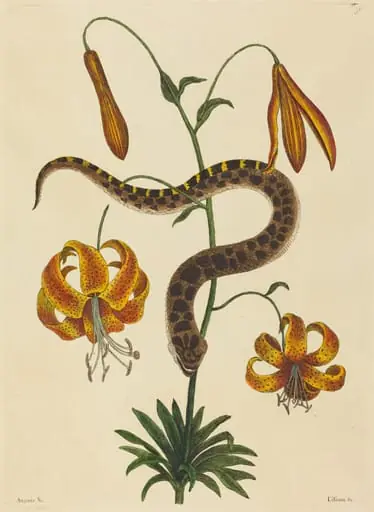 The Hog-nose Snake (Boa contortrix)
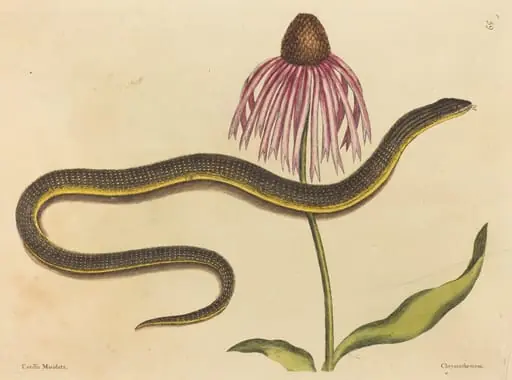 The Glass Snake (Anguis ventralis)
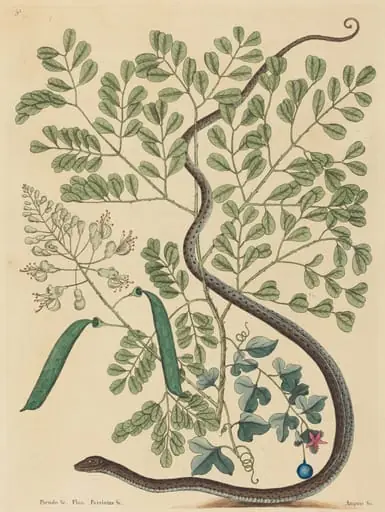 The Spotted Ribbon Snake (Coluber nebulosus?)
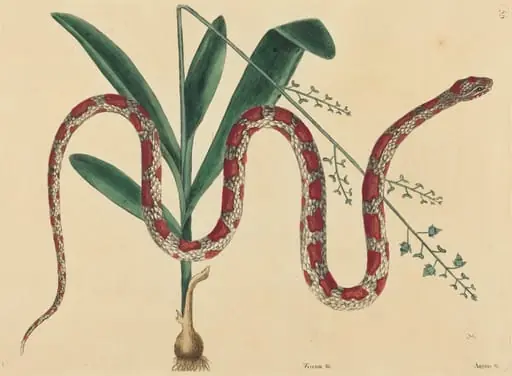 The Corn Snake (Coluber fulvius?)
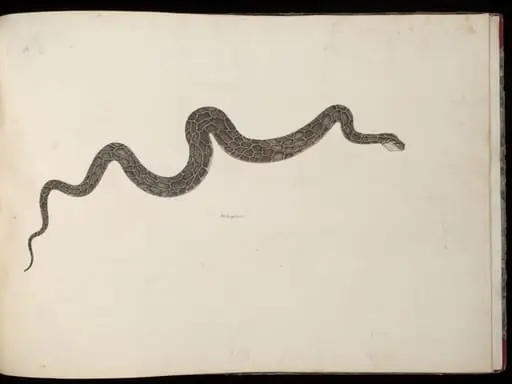 Snake
Snake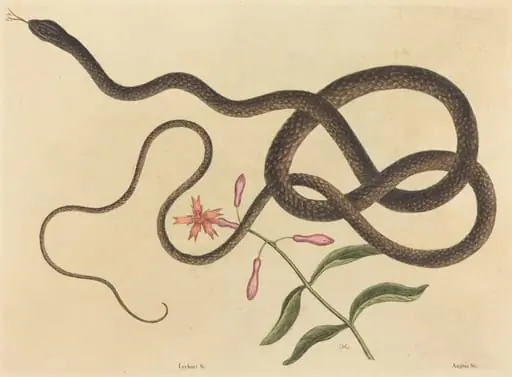 The Coach-whip Snake (Coluber flagellum)
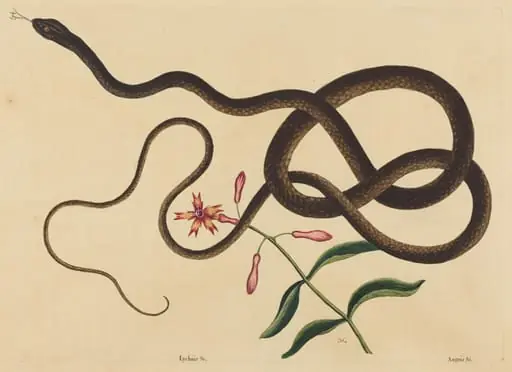 The Coach-Whip Snake (Coluber flagellum)
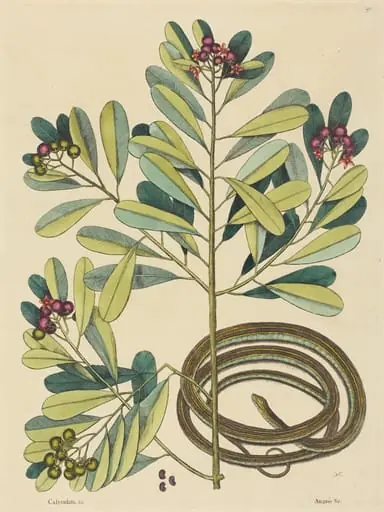 The Ribbon Snake (Coluber saurita)
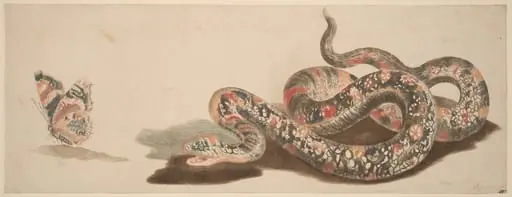 Snake and Butterfly
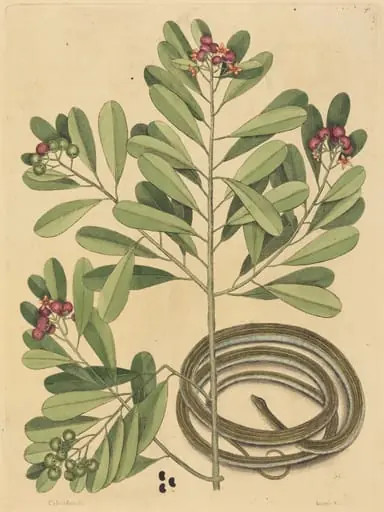 The Ribbon Snake (Coluber saurita)