Artwork
The Hawks-bill Turtle (Testudo caretta)
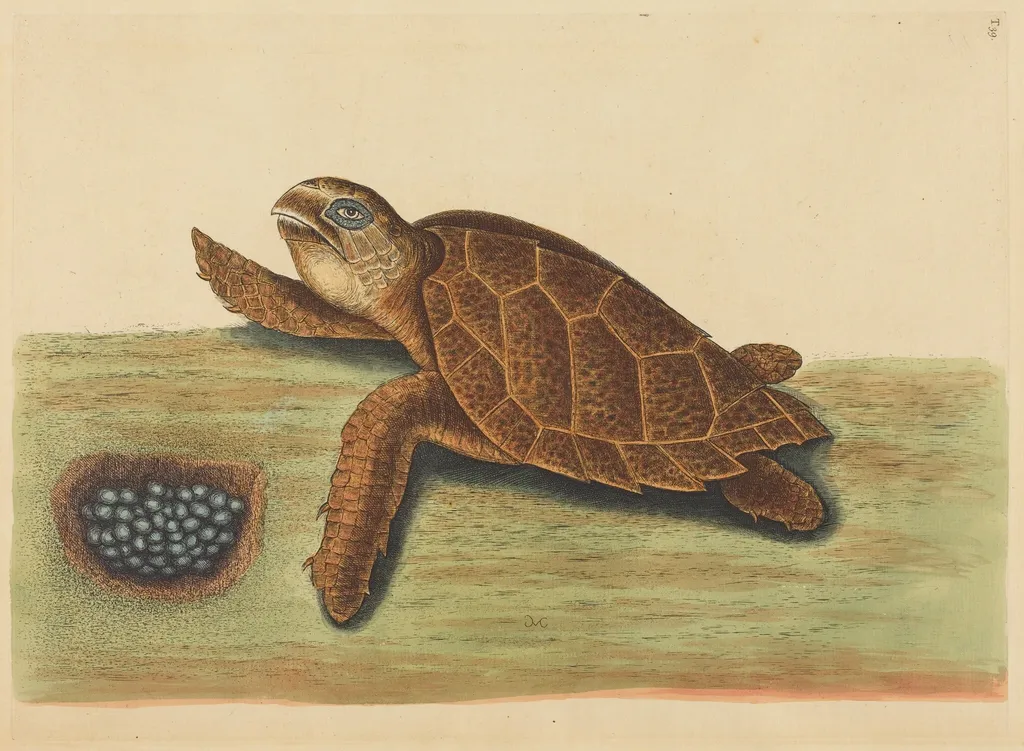
The Hawks-bill Turtle (Testudo caretta) is an ink print by the Baroque artist Mark Catesby. It dates from 1737 and is held in the collection of the National Gallery of Art.
About this work
Overview
Created in 1737, this print depicts a Hawks‑bill turtle (Testudo caretta) rendered in fine lines and modest hand‑applied color on laid paper. The animal lies on a flat surface, its shell covered with intricate cross‑hatching, while a small clutch of round eggs rests nearby. Muted earth tones dominate the turtle, set against a soft green‑yellow background.
Subject & Meaning
The image serves as a scientific illustration of the Hawks‑bill turtle, emphasizing anatomical detail and natural posture. The alert expression of the head and the inclusion of eggs highlight both the creature’s behavior and its reproductive role, aligning the work with the observational aims of early natural history studies.
Technique & Style
Catesby combined traditional etching with hand coloring, using acid‑etched lines to define texture and shape, then applying watercolor pigments to enhance realism. The laid paper surface contributes a subtle grain that supports the delicate line work, producing a precise yet slightly tactile representation typical of 18th‑century naturalist prints.
History & Provenance
The print is part of Mark Catesby’s larger project documenting the flora and fauna of the Carolinas, Florida, and the Bahama Islands. Published between 1729 and 1747 in his multi‑volume *Natural History of Carolina, Florida and the Bahama Islands*, the work includes over two hundred illustrated plates, of which this turtle is one.
Context
During the early 1700s, European naturalists sought to catalogue New World species, and Catesby’s illustrations provided some of the first visual records of North American wildlife. The blend of artistic skill and scientific observation reflects the Enlightenment’s drive to merge empirical study with aesthetic presentation.
Artist & collection

Artist
Mark Catesby (24 March 1683 – 23 December 1749) was an English naturalist who studied the flora and fauna of the New World.

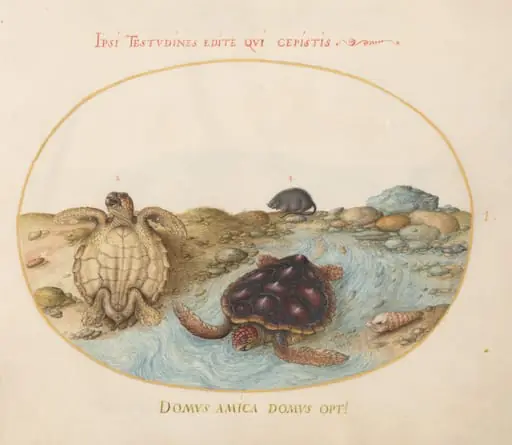 Plate 1: Two Loggerhead or Green Sea Turtles, a Muskrat, and Shells
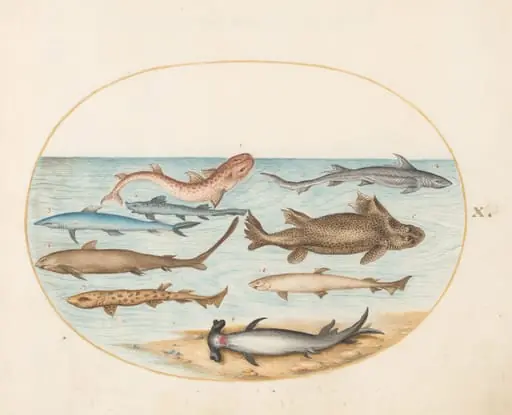 Plate 10: Nine Sharks
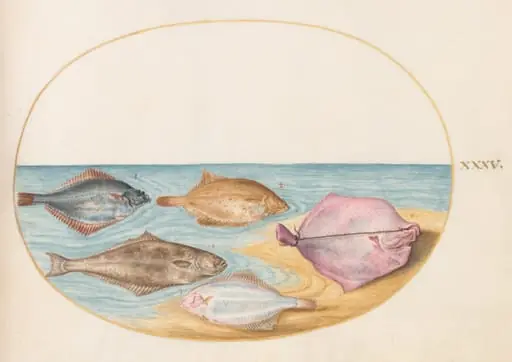 Plate 35: The Undersides of Turbot(?) and Other Flat Fish
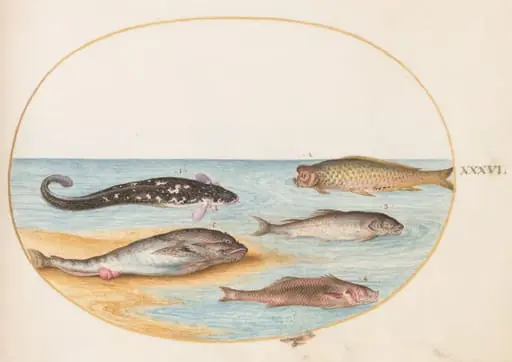 Plate 36: Five Fish, Including Carp(?)
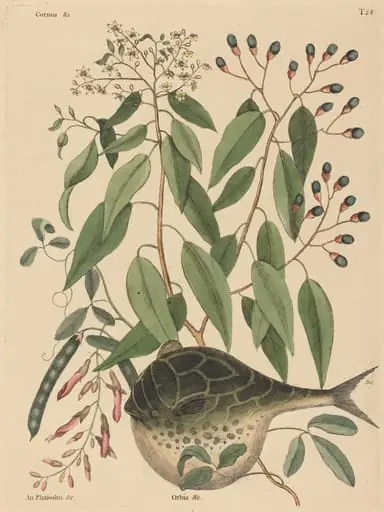 The Globe Fish (Tetrodon lagocephalus)
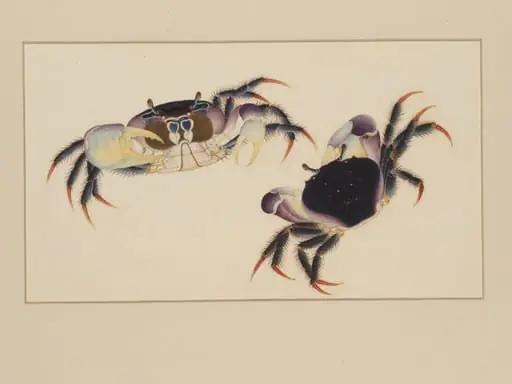 One of four natural-history drawings.
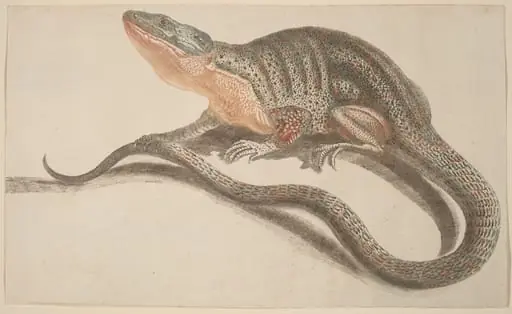 Lizard
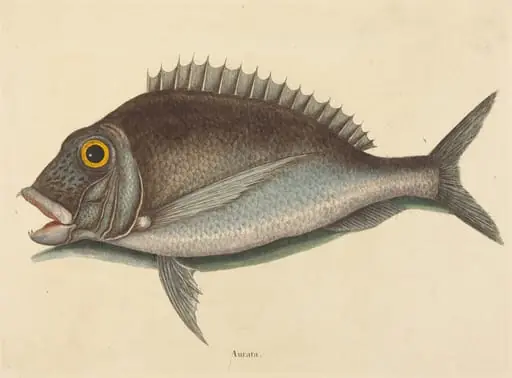 The Porgy (Sparus chrysops)
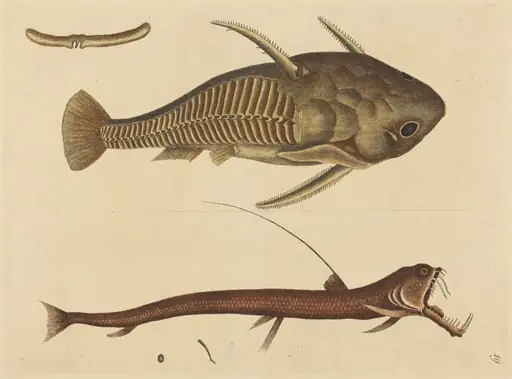 The Viper-mouth (Silurus cataphractus)