Artwork
The Land-crab (Cancer ruricola)
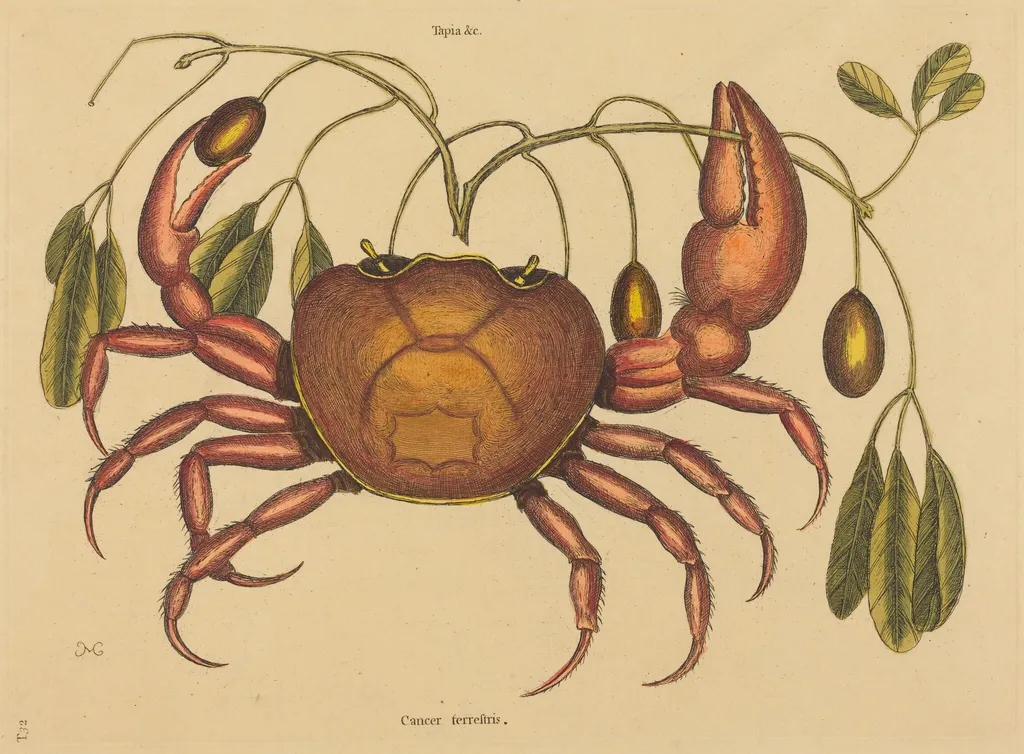
The Land-crab (Cancer ruricola) is an ink print by the Baroque artist Mark Catesby. It dates from 1737 and is held in the collection of the National Gallery of Art.
About this work
Overview
It stands as a key example of early scientific illustration in the British colonial context, blending accuracy with aesthetic care.
Created in 1737, *The Land-crab (Cancer ruricola)* is one of 220 illustrated plates in Mark Catesby’s *Natural History of Carolina, Florida and the Bahama Islands*. Executed in etching and engraving with hand coloring on laid paper, the print reflects Catesby’s systematic effort to document the wildlife of the American Southeast and Caribbean. It stands as a key example of early scientific illustration in the British colonial context, blending accuracy with aesthetic care.
Subject & Meaning
The print depicts a land crab native to the Caribbean and southeastern coast, shown in its natural habitat among foliage and oval fruits. Its detailed rendering—brown carapace, elongated red legs, and prominent claws—emphasizes biological specificity. The surrounding vegetation, carefully observed and rendered, situates the crab within its ecological niche, reinforcing Catesby’s goal of portraying species in context rather than as isolated specimens.
Technique & Style
Catesby used etching and engraving to define fine lines and textures, then applied watercolor by hand to achieve lifelike coloration. The layered technique allowed for subtle gradations in the crab’s shell and the variegated greens of the leaves. The precision of the lines and the delicate application of pigment reflect a methodical approach, prioritizing scientific clarity over decorative flourish, while still maintaining visual richness.
History & Provenance
The print was produced in London between 1729 and 1747 as part of Catesby’s multi-volume publication, funded through subscription. Catesby traveled extensively in the colonies between 1712 and 1726, sketching specimens firsthand before returning to England to prepare plates. The original impressions were printed on laid paper, a common medium for fine prints of the period, and each was individually colored, making every copy unique.
Context
Catesby’s work emerged during a period of heightened European interest in New World biodiversity. His illustrations were among the first to depict American flora and fauna with observational rigor, challenging earlier speculative depictions. Unlike many contemporaries, he insisted on portraying animals alongside their environments, contributing to a more holistic understanding of natural systems in the pre-Darwinian era.
Legacy
Catesby’s plates influenced generations of naturalists and illustrators, setting a standard for combining scientific detail with visual fidelity. *The Land-crab* remains a reference for taxonomic studies and a testament to the role of visual documentation in early natural history. Though superseded by later methods, his work preserved critical records of species and habitats now altered or lost.
Artist & collection

Artist
Mark Catesby (24 March 1683 – 23 December 1749) was an English naturalist who studied the flora and fauna of the New World.

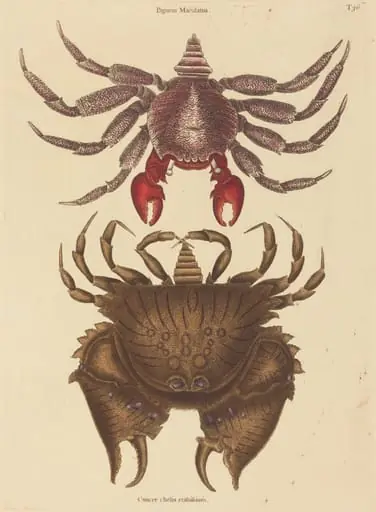 Red Mottled Rock-crab (Cancer grapsus)
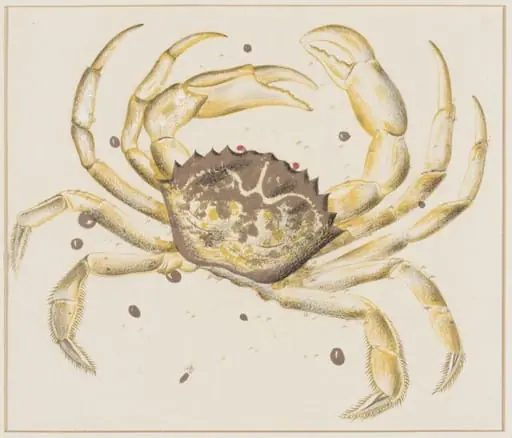 Crab
Crab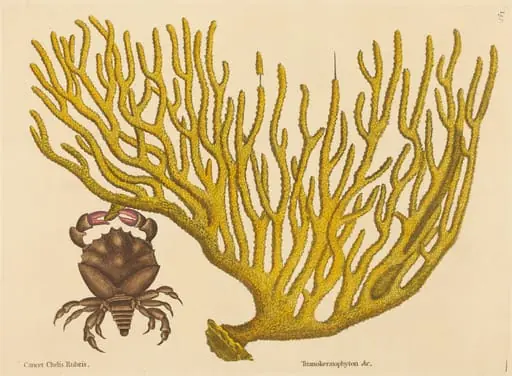 The Red Clawed Crab (Cancer erythropus)
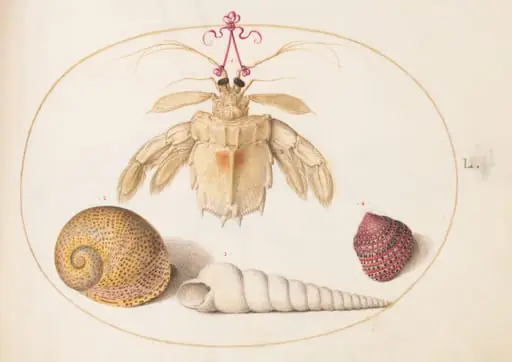 Plate 50: A Partial Mantis Shrimp with Tower Snail Shells
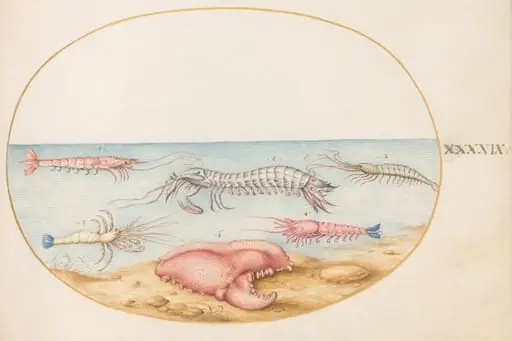 Plate 49: Mantis Shrimp and the Claw of a European Crayfish
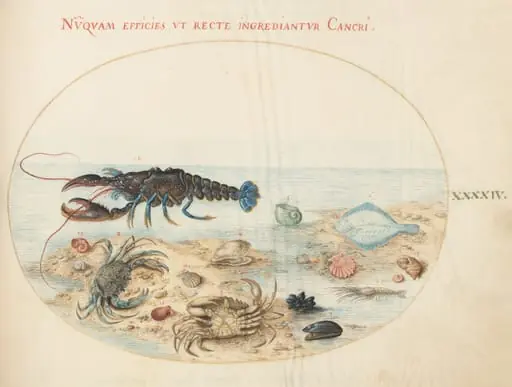 Plate 44: Lobster, Two Crabs, Scallop Shells, and Other Sea Life
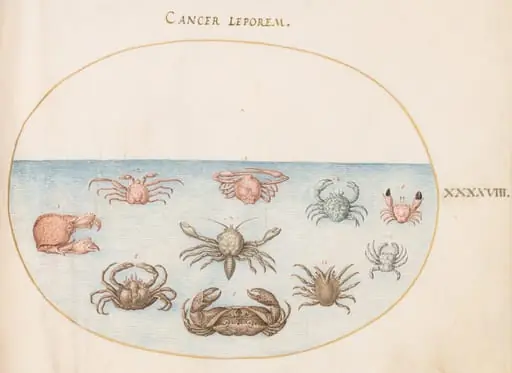 Plate 48: Ten Crabs
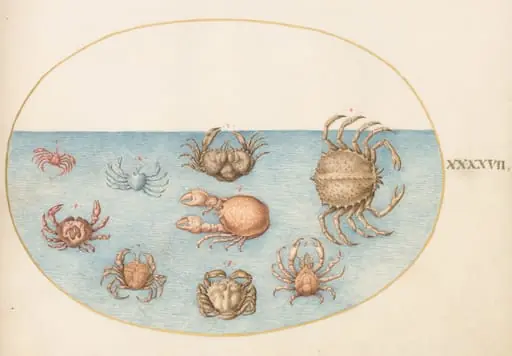 Plate 47: Nine Crabs
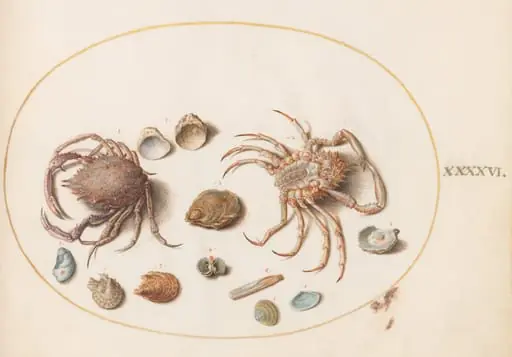 Plate 46: Two Crabs with Seashells
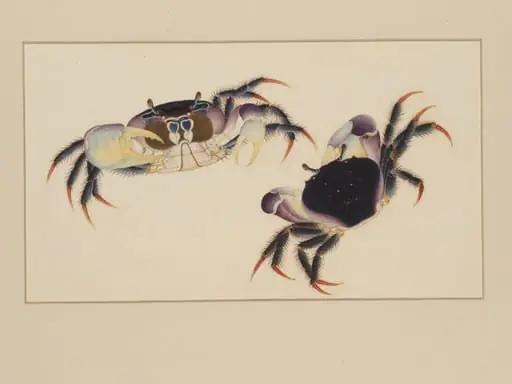 One of four natural-history drawings.
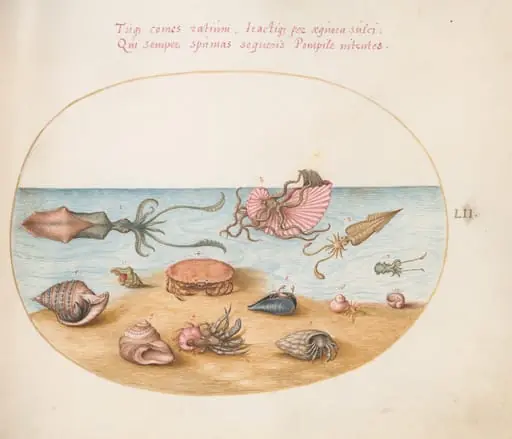 Plate 52: An Argonaut, Squid, Hermit Crabs, Shells, and a Crab