Artwork
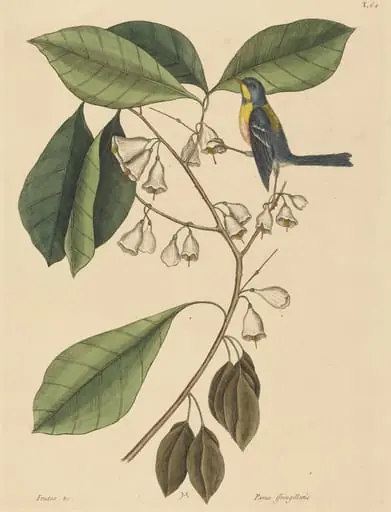
The Yellow Titmouse (Motacilla trochilus)
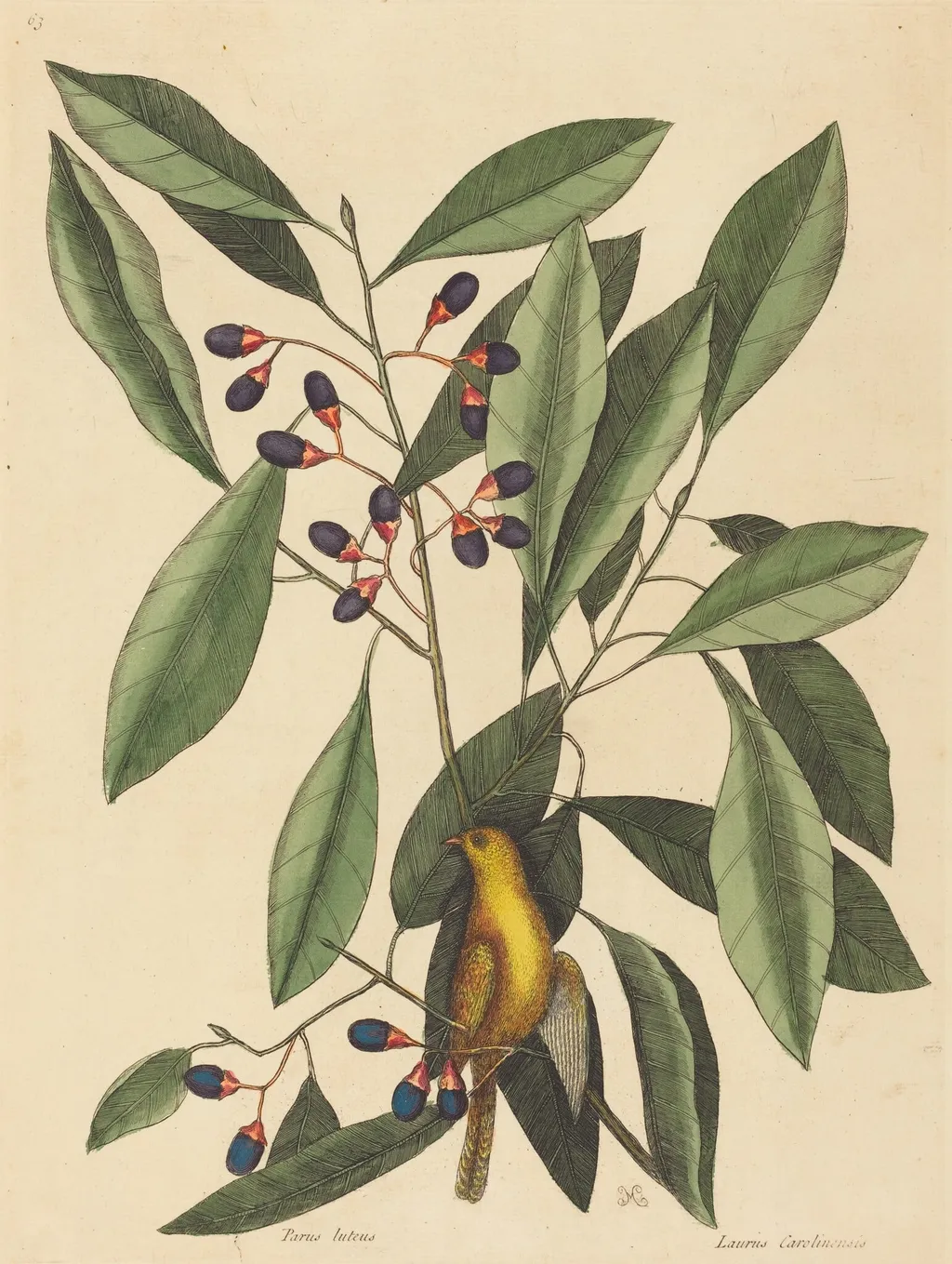
The Yellow Titmouse (Motacilla trochilus) is an ink print by the Romanticist artist Mark Catesby. It is held in the collection of the National Gallery of Art.
About this work
Overview
Created in 1754, this hand-colored etching and engraving by Mark Catesby depicts a small bird native to the southeastern North American region.
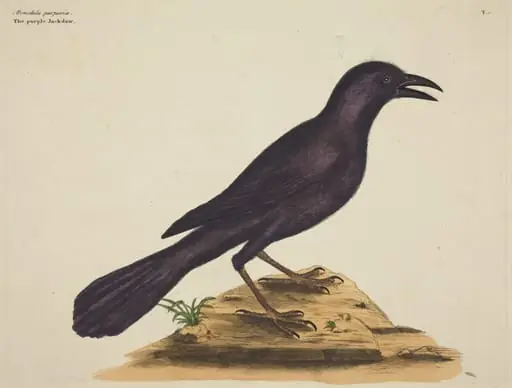
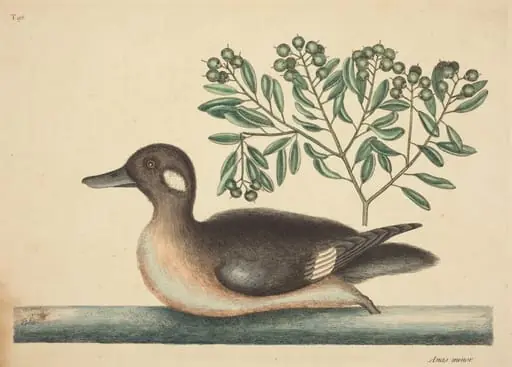
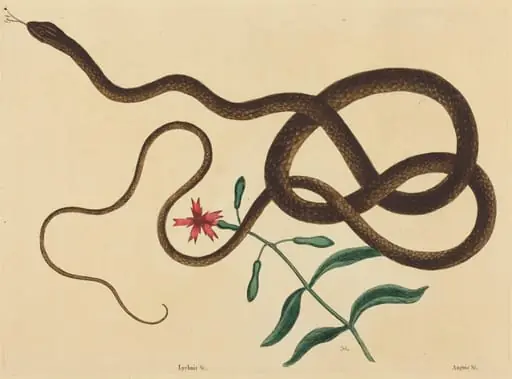
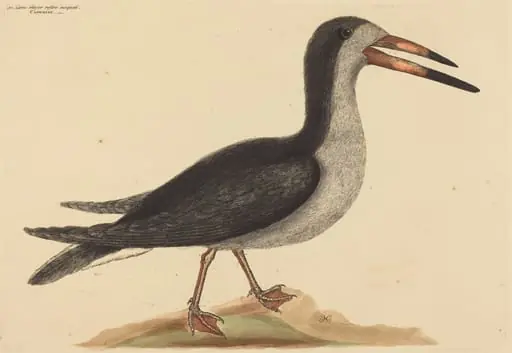
Created in 1754, this hand-colored etching and engraving by Mark Catesby depicts a small bird native to the southeastern North American region. Executed on laid paper, it is one of many plates produced for his comprehensive study of regional wildlife. Catesby combined meticulous observation with artistic technique to document species previously unfamiliar to European audiences, contributing to early natural history illustration.
Subject & Meaning
The bird, labeled *Parus luteus* and now known as the Yellow Titmouse, is rendered with attention to plumage details: a bright yellow breast, grayish back, and subtle wing markings. It perches beside a branch bearing clusters of blue and red berries, identified as *Laurus carolinensis*. The composition reflects a scientific intent—to record both organism and habitat—while the delicate coloring suggests an aesthetic sensitivity to natural harmony.
Technique & Style
Catesby used etching and engraving to define fine lines of feather texture and leaf veins, then applied watercolor by hand to achieve soft, lifelike tones. The background remains uncluttered, focusing attention on the bird and its immediate environment. Colors are muted yet precise, avoiding theatricality; the rendering prioritizes accuracy over ornamentation, aligning with Enlightenment-era ideals of empirical representation.
History & Provenance
This print originated from Catesby’s multi-volume publication, *Natural History of Carolina, Florida and the Bahama Islands*, issued between 1729 and 1747. Though the plate was published in 1754, it was based on field sketches made during his earlier expeditions. Copies were distributed to European institutions and collectors, establishing Catesby as a key figure in transatlantic natural history documentation.
Context
Catesby worked during a period when European science sought to classify and visualize the natural world through direct observation. His work stood apart by relying on firsthand study in the Americas rather than secondhand accounts. The blending of botanical and zoological elements in single compositions reflected a holistic approach to natural history, anticipating later ecological thinking.
Legacy
Catesby’s illustrations influenced subsequent naturalists, including Linnaeus and Audubon, by demonstrating how art could serve scientific documentation. His plates remain valuable for identifying historical distributions of species and for understanding 18th-century methods of visualizing biodiversity. Though taxonomic names have changed, the precision of his observations continues to inform ecological and art-historical scholarship.
Artist & collection

Artist
Mark Catesby (24 March 1683 – 23 December 1749) was an English naturalist who studied the flora and fauna of the New World.