Artwork
The Sucking Fish (Echeneis Naucratis)
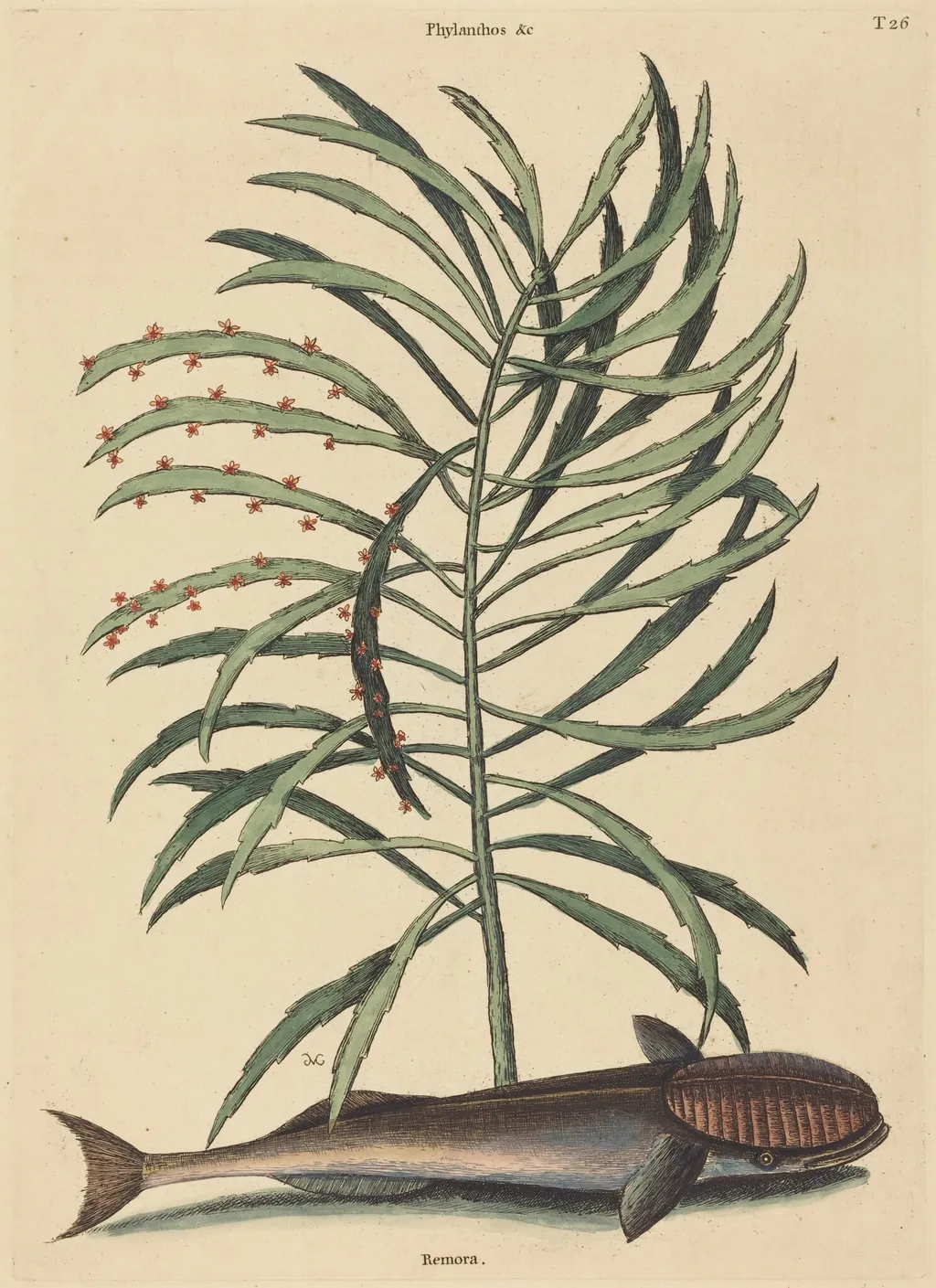
The Sucking Fish (Echeneis Naucratis) is an ink print by the Baroque artist Mark Catesby. It dates from 1737 and is held in the collection of the National Gallery of Art.
About this work
He published this in *Natural History of Carolina*, the first big book about North American wildlife.
This 1731 etching shows a fish with a leech-like disc on its head clinging to a turtle shell. The artist drew it life-size, with fine lines and small dots to show texture. The turtle seems calm, used to the hitchhiker.
Mark Cateby traveled to the Americas to study animals. He published this in *Natural History of Carolina*, the first big book about North American wildlife. Scientists still use his exact pictures.
Look for the National Gallery of Art, Washington to see this sheet up close.
Overview
The work titled *The Sucking Fish (Echeneis naucratis)* is a hand‑colored etching and engraving on laid paper, executed by English naturalist Mark Catesby in the mid‑1730s. It depicts a marine fish attached to a turtle’s shell, rendered at life size with fine linear detail. The image forms part of Catesby’s systematic visual record of North American flora and fauna.
Subject & Meaning
The plate illustrates the remora, a fish known for its suction disc on the head that allows it to cling to larger marine animals. By showing the fish attached to a turtle, Catesby emphasizes the ecological relationship of hitchhiking parasites and their hosts, a topic of interest to naturalists seeking to document interspecies interactions in the New World.
Technique & Style
Catesby employed a combination of intaglio etching and engraving, then applied watercolor by hand to enhance anatomical features and coloration. The printed lines are delicate, with stippled dots that suggest texture on both the fish’s disc and the turtle’s shell. The use of laid paper provides a slightly ribbed surface that accentuates the fine linear work.
History & Provenance
The image first appeared in Catesby’s multi‑volume *Natural History of Carolina, Florida and the Bahama Islands*, published between 1729 and 1747. The plate was likely produced around 1737, during the period when Catesby was compiling his observations for the series. Today the original sheet is held by the National Gallery of Art in Washington, D.C., where it is accessible for scholarly study.
Context
Catesby’s publication represented the earliest comprehensive illustrated account of North American wildlife, predating many later natural histories. His fieldwork in the American colonies supplied the empirical basis for the plates, which were intended to convey accurate visual information to European audiences unfamiliar with New World species. The remora illustration contributed to the broader scientific effort to classify and understand marine biodiversity.
Artist & collection

Artist
Mark Catesby (24 March 1683 – 23 December 1749) was an English naturalist who studied the flora and fauna of the New World.

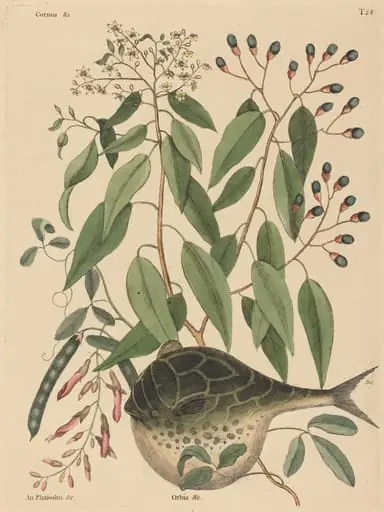 The Globe Fish (Tetrodon lagocephalus)
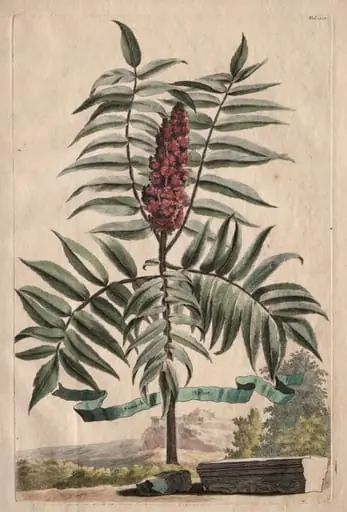 Phytographia Curiosa: Sumach Arbor
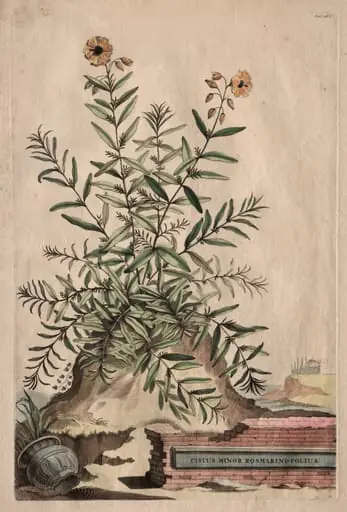 Phytographia Curiosa: Cistus Minor Rosmarini-Folius
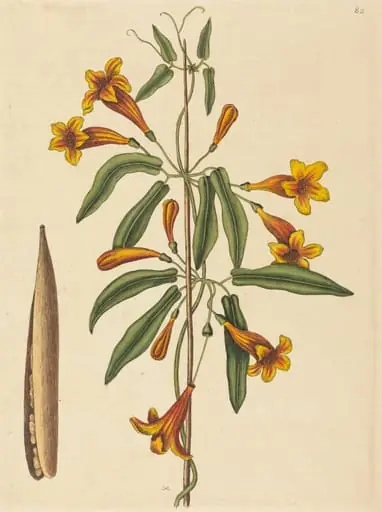 Cross-vine (Bignonia capreolata)
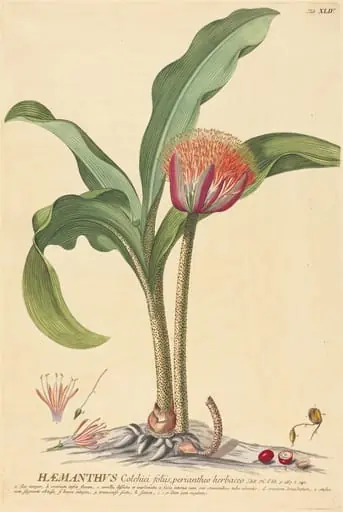 Haemanthus
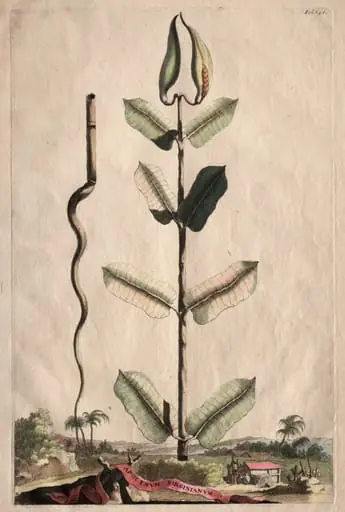 Phytographia Curiosa: Apocynum Virginianum
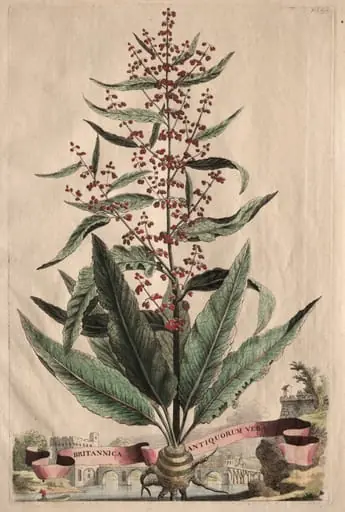 Phytographia Curiosa: Britannica Antiquorum Vera
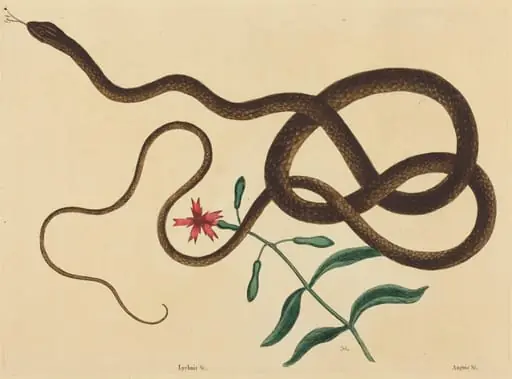
 The Ribbon Snake (Coluber saurita)
 Fumaria Obliquefolia
 Carduus Lanceolatus