Artwork
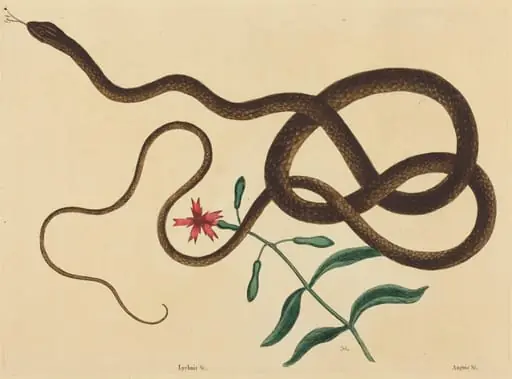
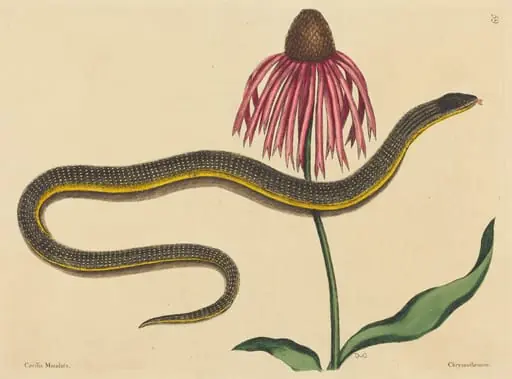
The Ribbon Snake (Coluber saurita)
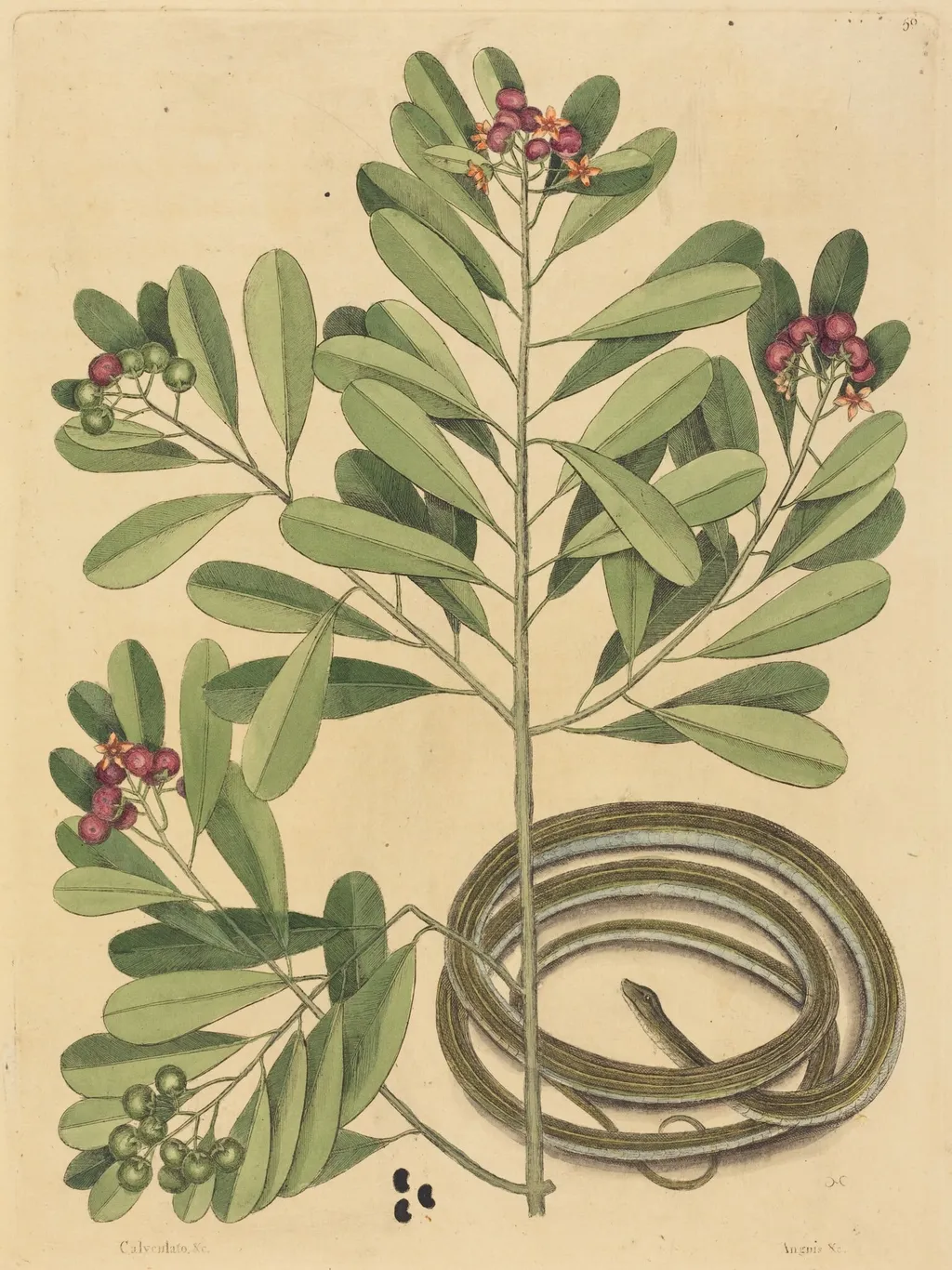
The Ribbon Snake (Coluber saurita) is an ink print by the Baroque artist Mark Catesby. It dates from 1737 and is held in the collection of the National Gallery of Art.
About this work
Overview
Created in 1737 by English naturalist Mark Catesby, this print depicts a ribbon snake alongside a native plant, rendered in etching and engraving with hand-applied color on laid paper. It forms part of Catesby’s multi-volume *Natural History of Carolina, Florida and the Bahama Islands*, a pioneering effort to document the biodiversity of the southeastern North American colonies through direct observation and detailed illustration.
Subject & Meaning
Together, they convey a moment of natural coexistence, reflecting Catesby’s intent to portray animals within their living environments, not isolated specimens.
The image pairs a coiled snake with a fruiting plant, emphasizing ecological association rather than mere specimen display. The snake’s striped pattern and relaxed coil suggest its common name, while the plant’s berries in red and green hint at seasonal cycles. Together, they convey a moment of natural coexistence, reflecting Catesby’s intent to portray animals within their living environments, not isolated specimens.
Technique & Style
Catesby employed fine etching and engraving lines to define the snake’s scaled skin and the plant’s leaf veins, then added color by hand to enhance realism. The plain background isolates the subjects, directing focus to their textures and forms. Shading is subtle yet precise, capturing the sheen of scales and the matte surface of berries without theatrical lighting, aligning with scientific illustration norms of the period.
History & Provenance
Produced during Catesby’s two expeditions to the American Southeast between 1712 and 1726, the print was published in London as part of his *Natural History*, released in installments from 1729 to 1747. Original impressions were printed on laid paper and individually colored, making each copy unique. The work circulated among European scholars and collectors, contributing to early transatlantic understanding of New World species.
Context
Catesby’s work emerged during a period when European naturalists sought to classify and illustrate newly encountered species. Unlike earlier collections that relied on secondhand accounts, his images were based on direct observation in the field. His integration of plants and animals in single compositions challenged the convention of isolating specimens, offering a more holistic view of ecosystems.
Legacy
Catesby’s illustrations became foundational references for later naturalists, including Linnaeus. His method of depicting organisms in situ influenced the development of ecological illustration. Though later works surpassed his taxonomic accuracy, his commitment to firsthand observation and visual clarity established a model for scientific documentation that endured well into the 19th century.
Artist & collection

Artist
Mark Catesby (24 March 1683 – 23 December 1749) was an English naturalist who studied the flora and fauna of the New World.

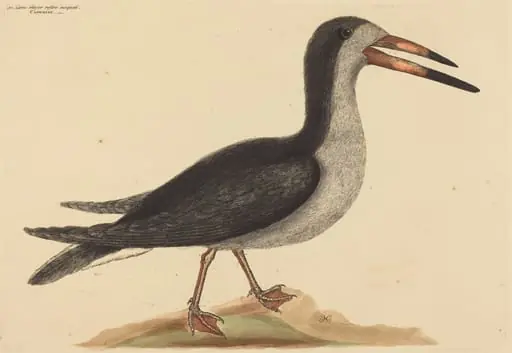
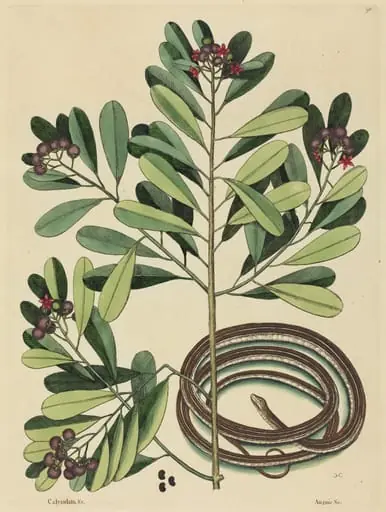 The Ribbon Snake (Coluber saurita)
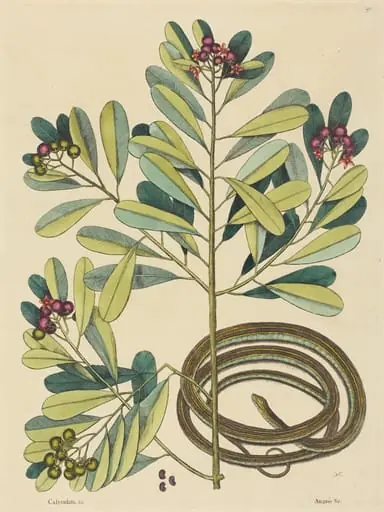 The Ribbon Snake (Coluber saurita)
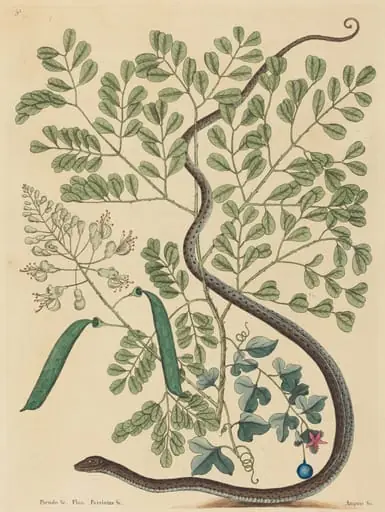 The Spotted Ribbon Snake (Coluber nebulosus?)
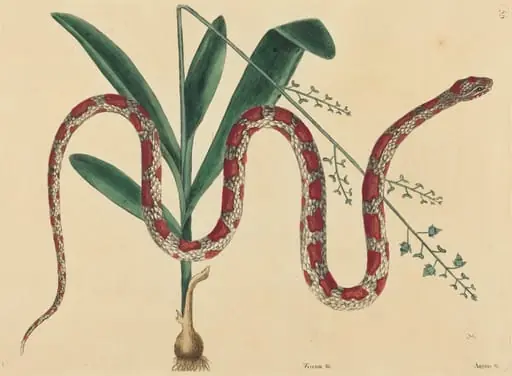 The Corn Snake (Coluber fulvius?)
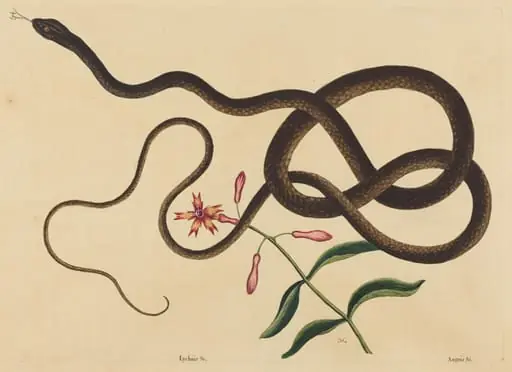 The Coach-Whip Snake (Coluber flagellum)
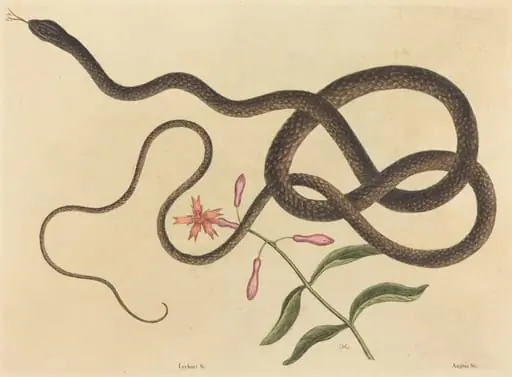 The Coach-whip Snake (Coluber flagellum)
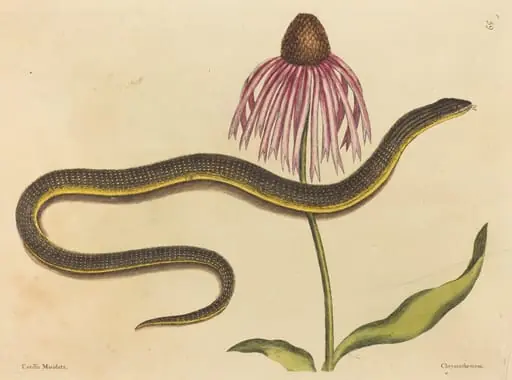 The Glass Snake (Anguis ventralis)
 The Glass Snake (Anguis ventralis)
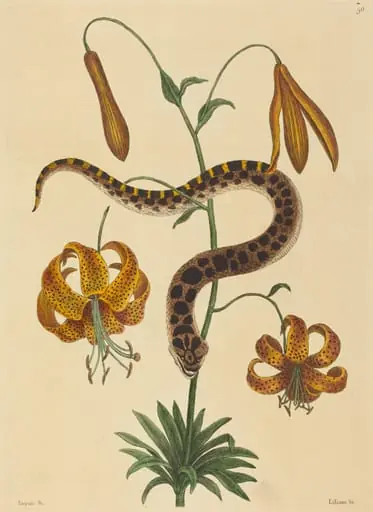 The Hog-nose Snake (Boa contortrix)