Artwork
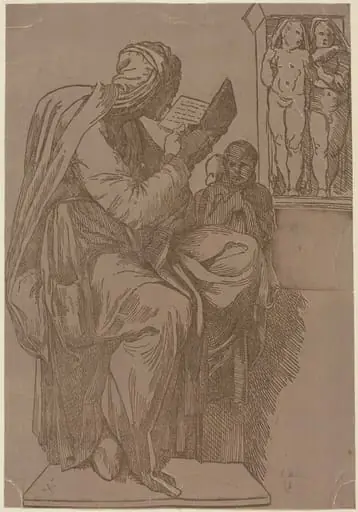
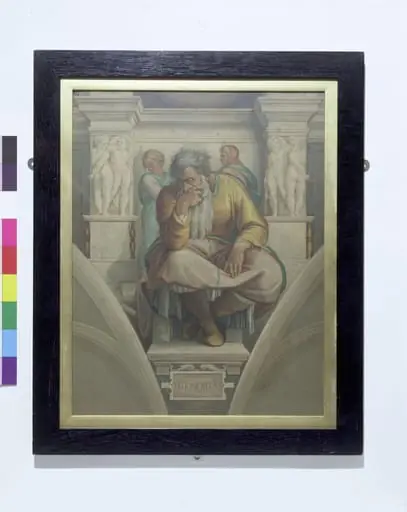
Copy after Michelangelo’s fresco of the ‘Persian Sibyl’ on the Sistine Chapel vault (Sistine Chapel, Rome, 1511-1512).
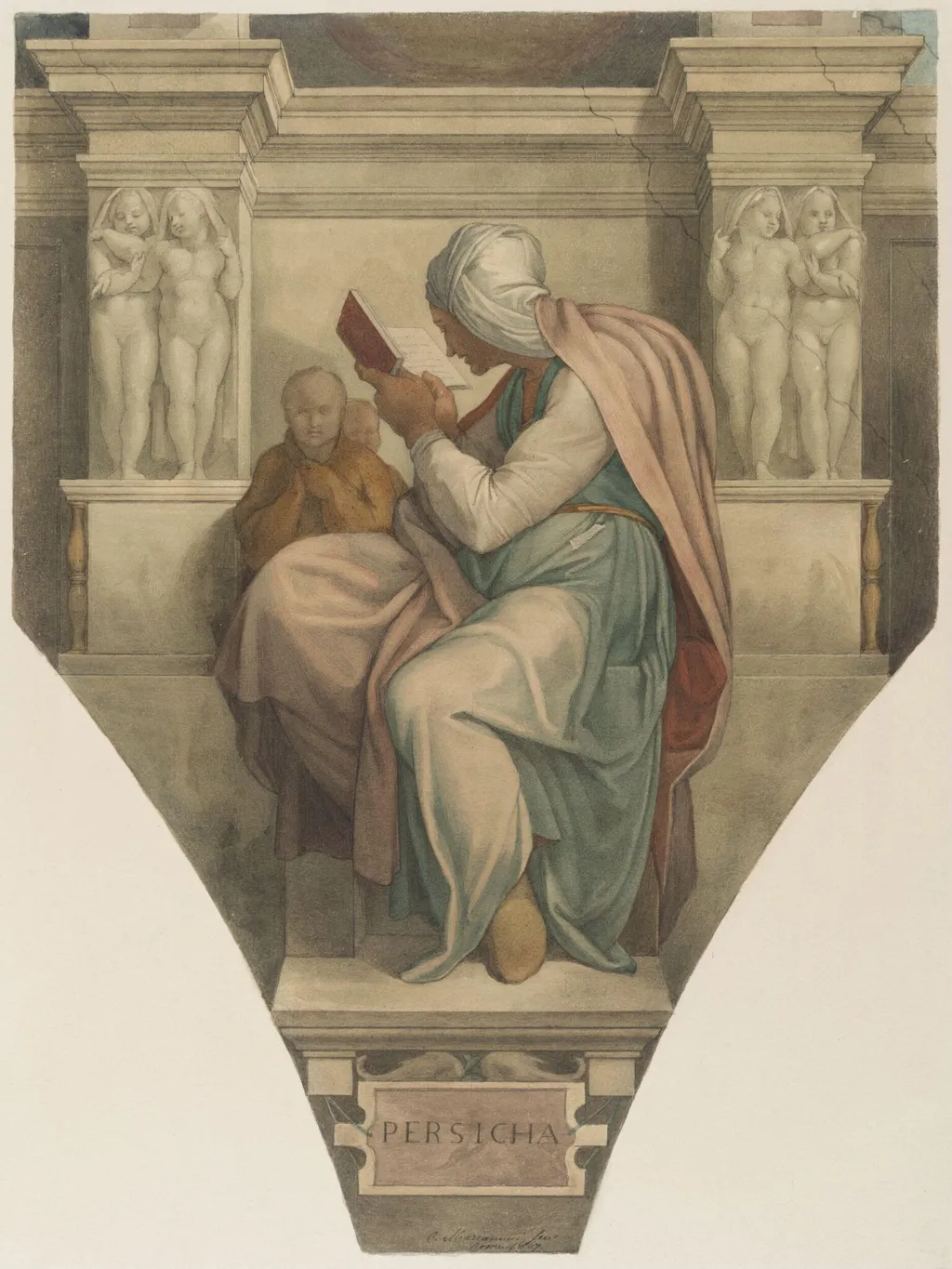
Copy after Michelangelo’s fresco of the ‘Persian Sibyl’ on the Sistine Chapel vault (Sistine Chapel, Rome, 1511-1512). is a watercolor work on paper by the Impressionist artist Cesari Mariannecci. It dates from 1867 and is held in the collection of the Victoria and Albert Museum. This watercolour is a faithful reproduction of Michelangelo’s Persian Sibyl, painted on the Sistine Chapel ceiling between 1511 and 1512.
About this work
This watercolor is a careful copy of Michelangelo’s ‘Persian Sibyl’ from the Sistine Chapel. It was made in 1867 by Cesare Mariannecci. The artist never turned it into a print.
The Arundel Society paid him to copy it for others to see. But the plan changed. The group closed in 1897 and later gave the watercolor to the V&A.
Check out the Victoria and Albert Museum to see this piece.
Overview
This watercolour is a faithful reproduction of Michelangelo’s Persian Sibyl, painted on the Sistine Chapel ceiling between 1511 and 1512.
This watercolour is a faithful reproduction of Michelangelo’s Persian Sibyl, painted on the Sistine Chapel ceiling between 1511 and 1512. Created in 1867 by Cesare Mariannecci, it was commissioned by the Arundel Society to document Renaissance frescoes for scholarly study. Unlike other copies in the project, this one was never printed or distributed, remaining as a unique hand-painted record of the original.
Subject & Meaning
The Persian Sibyl is one of five prophetic women depicted by Michelangelo alongside Old Testament prophets, symbolizing the universal anticipation of Christ’s coming. Her pose, with a book in hand and gaze directed outward, conveys contemplation and revelation. The watercolour preserves the figure’s monumental form and expressive gesture, reflecting the Renaissance ideal of human intellect and divine insight.
Technique & Style
Mariannecci employed watercolour with precision to replicate the tonal gradations and anatomical structure of Michelangelo’s fresco. The medium’s transparency allows subtle shifts in shadow and light, echoing the fresco’s sculptural modeling. His technique prioritizes fidelity over interpretation, capturing the drapery’s weight and the sibyl’s muscular tension without embellishment.
History & Provenance
Commissioned in 1867 by the Arundel Society, the watercolour was intended for reproduction as a chromolithograph, a plan abandoned before completion. When the society disbanded in 1897, the work entered the National Gallery’s collection. In 1993, it was transferred to the Victoria and Albert Museum, where it remains in the decorative arts and prints division, preserved as a rare documentary artifact.
Context
In the mid-19th century, the Arundel Society sought to preserve and disseminate images of medieval and Renaissance art through accurate copies, especially as photography was still limited in capturing frescoes. Mariannecci’s watercolour reflects this scholarly impulse, aligning with broader European efforts to document artistic heritage before industrialization altered cultural landscapes.
Legacy
Though never published, the watercolour endures as a tangible link between 16th-century Italian art and 19th-century preservation practices. It offers insight into how Victorian scholars engaged with Renaissance masterpieces, valuing handcrafted reproduction over mechanical reproduction. Its presence in the V&A underscores its role as a historical document rather than an artistic object in its own right.
Artist & collection
Artist
In the 1860s, Mariannecci spent years hunched over watercolors in Rome, squinting at Raphael’s frescoes until her brush matched their curves.

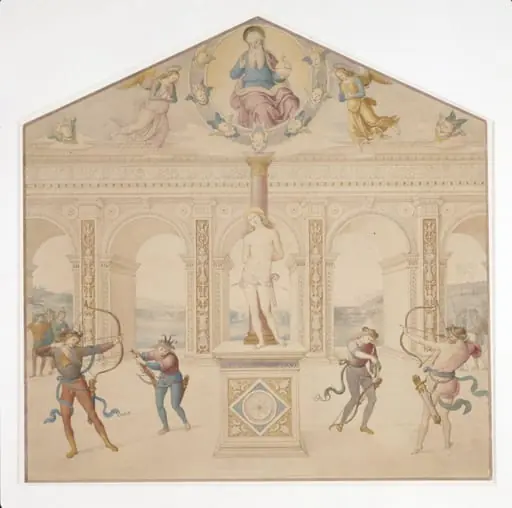 Copy after the painting Martyrdom of St Sebastian by Perugino in S. Sebastiano, Panicale.
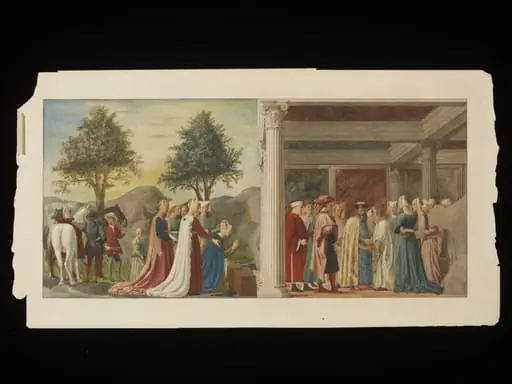 Arundel Society watercolour, Copy after the painting St Helena Finds the True Cross, by Piero della Francesca in San Francesco, Arezzo
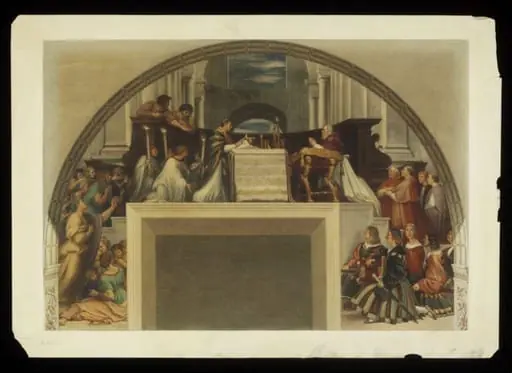 Copy after Raphael’s fresco representing the ‘Miracle of the Mass at Bolsena’ in the Stanza di Eliodoro (Vatican Palace, Rome, 1512-13), 1864.
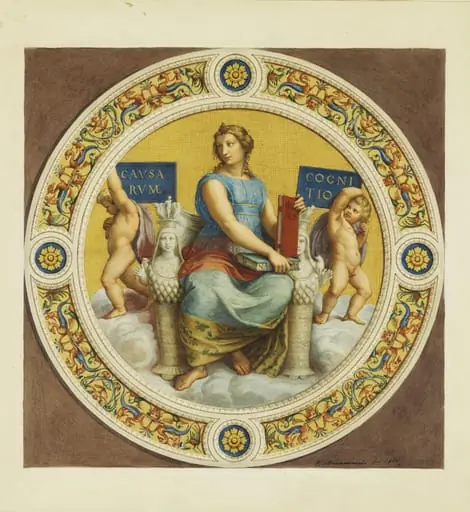 Copy after Raphael’s ceiling fresco representing ‘Philosophy’ in the Stanza della Segnatura (Vatican Palace, Rome,1509-11), 1864
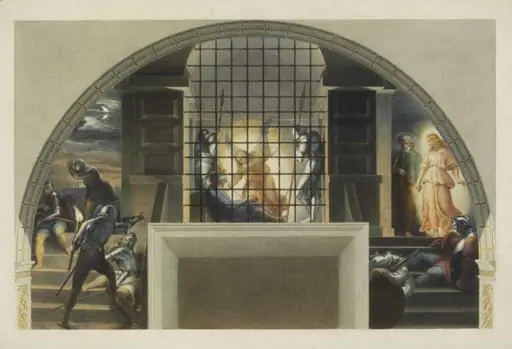 Copy after Raphael’s fresco representing the ‘Deliverance of St Peter from Prison’ in the Stanza di Eliodoro (Vatican Palace, Rome, 1511-12), 1864
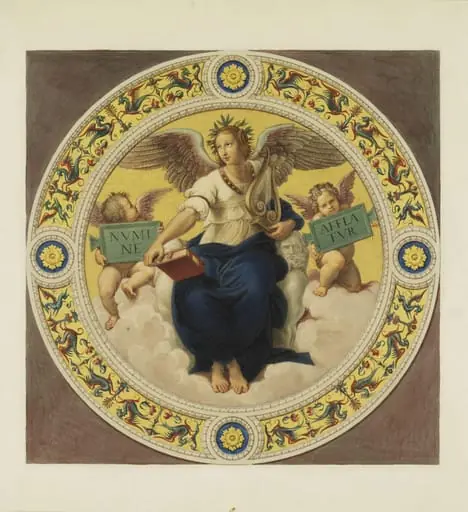 Copy after Raphael’s ceiling fresco representing ‘Poetry’ in the Stanza della Segnatura (Vatican Palace, Rome,1509-11), 1864
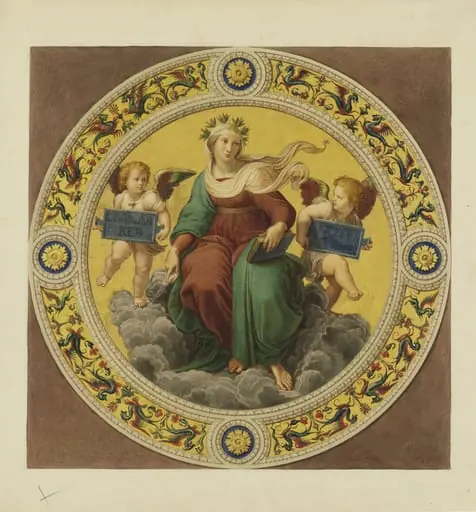 Copy after Raphael’s ceiling fresco representing ‘Theology’ in the Stanza della Segnatura (Vatican Palace, Rome,1508-09), 1864.
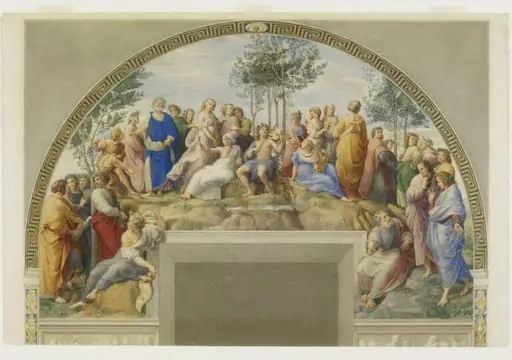 Copy after Raphael’s fresco representing the ‘Poets on Mount Parnassus’ in the Stanza della Segnatura (Vatican Palace, Rome, 1510-11), 1864-66