Artwork
喜多川歌麿画 「婦女人相十品」 ポペンを吹く娘|Young Woman Blowing a Popen (glass noisemaker), from the series “Ten Classes of Women’s Physiognomy” (Fujo ninsō juppen)
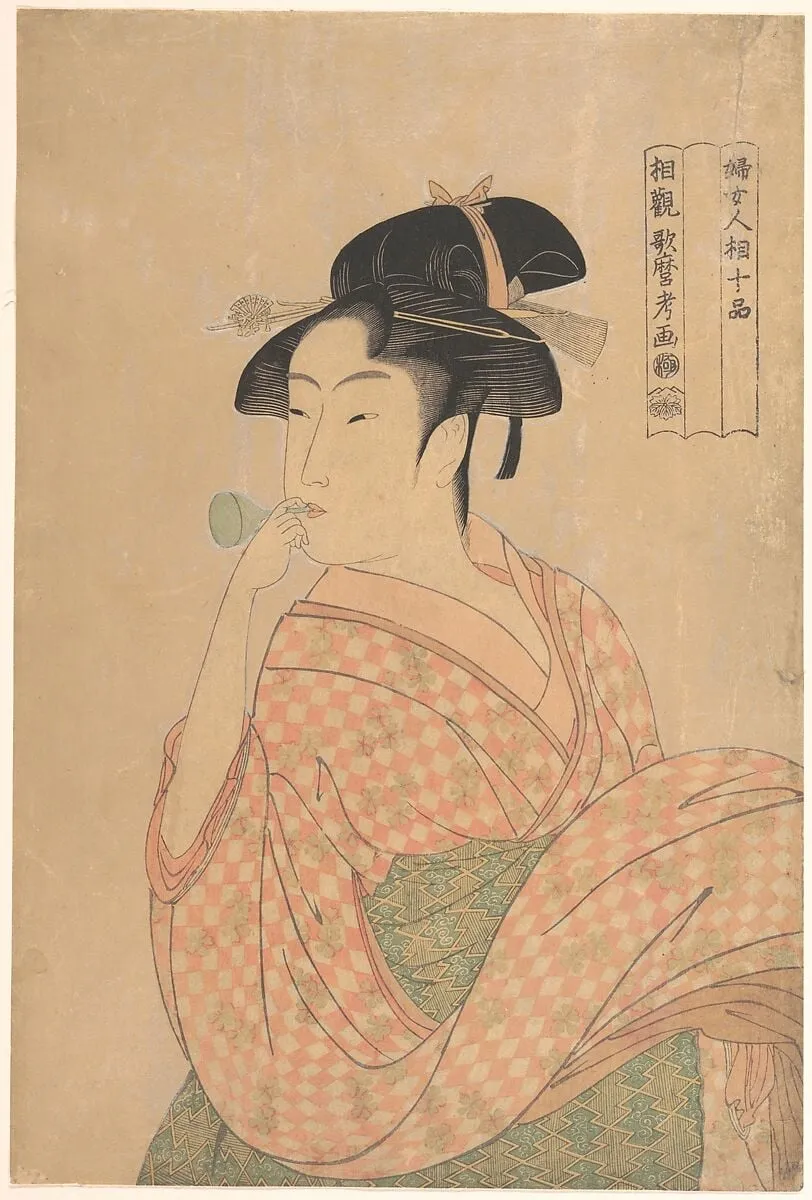
喜多川歌麿画 「婦女人相十品」 ポペンを吹く娘|Young Woman Blowing a Popen (glass noisemaker), from the series “Ten Classes of Women’s Physiognomy” (Fujo ninsō juppen) is an ink print by the Romanticist artist Kitagawa Utamaro. It dates from 1792 and is held in the collection of the Metropolitan Museum of Art. Created around 1792, this woodblock print by Kitagawa Utamara belongs to his series “Ten Classes of Women’s Physiognomy.
About this work
Overview
Created around 1792, this woodblock print by Kitagawa Utamara belongs to his series “Ten Classes of Women’s Physiognomy.” It portrays a young woman engaged in a fleeting, private act, holding a glass poppen—a small whistle toy—while her kimono slips off one shoulder, exposing a red undergarment.
Subject & Meaning
The image captures a moment of informal play, emphasizing the everyday aspects of feminine life beyond idealized beauty. By focusing on a modest toy and a casual pose, Utamara highlights a particular type of woman within the broader social spectrum explored in the series.
Technique & Style
Executed in ink and color on paper, the print employs clean, flowing lines to define the figure’s posture and hair. A restrained palette of deep red, pale flesh tones, and black hair contrasts with the delicate shading, giving the scene a vivid yet understated presence.
History & Provenance
Part of a ten‑image set that surveyed varied female archetypes, the print was produced in Edo’s prolific ukiyo‑e publishing environment. Original impressions circulated among the city’s literate public; later, the series entered museum collections and scholarly catalogues as representative of Utamara’s nuanced portraiture.
Context
During the late 18th century, ukiyo‑e artists increasingly depicted ordinary moments and diverse social roles. Utamara’s focus on physiognomy reflects contemporary interests in categorizing personality traits through appearance, aligning the work with both artistic and cultural discourses of the period.
Artist & collection


 Untitled
 Untitled
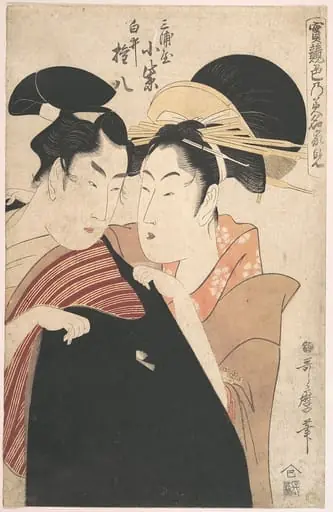 実競色乃美名家見 三浦屋小紫 白井権八|The Lovers Miura-ya Komurasaki and Shirai Gonpachi.
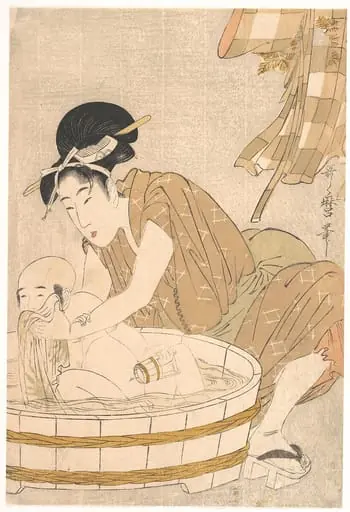 行水|Bathtime (Gyōzui)
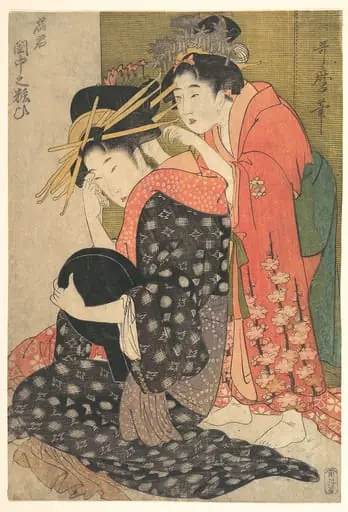 名君 閨中の粧ひ|The Oiran Yoso-oi Seated at Her Toilet
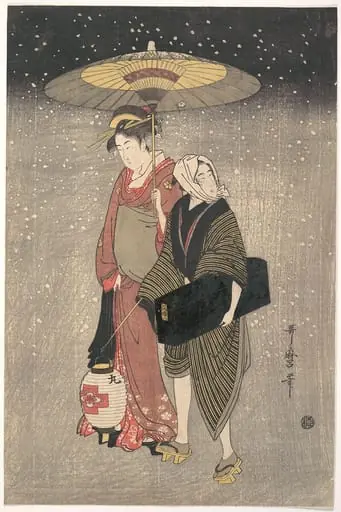 Untitled
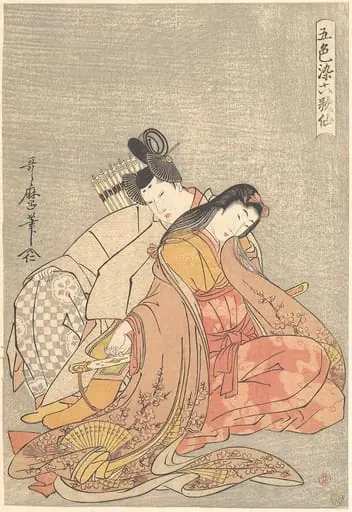 『五色染六歌仙』 在原業平と小野小町|“The Poet Ariwara no Narihira (825–880) and Ono no Komachi,” from the series Five Colors of Love for the Six Poetic Immortals (Goshiki-zome rokkasen)
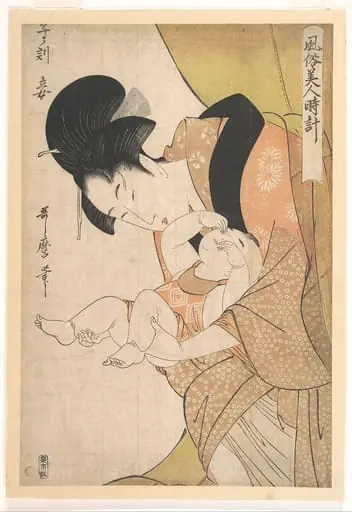 風俗美人時計 子ノ刻 妾|Midnight: Mother and Sleepy Child
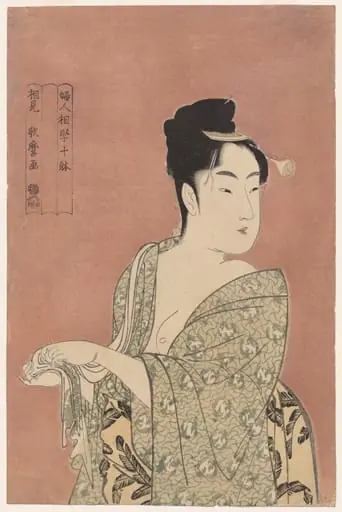 The Flirtatious Type, from Ten Types in the Physiognomy of Women
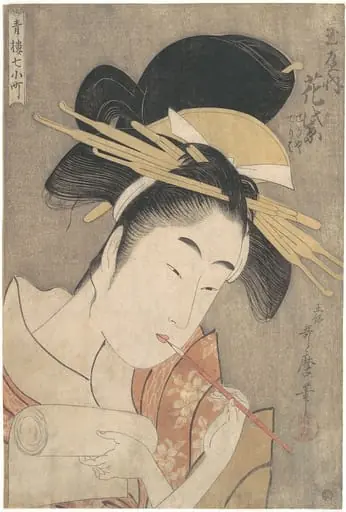 『青楼七小町』 「玉屋内花紫」|“Hanamurasaki of the Tamaya,” from the series Seven Komachi of the Pleasure Quarters (Seirō Nana Komachi)
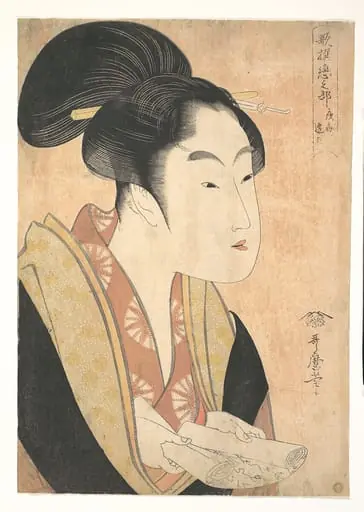 歌撰恋之部 夜毎に逢恋|A Young Woman Reading A Letter
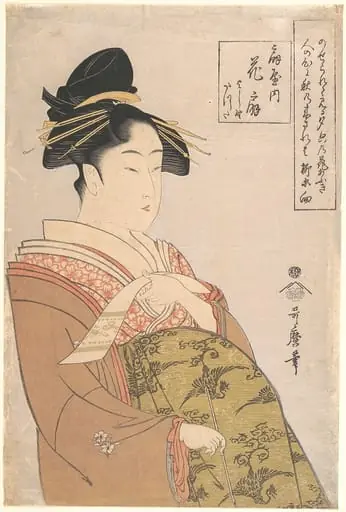 「扇屋内花扇図」|The Courtesan Hanaōgi of the Ōgiya Brothel in Yoshiwara (Ōgiya uchi Hanaōgi, Yoshino, Tatsuta)
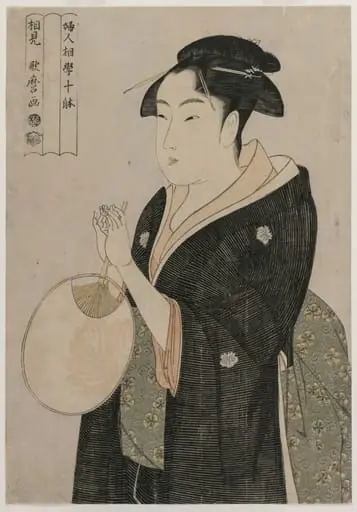 Woman Holding a Fan (from the series Ten Aspects of the Physiognomy of Women)
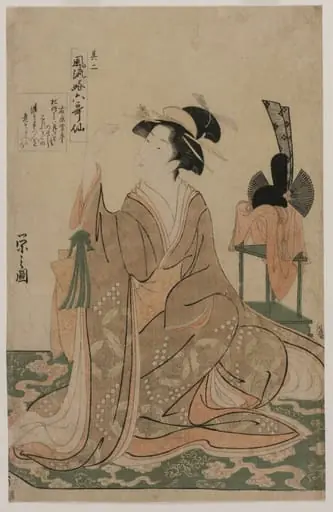 Young Woman Kneeling by a Stand with a Ceremonial Cap (from the series The Six Immortal Poets in Elegant Modern Dress)
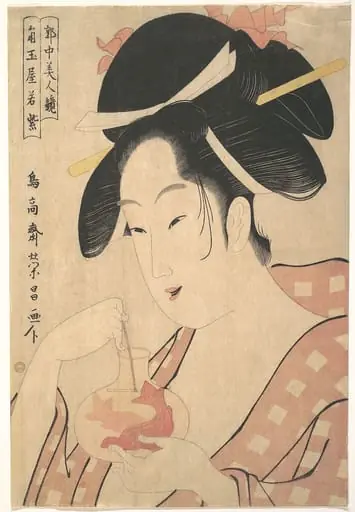 Untitled
 Muraogi, from the series The False Murasaki's Rustic Genji (Nise Murasaki Inaka Genji)