Artwork
Etchings of Paris: The Clock Tower
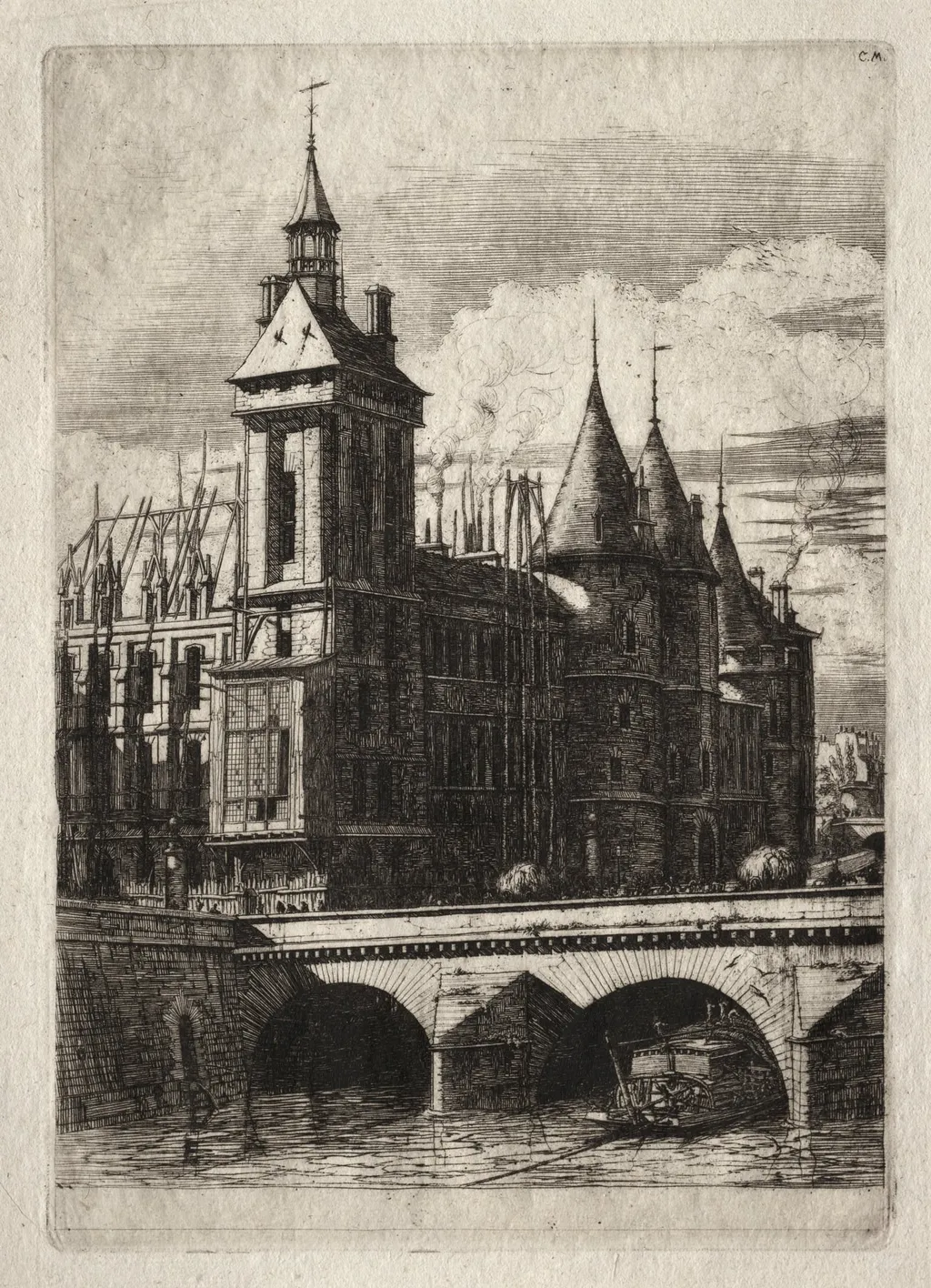
Etchings of Paris: The Clock Tower is a print by the Impressionist artist Charles Meryon. It dates from 1852 and is held in the collection of the Cleveland Museum of Art.
About this work
Overview
He worked almost entirely in etching, a medium suited to his color blindness, and became the most influential French etcher of the 19th century.
Charles Meryon produced *Etchings of Paris: The Clock Tower* in 1852 as part of a focused series documenting Parisian architecture. He worked almost entirely in etching, a medium suited to his color blindness, and became the most influential French etcher of the 19th century. His prints capture the city’s medieval and early modern structures with precision, avoiding idealized landscapes in favor of observed reality.
Subject & Meaning
The print centers on a towering clock structure rising above the Seine, flanked by bridges and rivercraft. The architecture suggests the historic core of Paris, possibly near Notre-Dame or the Palais de Justice. Meryon’s choice of subject reflects his deep, personal attachment to the city, shaped in part by his mother’s connection to the Paris Opera. The scene conveys quiet solitude, emphasizing the endurance of stone over human activity.
Technique & Style
Meryon employed fine, controlled etching lines to render every surface—stone facades, roofing tiles, chimney smoke—with meticulous detail. His use of deep shadows and high contrast gives the scene a luminous, almost spectral quality. Unlike contemporaries who favored romanticized compositions, he prioritized architectural accuracy and atmospheric texture, creating a sense of quiet realism that was novel in mid-century printmaking.
History & Provenance
Created in 1852, this etching belongs to Meryon’s *Les Mouchards* and *Paris et ses transformateurs* series, which he compiled over several years. Few impressions were made during his lifetime, and the work remained largely unknown outside artistic circles until later in the century. Its current holdings trace to private collections in France and institutional acquisitions after his death in 1868.
Context
In the 1850s, Paris underwent radical urban renewal under Haussmann, erasing many medieval quarters. Meryon’s etchings served as a quiet record of structures soon to vanish. His focus on decayed towers and narrow alleys contrasted with official celebrations of modernity. While his work was not widely celebrated in his time, it resonated with artists and writers drawn to urban melancholy and historical memory.
Legacy
Meryon’s etchings influenced later generations of printmakers and urban observers, including the Symbolists and early modernists. His commitment to capturing the physical and emotional texture of Paris without embellishment set a precedent for documentary printmaking. Though he died in obscurity, his body of work is now recognized as a vital visual archive of a transforming city.
Artist & collection
Artist
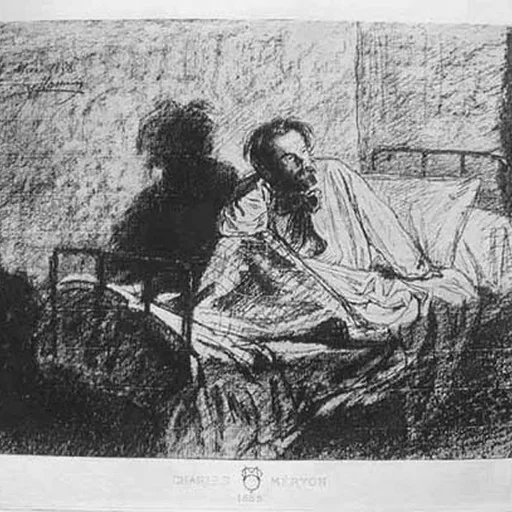
Charles Meryon (sometimes Méryon, 23 November 1821 – 14 February 1868) was a French artist who worked almost entirely in etching, as he had colour blindness.

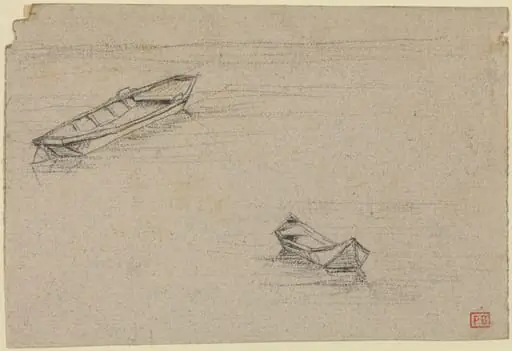
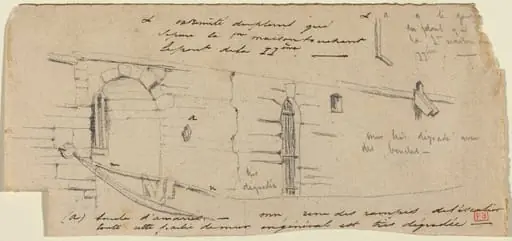
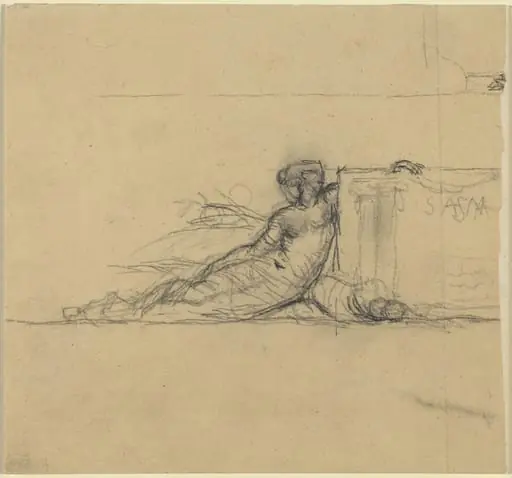
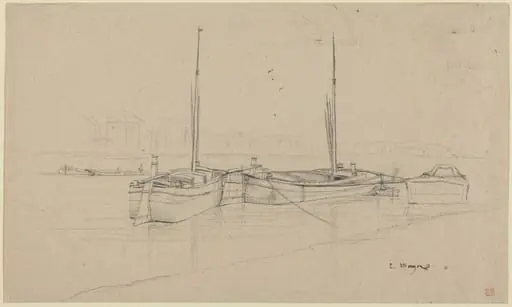
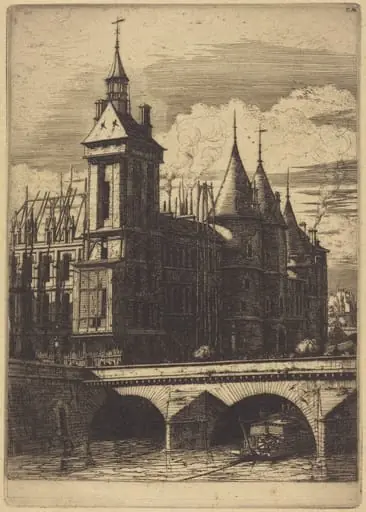 La Tour de l'Horloge, Paris (The Clock Tower, Paris)
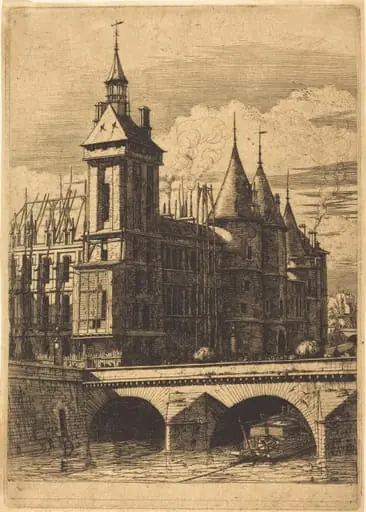 La Tour de l'Horloge, Paris (The Clock Tower, Paris)
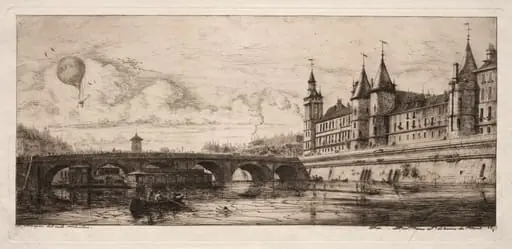 Etchings of Paris: The Exchange Bridge
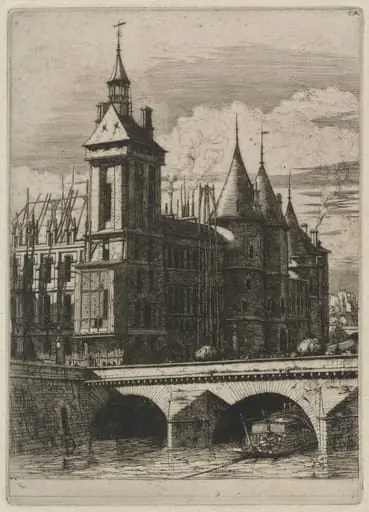 La Tour de l'Horloge, Paris (The Clock Tower, Paris)
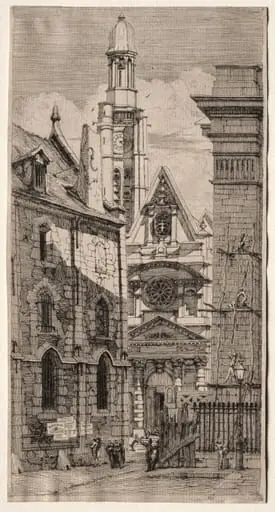 Etchings of Paris: Church of St. Stephen of the Mount
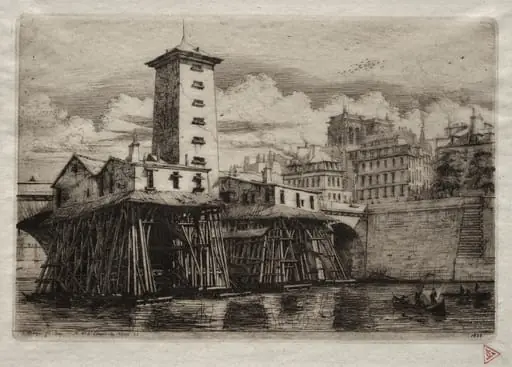 Etchings of Paris: The Notre Dame Pump
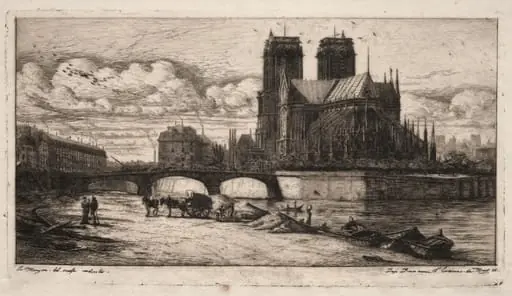 Etchings of Paris: The Apse of the Cathedral of Notre Dame
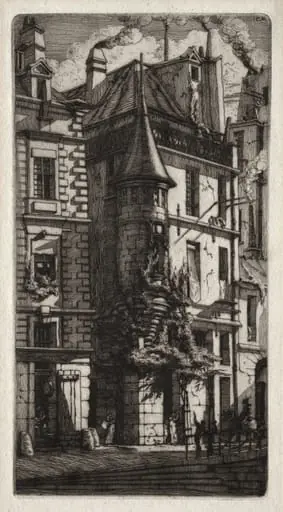 Etchings of Paris: House with a Turret, Weavers' Street