Artwork
La Tour de l'Horloge, Paris (The Clock Tower, Paris)
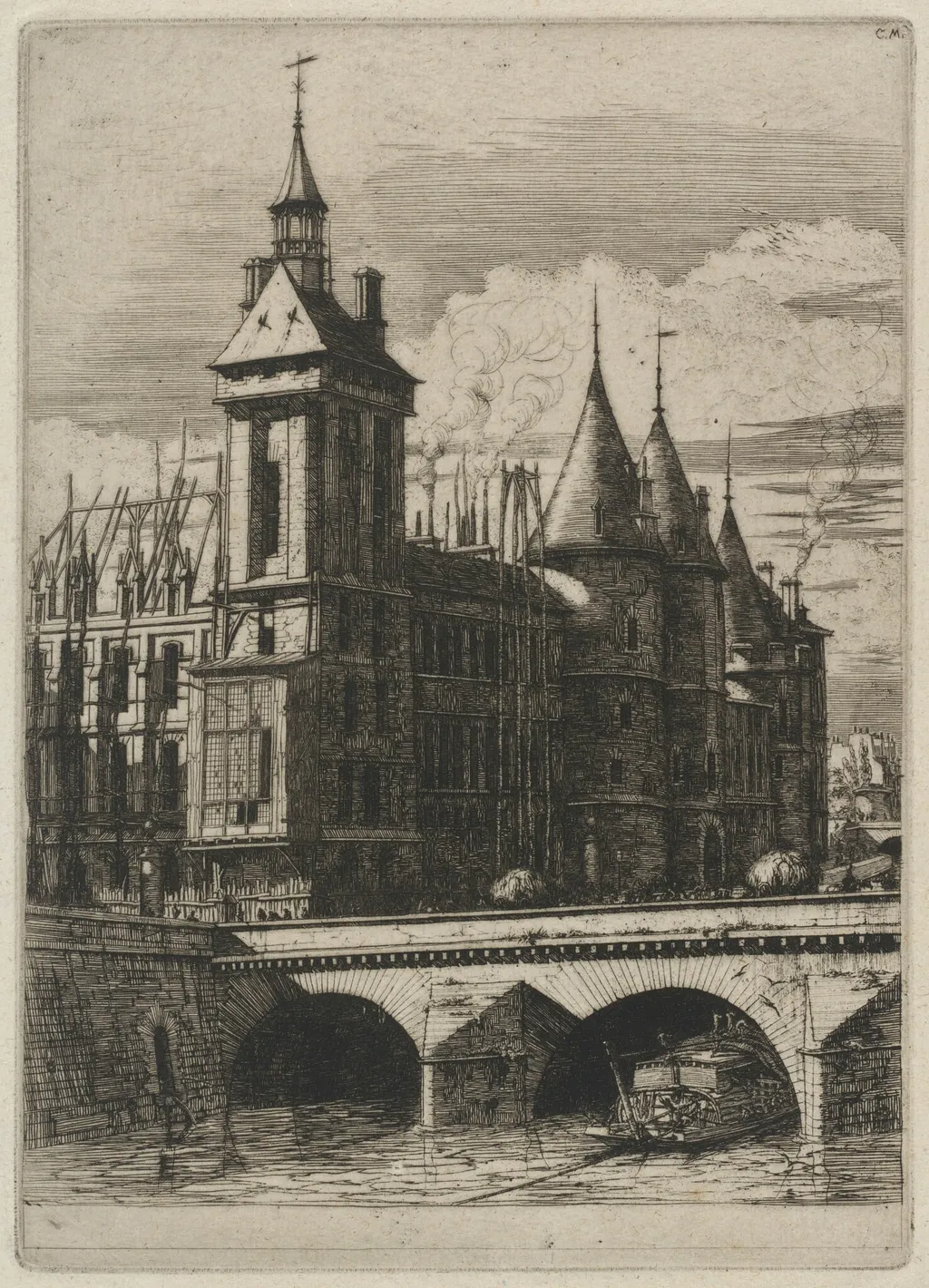
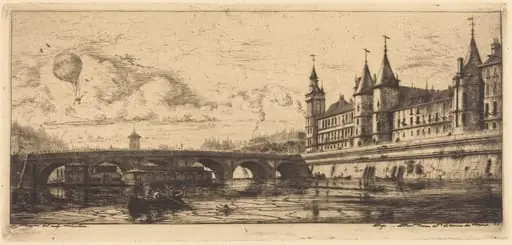
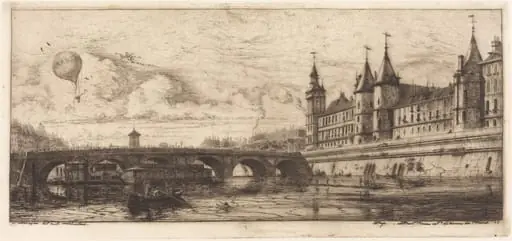
La Tour de l'Horloge, Paris (The Clock Tower, Paris) is an ink print by the Impressionist artist Charles Meryon. It dates from 1852 and is held in the collection of the National Gallery of Art.
About this work
The buildings around the tower have sharp angles and lots of windows, and smoke rises from chimneys in the distance.
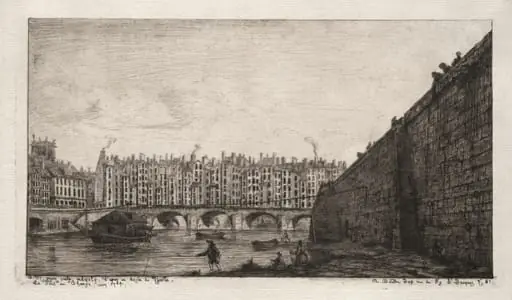
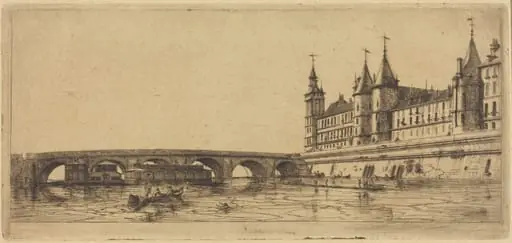
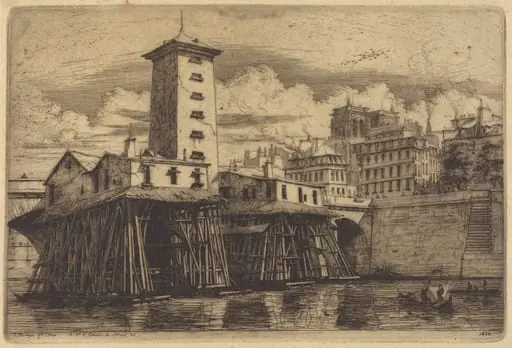
This black-and-white print shows a tall clock tower with a steep roof and a cross on top. Below it, a busy bridge spans a river, with boats moving under arches. The buildings around the tower have sharp angles and lots of windows, and smoke rises from chimneys in the distance.
The artist used fine lines to show every detail, from the wood on the bridge to the bricks on the tower. This was made in 1852, when artists focused on real, everyday scenes.
Next, look up etching to see how this technique works.
Overview
La Tour de l'Horloge, Paris is an 1852 etching on green laid paper by Charles Meryon, a prominent 19th-century French etcher. The work captures a detailed, everyday scene of a Parisian clock tower and its surroundings.
Subject & Meaning
The etching focuses on the clock tower of a Parisian building, set amidst a bustling scene of a bridge, river, boats, and surrounding architecture. The depiction emphasizes the integration of a notable landmark within the daily life of the city.
Technique & Style
Meryon's distinctive, atmospheric style is achieved through fine etching lines, meticulously rendering details from architectural elements to environmental textures. His colour blindness likely influenced the medium choice, leveraging etching's expressive potential in black and white.
History & Provenance
Created in 1852, the etching reflects the period's artistic interest in realistic, quotidian scenes. Meryon's work aligns with the era's focus on documenting urban life through detailed, high-contrast etchings.
Context
Part of a broader movement in 19th-century French art emphasizing Gothic-inspired urban landscapes, La Tour de l'Horloge, Paris situates Meryon among artists exploring the interplay between historical architecture and modern city life.
Legacy
As one of Meryon's characteristic works, La Tour de l'Horloge, Paris contributes to his legacy as a leading etcher of Parisian scenes, appreciated for capturing the essence of the city's architecture and daily activities in the 19th century.
Artist & collection
Artist
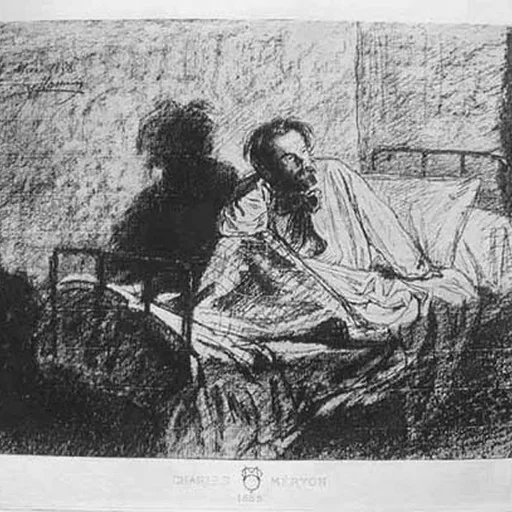
Charles Meryon (sometimes Méryon, 23 November 1821 – 14 February 1868) was a French artist who worked almost entirely in etching, as he had colour blindness.