Artwork
Footbridge Temporarily Replacing the Exchange Bridge,Paris, after the fire of 1621
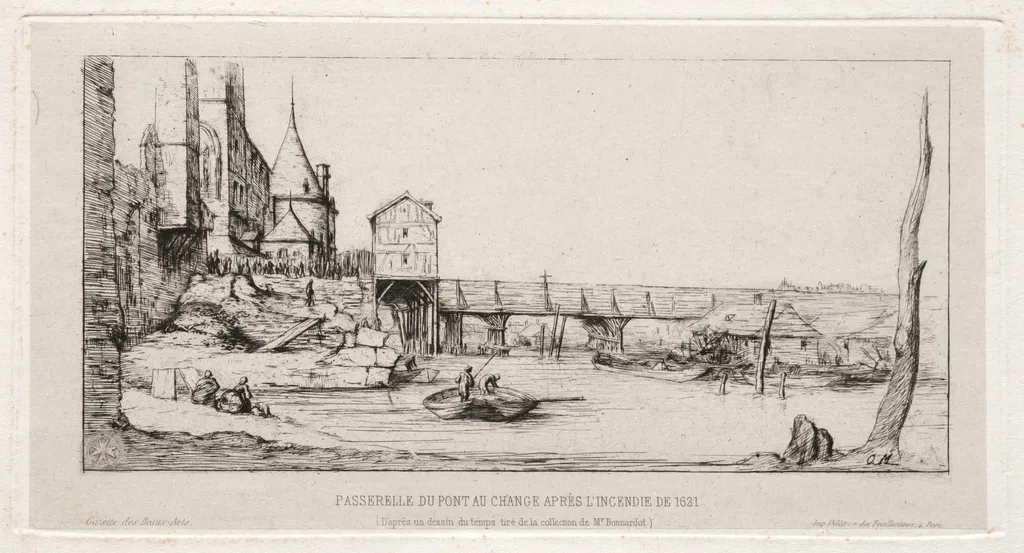
Footbridge Temporarily Replacing the Exchange Bridge,Paris, after the fire of 1621 is a print by the Impressionist artist Charles Meryon. It dates from 1860 and is held in the collection of the Cleveland Museum of Art.
About this work
The painting's style is reminiscent of Impressionism, with its focus on capturing the fleeting effects of light and color.
This painting depicts a temporary footbridge replacing the Exchange Bridge in Paris after a fire in 1621. The scene is set in a river, with the bridge connecting two landmasses. In the foreground, people are seen on the bridge and in boats on the river. The background features buildings and a clear sky.
The painting's composition is notable for its use of light and shadow, with the sun casting a warm glow on the scene. The artist's attention to detail is evident in the depiction of the bridge's structure and the people's activities.
The painting's style is reminiscent of Impressionism, with its focus on capturing the fleeting effects of light and color. To learn more about this style, explore the Impressionism movement.
Overview
Footbridge Temporarily Replacing the Exchange Bridge, Paris, after the fire of 1621 is a print created by Charles Meryon in 1860. It depicts a temporary bridge in Paris, set against a backdrop of river activity and cityscape.
Subject & Meaning
The print shows a makeshift footbridge that replaced the Exchange Bridge after a 1621 fire. The scene captures everyday life on and around the bridge, with people on the bridge and in boats.
Technique & Style
Meryon's work is characterized by detailed etching and a focus on light and shadow. The print's style, with its emphasis on light effects, is similar to Impressionist works, despite being an etching.
History & Provenance
Charles Meryon, a French etcher, produced this work in 1860. He was known for his views of Paris and struggled with mental illness later in life.
Artist & collection
Artist
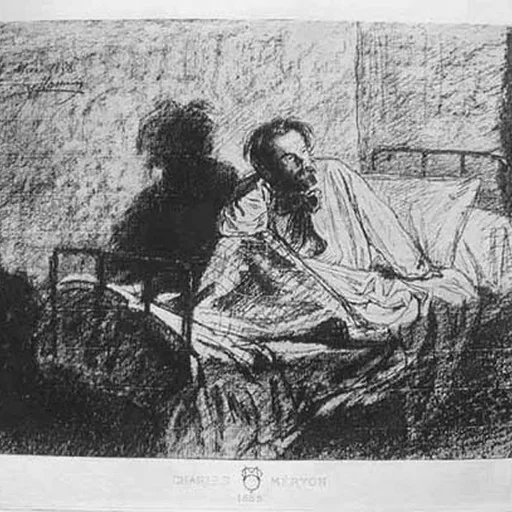
Charles Meryon (sometimes Méryon, 23 November 1821 – 14 February 1868) was a French artist who worked almost entirely in etching, as he had colour blindness.

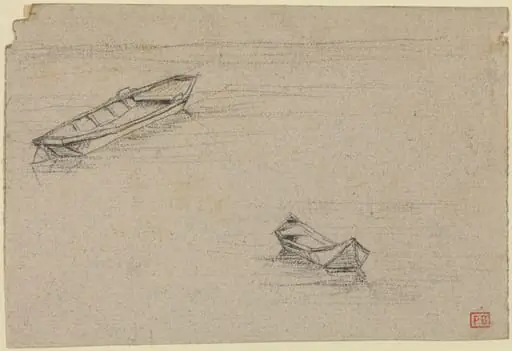
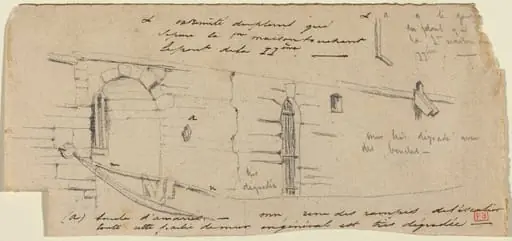
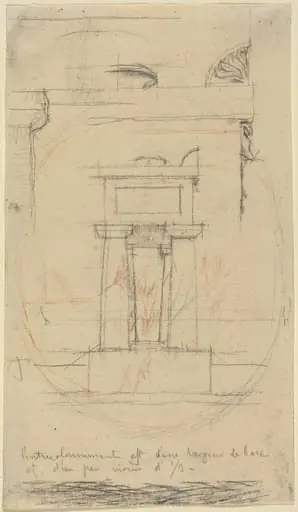
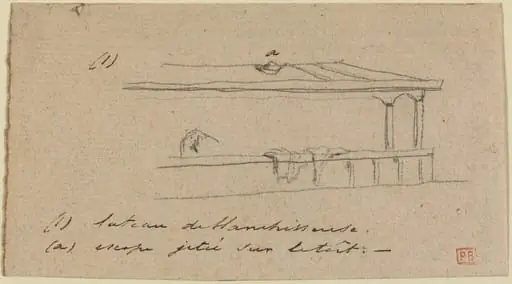
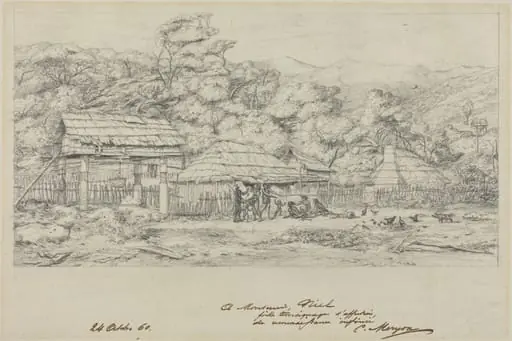
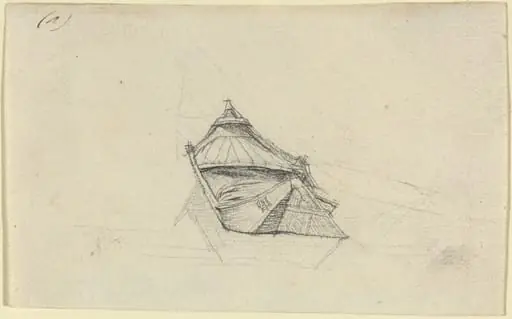
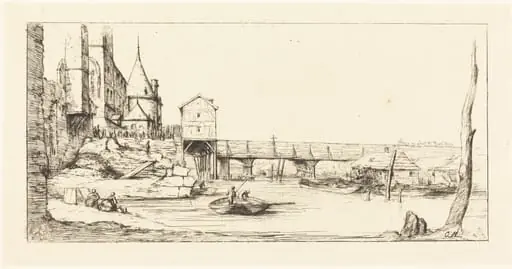 Passerelle du Pont-au-Change, Paris, après l'Incendie de 1621 (Footbridge Temporarily Replacing the Pont-au-Change, Paris, after the Fire of 1621)
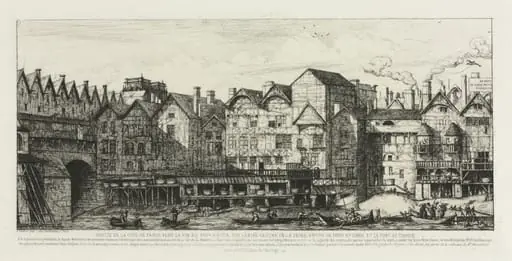 Part of the City of Paris at the End of the Seventeenth Century
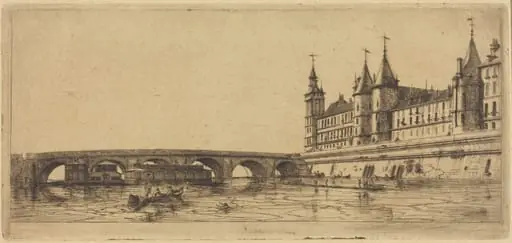 Le Pont-au-Change, Paris
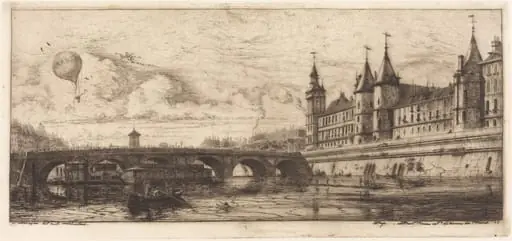 Le Pont-au-Change, Paris
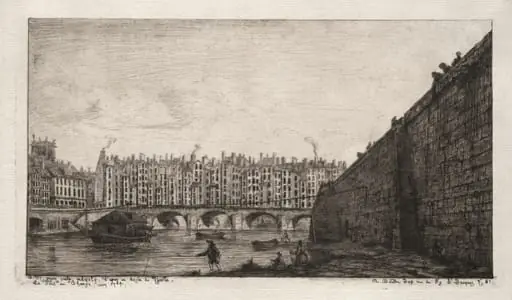 The Exchange Bridge, Paris, about 1784
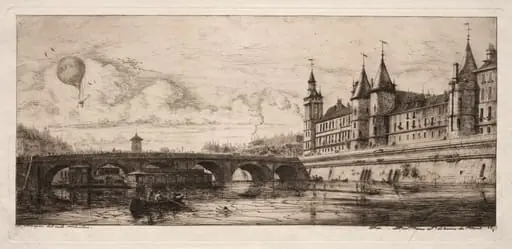 Etchings of Paris: The Exchange Bridge
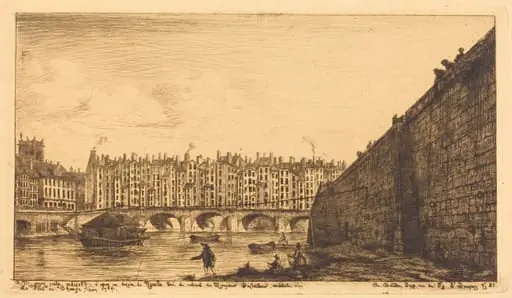 Le Pont-au-Change, Paris, vers 1784
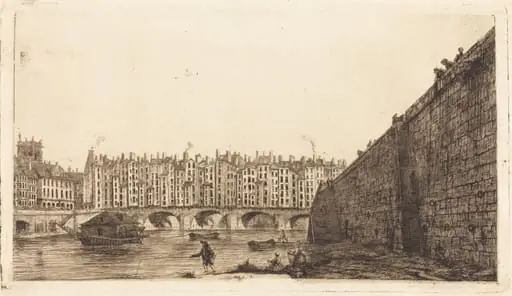 Le Pont-au-Change, Paris, vers 1784