Artwork
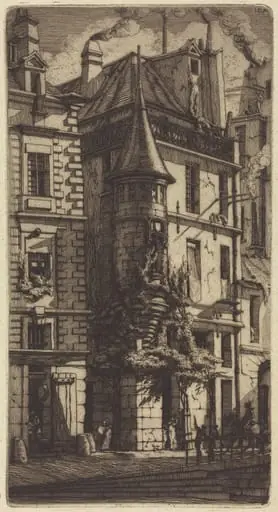
Tourelle de la rue de la Tixéranderie
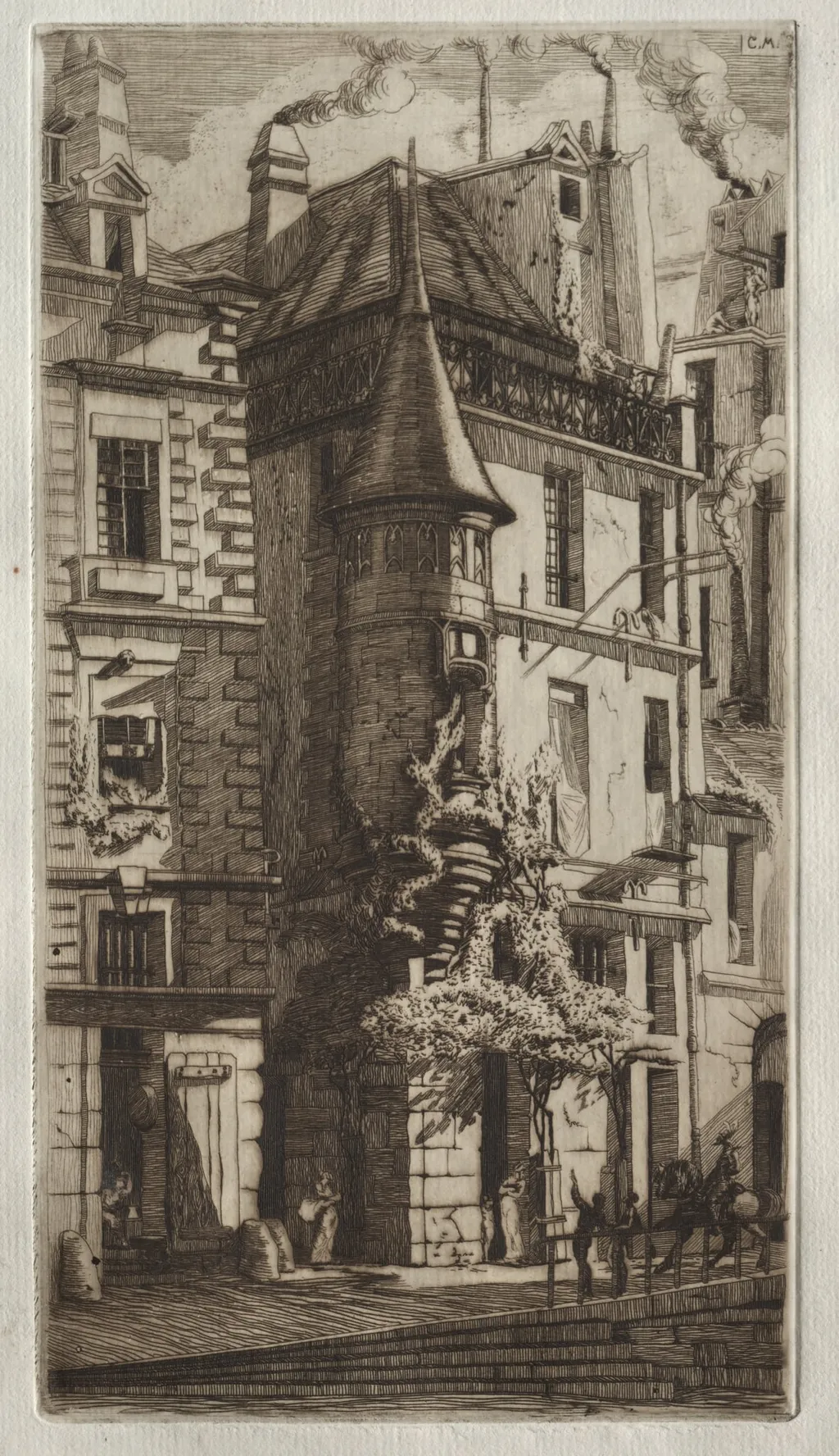
Tourelle de la rue de la Tixéranderie is a print by the Impressionist artist Edmond Gosselin. It dates from 1881 and is held in the collection of the Cleveland Museum of Art.
About this work
Overview
It depicts a narrow urban alley in France, capturing the quiet rhythm of daily life through precise architectural detail.
Tourelle de la rue de la Tixéranderie is a black-and-white drawing by Edmond Gosselin, dated around 1881. It depicts a narrow urban alley in France, capturing the quiet rhythm of daily life through precise architectural detail. The work is part of the print collection at The Cleveland Museum of Art, where it reflects the artist’s interest in ordinary urban environments during the late 19th century.
Subject & Meaning
The scene centers on a narrow street lined with modest, aged buildings, one featuring a distinctive round tower with a steep conical roof. Figures move along the pavement, their forms rendered indistinct to emphasize the setting over individual identity. The composition invites contemplation of everyday urban space, presenting architecture as a silent witness to routine human activity.
Technique & Style
Gosselin employs fine linear detail and tonal contrast to render textures: rough brickwork, smooth stone, and the sharp geometry of the tower’s roof. The absence of color and the soft blurring of figures focus attention on material surfaces and structural form. This approach aligns with Realist principles, prioritizing observational accuracy over idealization or dramatic effect.
History & Provenance
Created circa 1881, the drawing entered the collection of The Cleveland Museum of Art at an unspecified date. Its provenance prior to acquisition is not publicly documented, but its subject matter suggests Gosselin’s engagement with local French architecture during a period of urban transformation. The work remains part of the museum’s holdings of 19th-century prints.
Context
In the late 1800s, artists across Europe turned to unadorned urban scenes as subjects, rejecting romanticized narratives in favor of direct observation. Gosselin’s focus on a modest street in France reflects this broader shift, aligning with contemporaries who documented the quiet dignity of ordinary environments amid rapid industrial change.
Legacy
Though not widely exhibited outside institutional collections, the drawing contributes to a body of work that redefined urban representation in printmaking. Its quiet precision offers a record of architectural detail and street life that remains valuable for understanding how artists of the period engaged with the physical fabric of their cities.
Artist & collection

 Tourelle de la Rue de la Tixéranderie, Paris (House with a Turret, Weavers' Street, Paris)
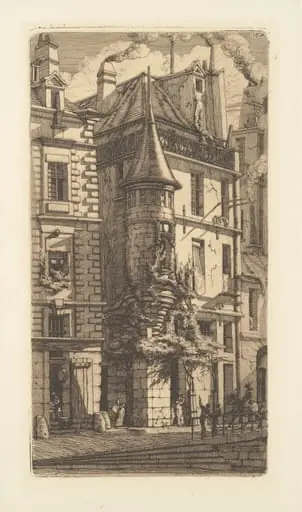 Tourelle, Rue de la Tixeranderie
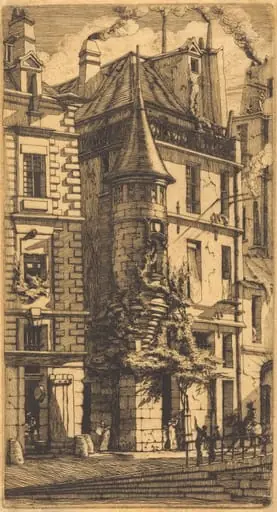 Tourelle de la Rue de la Tixéranderie, Paris (House with a Turret, Weavers' Street, Paris)
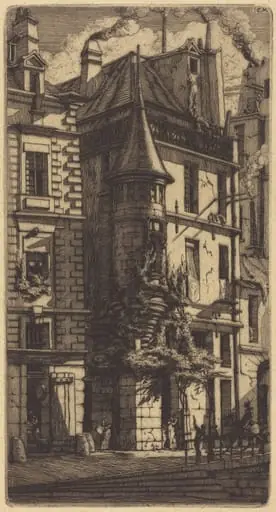 Tourelle de la Rue de la Tixéranderie, Paris (House with a Turret, Weavers' Street, Paris)
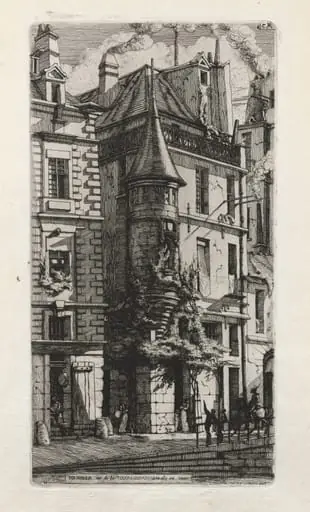 House with a Turret, rue de la Tixéranderie, Paris
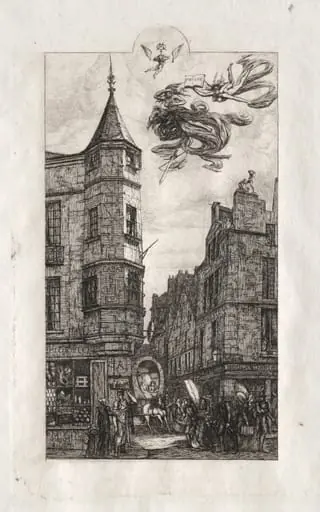 Etchings of Paris: Tourelle, rue de l'Ecole de Médicine