Artwork
Tourelle de la Rue de la Tixéranderie, Paris (House with a Turret, Weavers' Street, Paris)
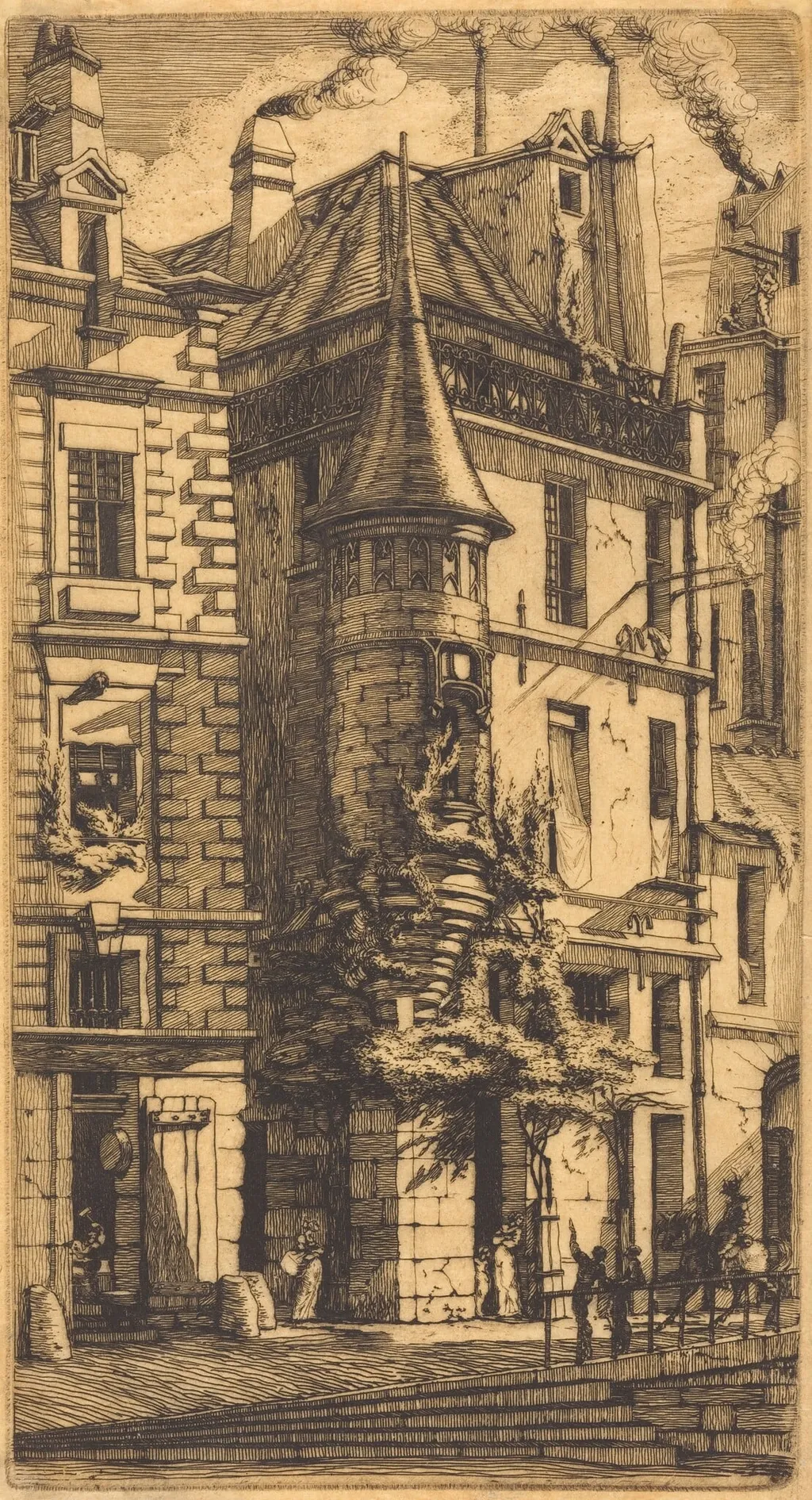
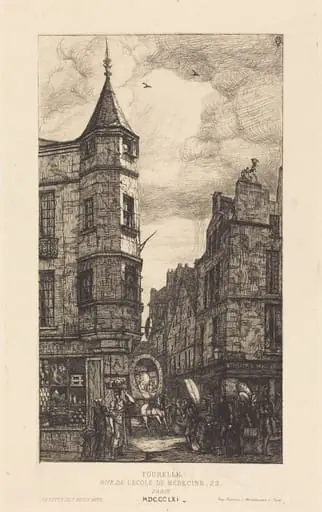
Tourelle de la Rue de la Tixéranderie, Paris (House with a Turret, Weavers' Street, Paris) is an ink print by the Impressionist artist Charles Meryon. It dates from 1852 and is held in the collection of the National Gallery of Art.
About this work
Overview
Created in 1852, this etching by Charles Meryon captures a modest urban structure on a narrow Parisian lane.
Created in 1852, this etching by Charles Meryon captures a modest urban structure on a narrow Parisian lane. Executed on wove paper, the work belongs to a larger series documenting the city’s architecture. Meryon, who worked exclusively in etching due to his color blindness, focused on the structural character of Paris rather than its grand monuments, revealing the quiet dignity of ordinary buildings through meticulous line work.
Subject & Meaning
The scene centers on a tall, crooked turret rising between closely packed dwellings, its pointed roof dominating the composition. The street, lined with trees and lampposts, hums with subtle human activity—figures scale the narrow passage, dwarfed by the walls. Meryon’s choice to elevate a working-class neighborhood over palaces or cathedrals reflects a deliberate shift toward documenting the lived environment, imbuing the mundane with atmospheric gravity.
Technique & Style
Meryon employed fine, incised lines to render every brick, shutter, and beam with precision, exploiting etching’s capacity for detail. The plate was scratched with a needle, then inked and pressed to transfer the image. His use of sharp, controlled strokes creates texture and depth without shading, emphasizing the weight and age of the architecture. The composition’s tight framing enhances the sense of enclosure, reinforcing the claustrophobic intimacy of the alley.
History & Provenance
This print emerged during Meryon’s most productive period, when he was systematically recording Parisian streets before widespread urban renovation. Though celebrated in France for his unique vision, his work remained largely overlooked in English-speaking circles during his lifetime. The etching was likely produced in small, private editions, circulated among collectors and artists familiar with the emerging interest in topographical printmaking.
Context
In the 1850s, Paris was undergoing radical transformation under Haussmann’s redesign. Meryon’s focus on crumbling, pre-modern alleys stood in quiet opposition to official narratives of progress. His etchings preserved the texture of a city on the verge of erasure, offering a counterpoint to the sweeping boulevards and neoclassical facades being erected elsewhere. This work belongs to a genre of urban documentation that valued authenticity over idealization.
Legacy
Meryon’s approach influenced later generations of printmakers who sought to capture urban decay and everyday life with psychological depth. His insistence on etching as a medium for serious artistic expression helped elevate printmaking beyond reproductive function. Though underappreciated in his time, his Parisian views are now recognized as vital records of a vanishing city, valued for their emotional resonance and technical discipline.
Artist & collection
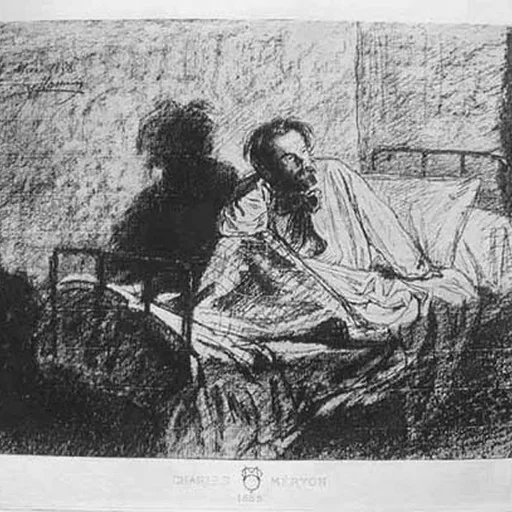
Artist
Charles Meryon (sometimes Méryon, 23 November 1821 – 14 February 1868) was a French artist who worked almost entirely in etching, as he had colour blindness.

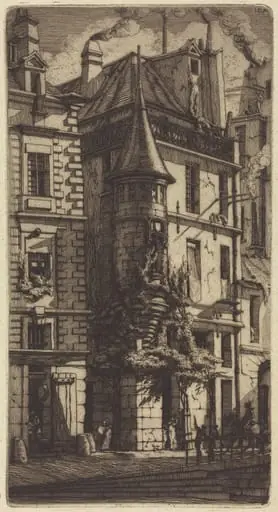 Tourelle de la Rue de la Tixéranderie, Paris (House with a Turret, Weavers' Street, Paris)
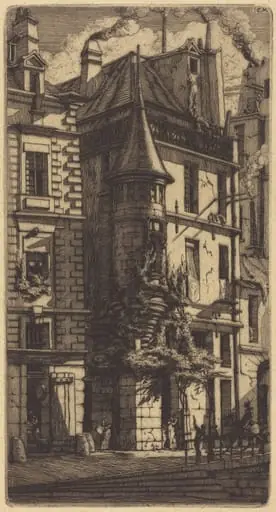 Tourelle de la Rue de la Tixéranderie, Paris (House with a Turret, Weavers' Street, Paris)
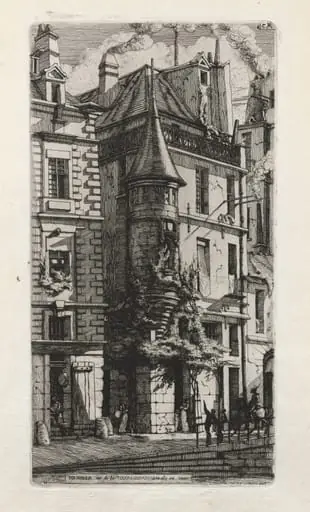 House with a Turret, rue de la Tixéranderie, Paris
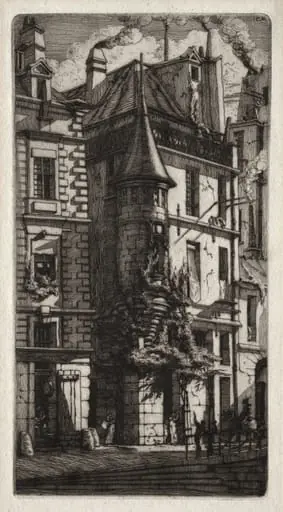 Etchings of Paris: House with a Turret, Weavers' Street
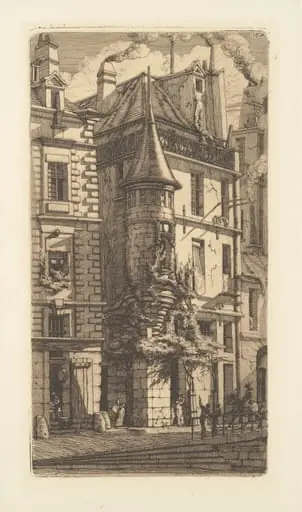 Tourelle, Rue de la Tixeranderie
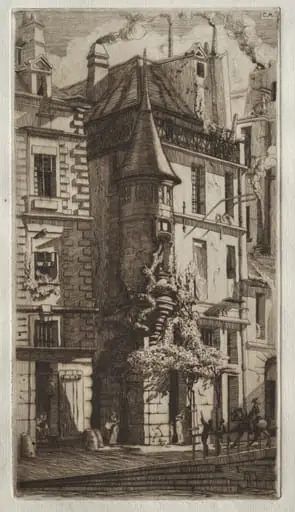 Tourelle de la rue de la Tixéranderie
 Tourelle, Rue de l'École de Médecine, 22, Paris