Artwork
Tourelle de la Rue de la Tixéranderie, Paris (House with a Turret, Weavers' Street, Paris)
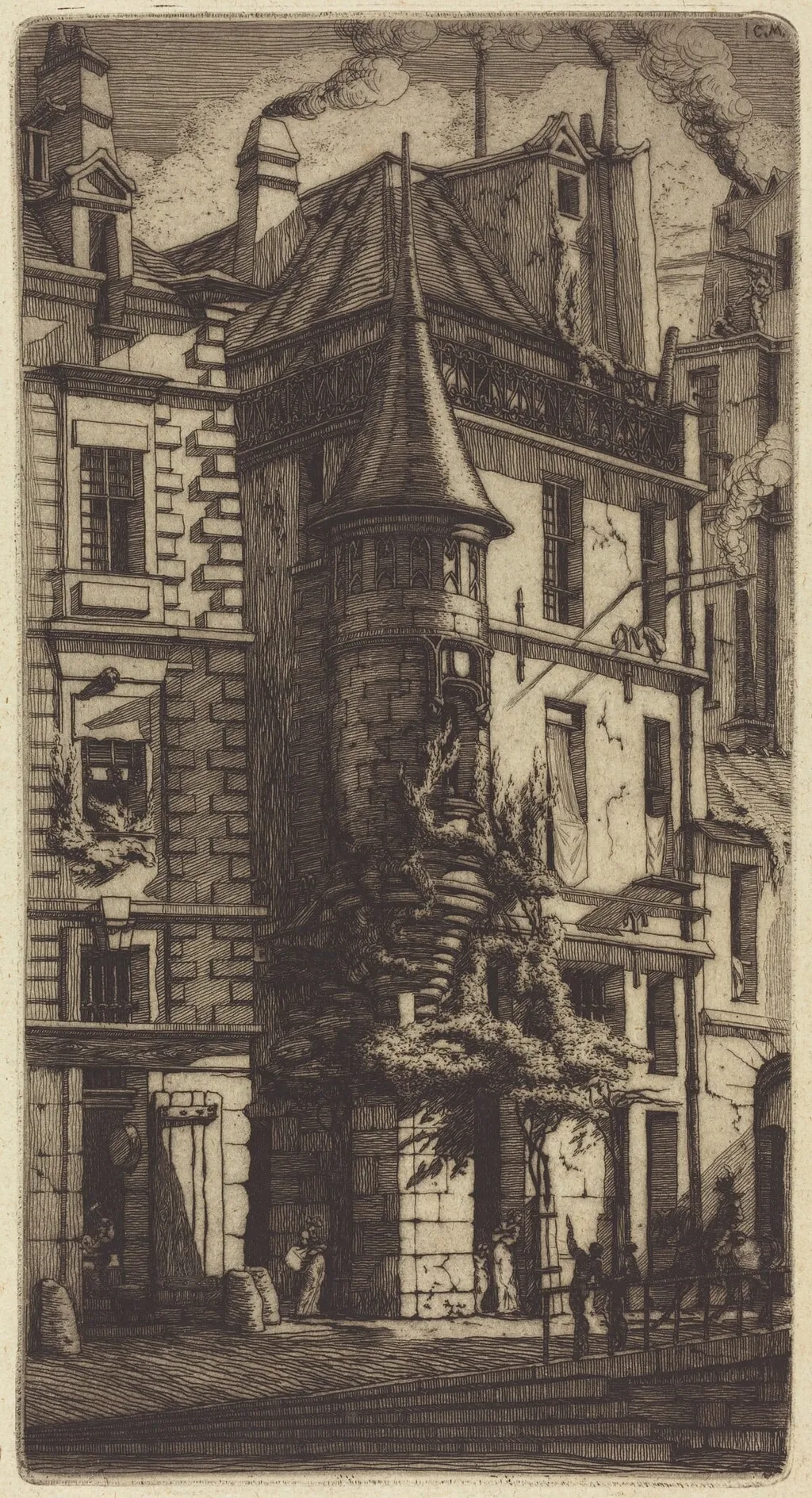
Tourelle de la Rue de la Tixéranderie, Paris (House with a Turret, Weavers' Street, Paris) is an ink print by the Impressionist artist Charles Meryon. It dates from 1852 and is held in the collection of the National Gallery of Art.
About this work
Overview
Executed in black ink on green laid paper, the work reflects his singular focus on the city’s architectural character.
Charles Meryon produced this etching in 1852, capturing a modest urban structure on Paris’s Rue de la Tixéranderie. Executed in black ink on green laid paper, the work reflects his singular focus on the city’s architectural character. Meryon, largely self-taught and restricted by color blindness, devoted his career to etching, refining a personal style that emphasized texture, shadow, and structural detail over color.
Subject & Meaning
The scene centers on a narrow, vertically oriented building crowned by a turret, flanked by neighboring structures typical of medieval Parisian quarters. Figures in the street and wisps of chimney smoke suggest daily life, grounding the architecture in human activity. The composition conveys neither grandeur nor decay, but a quiet, persistent presence of older urban forms amid evolving cityscapes.
Technique & Style
Meryon employed fine, controlled lines and dense cross-hatching to render brick, stone, and timber with tactile precision. The contrast between light and shadow enhances the building’s verticality and the depth of the alleyway. His use of atmospheric tone, rather than sharp outlines, gives the scene a somber, almost melancholic stillness, characteristic of his mature etching technique.
History & Provenance
Created during Meryon’s most productive period, this print belongs to a series documenting Parisian streets before large-scale renovations. It was likely issued as part of his broader project to record the city’s disappearing medieval fabric. The green paper, uncommon for etchings, may have been chosen for its tonal resonance with the ink, enhancing the work’s subdued mood.
Context
In the 1850s, Paris was undergoing radical transformation under Haussmann’s urban plan. Meryon’s focus on narrow alleys and medieval remnants stood in quiet opposition to modernization. His prints appealed to a niche audience interested in historical memory, offering a counter-narrative to the city’s accelerating change through meticulous, introspective observation.
Legacy
Meryon’s etchings, including this one, influenced later generations of printmakers and urban documentarians. Though little known during his lifetime, his work gained recognition in the 20th century for its emotional depth and technical rigor. Today, these images are valued as historical records and as early examples of psychological engagement with the urban environment.
Artist & collection
Artist
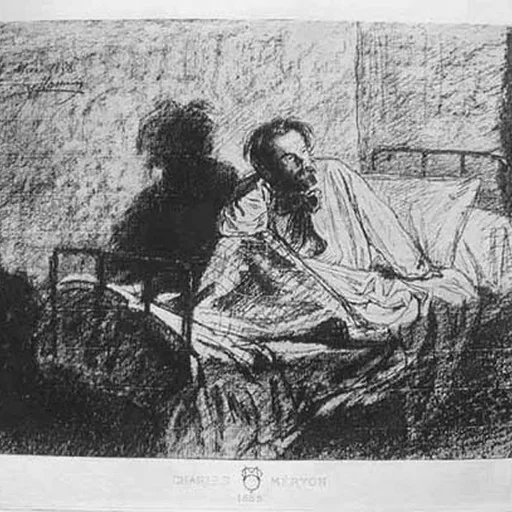
Charles Meryon (sometimes Méryon, 23 November 1821 – 14 February 1868) was a French artist who worked almost entirely in etching, as he had colour blindness.

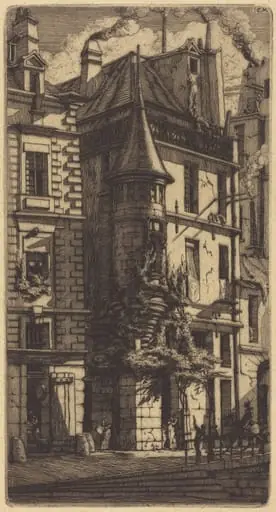 Tourelle de la Rue de la Tixéranderie, Paris (House with a Turret, Weavers' Street, Paris)
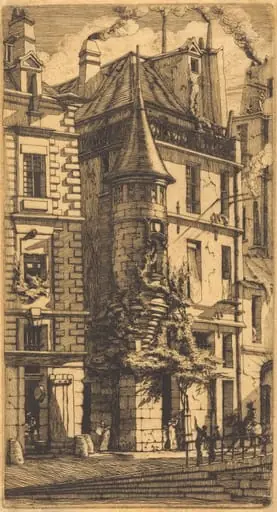 Tourelle de la Rue de la Tixéranderie, Paris (House with a Turret, Weavers' Street, Paris)
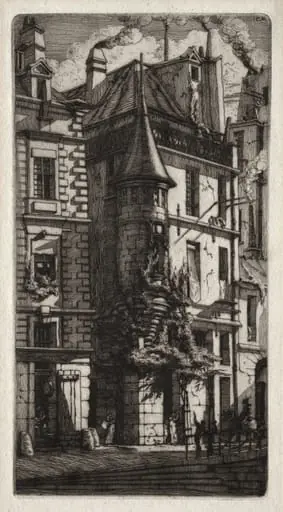 Etchings of Paris: House with a Turret, Weavers' Street
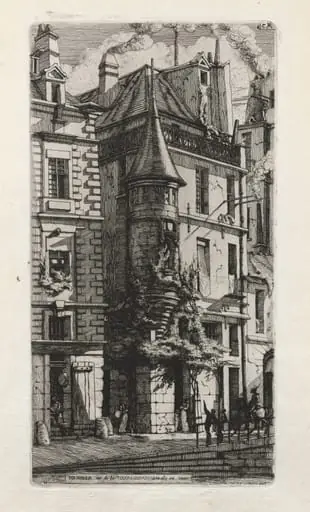 House with a Turret, rue de la Tixéranderie, Paris
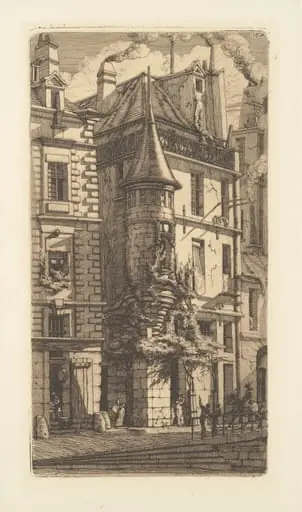 Tourelle, Rue de la Tixeranderie
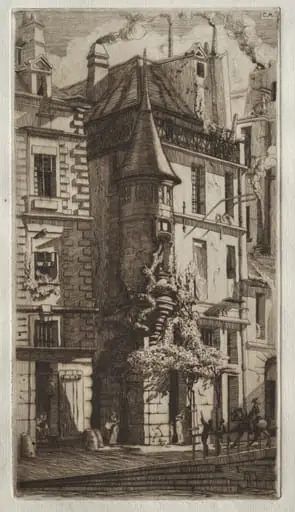 Tourelle de la rue de la Tixéranderie