Artwork
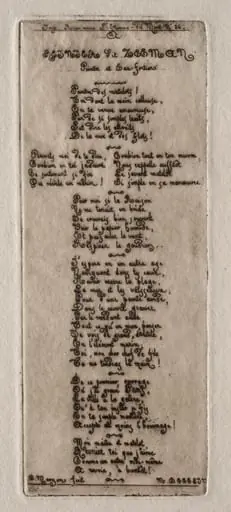
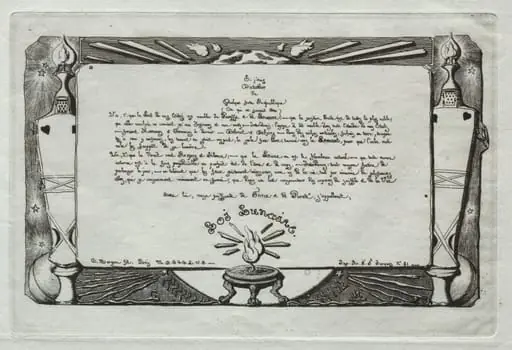
Verses to Eugène Bléry
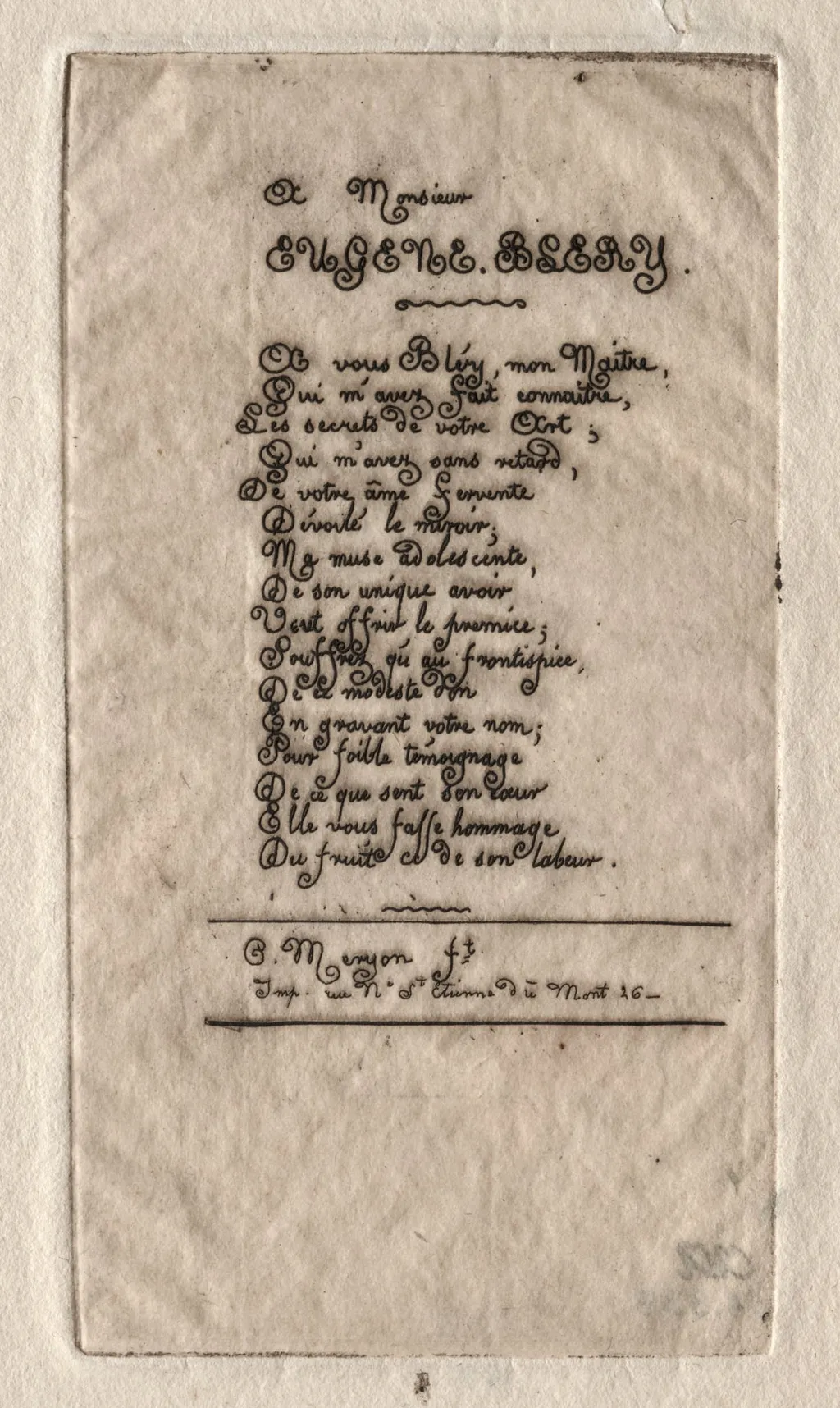
Verses to Eugène Bléry is a print by the Impressionist artist Charles Meryon. It dates from 1854 and is held in the collection of the Cleveland Museum of Art.
About this work
Overview
Created in 1854, *Verses to Eugène Bléry* is a print by the French artist Charles Meryon. The work exemplifies his dedication to the medium of etching, a choice shaped by his inability to perceive colour. It forms part of the body of work for which Meryon is remembered as a leading figure in 19th‑century French printmaking.
Technique & Style
Meryon produced the image almost entirely through etching, a process that allowed him to render fine lines and deep tonal contrasts without relying on pigment. His approach reflects a preference for stark, atmospheric effects, a hallmark of his broader oeuvre that often captures the moody architecture and streetscapes of Paris.
Context
The print belongs to a period when Meryon was concentrating on depictions of the French capital, interpreting its Gothic and medieval elements through a somber visual language. His focus on the city’s architecture aligns with a wider 19th‑century fascination with urban transformation and historic preservation.
Legacy
Meryon’s reputation as the pre‑eminent French etcher of his century rests on works such as this one, which demonstrate his mastery of line and tone. The piece contributes to his lasting influence on subsequent generations of printmakers who value the expressive potential of monochrome etching.
Artist & collection
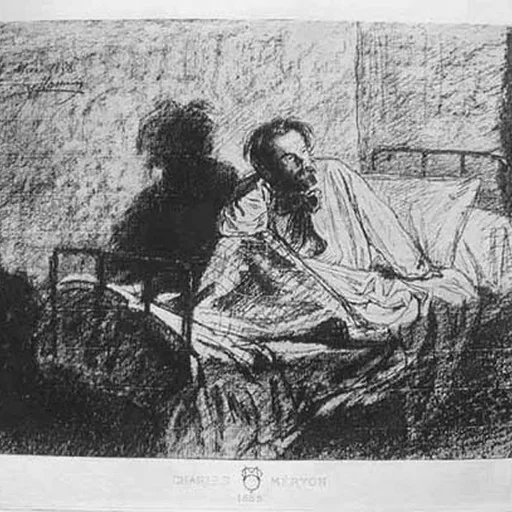
Artist
Charles Meryon (sometimes Méryon, 23 November 1821 – 14 February 1868) was a French artist who worked almost entirely in etching, as he had colour blindness.

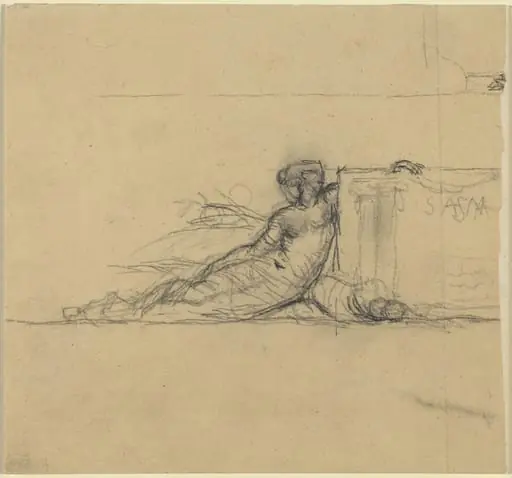
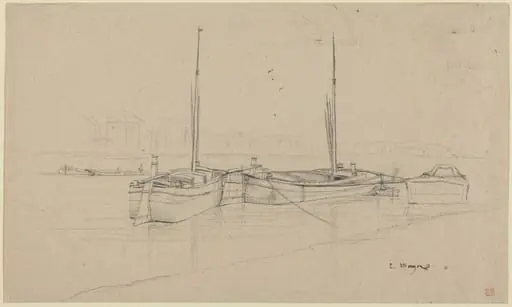
 Etchings of Paris: Dedication to Reynier Nooms, called Zeeman
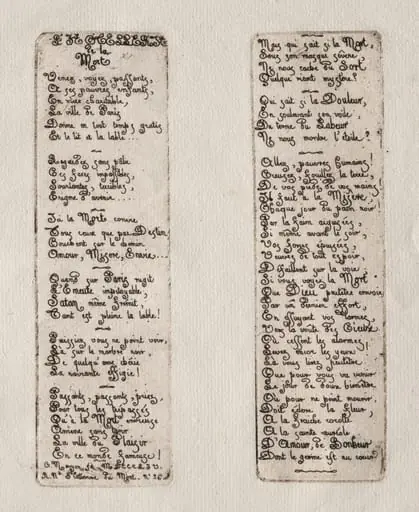 Etchings of Paris: Death's Hostel
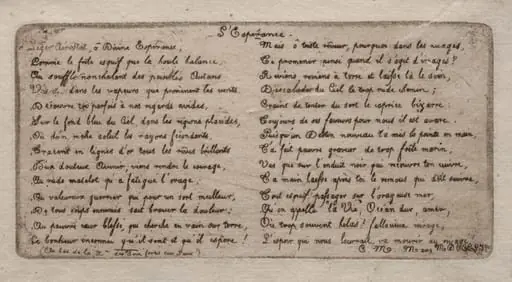 Etchings of Paris: Hope
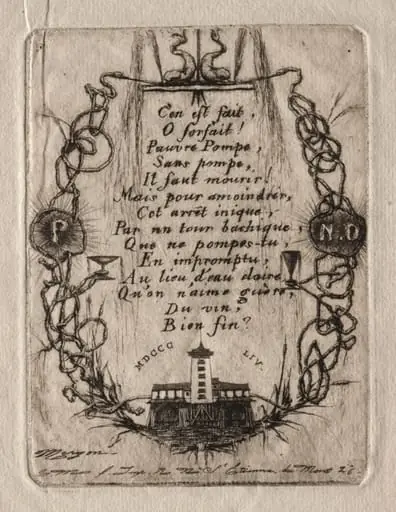 Etchings of Paris: The Notre Dame Pump, Small Plate
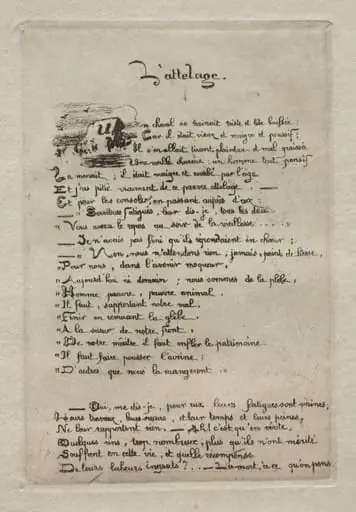 The Ploughman and his Horse
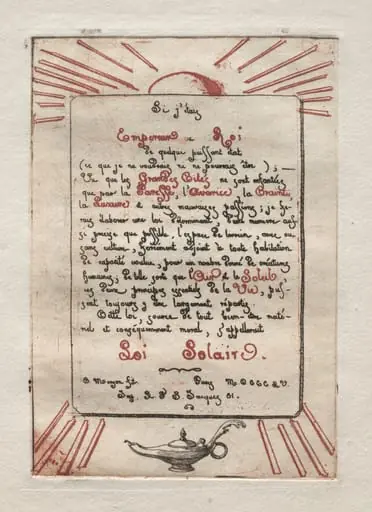 Solar Law
 Untitled
 Ornament
 La Loi Lunaire
 Art of the Lithograph: Printing Letters, Plate XV
 Noder
Noder Large Pendant, Hope Standing at Centre