Artwork
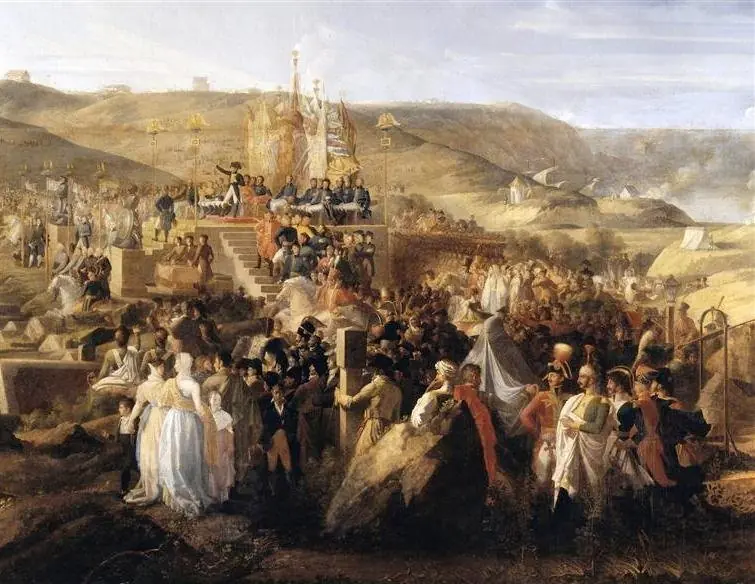
Marshal Ney hands over their flags to the soldiers of the 76th Line Regiment, November 7, 1805
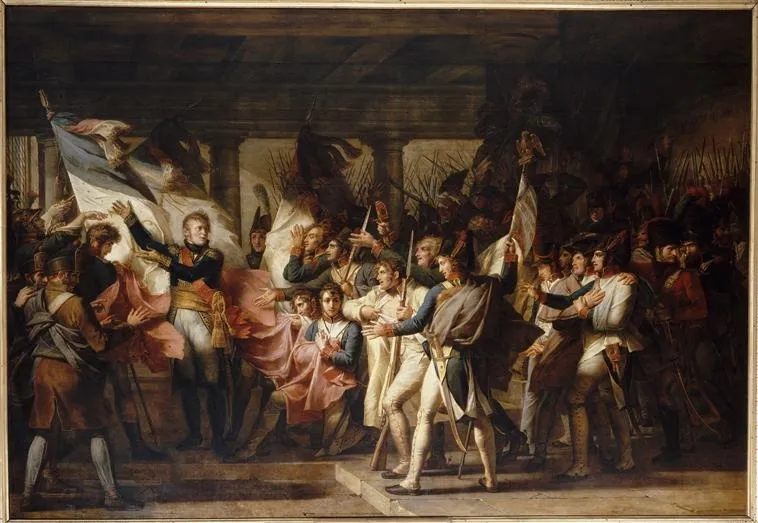
Marshal Ney hands over their flags to the soldiers of the 76th Line Regiment, November 7, 1805 is an oil painting by Charles Meynier. It dates from 1808 and is held in the collection of the Palace of Versailles.
About this work
Overview
Meynier, trained in the academic tradition, focused on military and political narratives of his era.
Painted in 1808 by Charles Meynier, this oil work captures a moment during the Napoleonic Wars when Marshal Michel Ney transferred regimental flags to soldiers of the 76th Line Regiment. The scene, set indoors under dim lighting, conveys a moment of transition rather than triumph. It resides in the Palace of Versailles collection, reflecting its official historical significance. Meynier, trained in the academic tradition, focused on military and political narratives of his era.
Subject & Meaning
The painting illustrates the surrender of regimental standards, a symbolic act signifying the dissolution or reorganization of a unit. Figures in military and civilian attire are gathered in a confined space, their gestures suggesting uncertainty or resignation. The central figure, Marshal Ney, is shown transferring the flags, emphasizing his role as an agent of authority. The white flags among the crowd imply possible dissent or the end of active resistance.
Technique & Style
Meynier employs chiaroscuro to model forms in the dim interior, directing attention to Ney and the flags through selective illumination. The composition is tightly packed, with overlapping figures creating a sense of claustrophobia. Brushwork is precise but not idealized; uniforms and facial expressions convey realism over heroism. The scene avoids grandeur, focusing instead on the human weight of military command during a moment of flux.
History & Provenance
Commissioned shortly after the event, the painting was likely intended to document a specific military reorganization during the 1805 campaign. It entered the Palace of Versailles collection in the 19th century, where it was preserved as part of the state’s effort to chronicle Napoleonic military history. Unlike celebratory battle scenes, this work records a quieter, more ambiguous moment, suggesting its role as administrative record as much as art.
Context
Created during the height of Napoleon’s empire, the painting reflects the regime’s interest in documenting military discipline and hierarchy. While contemporaries like David glorified imperial victories, Meynier’s focus on flag transfer reveals a more bureaucratic side of warfare. The presence of civilians among soldiers hints at the blurred lines between army and populace during this turbulent period of French history.
Legacy
The painting stands as a rare depiction of military reorganization rather than combat, offering insight into the administrative realities of Napoleonic armies. Though less celebrated than grand battle scenes, it contributes to a nuanced understanding of how authority was visually represented in early 19th-century France. Its preservation in Versailles underscores its role as a historical document as much as an artistic work.
Artist & collection

Artist
Charles Meynier (1763 or 1768, Paris – 1832, Paris) was a French painter of historical subjects in the late 18th and early 19th century. He was a contemporary of Antoine-Jean Gros and Jacques-Louis David.

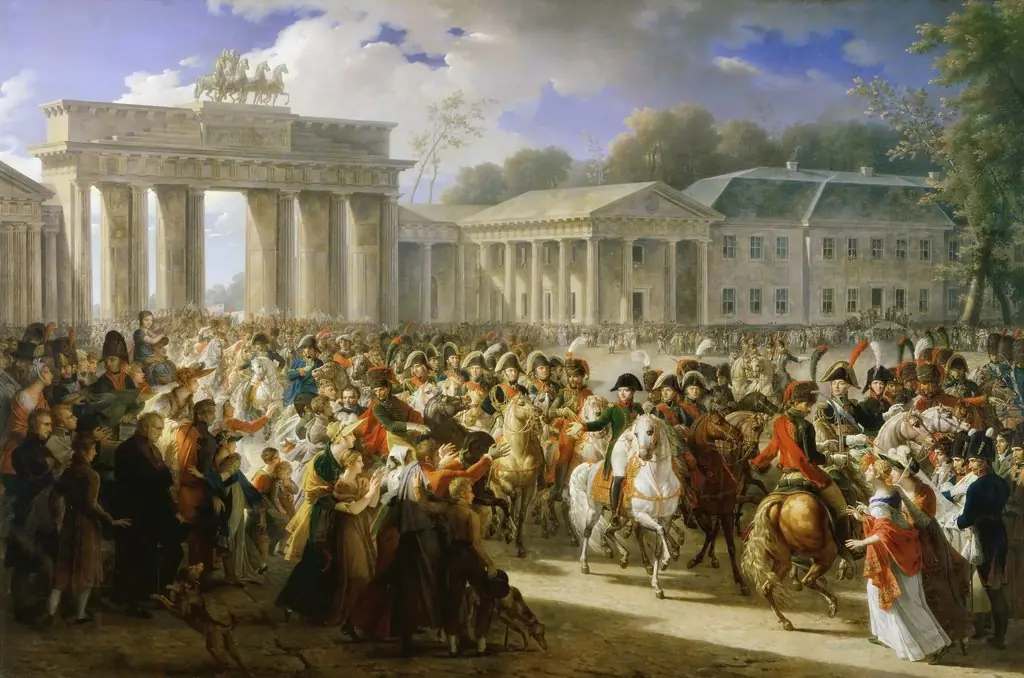 Entry of Napoleon I into Berlin, 27th October 1806
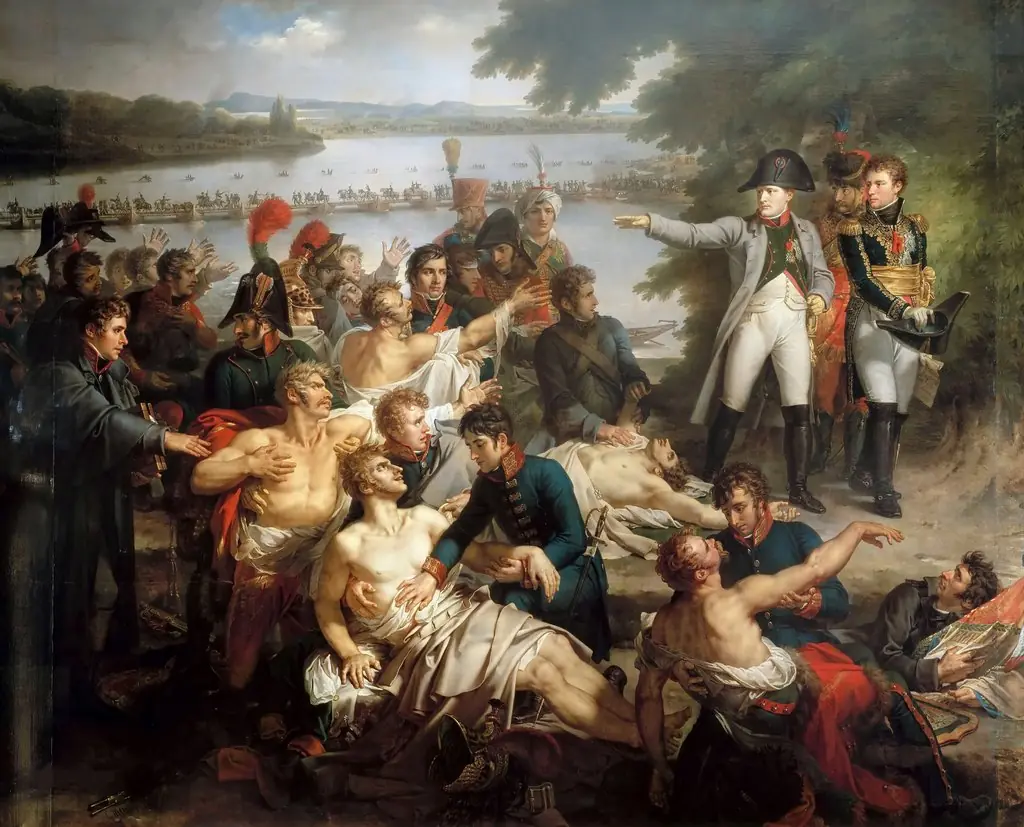 Napoleon's Return to the Island of Lobau After the Battle of Essling
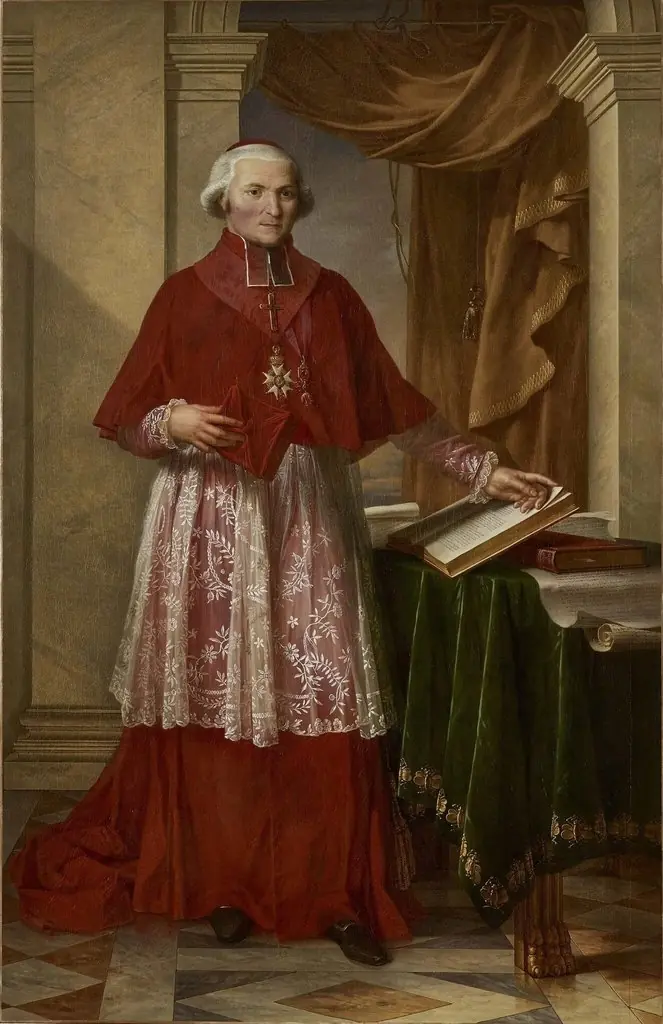 Portrait of Joseph Fesch
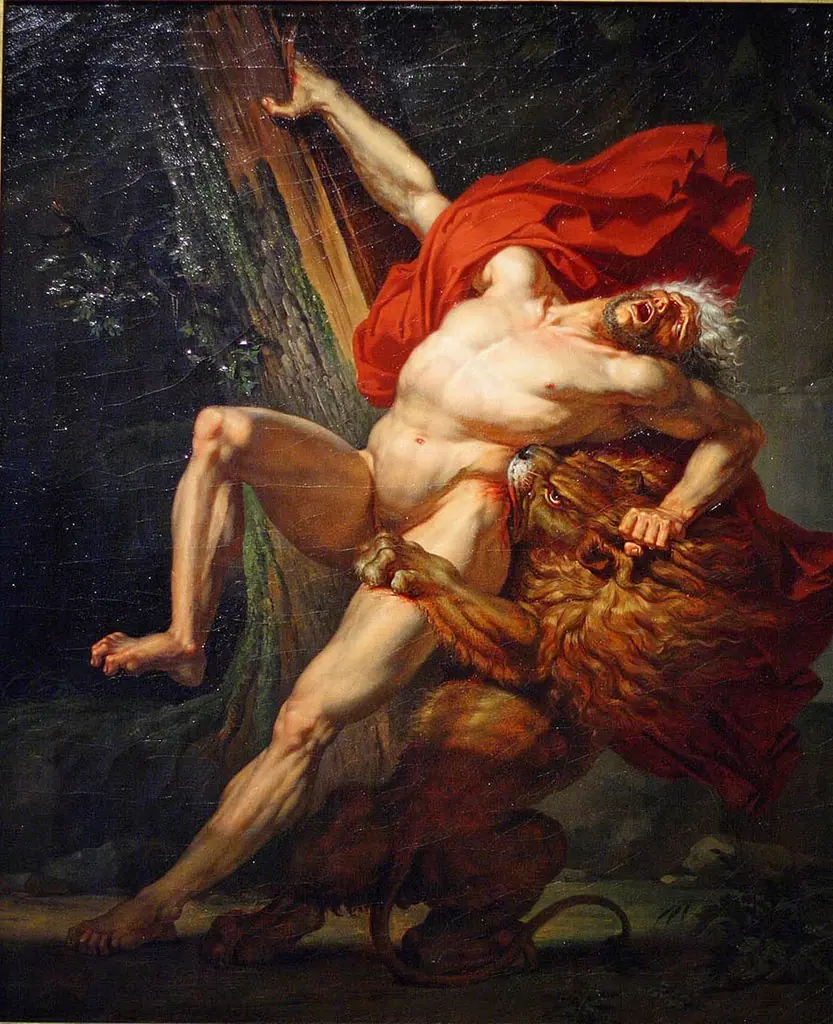 Milo of Croton, Attempting to Test His Strength, Is Caught and Devoured by a Lion
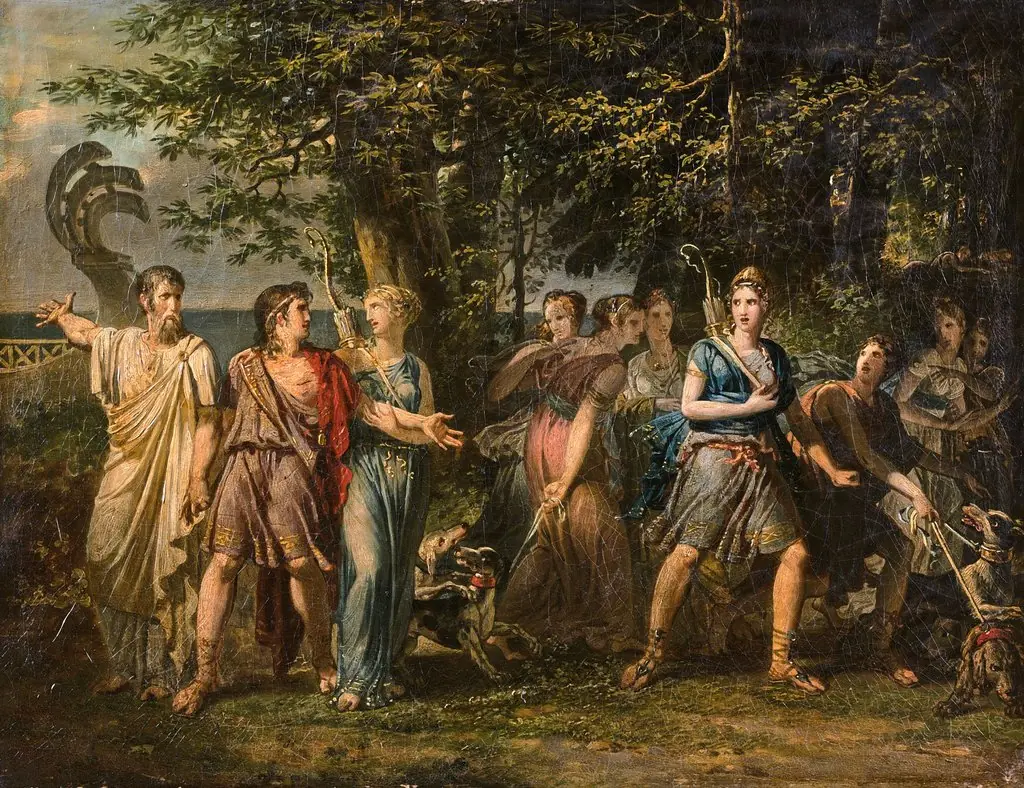 Telemachus, Urged by Mentor, Leaving the Island of Calypso
 Polyhymnia, Muse of Eloquence
 Apollo, God of Light, Eloquence, Poetry, and the Fine Arts with Urania, Muse of Astronomy
 Clio, Muse of History
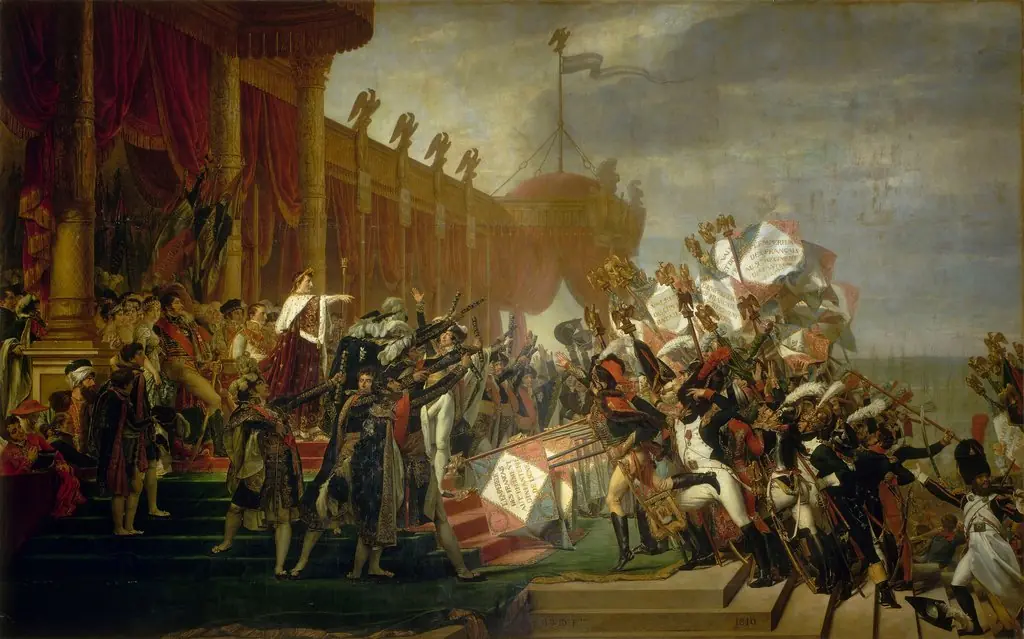 The Distribution of the Eagle Standards
 Attentat de Fieschi. Revue de la Garde nationale, 28 juillet 1835
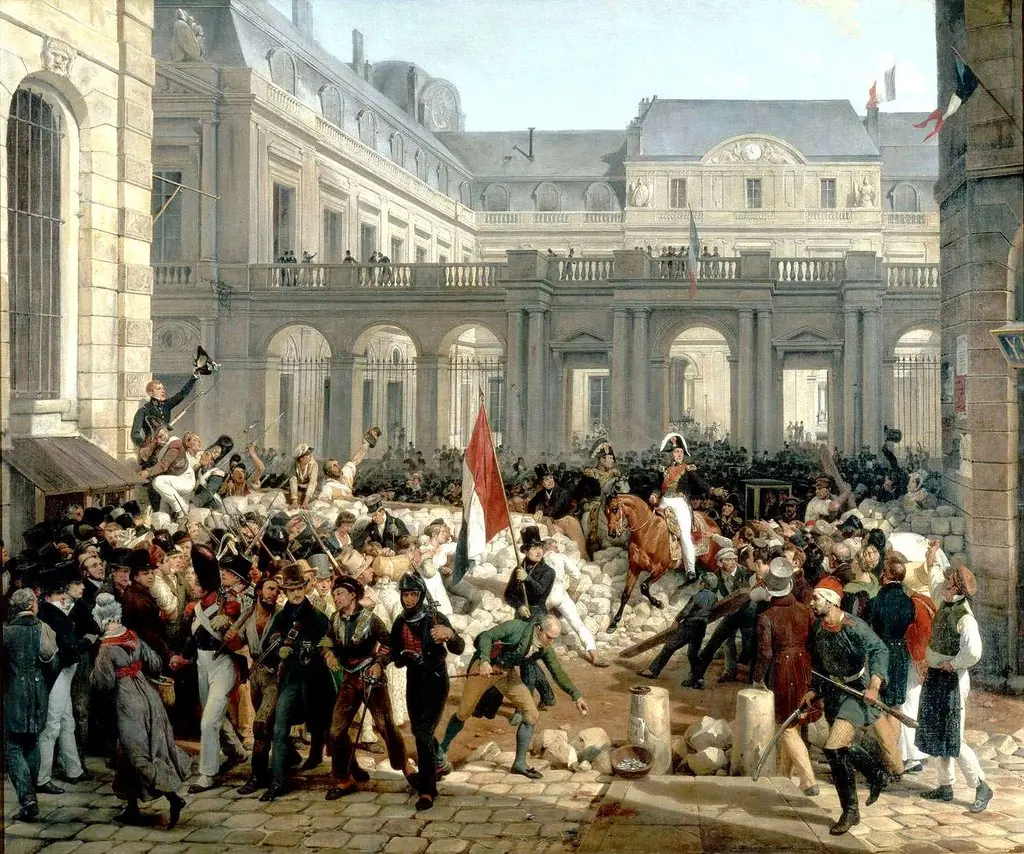 The Duke of Orleans Leaving the Palais-Royal
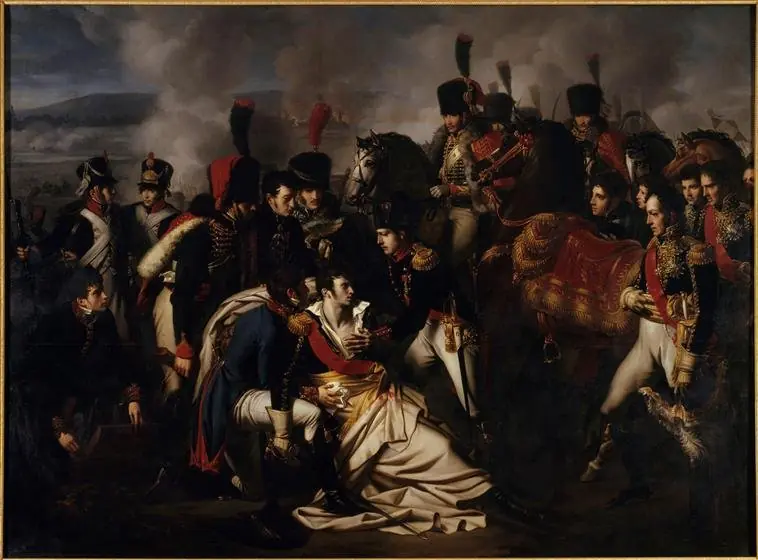 Last moments of Marshal Lannes at the Battle of Essling, 22 May 1809
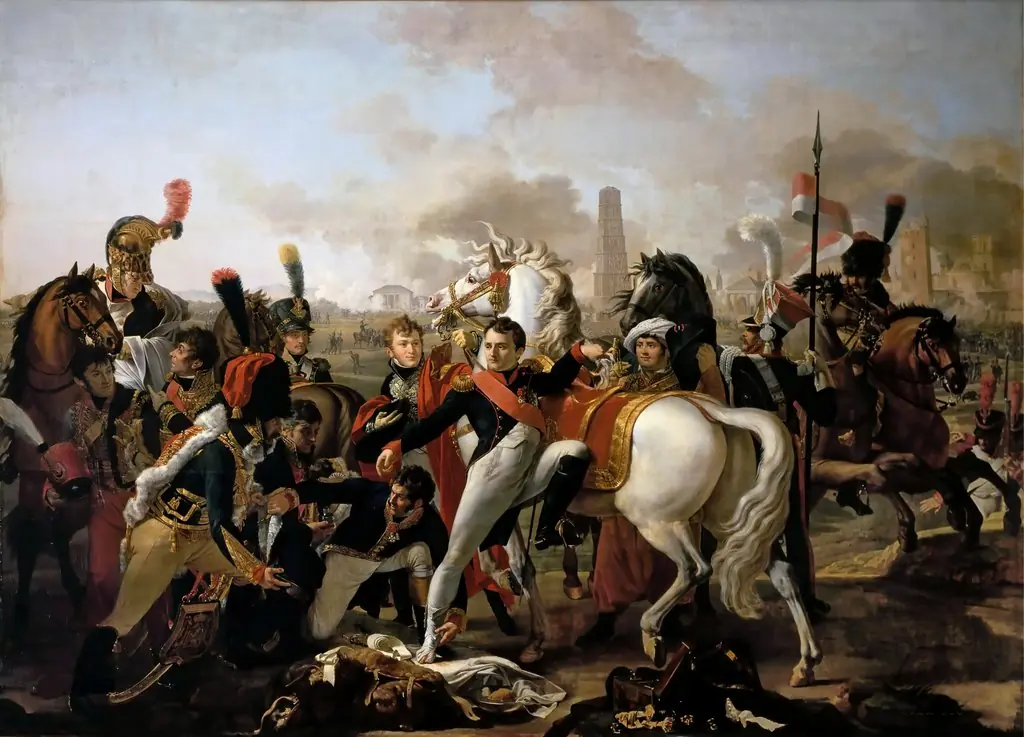 Napoleon dismounting with an injured foot at Regensburg, aided by the Surgeon, Yvan, April 23, 1809
 The Death of General Colbert
 Battle on a Bridge
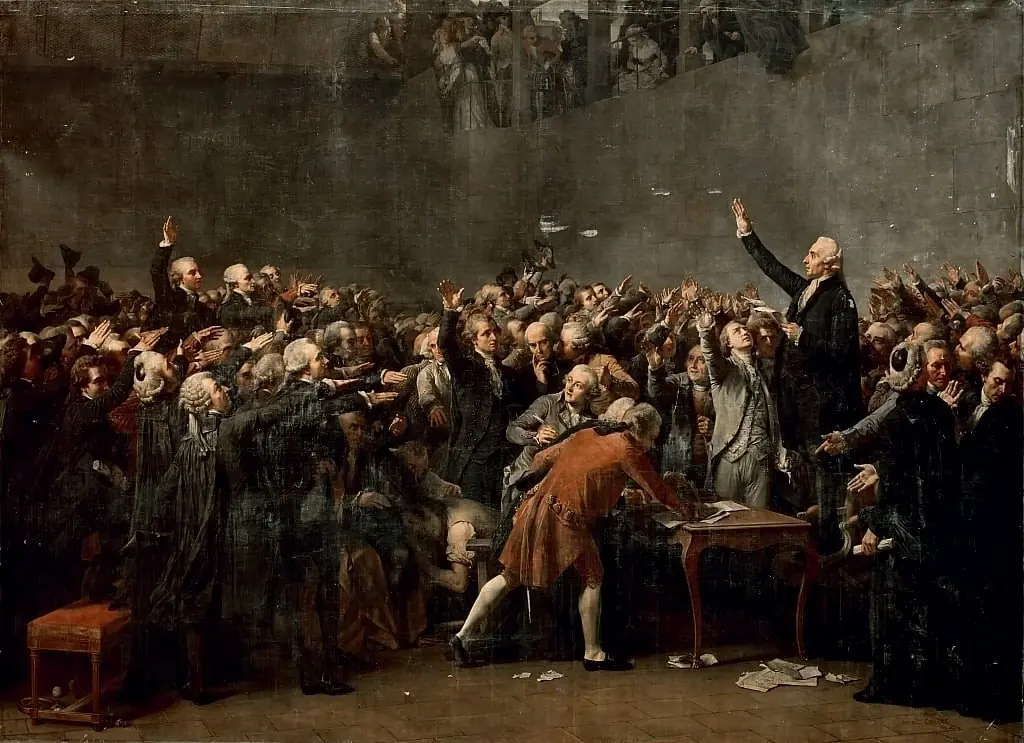 The Tennis Court Oath, 20 June 1879
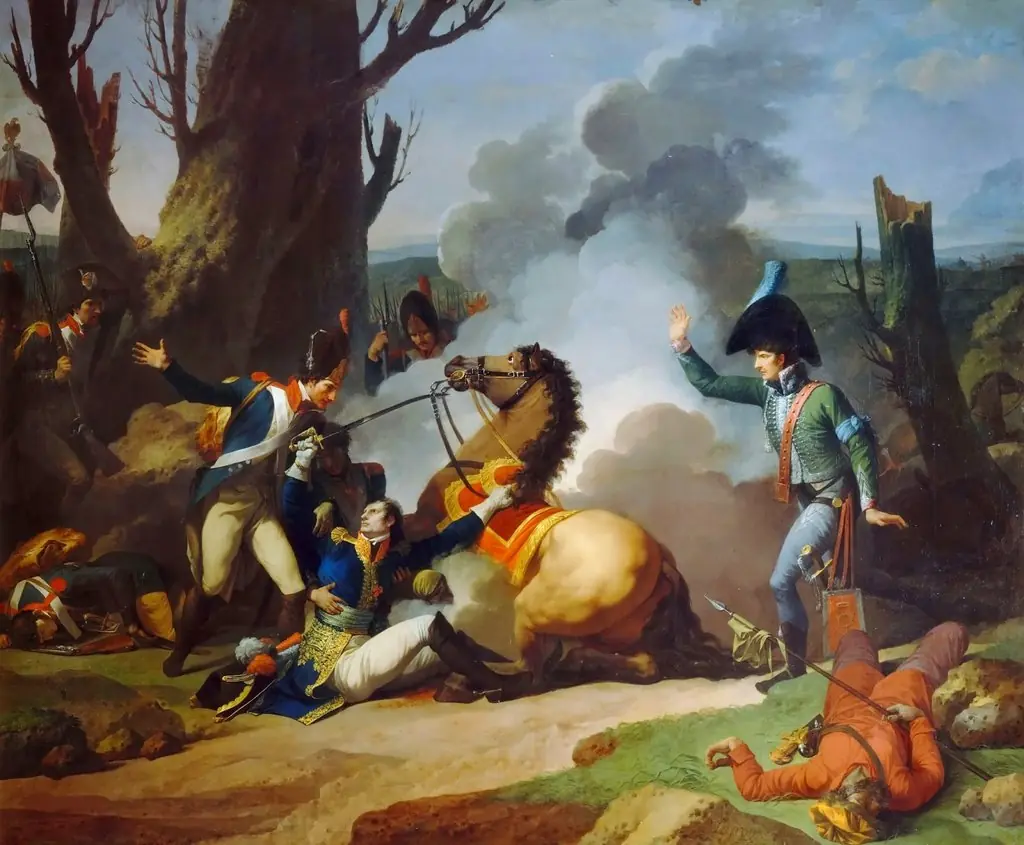 Death of General Valhubert, December 2, 1805
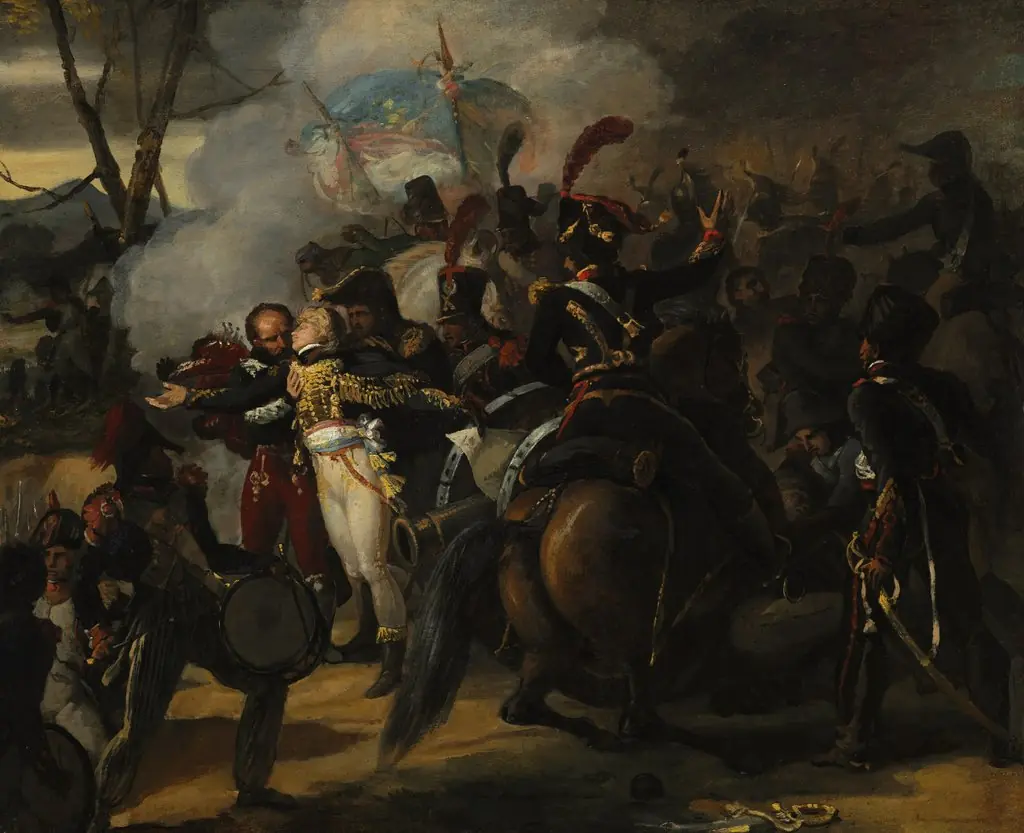 The Death of General Colbert
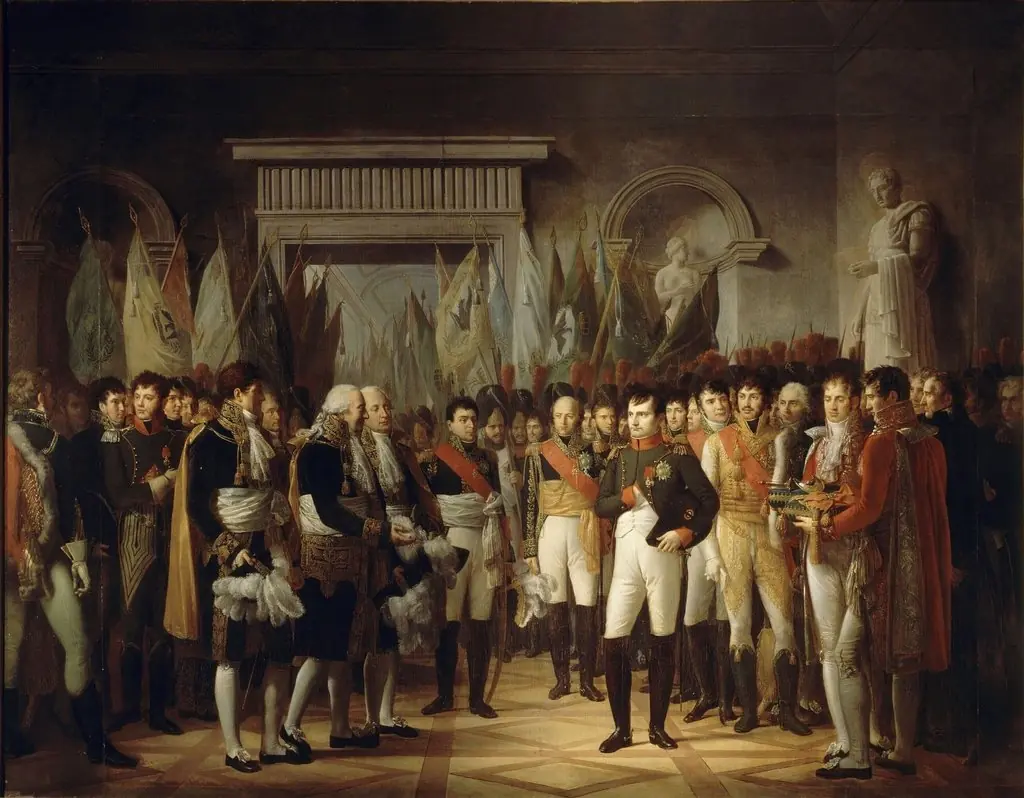 The Emperor receiving the deputies of the Conservative Senate in Berlin at the royal palace, 19 November 1806
 Napoleon I, at the Boulogne camp, distributes the crosses of the Legion of Honor, August 16, 1804