Artwork
The Cottage
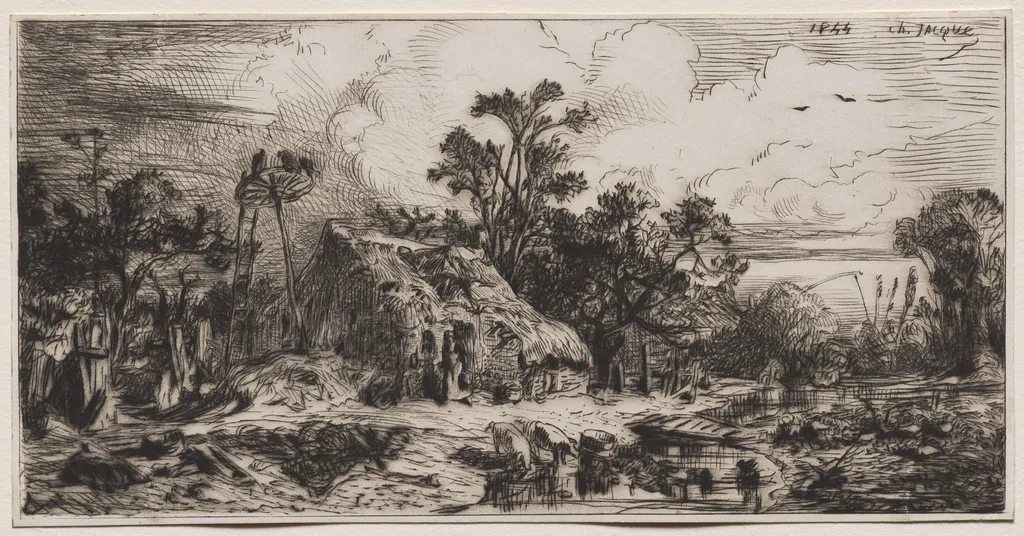
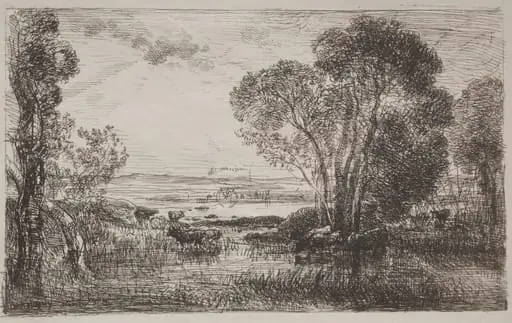
The Cottage is a print by the Romanticist artist Charles Jacque. It dates from 1844 and is held in the collection of the Cleveland Museum of Art.
About this work
The sky is lightly drawn with wispy clouds, and the whole image feels slightly sketchy, like it was made quickly.
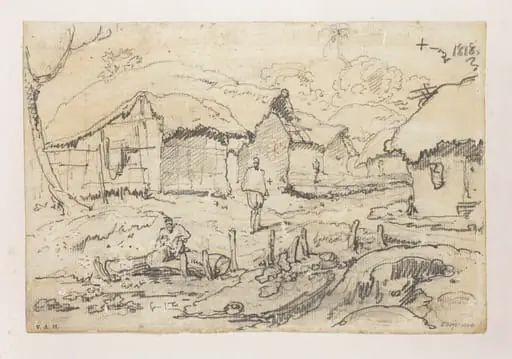
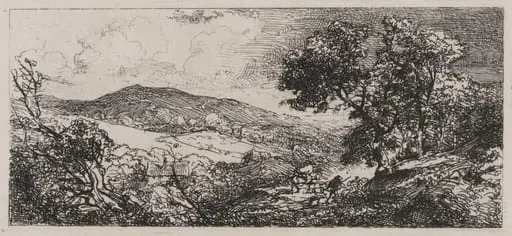
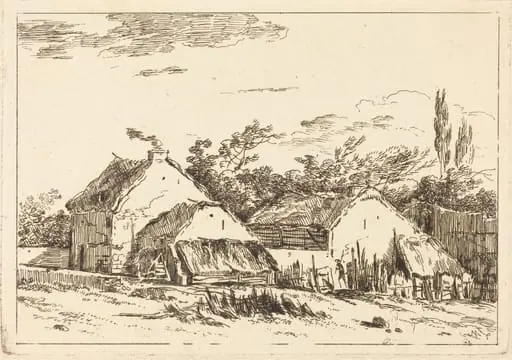
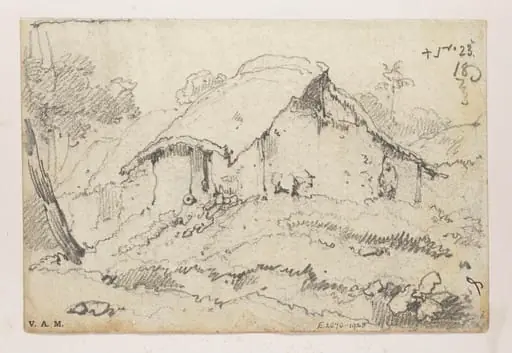
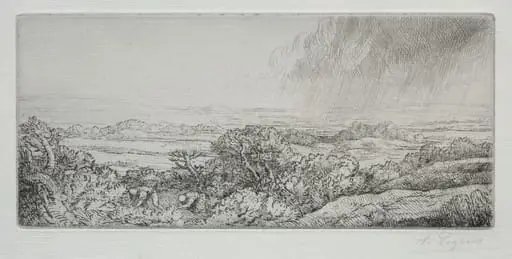
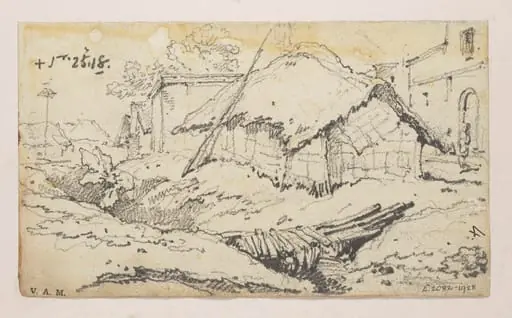
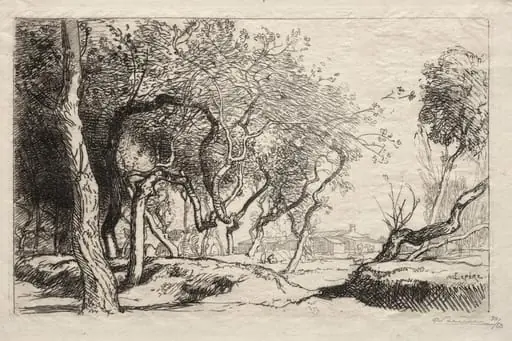
This sketch shows a quiet village scene with a thatched-roof cottage in the center. Tall trees surround it, and a few people walk or stand near the buildings. The ground is uneven, with rocks and a small stream running through the scene. The sky is lightly drawn with wispy clouds, and the whole image feels slightly sketchy, like it was made quickly.
The artist signed it "Ch. Jacque" in the top corner, along with the year 1844. The loose, textured lines give the scene a rough, almost hand-drawn feel.
Next, check out Romanticism to see how this style often focused on nature and everyday life.
Overview
Created in 1844 by Charles-Émile Jacque, *The Cottage* is a printed work reflecting the Barbizon School’s dedication to rural observation. Jacque, active in the same artistic circle as Jean-François Millet, used printmaking to capture quiet moments in the French countryside. The piece is not a polished finish but conveys immediacy, as if drawn on-site with minimal revision. Its modest scale and informal handling align with the movement’s rejection of academic idealism.
Subject & Meaning
The scene centers on a simple thatched cottage nestled among tall trees, with a small stream winding through uneven terrain. Figures nearby—indistinct but present—suggest daily life without drama or narrative. There is no heroism or symbolism; the value lies in the ordinary. The composition invites contemplation of rural solitude and the rhythms of peasant existence, consistent with Barbizon’s quiet reverence for the land and its inhabitants.
Technique & Style
Jacque employed loose, textured lines to build form, avoiding smooth contours in favor of a sketchlike immediacy. The sky is lightly rendered with faint cloud streaks, and the ground is suggested through irregular marks that imply rock and earth. The print’s hand-drawn quality, with visible pressure and variation in line weight, conveys a sense of direct observation. The signature and date in the upper corner reinforce its status as a personal, unembellished record.
History & Provenance
Produced in 1844, *The Cottage* emerged during the early years of the Barbizon School’s formation, when artists began gathering near Fontainebleau Forest to work directly from nature. Jacque’s prints from this period were often circulated among collectors and fellow artists, valued for their authenticity over commercial appeal. While its early ownership is undocumented, its survival reflects the growing interest in non-academic art during mid-19th-century France.
Context
This work belongs to a broader shift in French art away from historical and mythological themes toward depictions of everyday rural life. The Barbizon artists rejected studio conventions, choosing instead to observe and record the landscape and its people with honesty. *The Cottage* aligns with this ethos, sharing affinities with the quiet realism of contemporaries like Millet and Daubigny, and anticipating later movements that valued direct experience over idealization.
Legacy
Jacque’s prints, including *The Cottage*, contributed to the legitimization of printmaking as a medium for serious artistic expression, not merely reproduction. His emphasis on naturalism and informal technique influenced later generations of realist and impressionist artists who sought to capture transient moments in nature. Though less widely known than his peers, his work remains a quiet testament to the Barbizon commitment to seeing the ordinary with clarity and respect.
Artist & collection
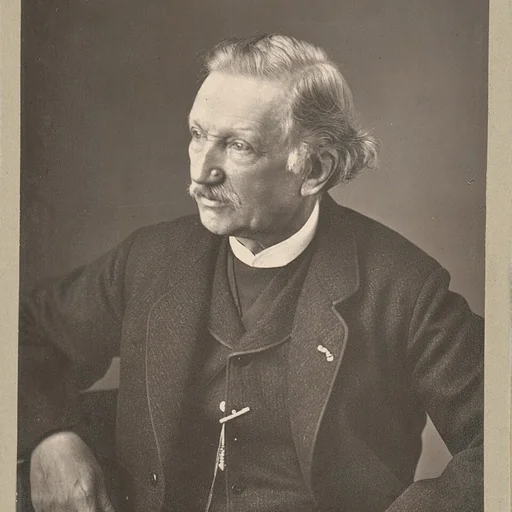
Artist
Charles-Émile Jacque (23 May 1813 – 7 May 1894) was a French painter of Pastoralism and engraver who was, with Jean-François Millet, part of the Barbizon School. He first learned to engrave maps when he spent seven years in the French Army.