Artwork
Le Fermier brulé (A Burnt-Out Farmer, Begging with his Family)
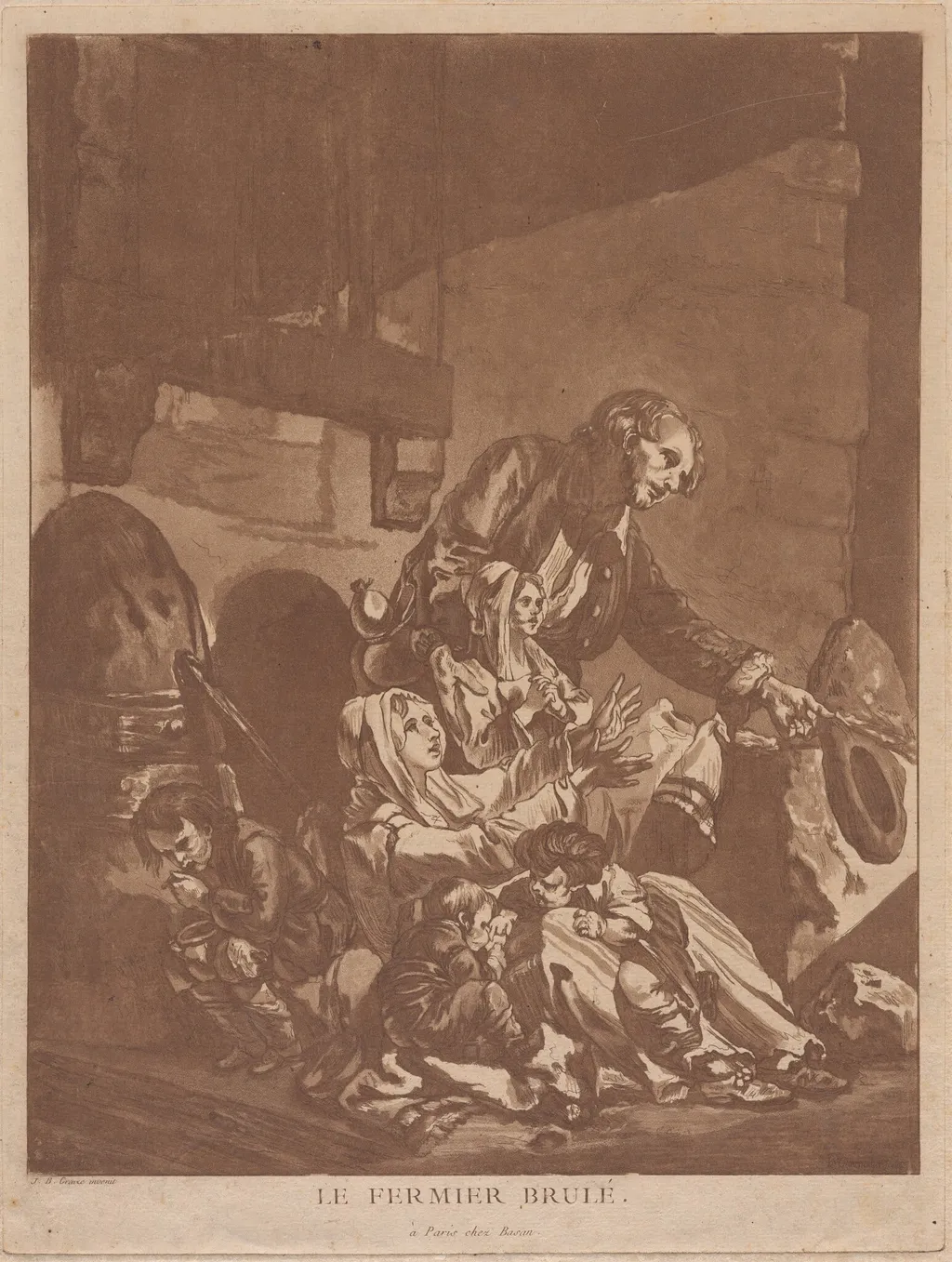
Le Fermier brulé (A Burnt-Out Farmer, Begging with his Family) is an ink print by the Romanticist artist François-Philippe Charpentier. It dates from 1764 and is held in the collection of the National Gallery of Art.
About this work
Overview
Charpentier, known for technical innovation in printmaking, used these methods to evoke atmosphere and emotion rather than mere documentation.
Created in 1764 by French engraver François-Philippe Charpentier, this print combines etching and aquatint in brown ink on laid paper. It portrays a family in extreme distress, their physical and emotional exhaustion rendered through tonal contrasts and textured lines. Charpentier, known for technical innovation in printmaking, used these methods to evoke atmosphere and emotion rather than mere documentation.
Subject & Meaning
The image centers on a man in tattered garments, holding a child, while other family members crouch or kneel nearby, their postures conveying weariness and despair. The title, 'A Burnt-Out Farmer,' suggests not literal fire but the erosion of livelihood and hope. The crumbling architecture behind them implies systemic neglect, framing personal suffering as the consequence of broader social and economic collapse.
Technique & Style
Charpentier employed aquatint to achieve subtle gradations of tone, enhancing the somber mood through atmospheric shadows. Etched lines define the figures’ ragged clothing and the ruinous backdrop, while the paper’s laid texture adds tactile depth. The absence of bright highlights and the dominance of mid-to-dark tones focus attention on the family’s vulnerability, using chiaroscuro to amplify emotional weight.
History & Provenance
Charpentier, trained in a Parisian copperplate workshop, developed an early mechanical method for aquatint around this period, improving control over tonal fields. This print likely emerged from his experimentation with these techniques. While specific early ownership records are scarce, its survival in institutional collections attests to its recognition as a significant example of 18th-century social commentary in print.
Context
In mid-18th-century France, rural hardship intensified due to poor harvests, taxation, and feudal obligations. Charpentier’s image aligns with a growing interest in depicting the lives of the poor, though it avoids overt political messaging. The work reflects a shift in print culture toward empathetic realism, influenced by Enlightenment concerns with human dignity and social inequality.
Legacy
Charpentier’s technical refinements in aquatint helped expand the expressive range of printmaking, influencing later artists seeking to convey mood through tone. While not widely reproduced in his lifetime, this print remains a rare and early example of using print media to humanize rural poverty. It stands as a quiet but forceful document of social observation in pre-revolutionary France.
Artist & collection

Artist
François-Philippe Charpentier (b. Blois, 1734; d. there 22 July 1817) was a French engraver and inventor. His father was a bookbinder, a poor man who reportedly made many sacrifices so that his son might attend the…

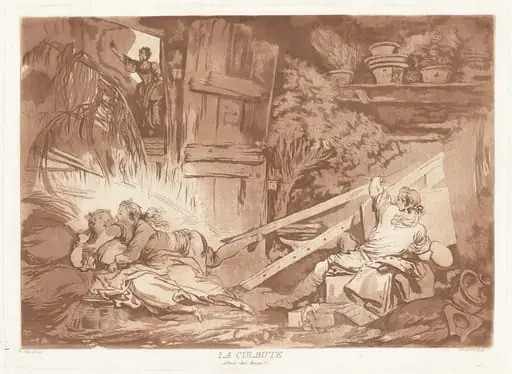 La Culbute (The Tumble)
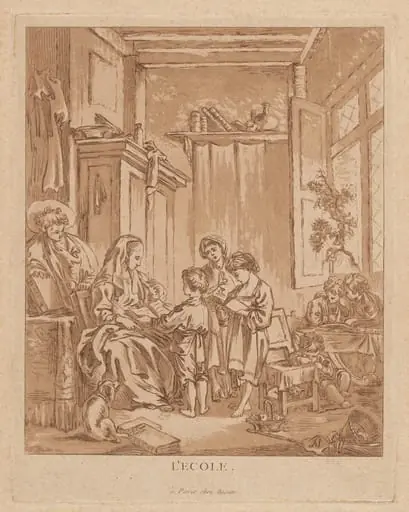 L’École (The School)
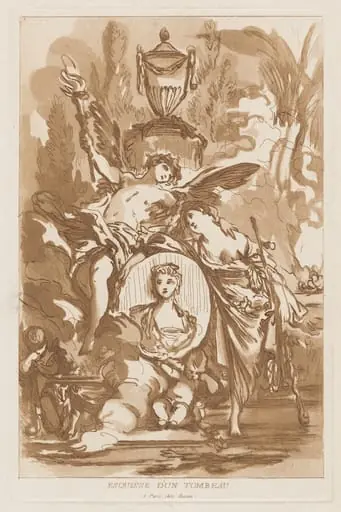 Esquisse d’un tombeau (Sketch for a Tomb)
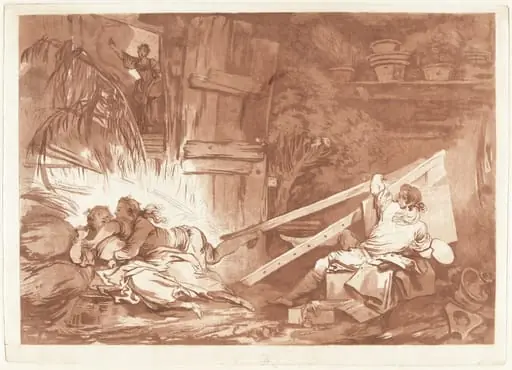 The Tumble
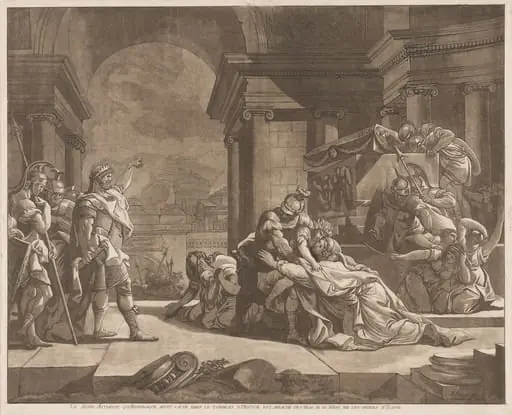 Le Jeune Astianax qu’Andromaque avoit caché dans le tombeau d’Hector est arraché des bras de sa Mere par les ordres d'Ulisse (Young Astianax, who Andromache Hid in Hector's Tomb, is Seized from his Mother's Arms by Ulysses' Orders)
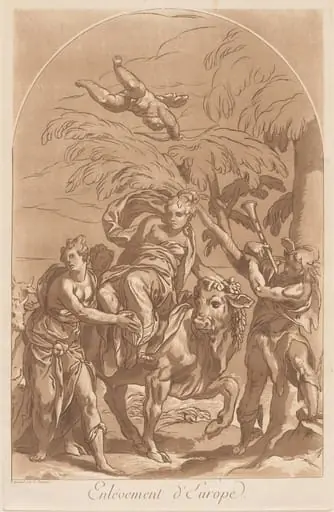 Rape of Europa
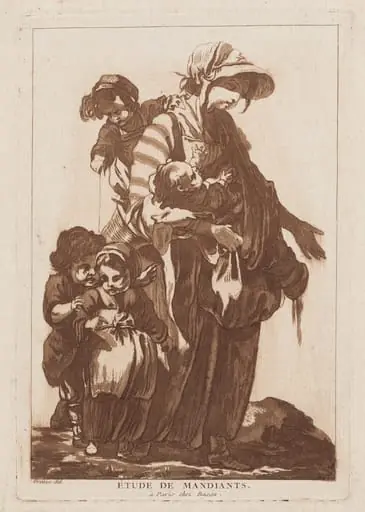 Étude de Mandiants (Study of Beggars)
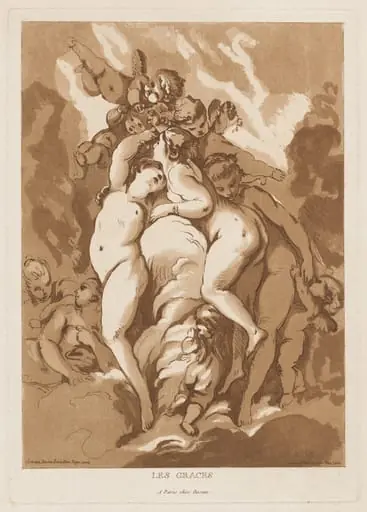 Les Graces (The Graces)
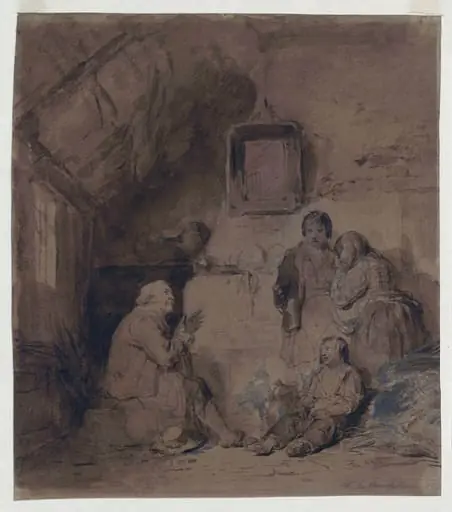 A Poor Family Lamenting Their Situation in Their Humble Home
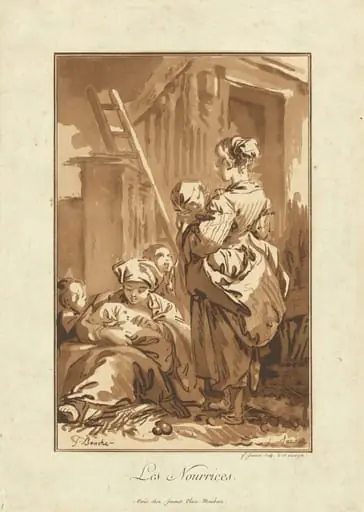 Les Nourrices (The Nurses)
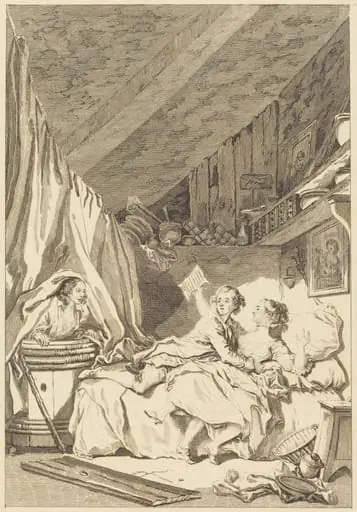 Le savetier
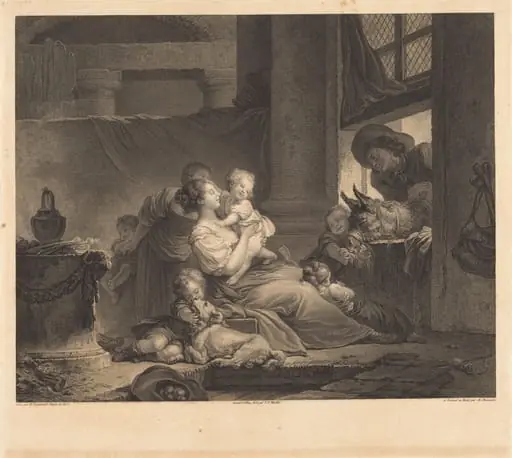 La famille du fermier
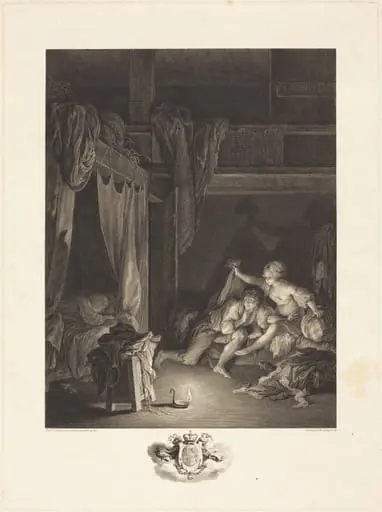 La Sentinelle en défaut
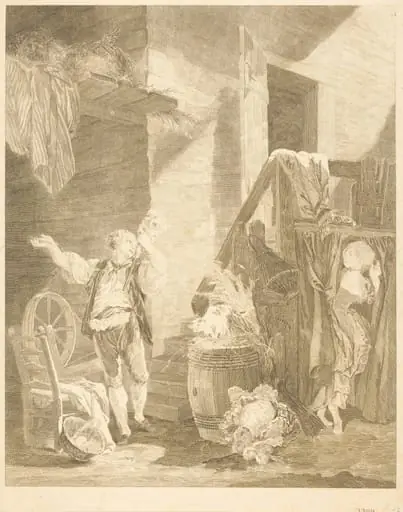 Rose et Colas
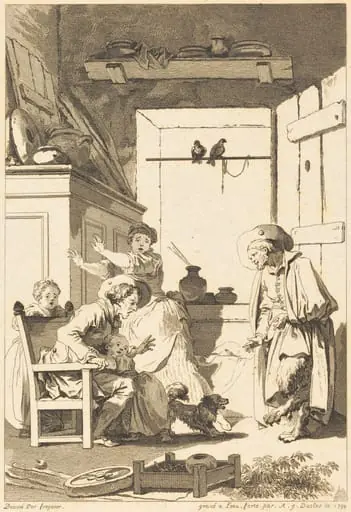 Belphegor
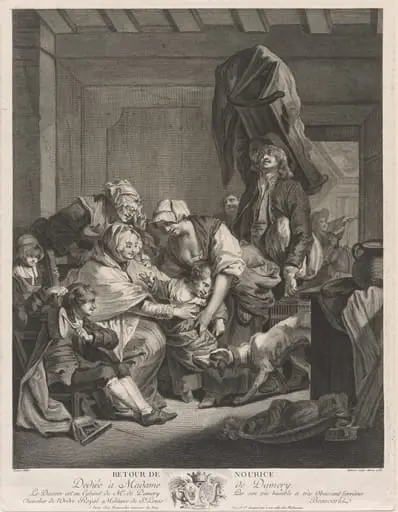 Retour de Nour(r)ice (Return from the Wet Nurse)
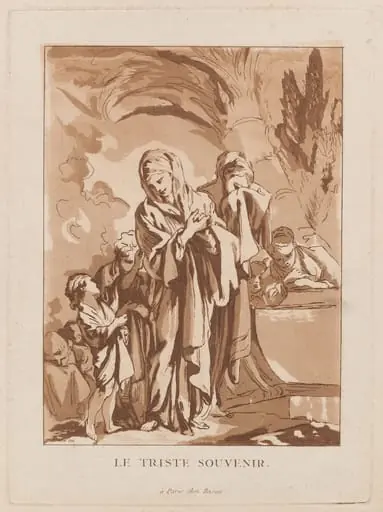 Le Triste Souvenir (The Sad Memory)
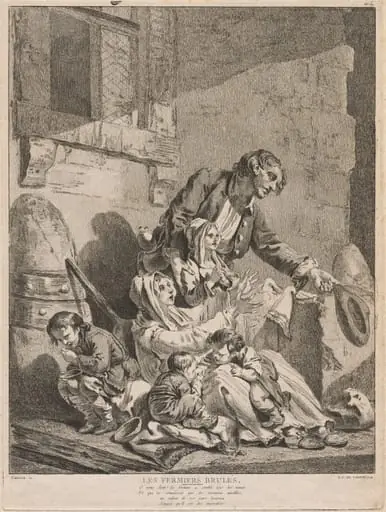 Les Fermiers brulés (A Burnt-Out Farmer, Begging with his Family)