Artwork
Veue de quelques Grottes solitaires de la Thebaide
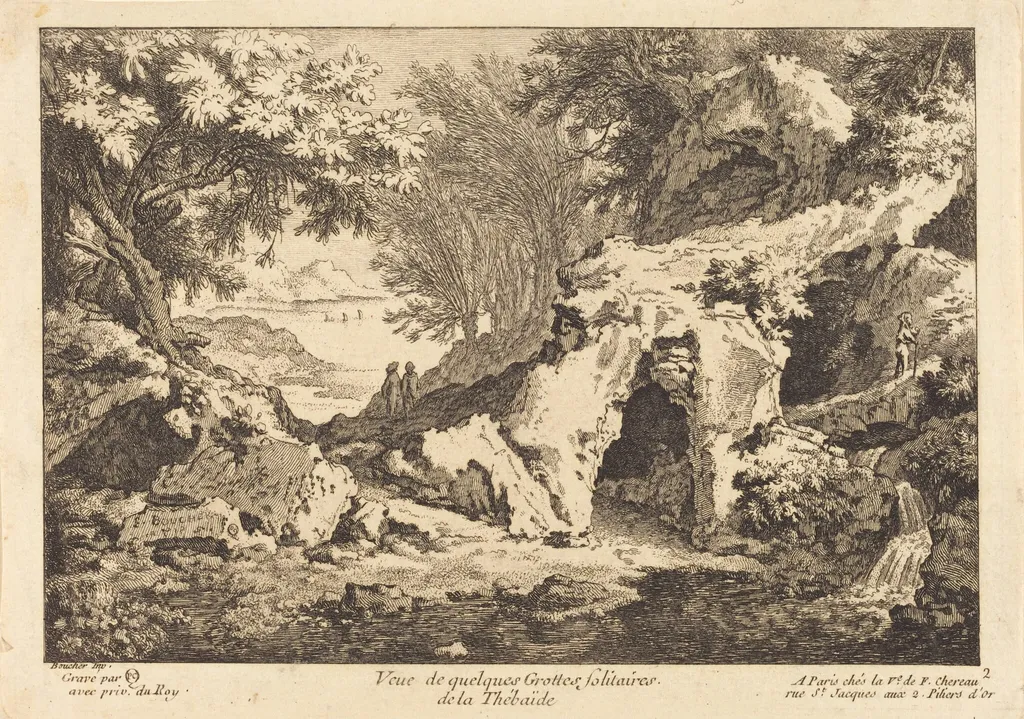
Veue de quelques Grottes solitaires de la Thebaide is an ink print by the Baroque artist Quentin-Pierre Chedel. It dates from 1734 and is held in the collection of the National Gallery of Art. Quentin‑Pierre Chedel’s 1734 etching, *Vue de quelques Grottes solitaires de la Thèbaïde*, presents a stark, monochrome landscape.
About this work
Overview
Quentin‑Pierre Chedel’s 1734 etching, *Vue de quelques Grottes solitaires de la Thèbaïde*, presents a stark, monochrome landscape. A central cave mouth opens amid rugged rock, while tangled trees dominate the upper half and jagged cliffs and boulders occupy the lower portion. A narrow strip of water runs along the bottom, punctuated by small figures that may represent animals or people.
Subject & Meaning
The composition depicts an isolated, desert‑like region of the Egyptian Thebaid, known historically for its hermitages and monastic caves. By emphasizing the solitude of the caves and the harsh terrain, the work evokes themes of asceticism and spiritual retreat, inviting viewers to contemplate the relationship between nature’s austerity and human devotion.
Technique & Style
The print’s dense, textured strokes convey dramatic chiaroscuro, with deep shadows accentuating the cliffs and lighter areas revealing the water’s surface.
Executed in traditional etching, Chedel incised the image onto a metal plate, allowing acid to bite the lines and create a range of tonal values. The print’s dense, textured strokes convey dramatic chiaroscuro, with deep shadows accentuating the cliffs and lighter areas revealing the water’s surface. The overall effect is both precise and atmospheric, characteristic of early‑18th‑century French printmaking.
Context
During the early 1700s, the Thebaid’s remote caves attracted European interest as symbols of early Christian monasticism. Artists often rendered these sites to satisfy antiquarian curiosity and to explore the sublime qualities of barren landscapes. Chedel’s work aligns with this trend, offering a visual study of a region that blended religious significance with natural drama.
Artist & collection


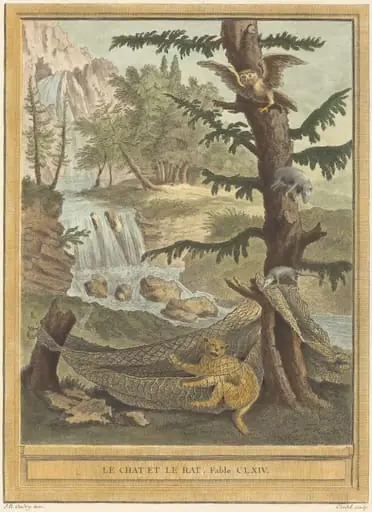 Le chat et le rat (The Cat and the Rat)
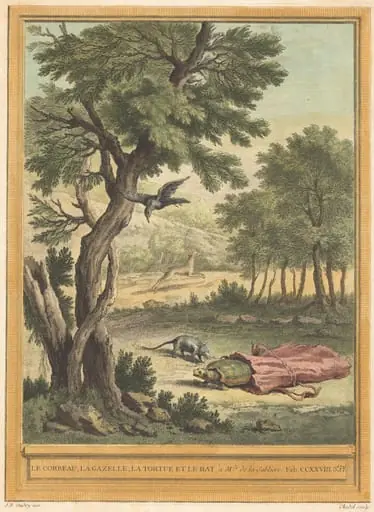 Le corbeau, la gazelle, la tortue et le rat (The Crow, the Gazelle, the Tortoise, and
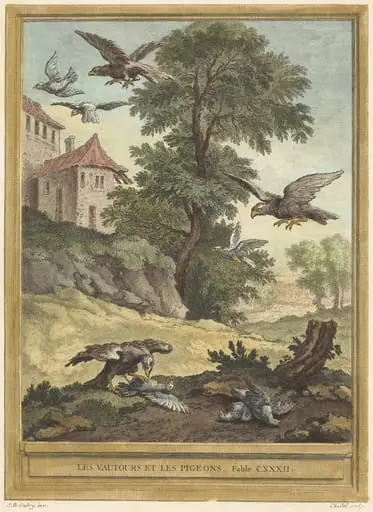 Les vautours et les pigeons (Vultures and Pigeons)
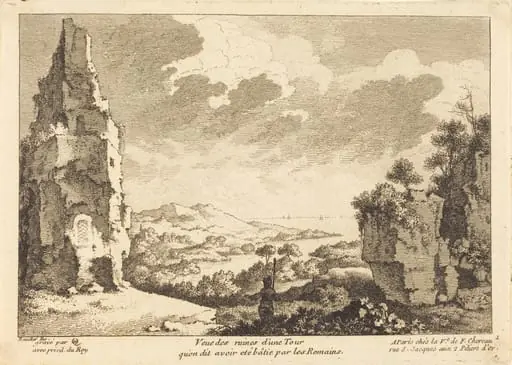 Veue des ruines d'une Tour qu'on dit avoir ete batie par les Romains
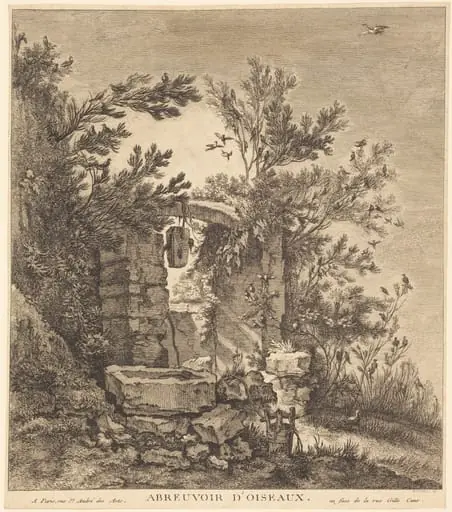 Abreuvoir d'oiseaux (The Birds' Watering Place)
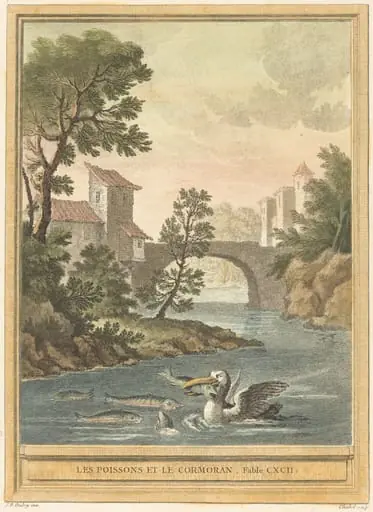 Les poissons et le cormoran (The Fish and theCormorant)
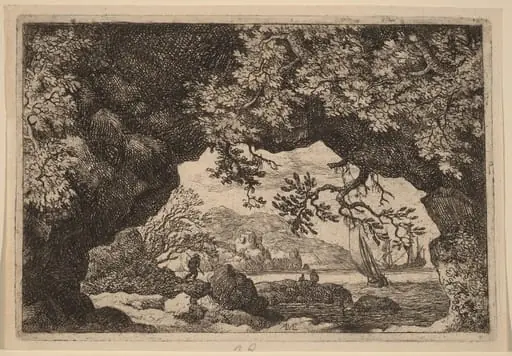 View through a Pierced Rock
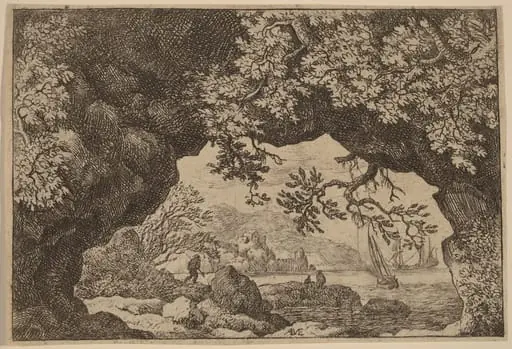 View through a Pierced Rock
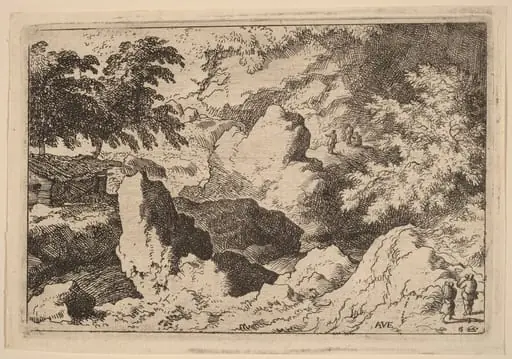 Three Men on a Rock
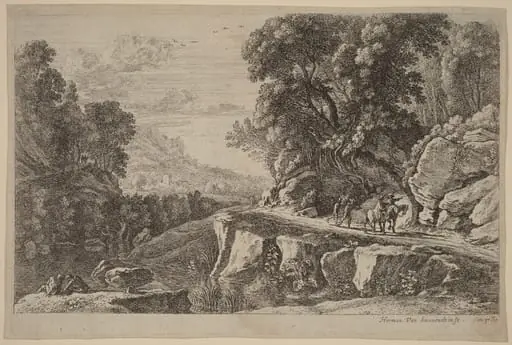 The Two Horsemen
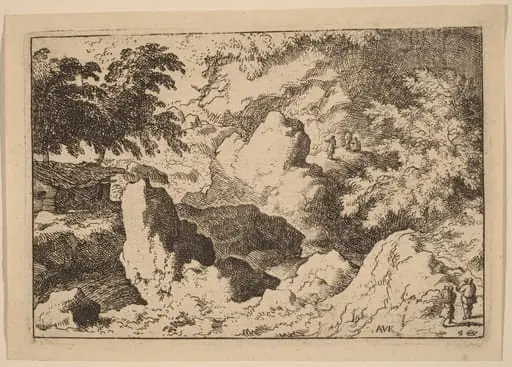 Three Men on a Rock
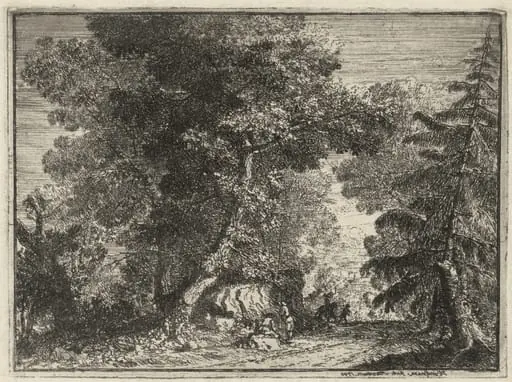 A Road through the Woods
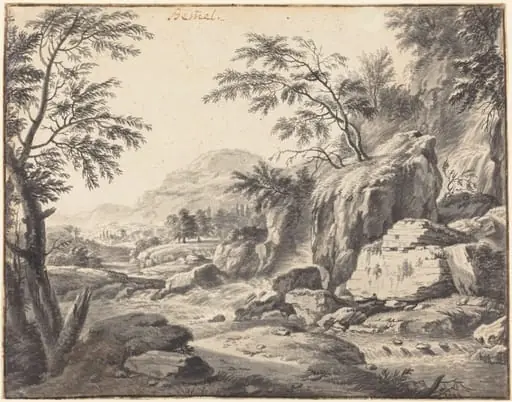 Classical Landscape with a Waterfall
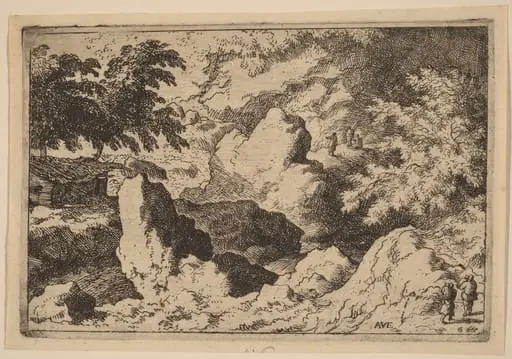 Three Men on a Rock
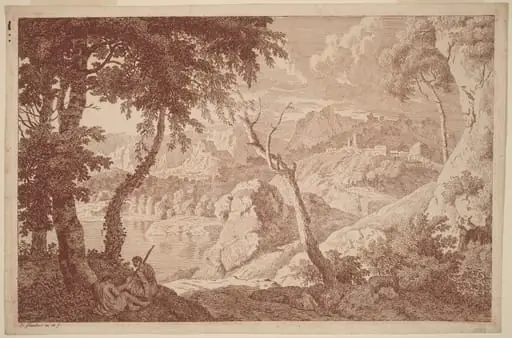 Mountain Landscape with Two Men Resting
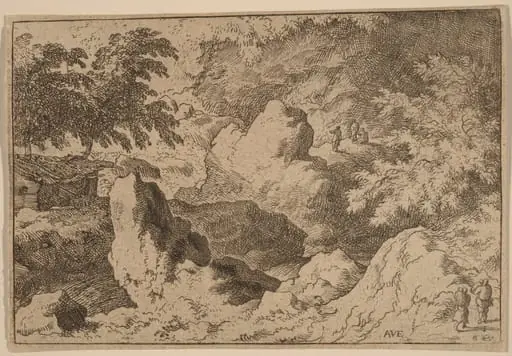 Three Men on a Rock
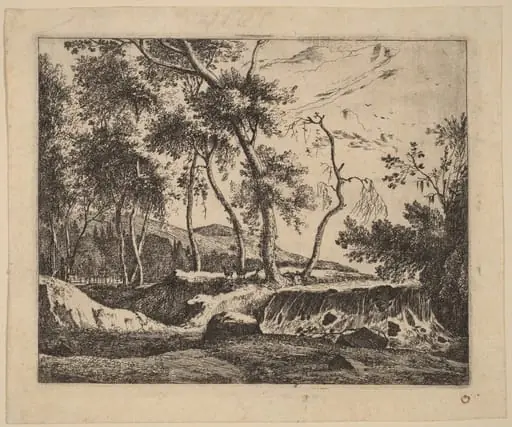 The Waterfall: pl.6
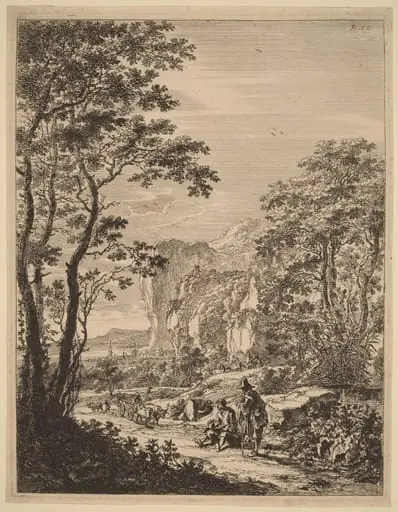 The Ox-Cart: View between Ancona and Sinigaglia