Artwork
Les poissons et le cormoran (The Fish and theCormorant)
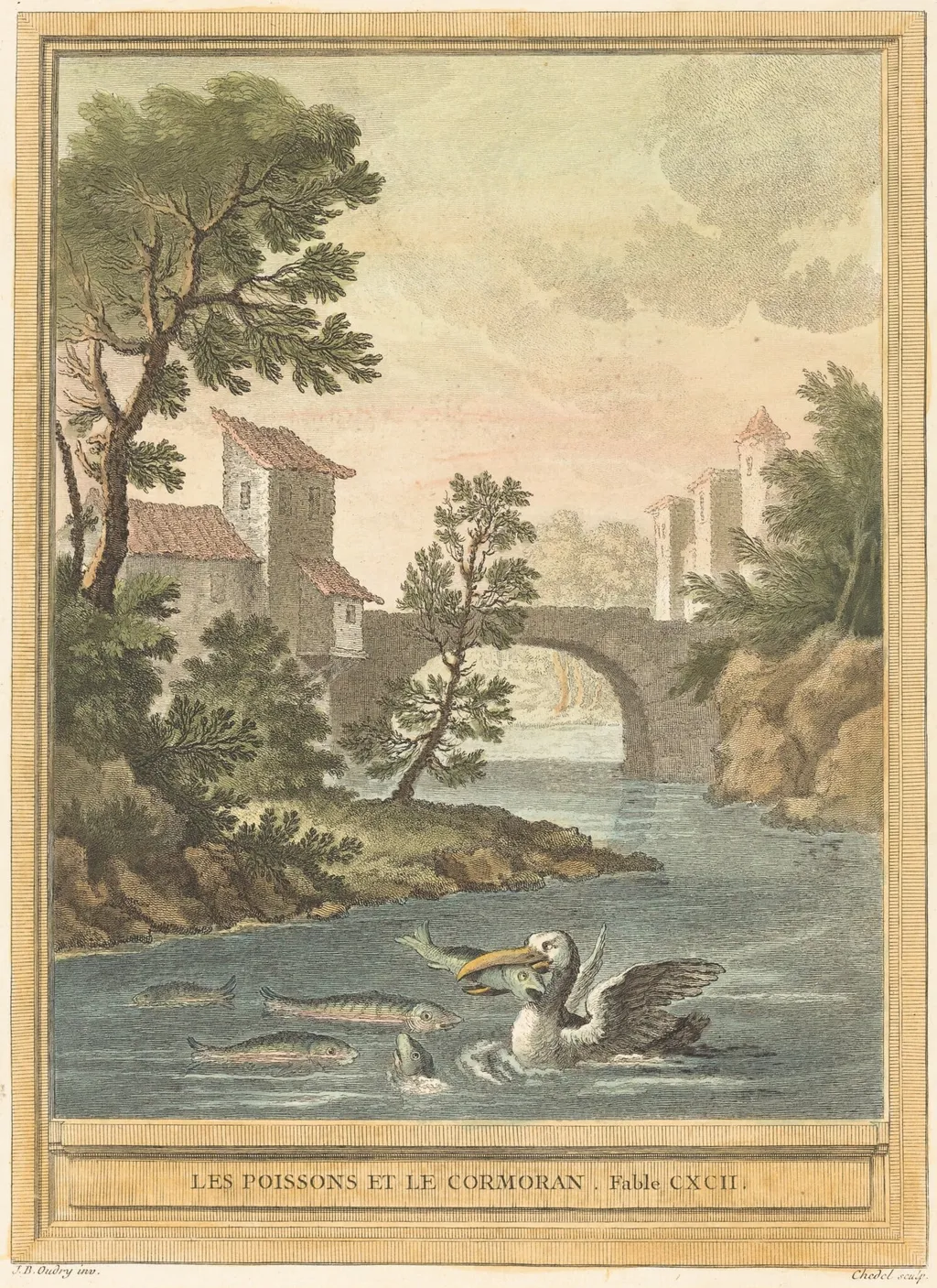
Les poissons et le cormoran (The Fish and theCormorant) is an ink print by the Romanticist artist Quentin-Pierre Chedel. It dates from 1759 and is held in the collection of the National Gallery of Art.
About this work
Overview
Les poissons et le cormoran (The Fish and the Cormorant) is a hand-colored etching created by Quentin-Pierre Chedel in 1759. The print depicts a serene river scene, blending natural elements with subtle narrative suggestion.
Subject & Meaning
The scene features a cormorant in the act of diving, with a smaller bird nearby, set against the backdrop of an ancient stone bridge, overgrown ruins, and surrounding trees. The composition alludes to a fable, as hinted by the title, though the specific moral or story is not explicitly illustrated.
Technique & Style
Chedel employed etching as the primary technique, characterized by precise line work, to capture the details of the natural setting. Delicate hand-coloring enhances the etching, emphasizing the nuances of the river environment and the textures of the stone and foliage.
History & Provenance
Created in 1759 by Quentin-Pierre Chedel, the etching's provenance details are not specified here, though its creation date situates it within 18th-century European artistic practices, particularly the appreciation for nature scenes and fable-inspired works during this period.
Context
The work reflects the 18th-century European interest in landscapes, wildlife, and the allegorical use of fables in art. The choice of a cormorant, a bird often associated with fishing and solitude, may symbolize themes related to industry, patience, or the human relationship with nature.
Legacy
While specific details on the etching's direct influence or widespread recognition are not provided, it contributes to the broader legacy of 18th-century etching techniques and the enduring appeal of nature and fable-inspired themes in European art.
Artist & collection


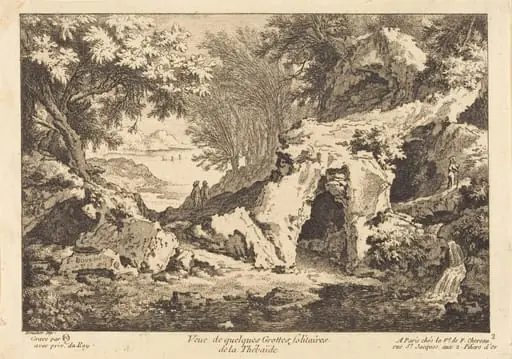 Veue de quelques Grottes solitaires de la Thebaide
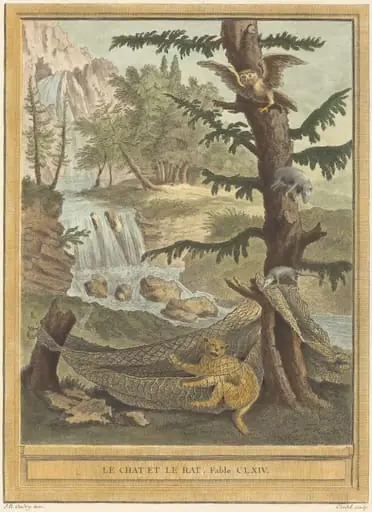 Le chat et le rat (The Cat and the Rat)
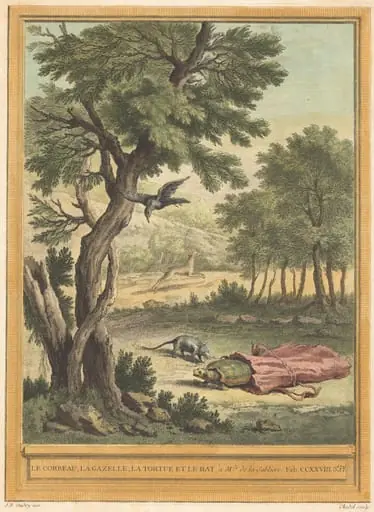 Le corbeau, la gazelle, la tortue et le rat (The Crow, the Gazelle, the Tortoise, and
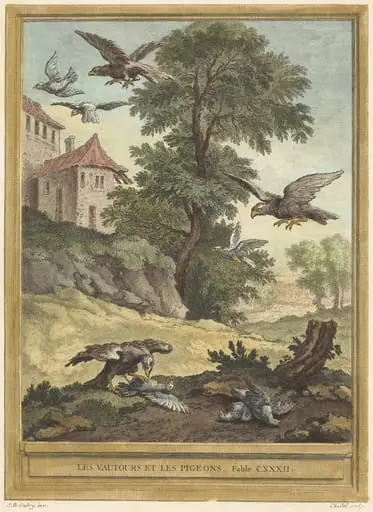 Les vautours et les pigeons (Vultures and Pigeons)
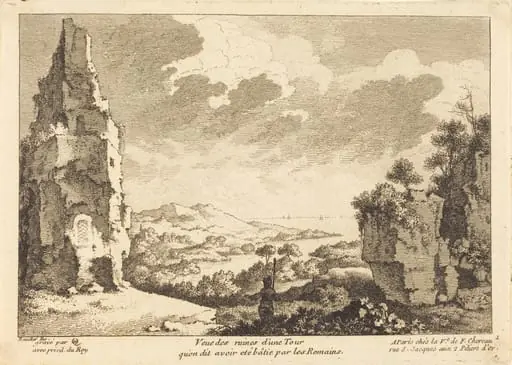 Veue des ruines d'une Tour qu'on dit avoir ete batie par les Romains
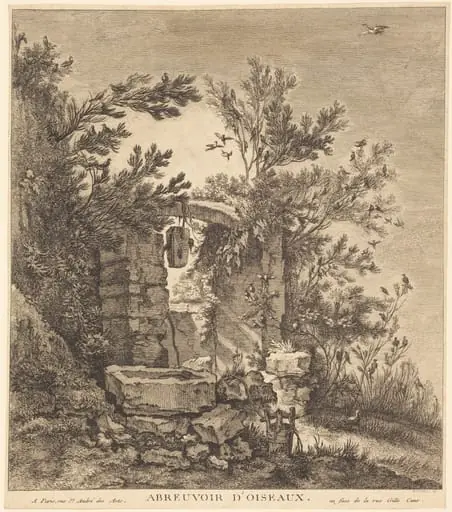 Abreuvoir d'oiseaux (The Birds' Watering Place)
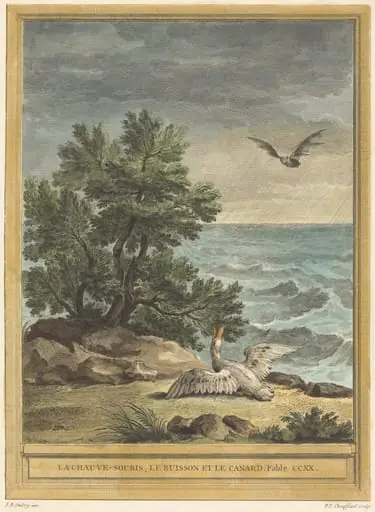 La chauve-souris, le buisson et le canard (The Bat, the Bush, and the Duck)
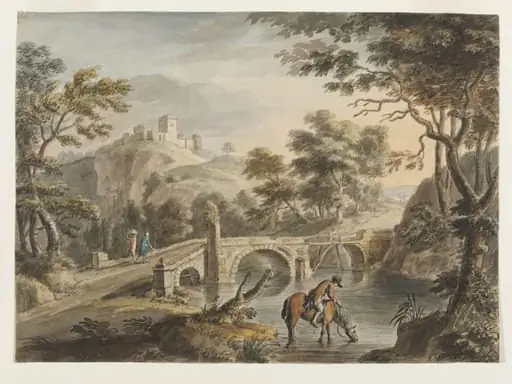 Landscape with Bridge
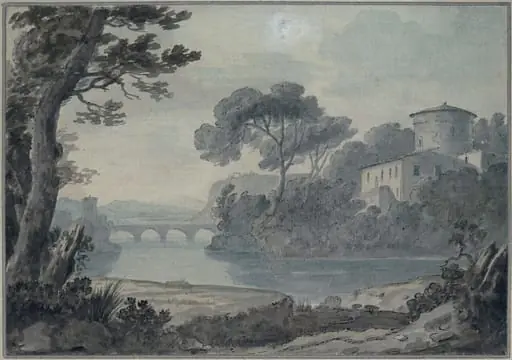 View near Rome
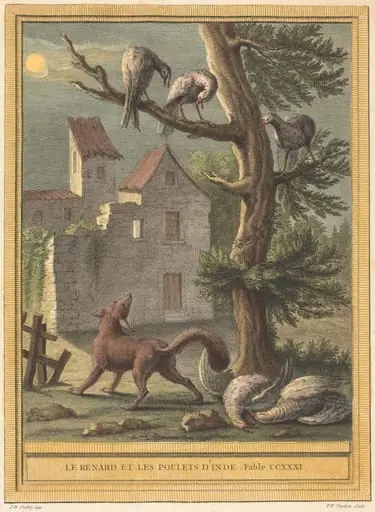 Le renard et les poulets d'Inde (The Fox and the Hens from India)
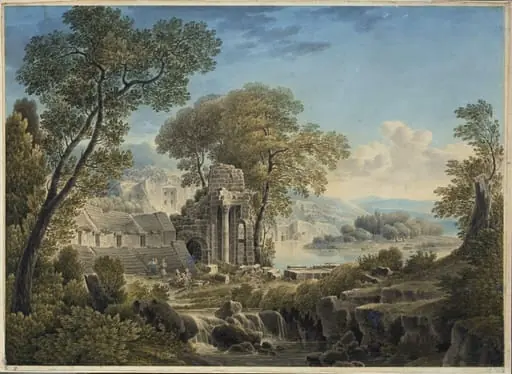 Theatre of Myra, now Demre, in Lycia
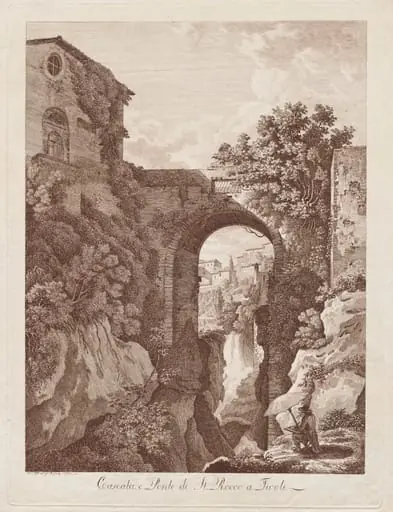 St. Rocco Waterfall and Bridge at Tivoli (Cascata e Ponte di St. Rocco a Tivoli)
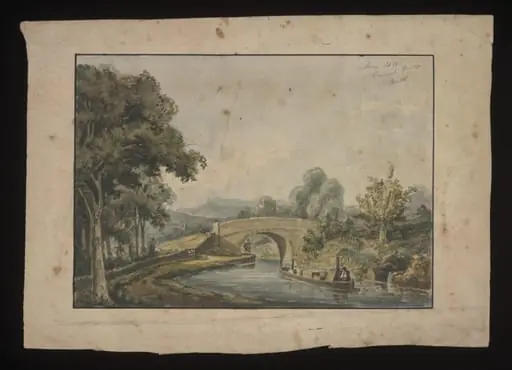 Watercolour drawing by the Grieve family, probably by John Henderson Grieve, showing a canal bridge near Bath
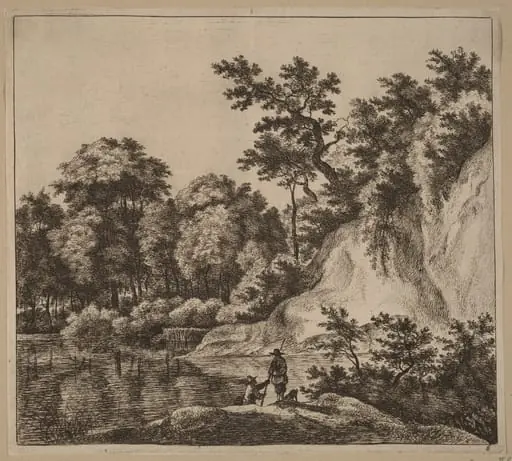 Landscape with River and Rock
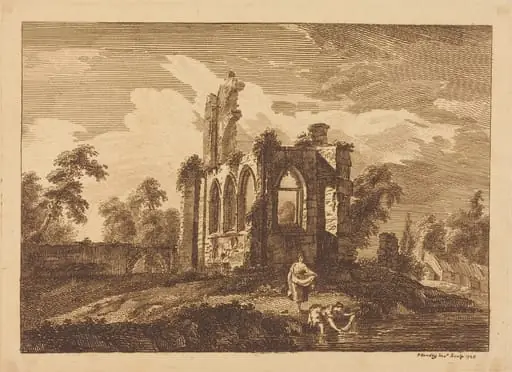 Ruins with Two Women Washing Clothes in a River
 View of Capelle Castle on the Rhine
 Trade Card of Pierre Mourgeon