Artwork
Copy of a detail of the Ghent Altarpiece, The Pilgrims, by Hubert and Jan van Eyck in the church of St. Bavon, Ghent.
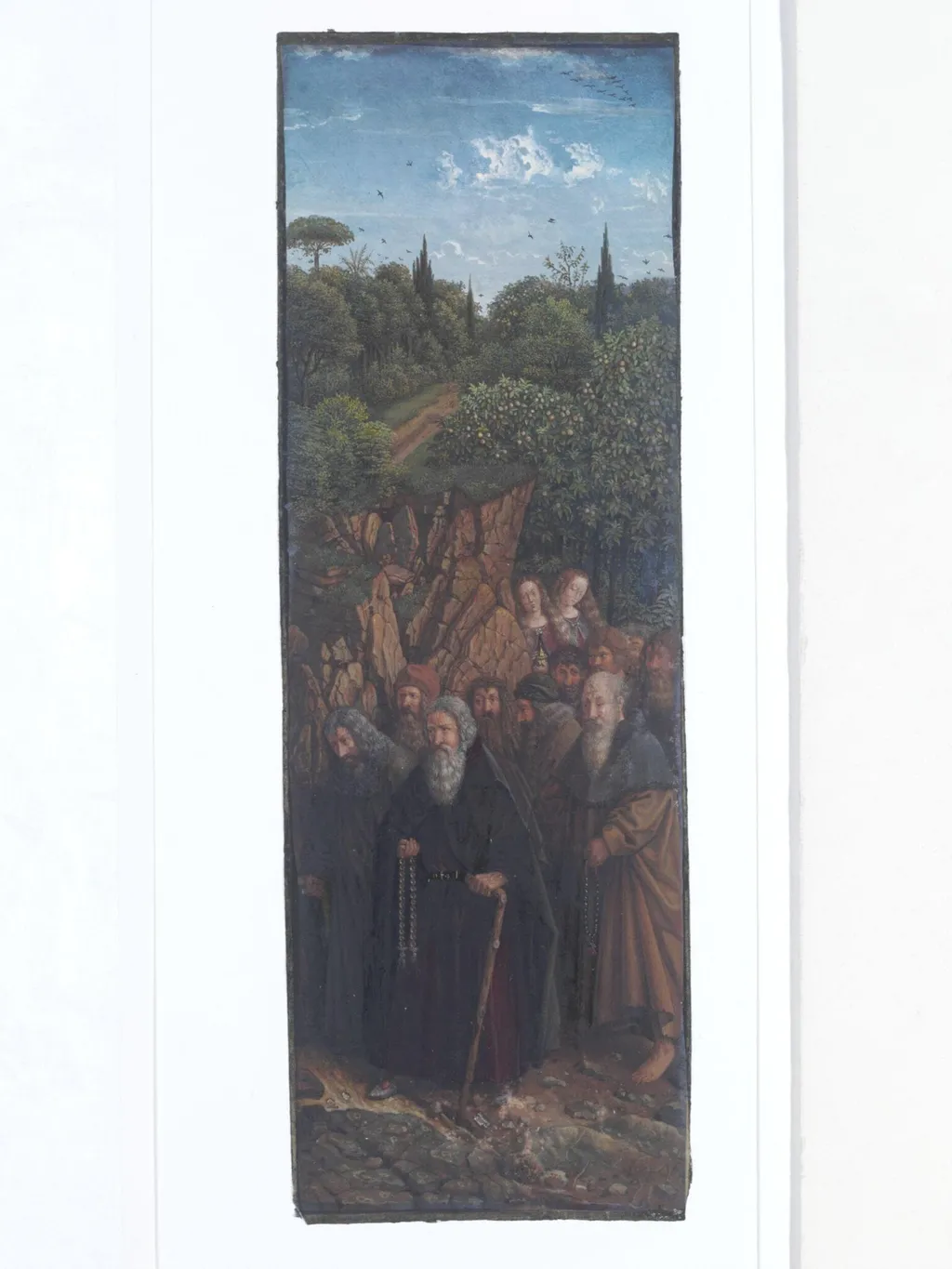
Copy of a detail of the Ghent Altarpiece, The Pilgrims, by Hubert and Jan van Eyck in the church of St. Bavon, Ghent. is a watercolor work on paper by the Impressionist artist Christian Schultz. It dates from 1864 and is held in the collection of the Victoria and Albert Museum.
About this work
Overview
This watercolour is a 19th-century copy of a detail from *The Pilgrims* panel of the renowned Ghent Altarpiece, originally created by the van Eyck brothers. Executed by Christian Schultz in 1864, it was later published by Hangard-Mauge in 1869.
Subject & Meaning
The work depicts a gathering of robed, bearded figures around a central rocky outcropping, set against a backdrop of trees and a blue sky. The scene, rooted in the original altarpiece, conveys a sense of solemnity and communal focus.
Technique & Style
Schultz's copy is characterized by realistic rendering, with meticulous attention to the textures of clothing and the subtleties of facial expressions. Notably, the detailed rocky centerpiece adds depth and tactile quality to the composition.
History & Provenance
Commissioned by the Arundel Society in 1864, the watercolour was created by Christian Schultz and subsequently published in 1869 by Hangard-Mauge, reflecting the society's efforts to disseminate artistic reproductions.
Context
While the original Ghent Altarpiece is a landmark of Early Netherlandish painting, Schultz's copy postdates the Impressionist movement's emergence, though the described influence appears anomalous given the work's realistic, detailed style, more aligned with the Arundel Society's reproductive aims than Impressionist innovations.
Legacy
As a reproduction, its significance lies in its role as an accessible, detailed copy of a portion of the Ghent Altarpiece during the 19th century, contributing to the broader dissemination of Early Netherlandish art to a wider audience.
Artist & collection

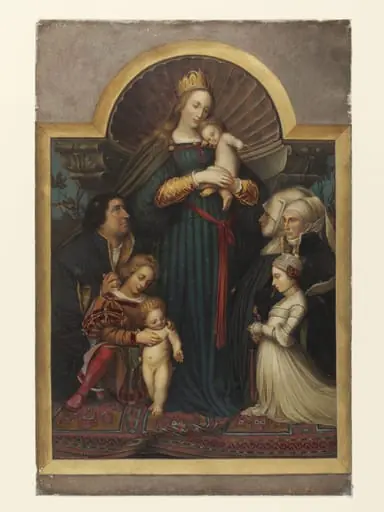 Copy after the painting Virgin and Child and Meyer Family by Hans Holbein in Darmstadt
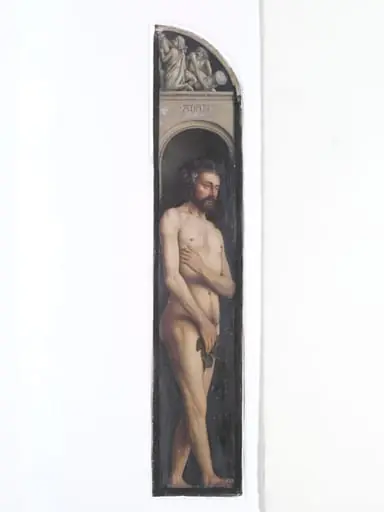 Copy of a detail from the Ghent Altarpiece, Adam, by Hubert and Jan van Eyck in the church of St Bavon, Ghent.
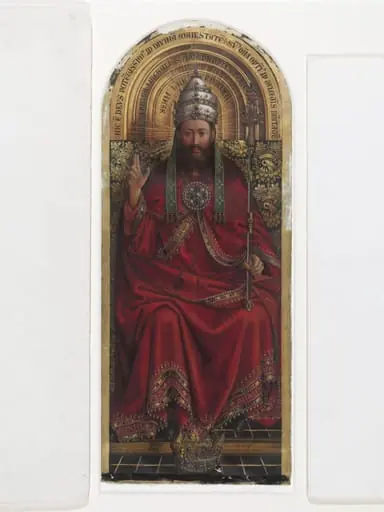 Copy of a detail of the Ghent Altarpiece, Triune God by Hubert and Jan van Eyck in the church of St Bavon, Ghent
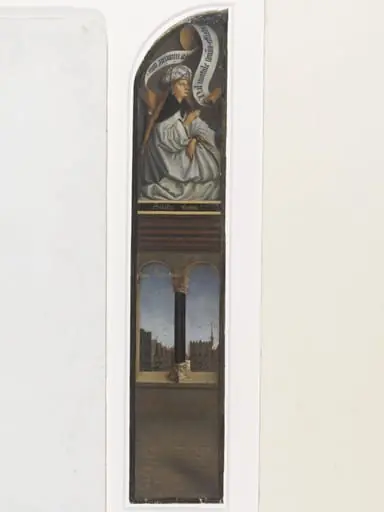 Copy of a detail of the Ghent Altarpiece, Sibyl of Erythrae, by Hubert and Jan van Eyck in the church of St Bavon, Ghent.
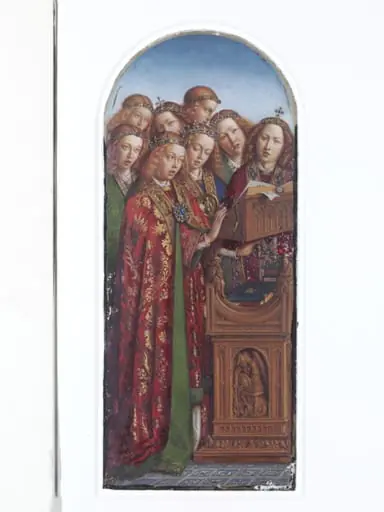 Copy of a detail of the Ghent Altarpiece, Angelic Choir, by Hubert and Jan van Eyck in the church of St Bavon, Ghent.
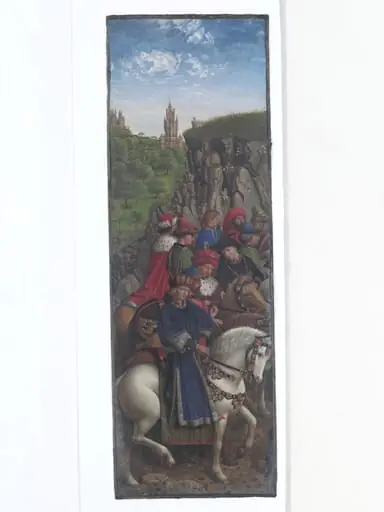 Copy of a detail of the Ghent Altarpiece, The Just Judges, by Hubert and Jan van Eyck in St Bavon, Ghent.
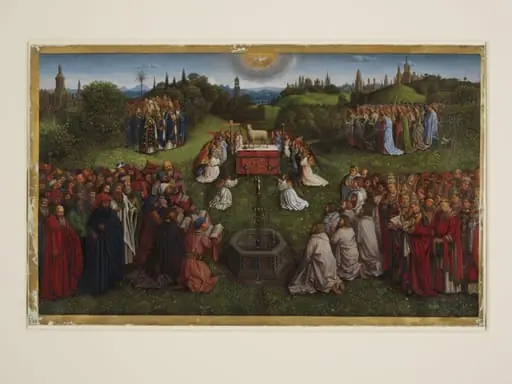 Copy of a detail of the Ghent Altarpiece, Adoration of the Lamb, by Hubert and Jan van Eyck in the church of St Bavon, Ghent.
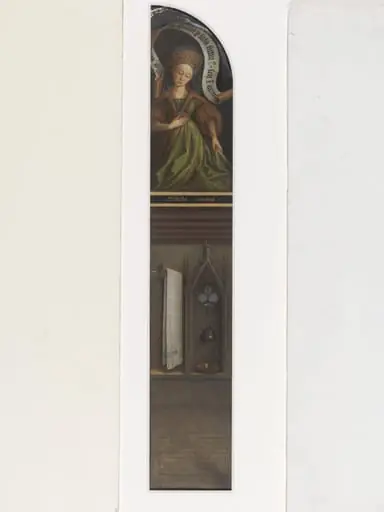 Copy of a detail of the Ghent Altarpiece, Sibyl of Cumaea, by Hubert and Jan van Eyck in the church of St Bavon, Ghent
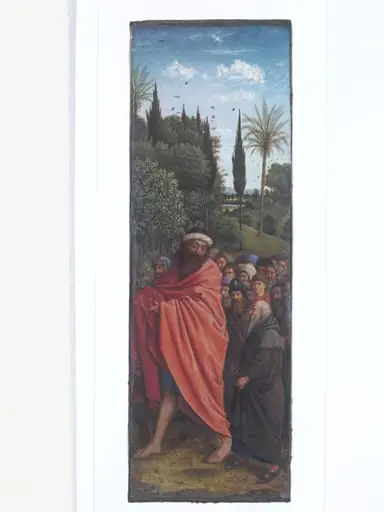 Copy of a detail of the Ghent Altarpiece, The Hermits, by Hubert and Jan van Eyck in the church of St. Bavon, Ghent.
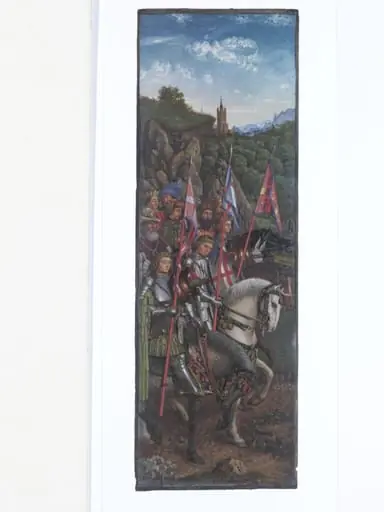 Copy of a detail of the Ghent Altarpiece, Knights of Christ, by Hubert and Jan van Eyck in the church of St. Bavon, Ghent.
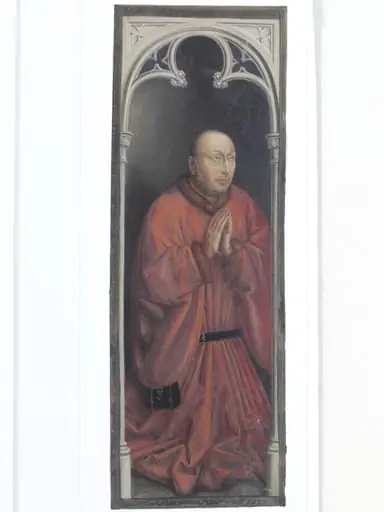 Copy of a detail of the Ghent Altarpiece, Josse Vyd, by Hubert and Jan van Eyck in the church of St Bavon, Ghent
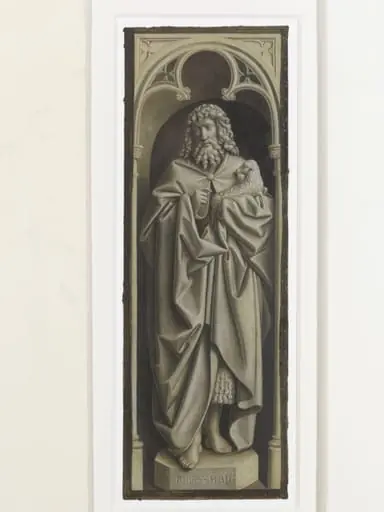 Copy of a detail of the Ghent Altarpiece, St John the Baptist by Hubert and Jan van Eyck in the church of St Bavon, Ghent.
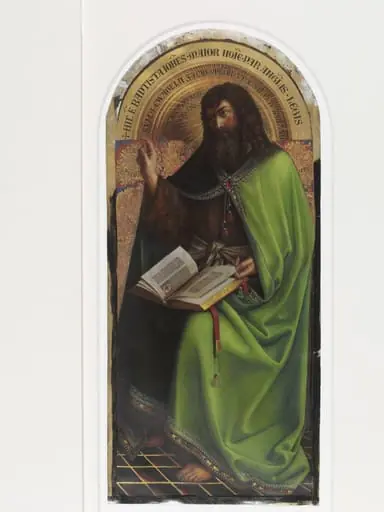 Copy of a detail from the Ghent Altarpiece, St John the Baptist by Hubert and Jan van Eyck in the church of St Bavon, Ghent.
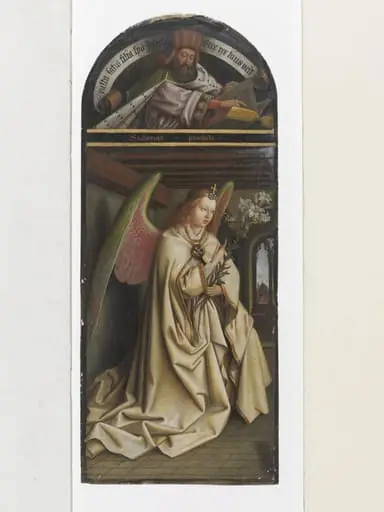 Copy of detail of the Ghent Altarpiece, Virgin Annunciate and Prophet, by Hubert and Jan van Eyck in the church of St Bavon, Ghent.
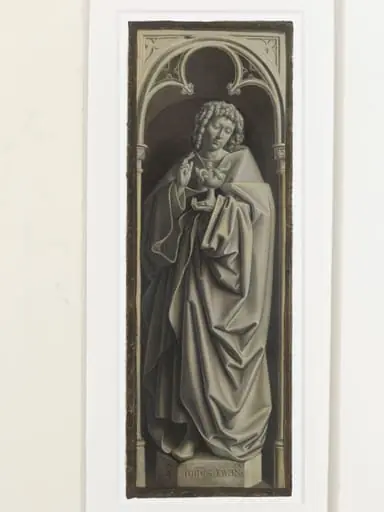 Copy of a detail of the Ghent Altarpiece, St John the Evangelist, by Hubert and Jan van Eyck in the church of St Bavon, Ghent.