Artwork
Copy of a detail from the Ghent Altarpiece, St John the Baptist by Hubert and Jan van Eyck in the church of St Bavon, Ghent.
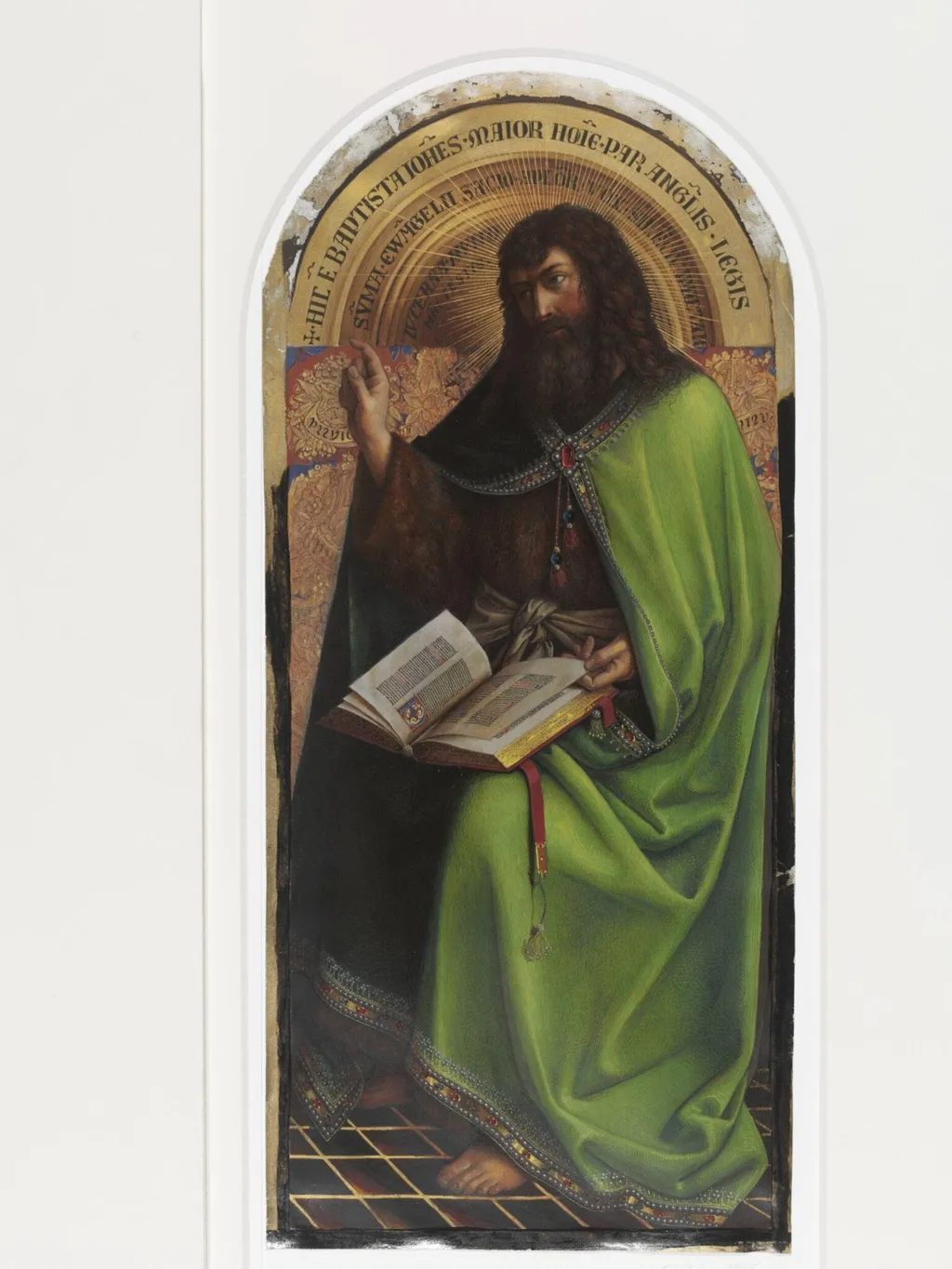
Copy of a detail from the Ghent Altarpiece, St John the Baptist by Hubert and Jan van Eyck in the church of St Bavon, Ghent. is a watercolor work on paper by Christian Schultz. It dates from 1858 and is held in the collection of the Victoria and Albert Museum. This work is a watercolor reproduction of a fragment of the Ghent Altarpiece, focusing on the figure of Saint John the Baptist.
About this work
Overview
The palette is restrained, dominated by muted greens, browns and gold tones, and the composition retains the intricate detailing of the original.
This work is a watercolor reproduction of a fragment of the Ghent Altarpiece, focusing on the figure of Saint John the Baptist. Executed in 1858, the copy presents the saint in a green robe, holding an open book, and standing before a circular panel bearing inscription. The palette is restrained, dominated by muted greens, browns and gold tones, and the composition retains the intricate detailing of the original.
Subject & Meaning
The image portrays Saint John the Baptist, a common figure in early Netherlandish polyptychs, identified by his long hair, beard, and the scriptural book he carries. The circular object behind him, likely a medallion or inscription panel, reinforces his role as a prophetic voice. The serene pose and modest coloration reflect the contemplative function of the saint within the larger altarpiece narrative.
Technique & Style
Rendered in watercolor, the copy reproduces the fine brushwork and delicate tonal transitions of the oil original. Schultz employed layered washes to achieve the subtle shading on the robe’s embroidered patterns and the luminous quality of the background. The muted palette mirrors the tonal harmony of the Ghent Altarpiece, while the medium allows for precise rendering of intricate details.
History & Provenance
Christian Schultz produced the watercolor in 1858 as part of a commission for the Arundel Society, an organization dedicated to disseminating knowledge of medieval art. Under Schultz’s supervision, the copy was later printed by Hangard‑Mauge in 1870, extending its reach to a broader audience. The work remains an example of 19th‑century scholarly reproduction practices.
Artist & collection

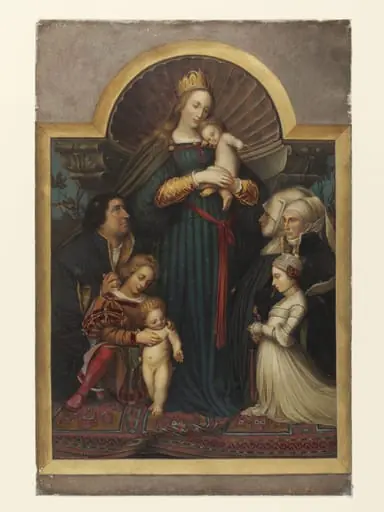 Copy after the painting Virgin and Child and Meyer Family by Hans Holbein in Darmstadt
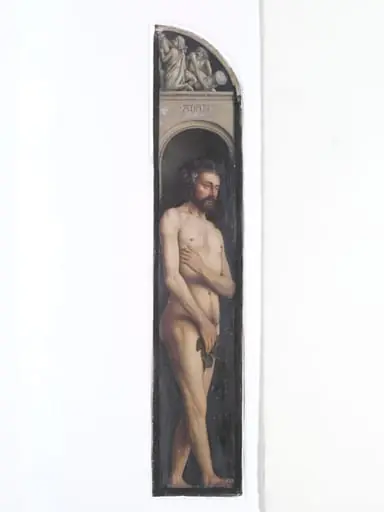 Copy of a detail from the Ghent Altarpiece, Adam, by Hubert and Jan van Eyck in the church of St Bavon, Ghent.
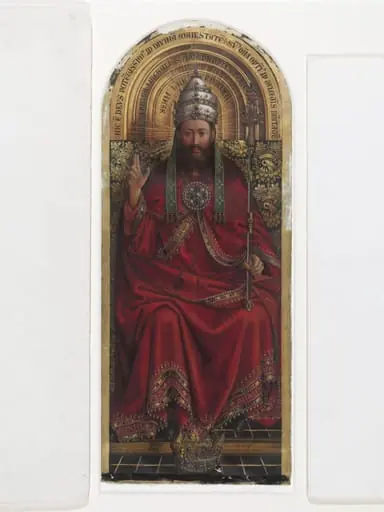 Copy of a detail of the Ghent Altarpiece, Triune God by Hubert and Jan van Eyck in the church of St Bavon, Ghent
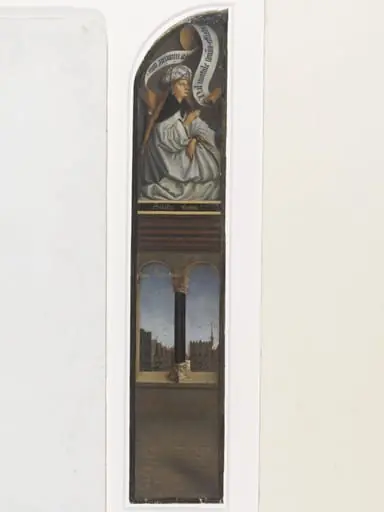 Copy of a detail of the Ghent Altarpiece, Sibyl of Erythrae, by Hubert and Jan van Eyck in the church of St Bavon, Ghent.
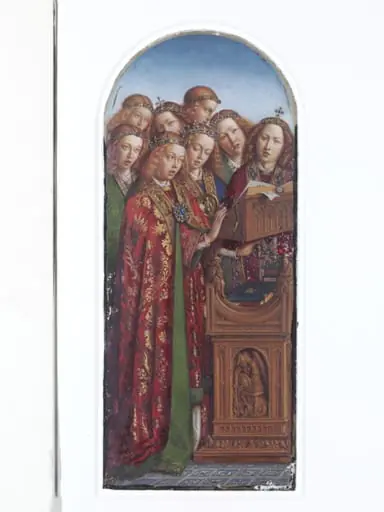 Copy of a detail of the Ghent Altarpiece, Angelic Choir, by Hubert and Jan van Eyck in the church of St Bavon, Ghent.
 Copy of a detail of the Ghent Altarpiece, The Just Judges, by Hubert and Jan van Eyck in St Bavon, Ghent.
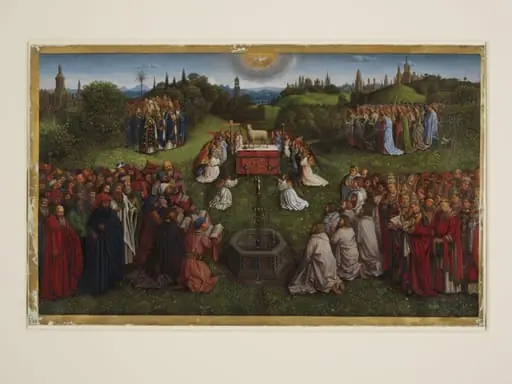 Copy of a detail of the Ghent Altarpiece, Adoration of the Lamb, by Hubert and Jan van Eyck in the church of St Bavon, Ghent.
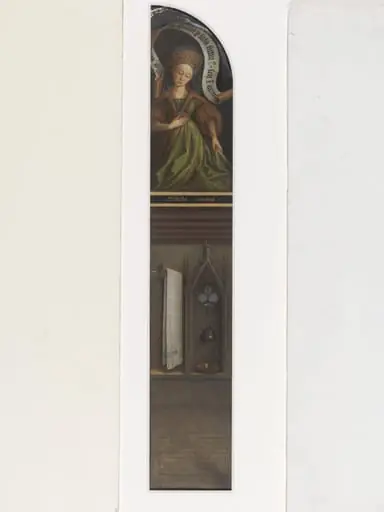 Copy of a detail of the Ghent Altarpiece, Sibyl of Cumaea, by Hubert and Jan van Eyck in the church of St Bavon, Ghent
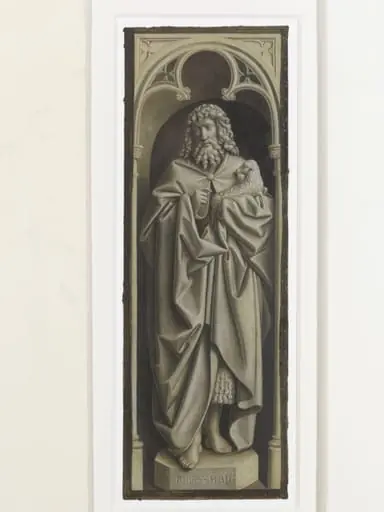 Copy of a detail of the Ghent Altarpiece, St John the Baptist by Hubert and Jan van Eyck in the church of St Bavon, Ghent.
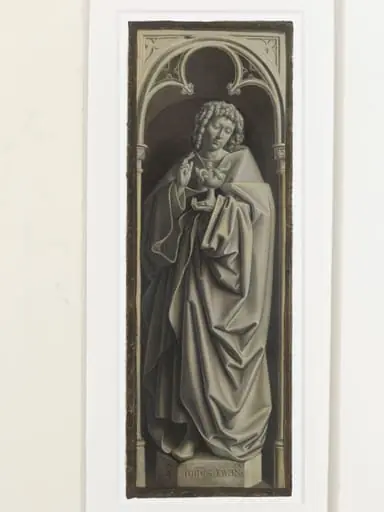 Copy of a detail of the Ghent Altarpiece, St John the Evangelist, by Hubert and Jan van Eyck in the church of St Bavon, Ghent.
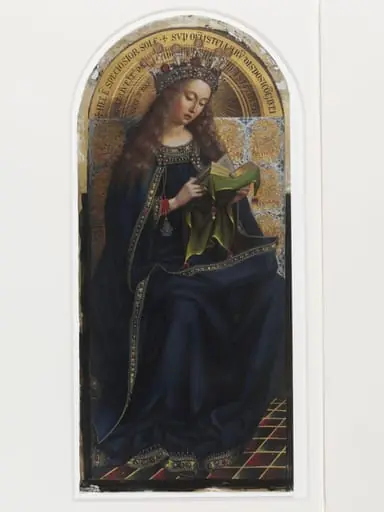 Copy of detail from the Ghent Altarpiece, The Virgin by Hubert and Jan van Eyck in the church of St Bavon, Ghent
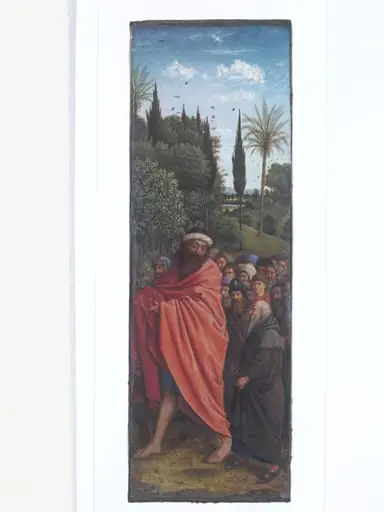 Copy of a detail of the Ghent Altarpiece, The Hermits, by Hubert and Jan van Eyck in the church of St. Bavon, Ghent.
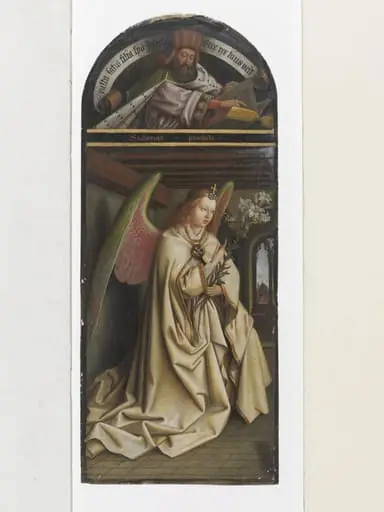 Copy of detail of the Ghent Altarpiece, Virgin Annunciate and Prophet, by Hubert and Jan van Eyck in the church of St Bavon, Ghent.
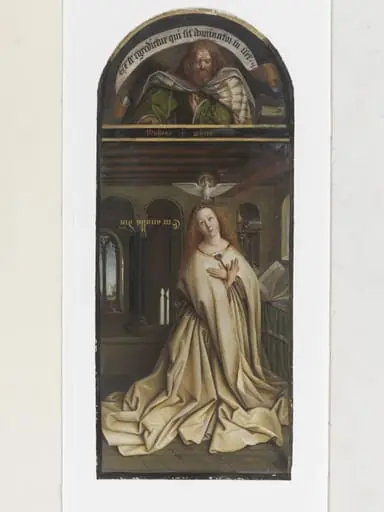 Copy of a detail of the Ghent Altarpiece, Annunicatory Angel and Prophet, by Hubert and Jan van Eyck in the church of St Bavon, Ghent.
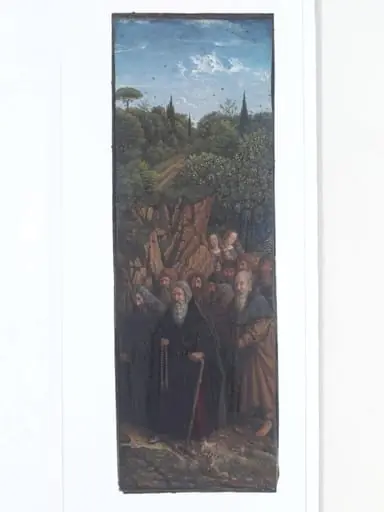 Copy of a detail of the Ghent Altarpiece, The Pilgrims, by Hubert and Jan van Eyck in the church of St. Bavon, Ghent.