Artwork
Copy of a detail of the Ghent Altarpiece, St John the Baptist by Hubert and Jan van Eyck in the church of St Bavon, Ghent.
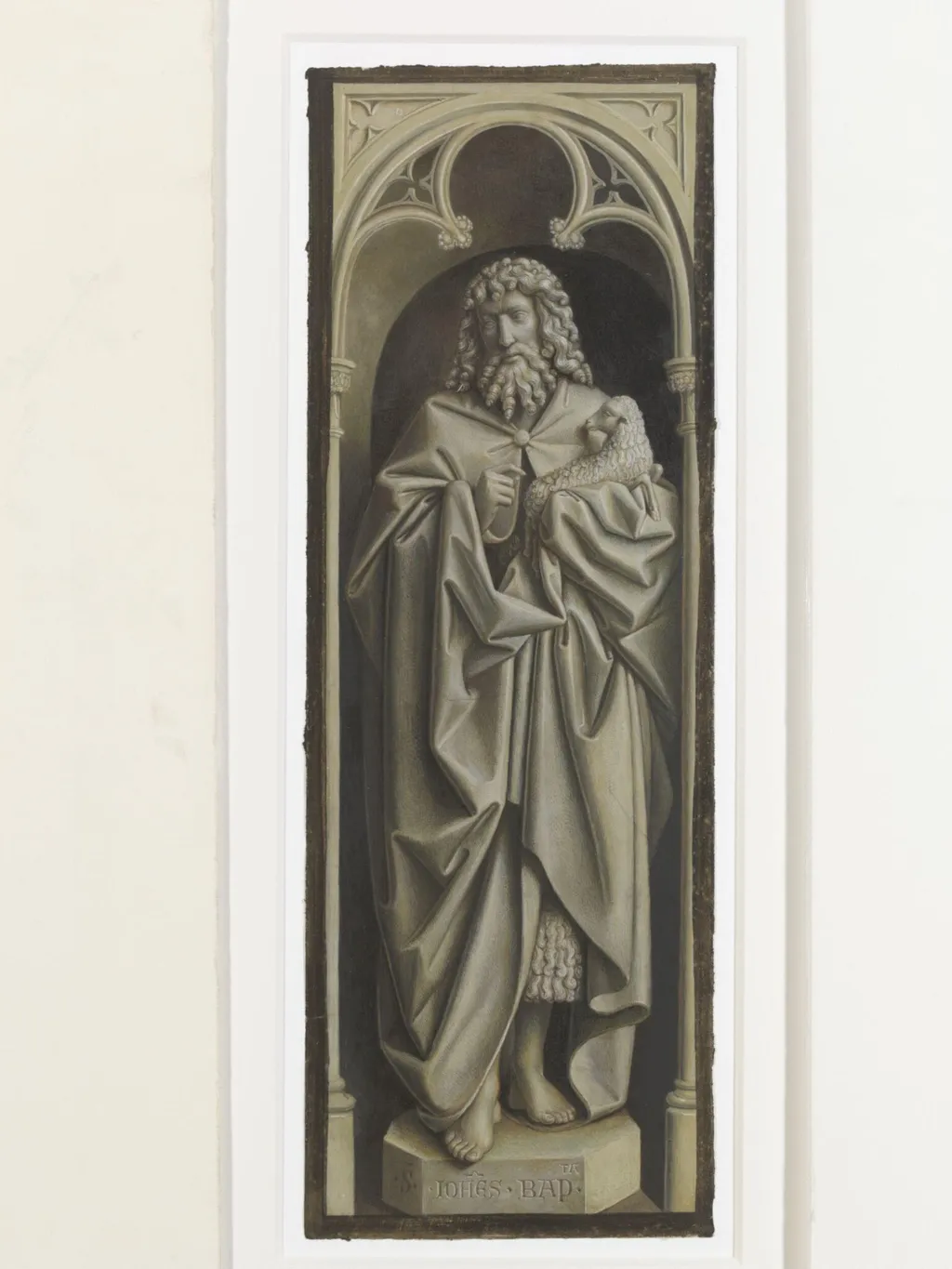
Copy of a detail of the Ghent Altarpiece, St John the Baptist by Hubert and Jan van Eyck in the church of St Bavon, Ghent. is a watercolor work on paper by the Impressionist artist Christian Schultz. It dates from 1864 and is held in the collection of the Victoria and Albert Museum.
About this work
Overview
Created as part of a broader effort to document medieval Netherlandish art, the work was published in 1869 by Hangard-Mauge with the artist’s oversight.
A watercolour reproduction of Saint John the Baptist from the Ghent Altarpiece was executed in 1864 by Christian Schultz under the auspices of the Arundel Society. Created as part of a broader effort to document medieval Netherlandish art, the work was published in 1869 by Hangard-Mauge with the artist’s oversight. It captures a specific panel from the polyptych housed in St. Bavo’s Cathedral, Ghent, rendered in delicate washes rather than oil.
Subject & Meaning
The figure depicts John the Baptist, identified by the inscription S. IOHES. BAP., in traditional iconography: long white beard, curly hair, and a robe of rich fabric. He cradles a lamb, symbolizing Christ’s sacrifice, while his hand rests gently on his chest—a gesture of humility and prophecy. The dark background and gilded arch frame isolate him as a sacred presence, consistent with devotional imagery of the early Netherlandish tradition.
Technique & Style
Schultz employed watercolour to emulate the luminosity and fine detail of the original oil panel. The technique allowed for subtle gradations in skin tone and fabric folds, while the gold-leaf border was carefully replicated to mirror the altarpiece’s ornate framing. His approach prioritized fidelity over interpretation, using transparent layers to suggest the depth and texture characteristic of 15th-century Netherlandish painting.
History & Provenance
Commissioned by the Arundel Society in the mid-19th century, the watercolour was part of a systematic project to preserve and disseminate images of endangered or inaccessible artworks. Schultz, known for his precise reproductions of medieval and Renaissance works, produced this copy during a visit to Ghent. It was later issued in a series of engravings and prints distributed to institutions and collectors across Europe.
Context
In the 1860s, European antiquarians and art societies sought to document early Northern Renaissance art amid industrialization and political upheaval. The Arundel Society’s initiative reflected a growing scholarly interest in conservation and historical accuracy. Schultz’s copy served both educational and preservation purposes, offering access to a work that remained in situ and was difficult to study closely.
Legacy
Schultz’s watercolour remains a valuable record of the Ghent Altarpiece’s appearance in the 19th century, before modern cleaning and restoration altered its surface. It exemplifies the era’s commitment to faithful reproduction as a scholarly tool. Today, it is held in institutional collections as evidence of Victorian-era art historical practice and the transmission of medieval imagery into modern academic discourse.
Artist & collection

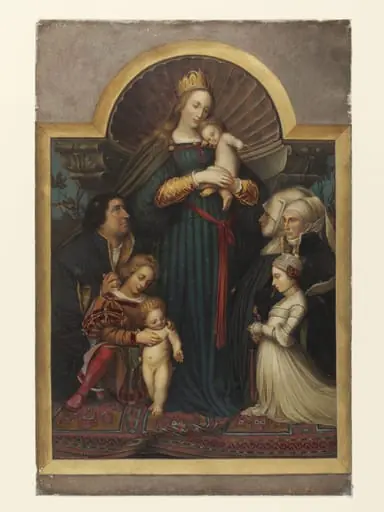 Copy after the painting Virgin and Child and Meyer Family by Hans Holbein in Darmstadt
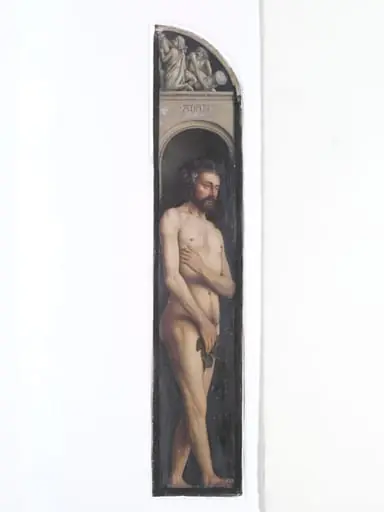 Copy of a detail from the Ghent Altarpiece, Adam, by Hubert and Jan van Eyck in the church of St Bavon, Ghent.
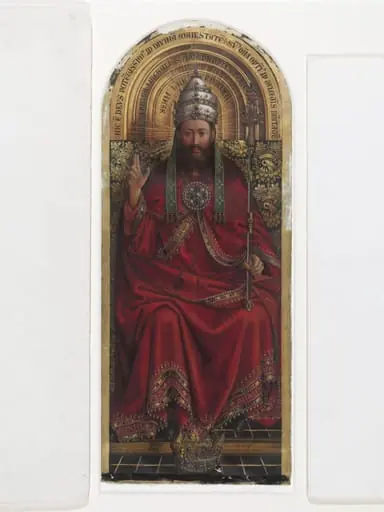 Copy of a detail of the Ghent Altarpiece, Triune God by Hubert and Jan van Eyck in the church of St Bavon, Ghent
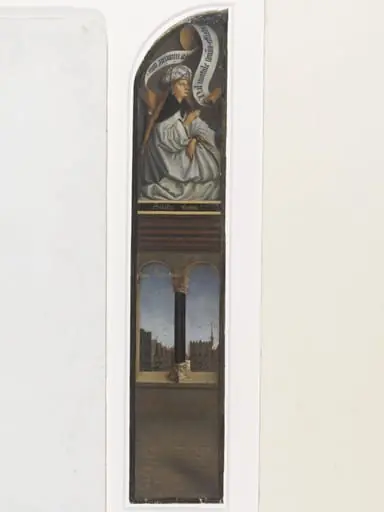 Copy of a detail of the Ghent Altarpiece, Sibyl of Erythrae, by Hubert and Jan van Eyck in the church of St Bavon, Ghent.
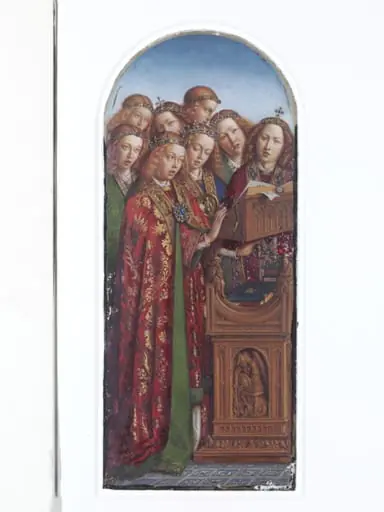 Copy of a detail of the Ghent Altarpiece, Angelic Choir, by Hubert and Jan van Eyck in the church of St Bavon, Ghent.
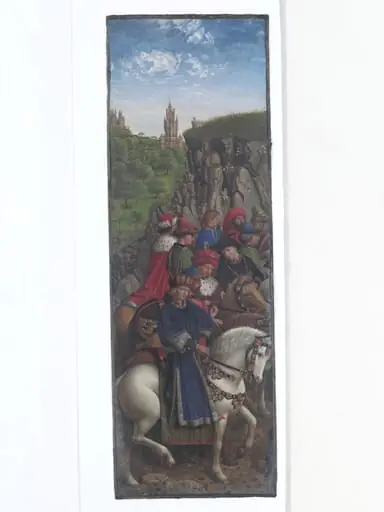 Copy of a detail of the Ghent Altarpiece, The Just Judges, by Hubert and Jan van Eyck in St Bavon, Ghent.
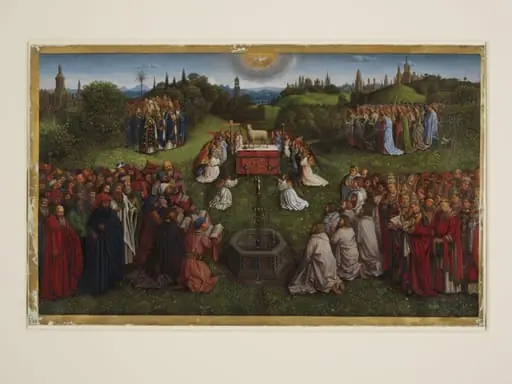 Copy of a detail of the Ghent Altarpiece, Adoration of the Lamb, by Hubert and Jan van Eyck in the church of St Bavon, Ghent.
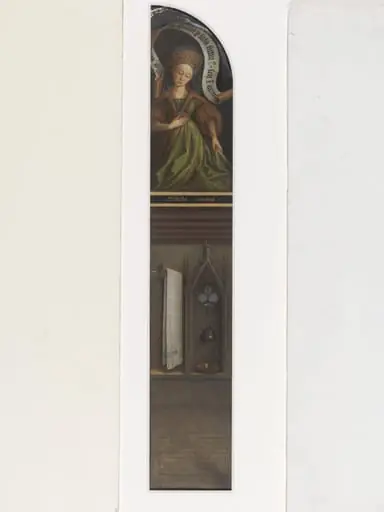 Copy of a detail of the Ghent Altarpiece, Sibyl of Cumaea, by Hubert and Jan van Eyck in the church of St Bavon, Ghent
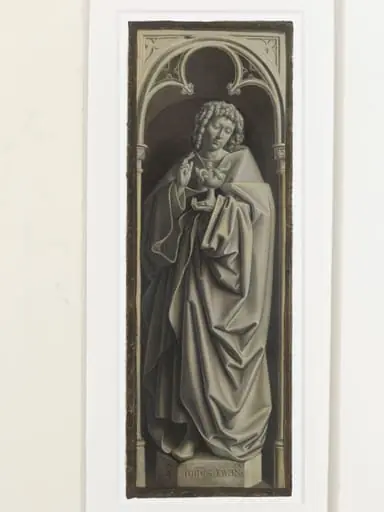 Copy of a detail of the Ghent Altarpiece, St John the Evangelist, by Hubert and Jan van Eyck in the church of St Bavon, Ghent.
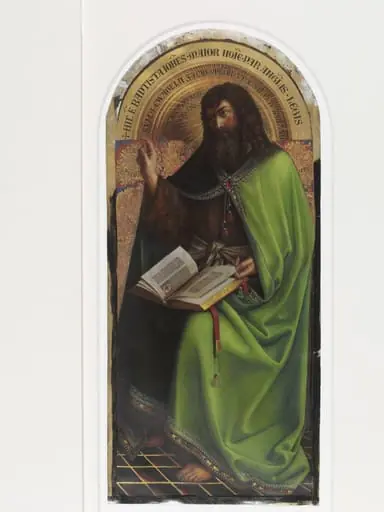 Copy of a detail from the Ghent Altarpiece, St John the Baptist by Hubert and Jan van Eyck in the church of St Bavon, Ghent.
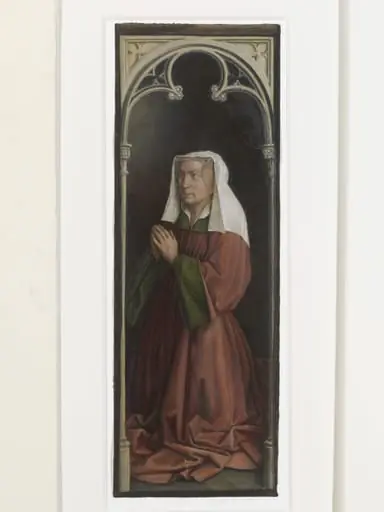 Copy of a detail from the Ghent Altarpiece, Isabelle Borluut, by Hubert and Jan van Eyck in the church of St Bavon, Ghent.
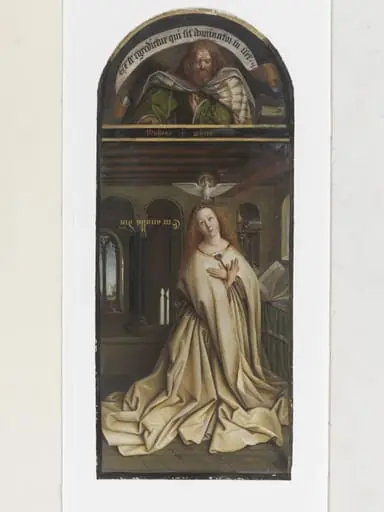 Copy of a detail of the Ghent Altarpiece, Annunicatory Angel and Prophet, by Hubert and Jan van Eyck in the church of St Bavon, Ghent.
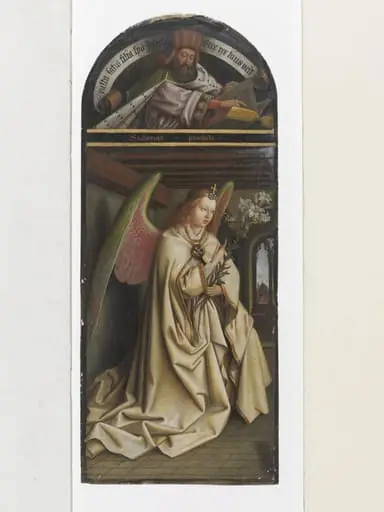 Copy of detail of the Ghent Altarpiece, Virgin Annunciate and Prophet, by Hubert and Jan van Eyck in the church of St Bavon, Ghent.
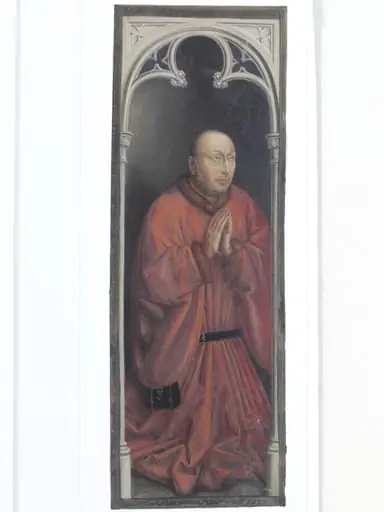 Copy of a detail of the Ghent Altarpiece, Josse Vyd, by Hubert and Jan van Eyck in the church of St Bavon, Ghent
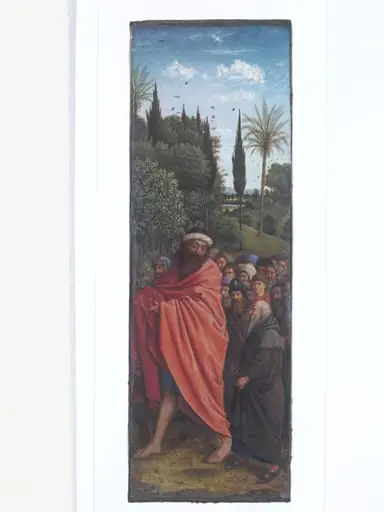 Copy of a detail of the Ghent Altarpiece, The Hermits, by Hubert and Jan van Eyck in the church of St. Bavon, Ghent.