Artwork
Copy of a detail of the Ghent Altarpiece, Josse Vyd, by Hubert and Jan van Eyck in the church of St Bavon, Ghent
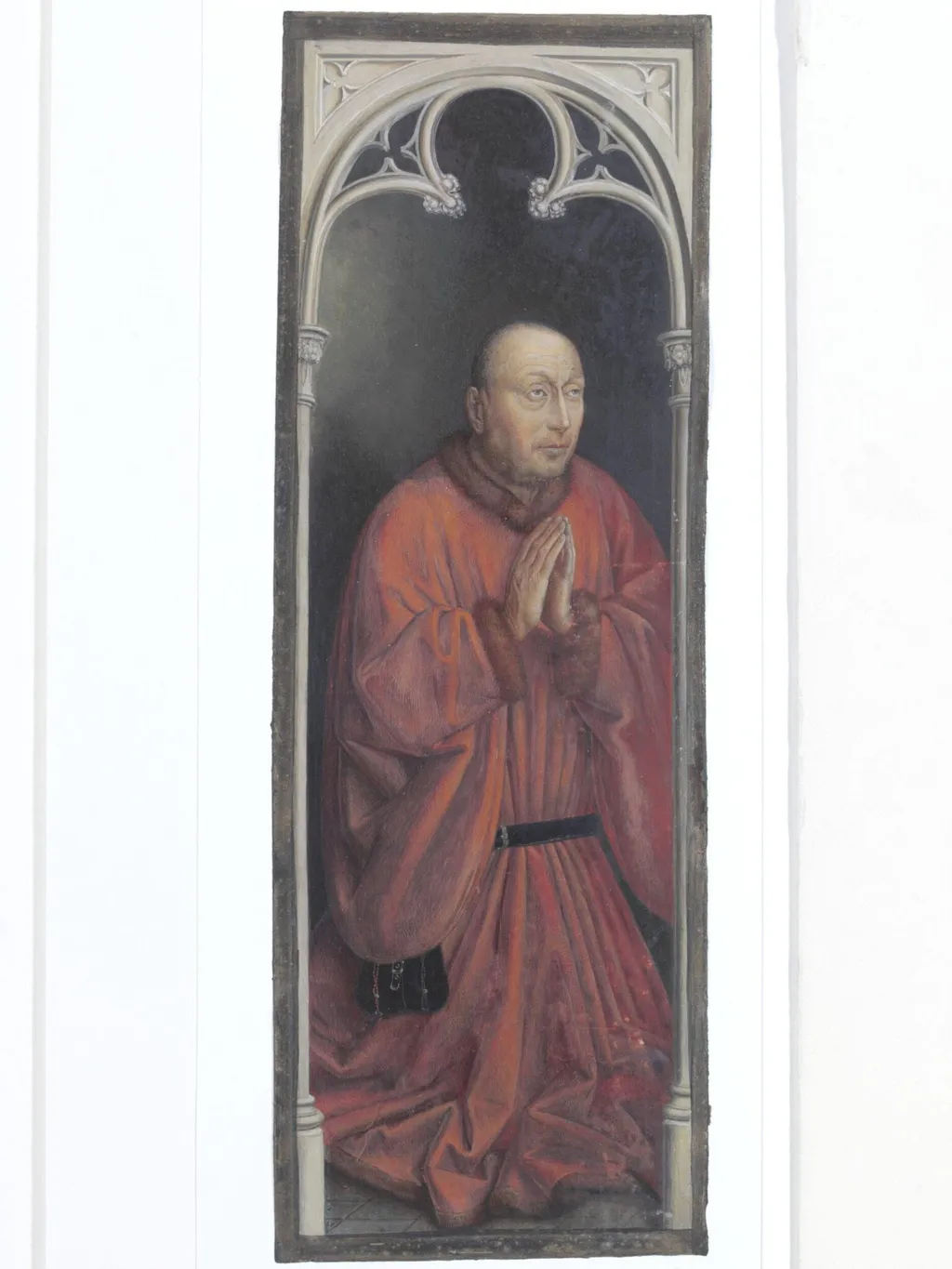
Copy of a detail of the Ghent Altarpiece, Josse Vyd, by Hubert and Jan van Eyck in the church of St Bavon, Ghent is a watercolor work on paper by the Impressionist artist Christian Schultz. It dates from 1864 and is held in the collection of the Victoria and Albert Museum.
About this work
Overview
Commissioned by the Arundel Society to document significant artworks, it was published five years later under the oversight of Hangard-Mauge.
This watercolour is a 19th-century reproduction of a panel from the Ghent Altarpiece, created by Christian Schultz in 1864. Commissioned by the Arundel Society to document significant artworks, it was published five years later under the oversight of Hangard-Mauge. The piece serves as a faithful transcription of a devotional figure from the original polyptych, preserved in St. Bavo’s Cathedral, Ghent.
Subject & Meaning
The figure depicted is Josse Vyd, a donor who commissioned part of the altarpiece. Shown in prayer, he kneels before an architectural backdrop, his hands clasped and gaze lifted in reverence. His posture and attire reflect the piety expected of wealthy patrons in late medieval religious art, emphasizing personal devotion rather than status. The scene underscores the donor’s spiritual role within the sacred narrative.
Technique & Style
Schultz employed watercolour to replicate the delicate tonal gradations and fine details of the original panel. The folds of the red robe and the carved stonework of the arch are rendered with precision, capturing texture and light without pigment opacity. The restrained palette and controlled brushwork reflect the academic tradition of art documentation, prioritizing accuracy over expressive interpretation.
History & Provenance
Created in 1864, the watercolour was part of a broader 19th-century effort by the Arundel Society to preserve and disseminate images of European masterpieces. It was published in 1869 under Hangard-Mauge’s supervision, likely as part of a series aimed at scholars and collectors. The work remains a historical record of the altarpiece’s condition and appearance in the mid-1800s.
Context
During the 19th century, institutions like the Arundel Society sought to make high art accessible through reproductions, especially as original works faced risks from war, neglect, or restoration. Schultz’s watercolour emerged in this climate of cultural preservation, offering a detailed, portable version of a revered northern Renaissance altarpiece to audiences who could not travel to Ghent.
Legacy
Schultz’s watercolour endures as a documentary artifact, illustrating how 19th-century art historians approached the replication of medieval works. While not an original, it preserves visual information about the Ghent Altarpiece’s donor panel before modern conservation. It stands as a testament to the era’s commitment to archiving artistic heritage through meticulous hand reproduction.
Artist & collection

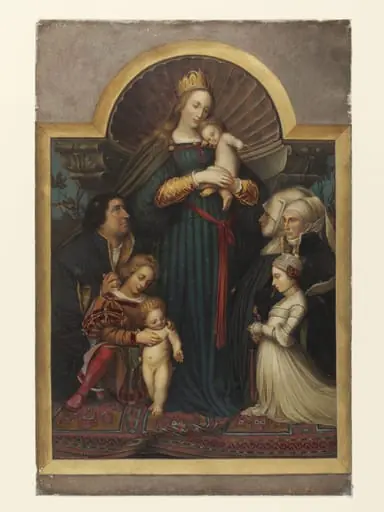 Copy after the painting Virgin and Child and Meyer Family by Hans Holbein in Darmstadt
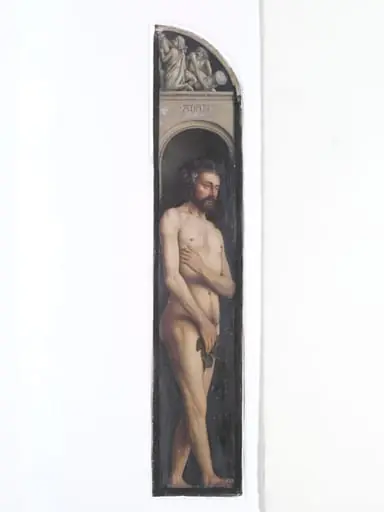 Copy of a detail from the Ghent Altarpiece, Adam, by Hubert and Jan van Eyck in the church of St Bavon, Ghent.
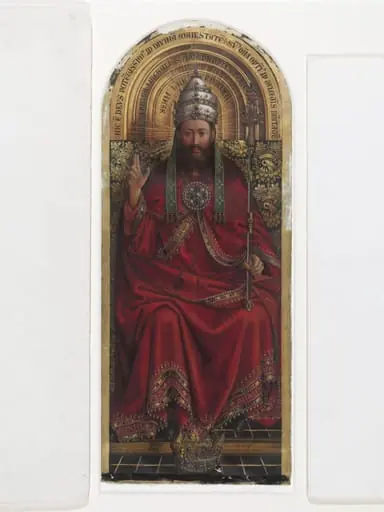 Copy of a detail of the Ghent Altarpiece, Triune God by Hubert and Jan van Eyck in the church of St Bavon, Ghent
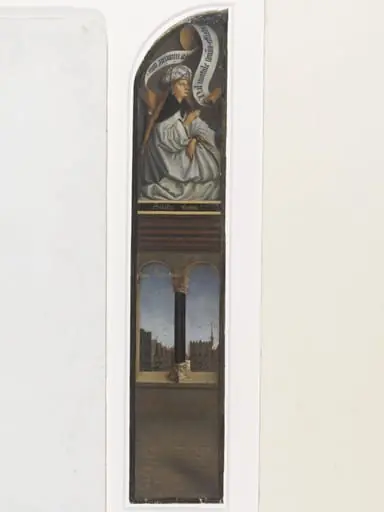 Copy of a detail of the Ghent Altarpiece, Sibyl of Erythrae, by Hubert and Jan van Eyck in the church of St Bavon, Ghent.
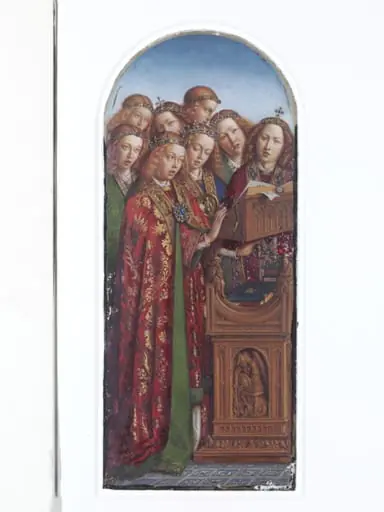 Copy of a detail of the Ghent Altarpiece, Angelic Choir, by Hubert and Jan van Eyck in the church of St Bavon, Ghent.
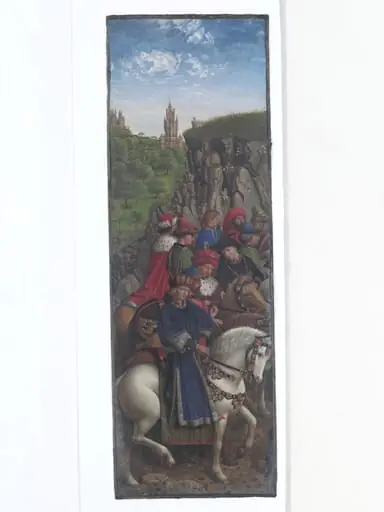 Copy of a detail of the Ghent Altarpiece, The Just Judges, by Hubert and Jan van Eyck in St Bavon, Ghent.
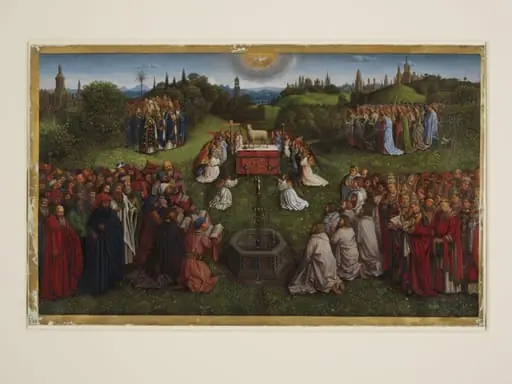 Copy of a detail of the Ghent Altarpiece, Adoration of the Lamb, by Hubert and Jan van Eyck in the church of St Bavon, Ghent.
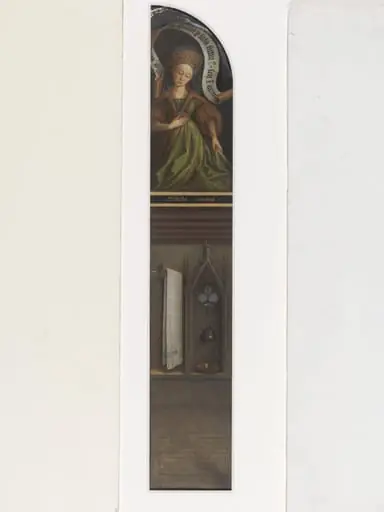 Copy of a detail of the Ghent Altarpiece, Sibyl of Cumaea, by Hubert and Jan van Eyck in the church of St Bavon, Ghent
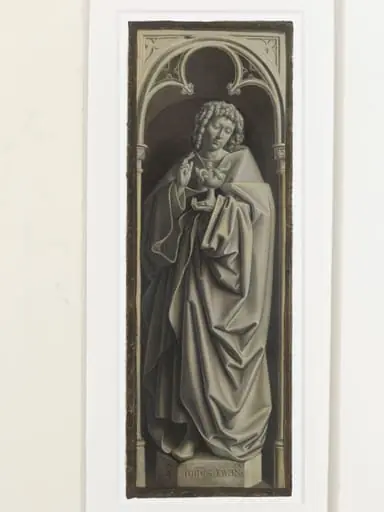 Copy of a detail of the Ghent Altarpiece, St John the Evangelist, by Hubert and Jan van Eyck in the church of St Bavon, Ghent.
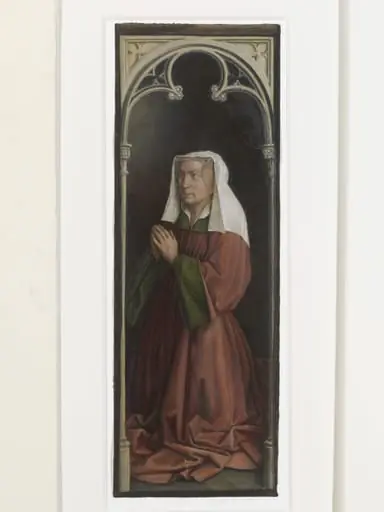 Copy of a detail from the Ghent Altarpiece, Isabelle Borluut, by Hubert and Jan van Eyck in the church of St Bavon, Ghent.
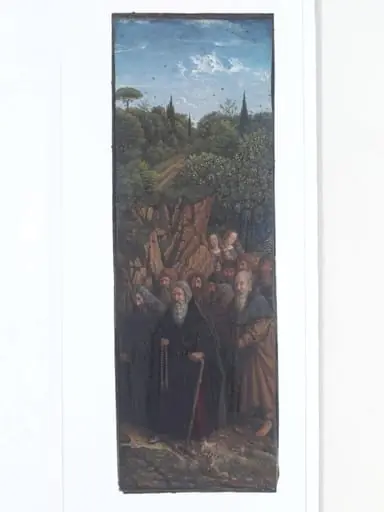 Copy of a detail of the Ghent Altarpiece, The Pilgrims, by Hubert and Jan van Eyck in the church of St. Bavon, Ghent.
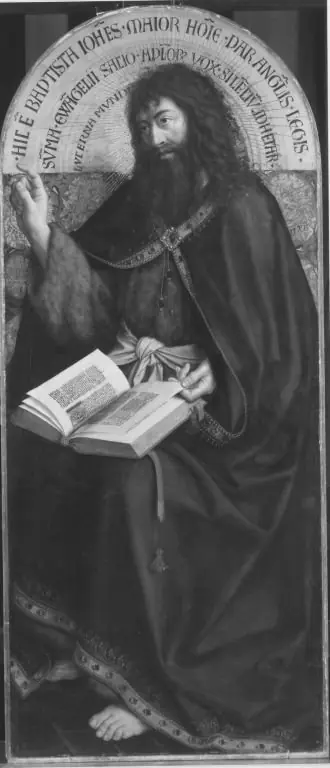 Saint John the Baptist (after The Ghent Altarpiece)
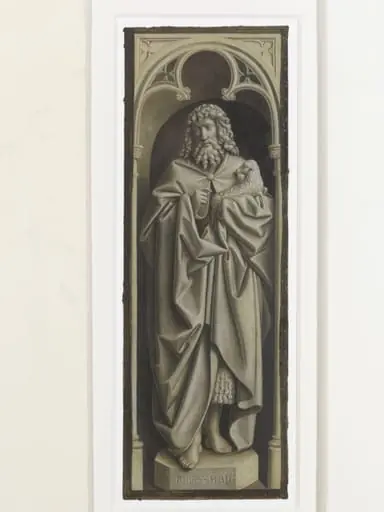 Copy of a detail of the Ghent Altarpiece, St John the Baptist by Hubert and Jan van Eyck in the church of St Bavon, Ghent.