Artwork
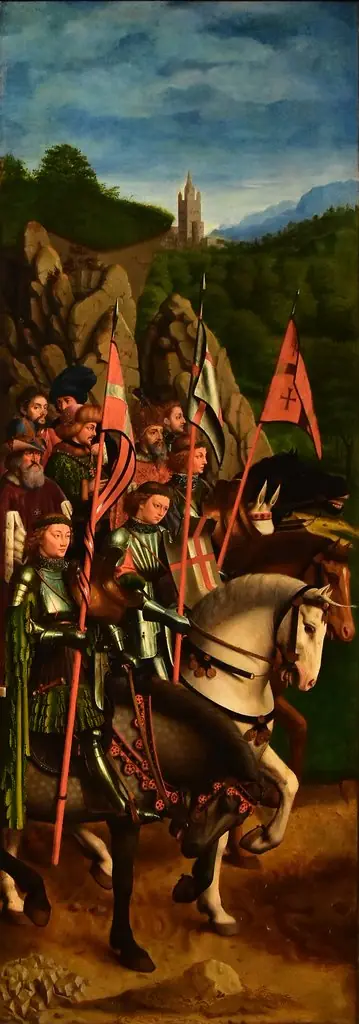
Copy of a detail of the Ghent Altarpiece, Knights of Christ, by Hubert and Jan van Eyck in the church of St. Bavon, Ghent.
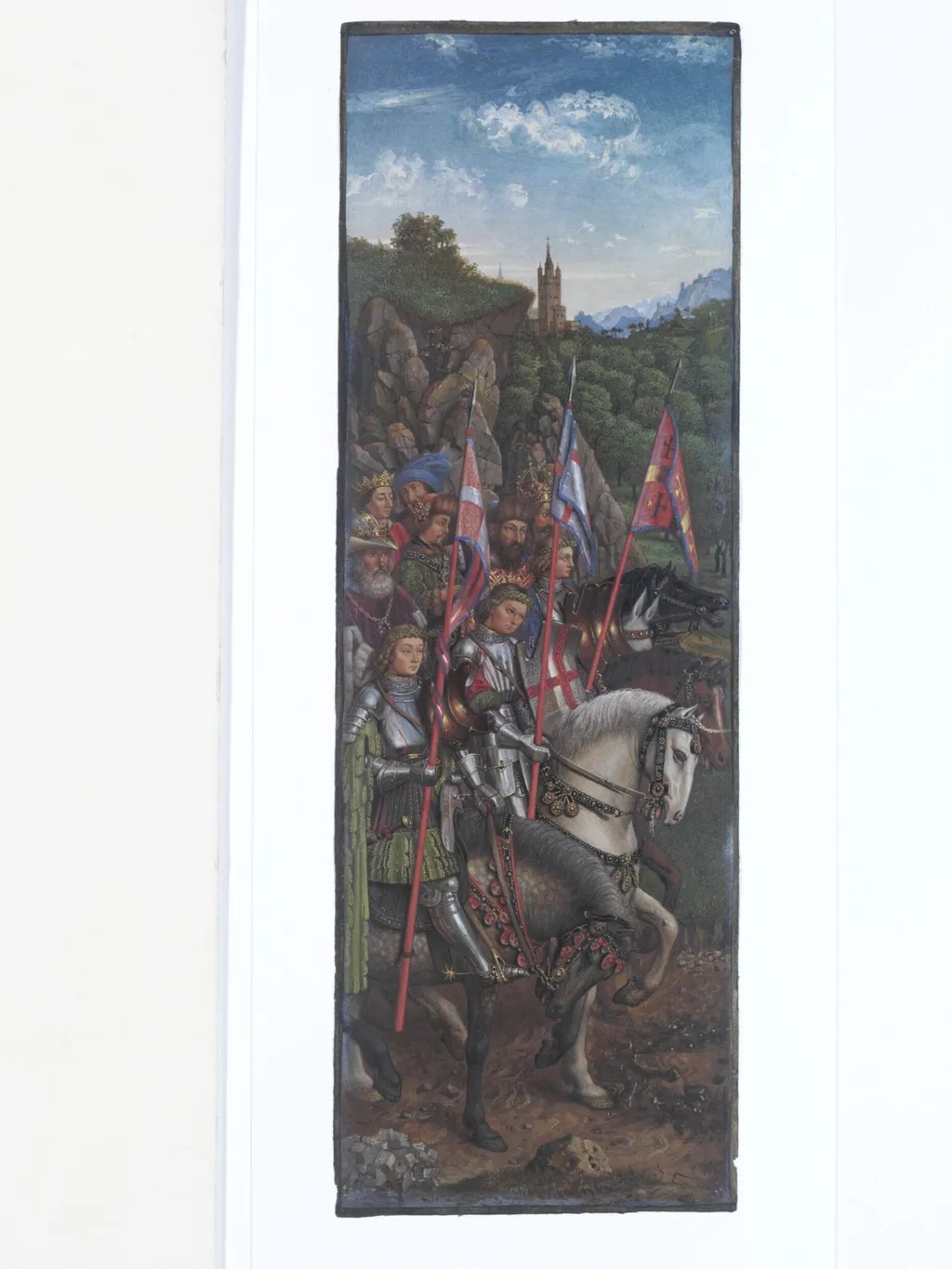
Copy of a detail of the Ghent Altarpiece, Knights of Christ, by Hubert and Jan van Eyck in the church of St. Bavon, Ghent. is a watercolor work on paper by the Impressionist artist Christian Schultz. It dates from 1864 and is held in the collection of the Victoria and Albert Museum.
About this work
Overview
This watercolour reproduction captures a section of the Ghent Altarpiece known as the Knights of Christ, originally painted by Hubert and Jan van Eyck.
This watercolour reproduction captures a section of the Ghent Altarpiece known as the Knights of Christ, originally painted by Hubert and Jan van Eyck. Created in 1864 by Christian Schultz for the Arundel Society, it was published in 1869 under his oversight. The work serves as a faithful transcription intended for scholarly and artistic study, reflecting 19th-century efforts to document and disseminate early Netherlandish masterpieces through accessible media.
Subject & Meaning
The scene depicts a procession of armored knights on horseback, bearing banners, advancing toward a distant church nestled against a rocky outcrop. Their orderly formation and solemn demeanor suggest a sacred military order, possibly symbolizing divine protection or the triumph of faith. The inclusion of a church in the background reinforces the spiritual context of the original panel, rooted in Christian iconography of the early 15th century.
Technique & Style
Schultz employed watercolour to replicate the intricate details of the van Eycks’ original armor and fabric textures, preserving the precision of the Northern Renaissance style. In contrast, the background landscape is rendered with looser, softer brushwork and muted tones, introducing a subtle atmospheric quality. This dual approach reflects both fidelity to the source and the aesthetic conventions of mid-19th-century reproductive art.
History & Provenance
Commissioned by the Arundel Society, a British organization dedicated to preserving artistic heritage, Schultz’s watercolour was part of a broader initiative to make high-value artworks available to institutions and students. Produced under his direct supervision, the print was published by Hangard-Mauge in 1869. The work remains a documented example of 19th-century art reproduction practices, tied to academic and cultural preservation efforts.
Context
In the mid-1800s, European institutions increasingly sought to catalog and distribute images of historic artworks as educational tools. Schultz’s copy emerged during a period of renewed interest in early Netherlandish painting, coinciding with the rise of art history as a discipline. While the original Ghent Altarpiece remained in Ghent, such reproductions allowed wider access to its iconography beyond the confines of the church.
Legacy
Schultz’s watercolour stands as a historical record of how 19th-century artists engaged with early Netherlandish masterpieces. Though not an original, it preserves visual details that may have shifted over time due to restoration or decay. Its existence underscores the role of reproductive art in sustaining scholarly dialogue and public engagement with canonical works before the age of photography.
Artist & collection

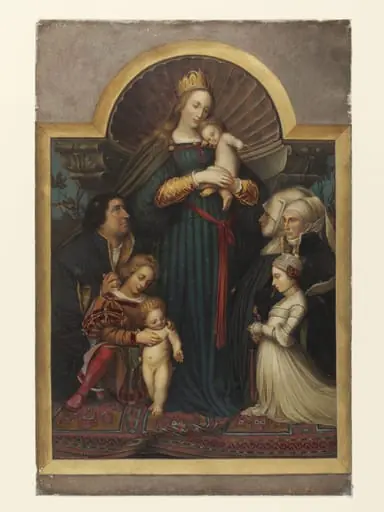 Copy after the painting Virgin and Child and Meyer Family by Hans Holbein in Darmstadt
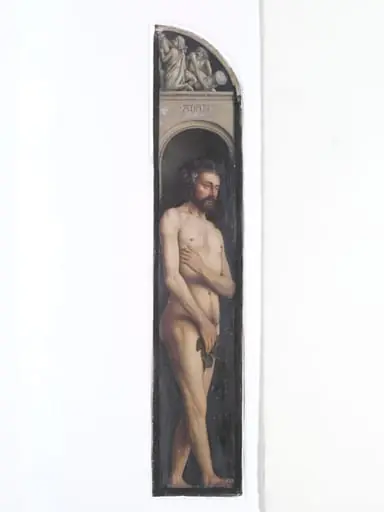 Copy of a detail from the Ghent Altarpiece, Adam, by Hubert and Jan van Eyck in the church of St Bavon, Ghent.
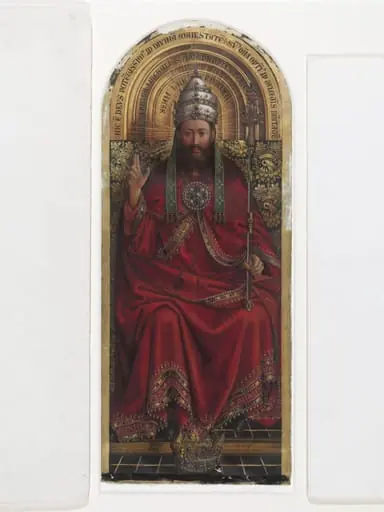 Copy of a detail of the Ghent Altarpiece, Triune God by Hubert and Jan van Eyck in the church of St Bavon, Ghent
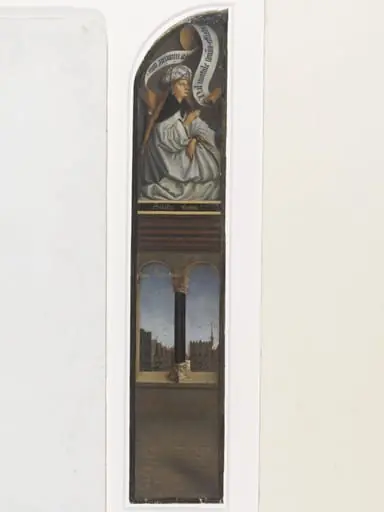 Copy of a detail of the Ghent Altarpiece, Sibyl of Erythrae, by Hubert and Jan van Eyck in the church of St Bavon, Ghent.
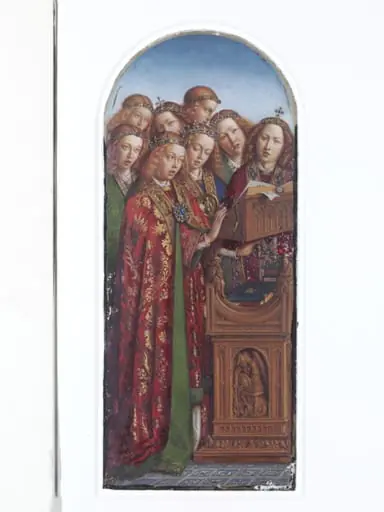 Copy of a detail of the Ghent Altarpiece, Angelic Choir, by Hubert and Jan van Eyck in the church of St Bavon, Ghent.
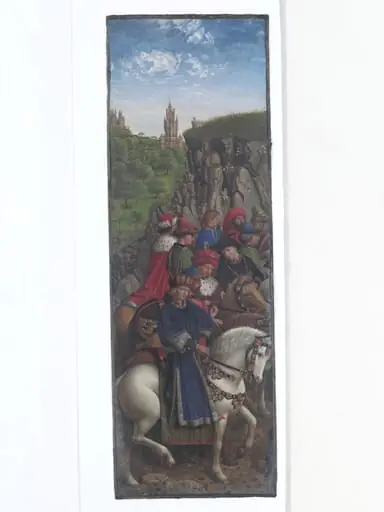 Copy of a detail of the Ghent Altarpiece, The Just Judges, by Hubert and Jan van Eyck in St Bavon, Ghent.
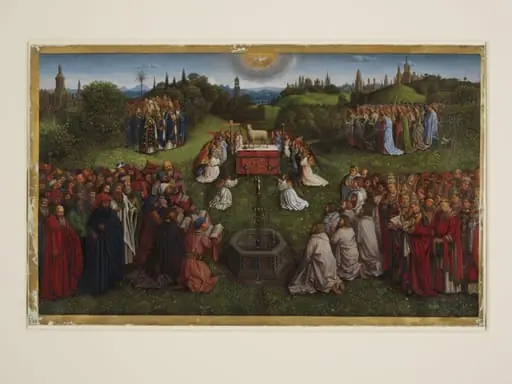 Copy of a detail of the Ghent Altarpiece, Adoration of the Lamb, by Hubert and Jan van Eyck in the church of St Bavon, Ghent.
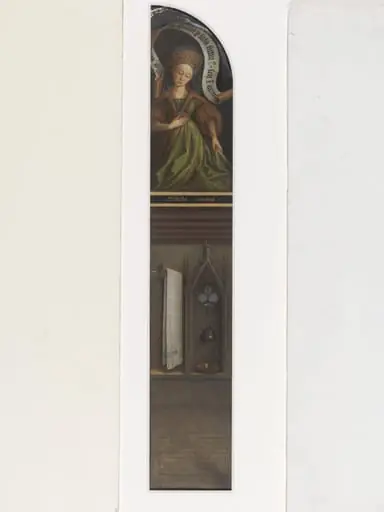 Copy of a detail of the Ghent Altarpiece, Sibyl of Cumaea, by Hubert and Jan van Eyck in the church of St Bavon, Ghent