Artwork
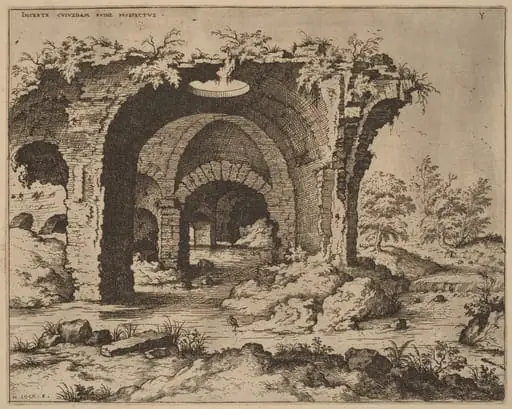
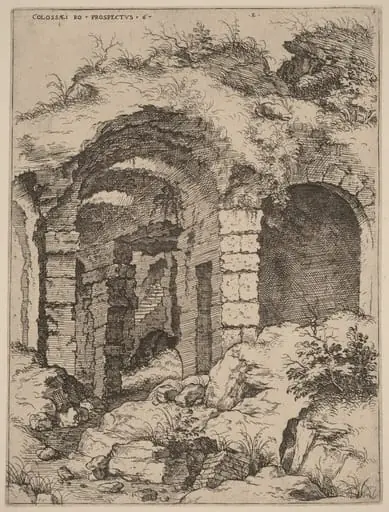
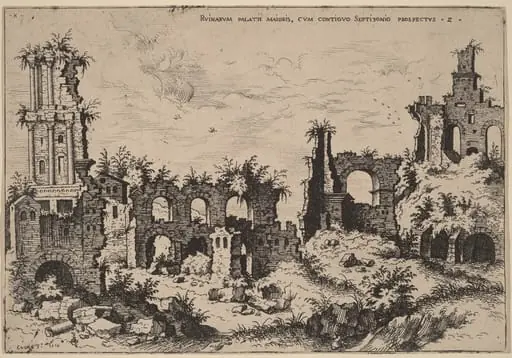
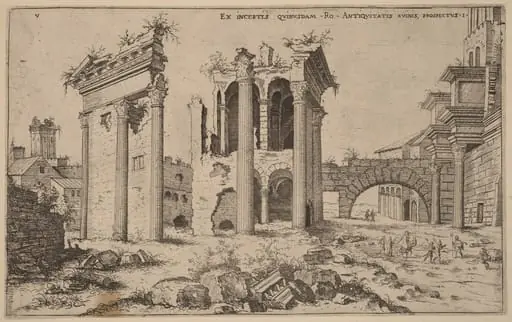
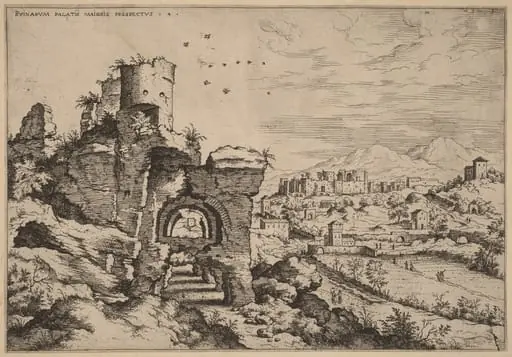
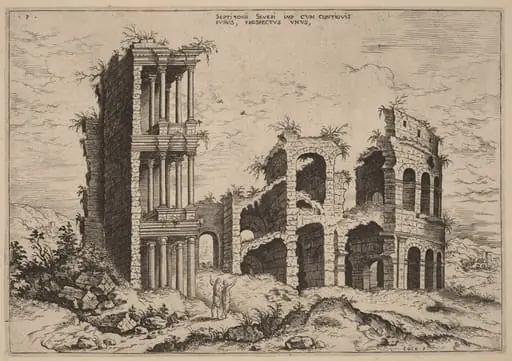
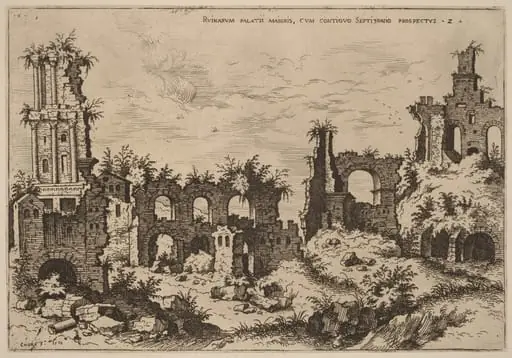
Second View of the Baths of Diocletian
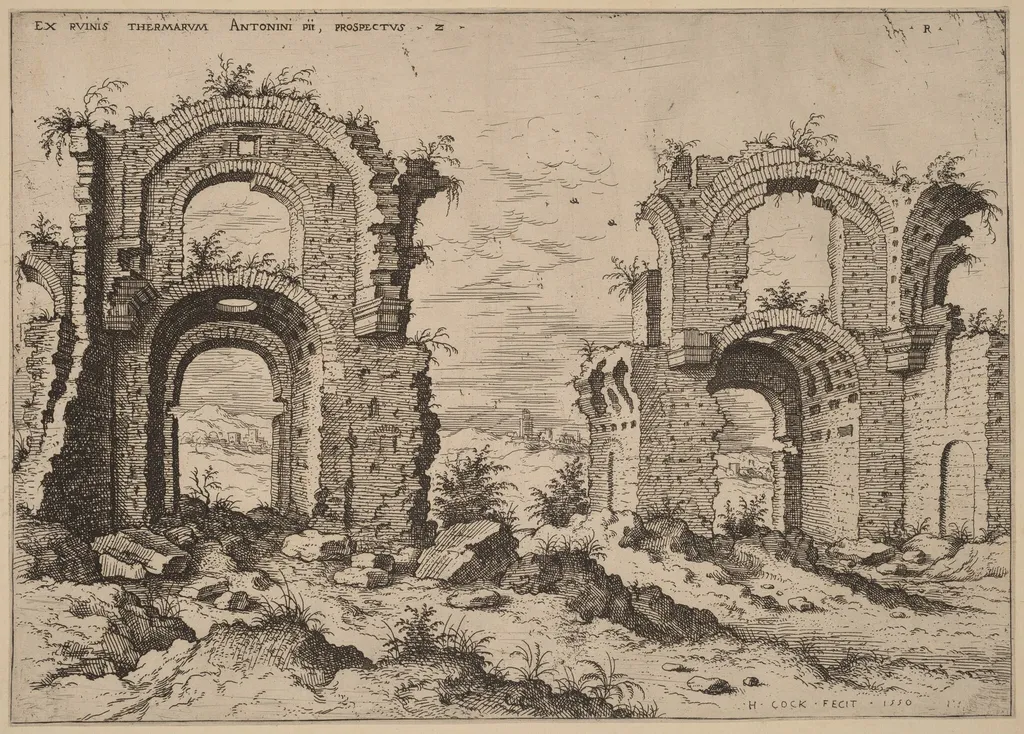
Second View of the Baths of Diocletian is an ink print by the Renaissance artist Hieronymus Cock. It dates from 1550 and is held in the collection of the National Gallery of Art.
About this work
Overview
Second View of the Baths of Diocletian is an etching on laid paper, created by Hieronymus Cock around 1550. This print exemplifies Cock's contribution to the cityscape genre, capturing the ancient Roman baths in precise, etched detail.
Subject & Meaning
The etching depicts the ruins of the Baths of Diocletian, emphasizing crumbling walls and arched windows. Through this work, Cock presents a visual record of ancient Roman architecture, reflecting 16th-century fascination with classical heritage.
Technique & Style
Characterized by sharp, scratchy lines, the etching showcases Cock's mastery of the medium. The process involved scratching the image onto a metal plate with acid, resulting in a distinctive, high-contrast visual aesthetic.
History & Provenance
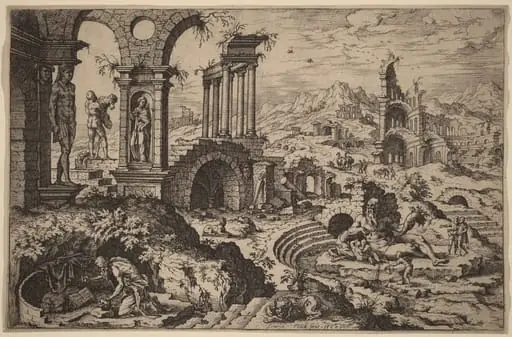
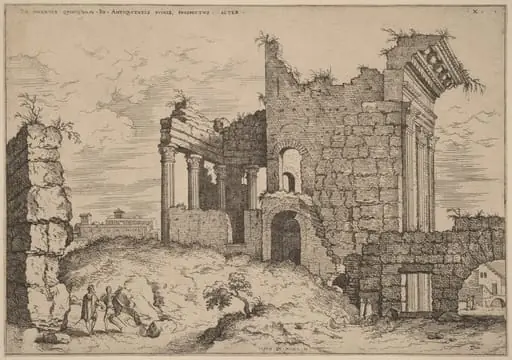
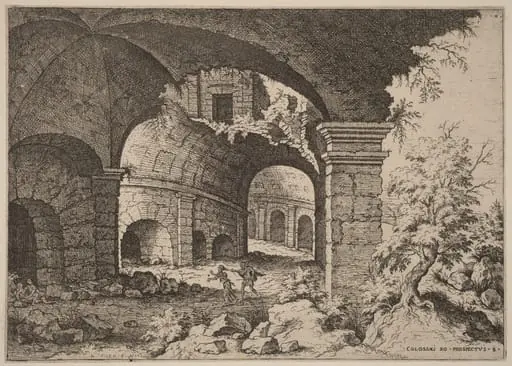
Produced in the mid-16th century, this etching is part of Cock's extensive output of over 1,100 prints. As the head of a major Antwerp publishing house, Cock played a pivotal role in industrializing printmaking in northern Europe.
Context
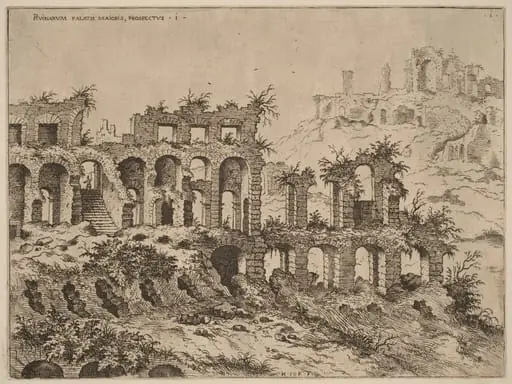
Second View of the Baths of Diocletian contributes to the visual culture of its time, alongside Cock's numerous other prints of ruins. These works catered to a growing interest in antiquity and helped shape the era's artistic landscape.
Legacy
Through his prolific printmaking, including works like Second View of the Baths of Diocletian, Hieronymus Cock left a lasting impact on the development of Northern European print culture in the 16th century.
Artist & collection
Artist
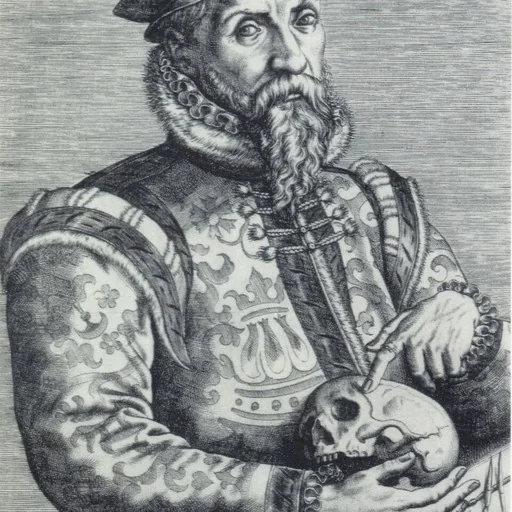
Hieronymus Cock, or Hieronymus Wellens de Cock, (1518 – 3 October 1570) was a Flemish painter and etcher as well as a publisher and distributor of prints.