Artwork
The Triumph of Christ
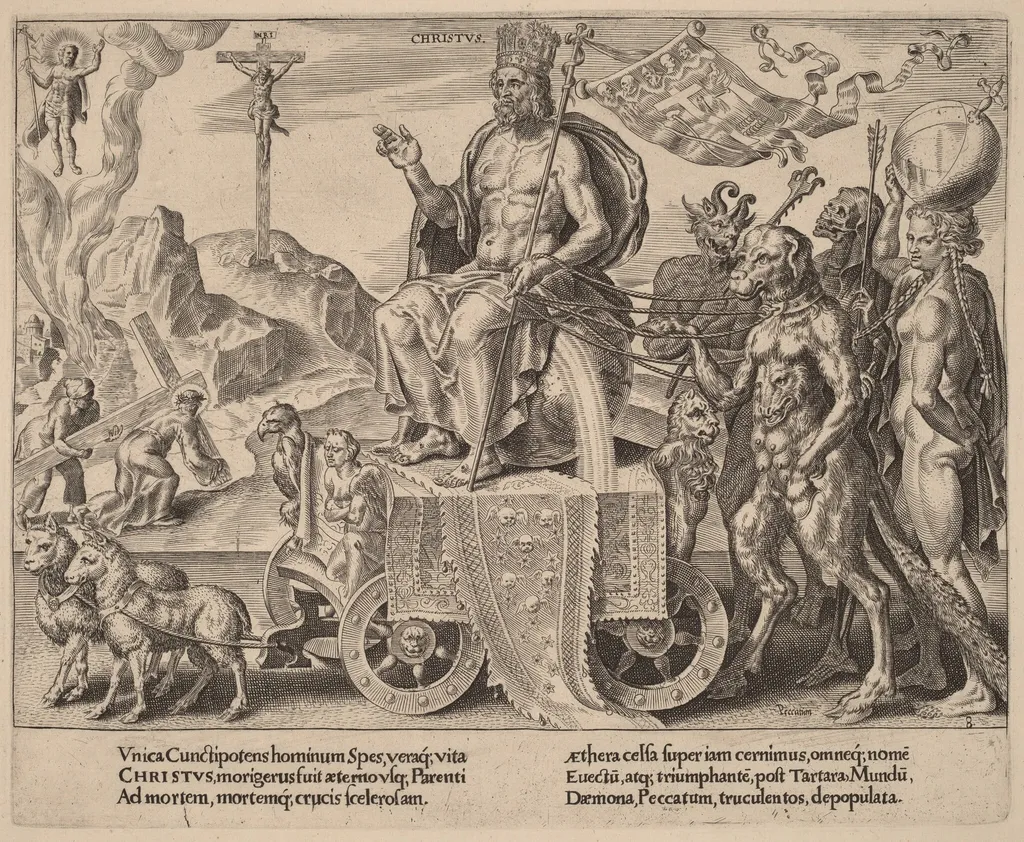
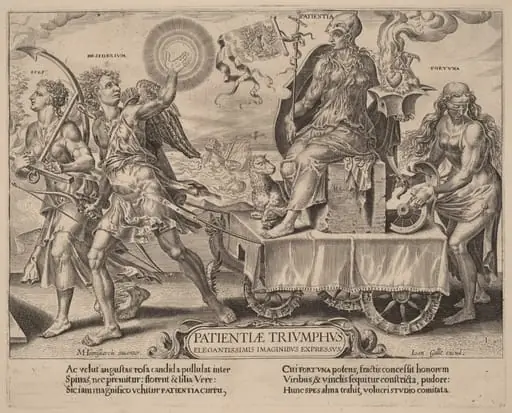
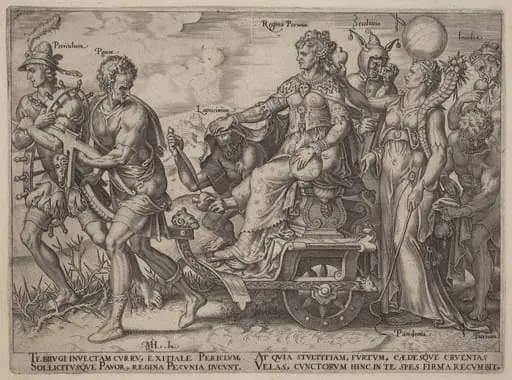
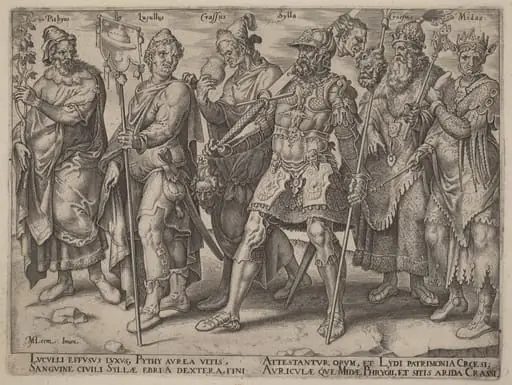
The Triumph of Christ is an ink print by the Renaissance artist Dirck Volckertz Coornhert. It dates from 1559 and is held in the collection of the National Gallery of Art.
About this work
Overview
Created in 1559 by Dirck Volckertz Coornhert, this print combines engraving and etching on laid paper to depict a dramatic vision of Christ’s spiritual victory.
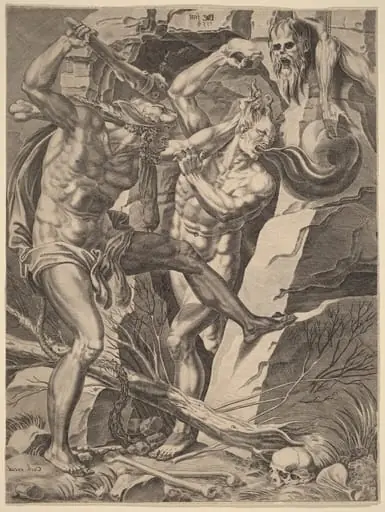
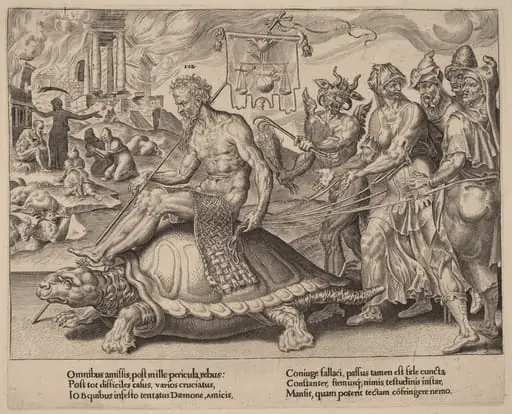
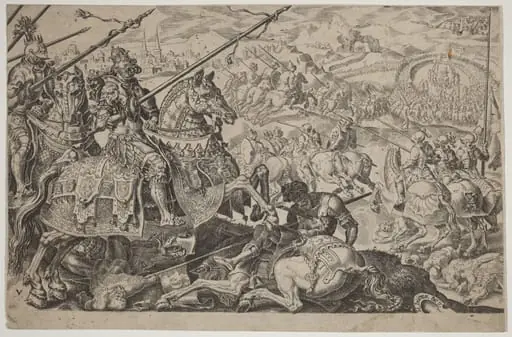
Created in 1559 by Dirck Volckertz Coornhert, this print combines engraving and etching on laid paper to depict a dramatic vision of Christ’s spiritual victory. The composition centers on a crowned Christ raising a cross, surrounded by a violent struggle between celestial and infernal forces. The scene is densely populated with writhing figures, symbolic torment devices, and a horned demon being subdued, all rendered with precise linear detail.
Subject & Meaning
The imagery illustrates Christ’s triumph over sin and death, drawing from apocalyptic themes common in Reformation-era theology. Angels and demons engage in physical combat, symbolizing the cosmic battle for souls. The wheel of torture and the fallen horned figure represent the defeat of evil, while light descending from above signifies divine authority. Latin inscriptions reinforce the theological message of redemption through Christ’s sacrifice.
Technique & Style
Coornhert employed fine, controlled lines to define muscular forms, flowing drapery, and intricate textures across the crowded scene. Etching allowed for fluid, expressive strokes, while engraving added sharp definition to key elements like chains and facial expressions. The contrast between dense, chaotic foreground and the stark, illuminated central figure creates visual tension, balancing movement with order.
History & Provenance
Produced in the Netherlands during a period of religious upheaval, the print likely served as a devotional or didactic object for Protestant audiences. Its survival in multiple institutional collections suggests it was circulated widely, possibly as part of religious pamphlets or educational materials. No record of a specific original owner exists, but its technical quality indicates commission or sale to a literate, religiously engaged clientele.
Context
Made during the height of the Protestant Reformation, the image reflects the era’s emphasis on spiritual warfare and the authority of Christ over earthly and demonic powers. Similar themes appear in contemporary woodcuts and engravings by artists like Lucas van Leyden. The Latin text aligns with scholarly religious culture, while the visceral imagery catered to broader audiences seeking tangible representations of abstract doctrine.
Legacy
Though not widely known today, the print exemplifies the sophistication of 16th-century Northern European printmaking. Its blend of theological narrative and technical precision influenced later religious imagery in print form. It remains a documented example of how visual art was used to communicate doctrinal ideas in an era of limited literacy and rising print culture.
Artist & collection