Artwork
The Triumph of Patience
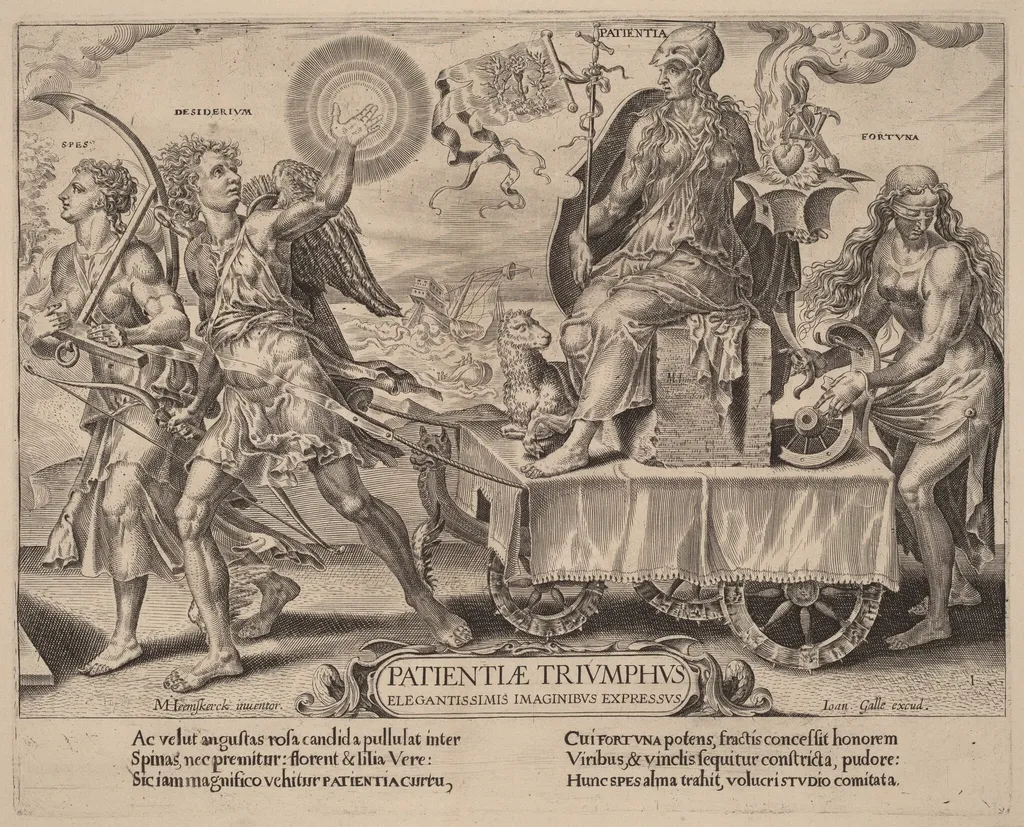
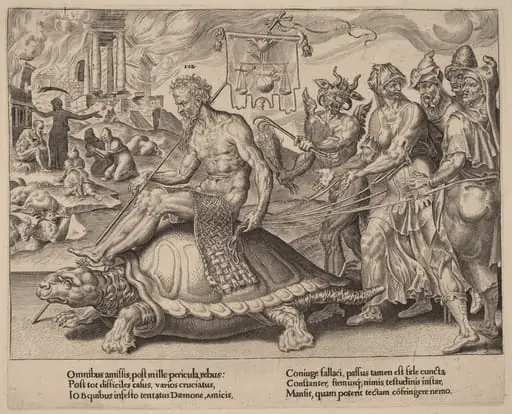
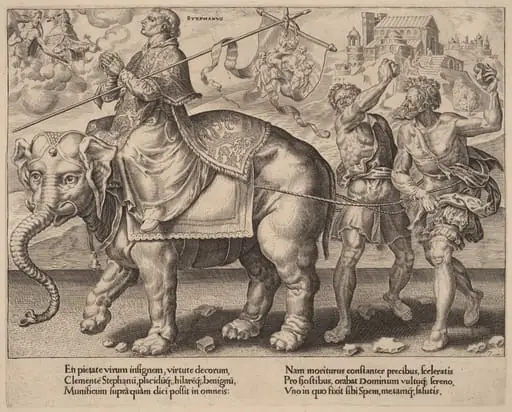
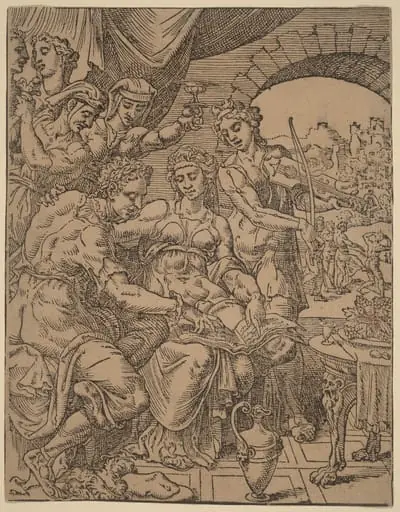
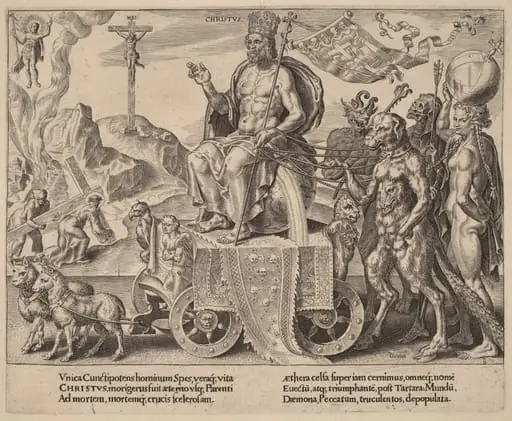
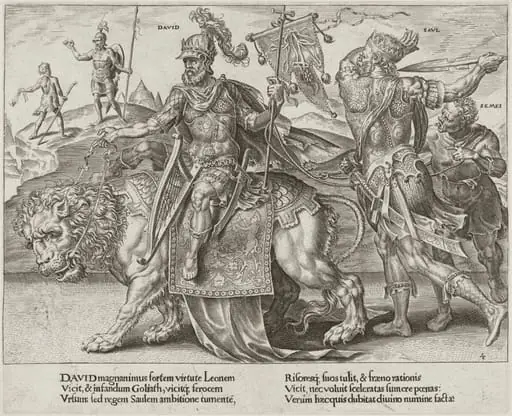
The Triumph of Patience is an ink print by the Renaissance artist Dirck Volckertz Coornhert. It dates from 1559 and is held in the collection of the National Gallery of Art.
About this work
Overview
Dirck Volckertz Coornhert’s print, titled The Triumph of Patience, was executed in 1559 using both engraving and etching techniques on laid paper. The work presents an allegorical scene that combines symbolic figures with a maritime landscape, rendered in a balanced interplay of light and shadow.
Subject & Meaning
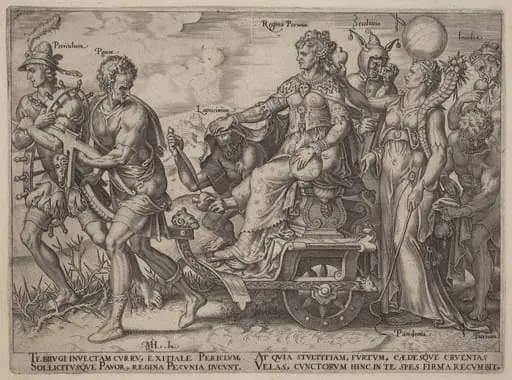
At the centre sits a woman representing Patience, seated upon a chariot. She cradles a heart, while a lion rests at her feet, both traditional emblems of steadfastness and courage. Flanking her are two men—one pulling, the other pushing the vehicle—suggesting the forces that test endurance, while a third figure stands nearby, observing the tableau.
Technique & Style
Coornhert employs a combination of engraving’s crisp lines and etching’s softer tonal washes, creating a nuanced gradation of dark and light. Fine hatching defines the figures and the distant sea, while broader strokes suggest the texture of the chariot’s wheel and the draped tablecloth, giving the composition depth and a calm, measured rhythm.
Context
The print belongs to the mid‑sixteenth‑century tradition of moral allegory, where virtues were personified for didactic purposes. Its maritime backdrop, complete with ships and a radiant sun, reflects contemporary interests in exploration and the notion of a steady course through life’s uncertainties.
Legacy
Although not as widely reproduced as other allegorical prints of its era, The Triumph of Patience illustrates Coornhert’s skill in merging narrative content with technical mastery, offering insight into the visual language of virtue that circulated in Northern European print culture.
Artist & collection