Artwork
Ecce Homo
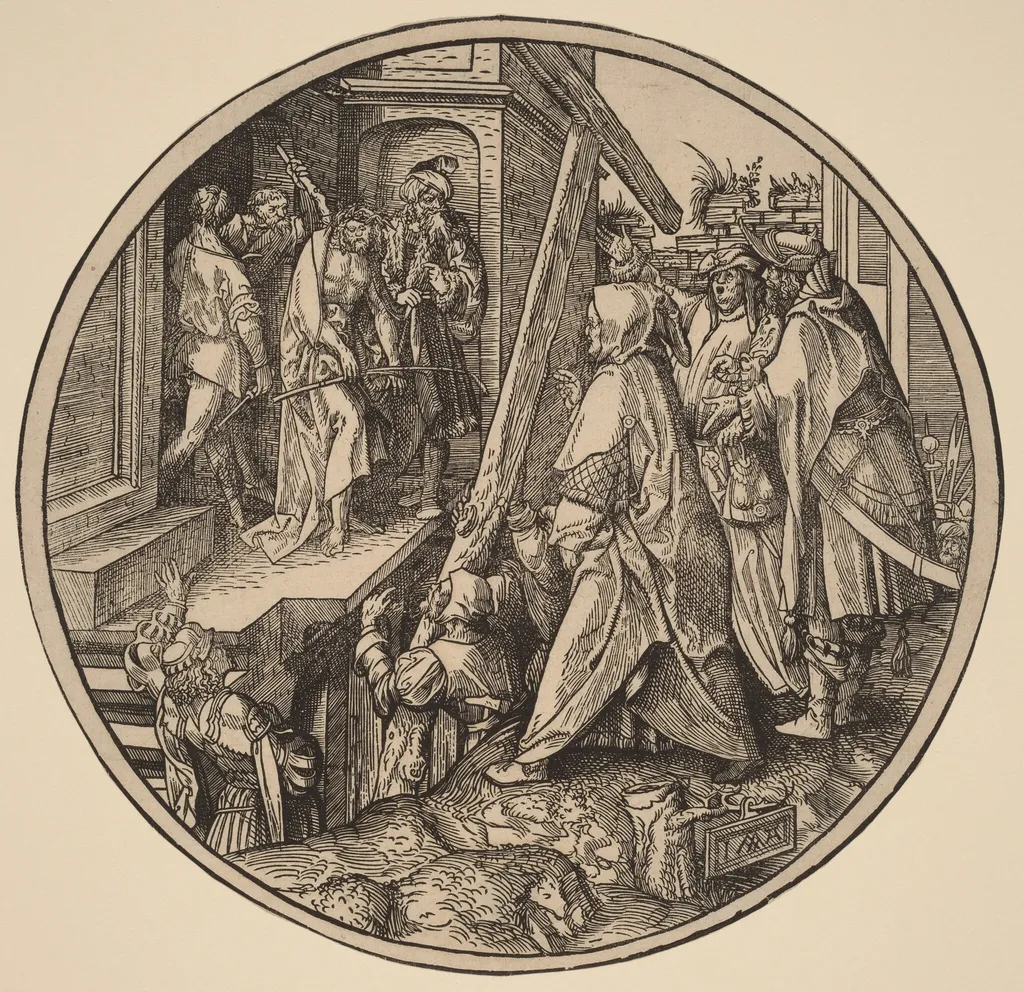
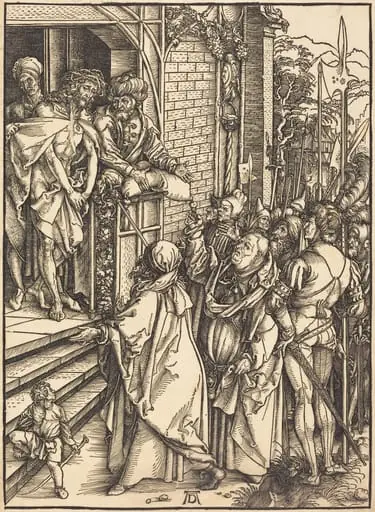
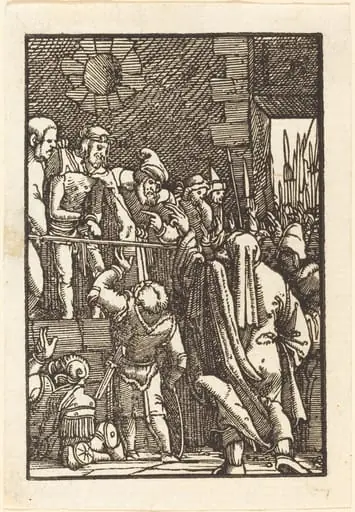
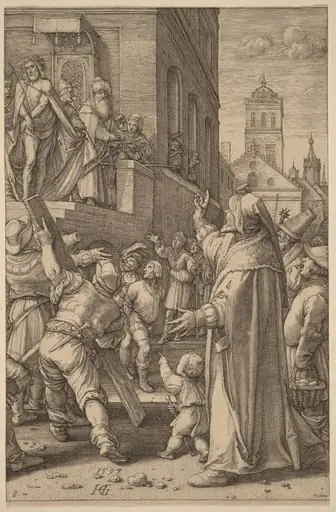
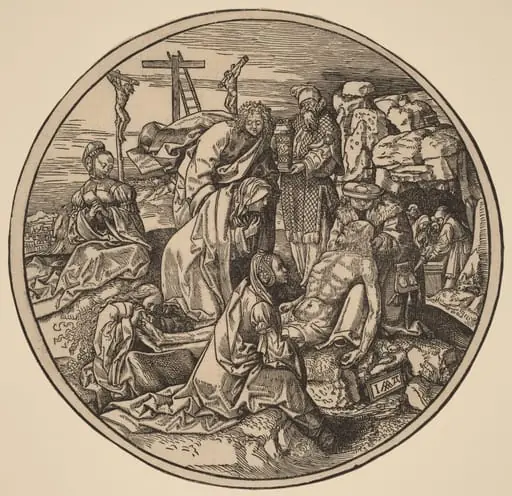
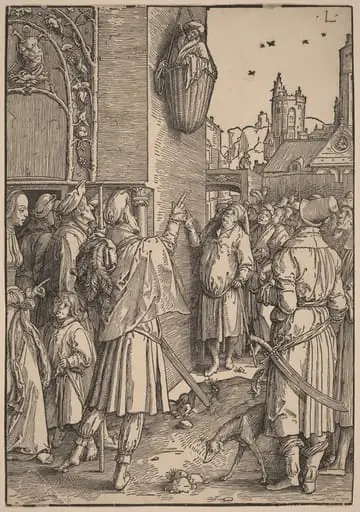
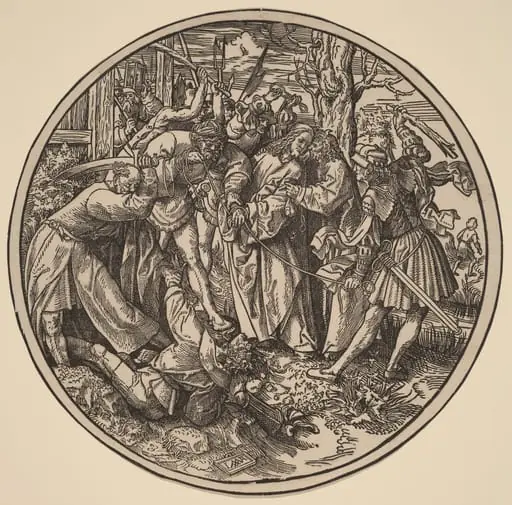
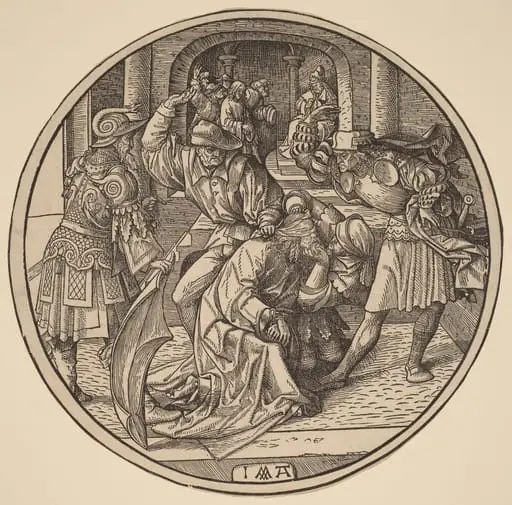
Ecce Homo is an ink print by the Renaissance artist Jacob Cornelisz van Oostsanen. It dates from 1514 and is held in the collection of the National Gallery of Art.
About this work
Overview
Van Oostsanen, active during the city’s rise as a commercial hub, combined printmaking with painting, helping establish a local artistic tradition.
Created in 1514 by Jacob Cornelisz van Oostsanen, this woodcut on laid paper is one of the earliest significant prints produced in Amsterdam. Van Oostsanen, active during the city’s rise as a commercial hub, combined printmaking with painting, helping establish a local artistic tradition. The work reflects the growing demand for devotional imagery in northern Europe, executed with the technical precision characteristic of early 16th-century woodcut production.
Subject & Meaning
The scene illustrates Pontius Pilate presenting Jesus, bound and crowned with thorns, to a hostile crowd. Christ’s upward gaze and outstretched arms evoke resignation and divine purpose, while the surrounding figures display varied reactions—some pointing, others observing in silence. The composition emphasizes the moment of public judgment, a common theme in Passion cycles, inviting viewers to reflect on guilt, authority, and sacrifice.
Technique & Style
The image was carved into a wooden block and printed using the woodcut method, resulting in bold, linear forms with a textured, grainy surface. Shading is achieved through parallel and cross-hatched lines, creating subtle depth without soft transitions. The roughness of the lines enhances the emotional intensity, aligning with Northern European print traditions that favored expressive clarity over idealized detail.
History & Provenance
Van Oostsanen operated a workshop in Amsterdam during its early expansion as a center of trade and culture. While few of his paintings survive, his prints circulated widely, indicating his influence. This particular woodcut was likely produced in multiple impressions for religious households and clergy. Its survival in good condition suggests careful handling and continued use in private devotion.
Context
In the early 1500s, Amsterdam was becoming a hub for print distribution, aided by growing literacy and the Reformation’s emphasis on personal scripture. Woodcuts like this one served as accessible religious tools before widespread book printing. Van Oostsanen’s work bridges late medieval iconography and emerging humanist themes, reflecting both traditional piety and the city’s evolving cultural identity.
Legacy
Van Oostsanen’s prints helped define the visual language of early Dutch printmaking. His use of narrative density and emotional expression influenced later artists in the region. Though overshadowed by contemporaries like Dürer, his contributions laid groundwork for Amsterdam’s later prominence in print culture, particularly in devotional and biblical subjects.
Artist & collection
Artist
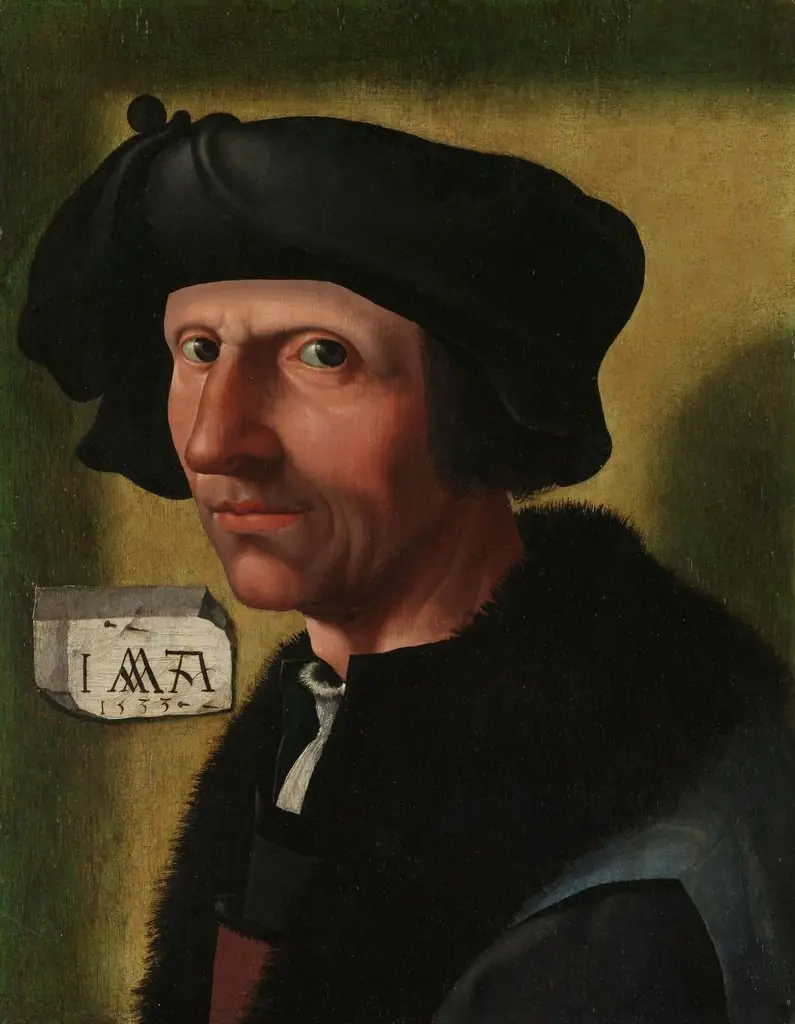
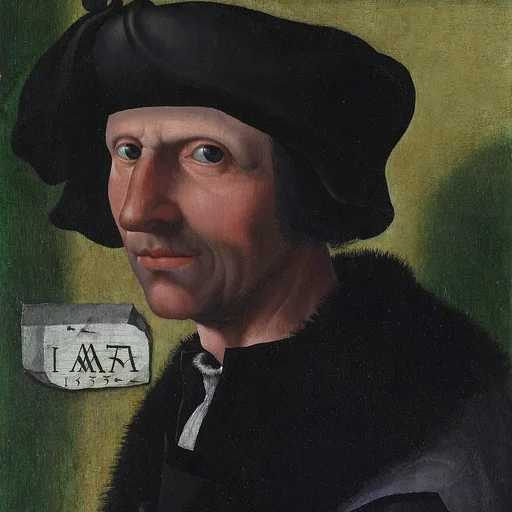
Jacob Cornelisz van Oostsanen (before 1470 – 1533) was a Northern Netherlandish designer of woodcuts and painter.