Artwork
Flora
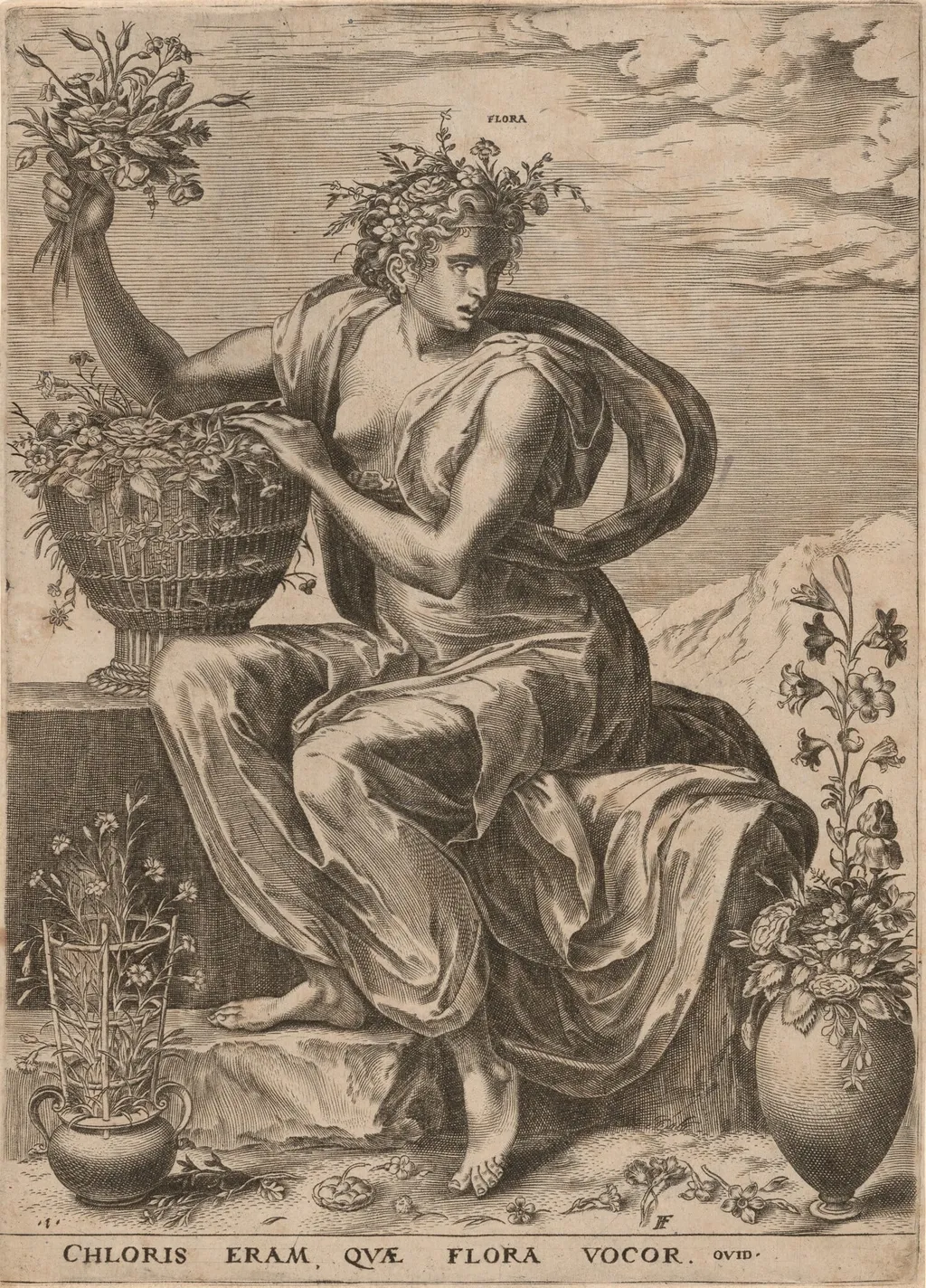
Flora is an ink print by the Renaissance artist Cornelis Cort. It dates from 1564 and is held in the collection of the National Gallery of Art.
About this work
Overview
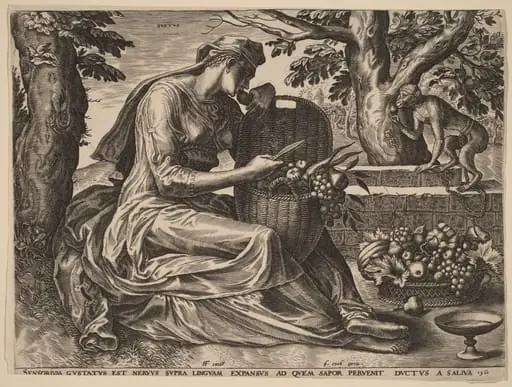
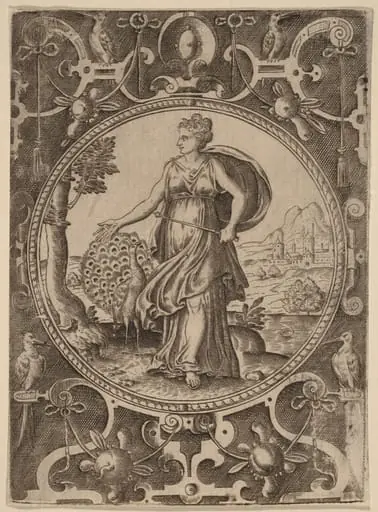
Cornelis Cort’s 1564 print, titled *Flora*, presents a seated female figure surrounded by an abundance of blossoms and foliage. Rendered as an engraving on laid paper, the composition balances a tranquil pose with a richly detailed botanical setting, reflecting the artist’s skill in line work and his engagement with classical themes.
Subject & Meaning
The figure represents the Roman goddess Flora, patron of flowers and spring, identified by the bouquet she holds and the floral adornments in her hair and attire. The surrounding plants and baskets reinforce her association with fertility and the renewal of nature, a common allegorical motif in Renaissance visual culture.
Technique & Style
Cort employs fine, intersecting lines to model the drapery, hair, and plant forms, creating a sense of texture and depth on the paper’s laid surface. The engraving demonstrates the high level of precision characteristic of mid‑sixteenth‑century Northern printmaking, while its graceful composition aligns with Italian Renaissance ideals of harmony and proportion.
History & Provenance
Born in the Netherlands, Cort spent the last twelve years of his career in Italy, where he signed works as Cornelio Fiammingo. *Flora* was produced during this Italian period and now belongs to the collection of the National Gallery of Art in Washington, where it is catalogued as part of the museum’s holdings of Renaissance prints.
Artist & collection

Artist
Cornelis Cort (c. 1533 – c. 17 March 1578) was a Dutch engraver and draughtsman. He spent the last 12 years of his life in Italy, where he was known as Cornelio Fiammingo.