Artwork
A Boy in Florentine Costume
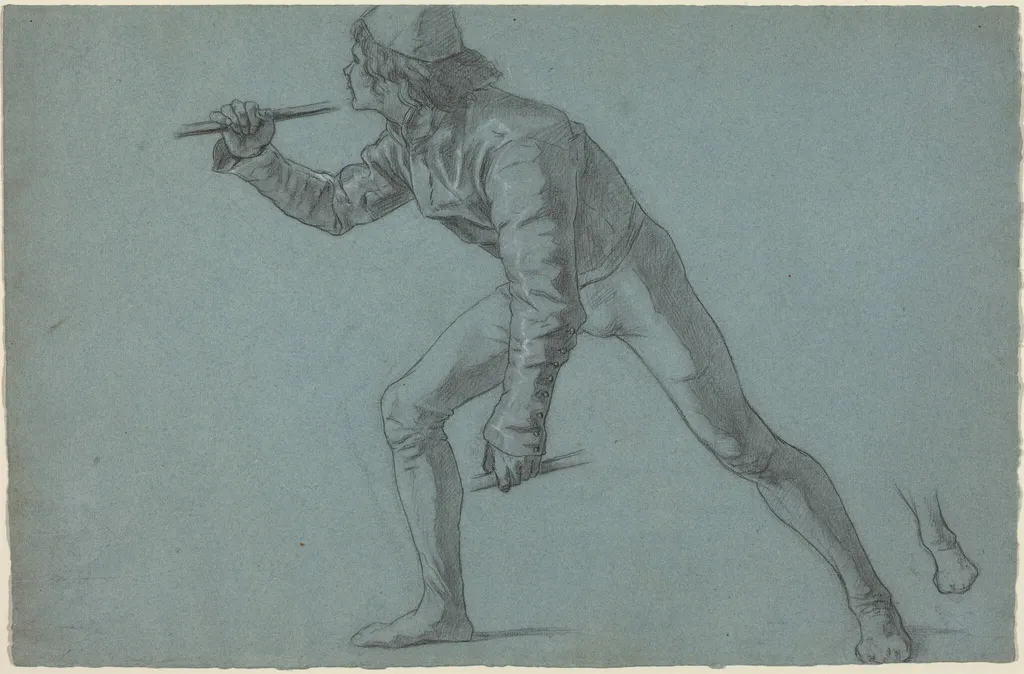
A Boy in Florentine Costume is a chalk drawing by the Impressionist artist Thomas Couture. It dates from 1863 and is held in the collection of the National Gallery of Art.
About this work
Overview
Created around 1863 by French artist Thomas Couture, this drawing captures a young boy dressed in Renaissance-inspired Florentine attire.
Created around 1863 by French artist Thomas Couture, this drawing captures a young boy dressed in Renaissance-inspired Florentine attire. Executed in black chalk with white chalk highlights on blue laid paper, the work exemplifies Couture’s disciplined draftsmanship and his sustained interest in historical costume. Though not a finished painting, it reflects his method of studying form and gesture through preparatory studies.
Subject & Meaning
The figure is a youthful male in period dress, his pose suggesting motion—head forward, torso turned left, one arm bent, the other extended. The costume evokes 15th-century Florence, aligning with Couture’s broader fascination with Renaissance aesthetics. The subject is not a specific historical person but an idealized type, chosen to explore anatomical vitality and the expressive potential of historical dress in academic training.
Technique & Style
Couture employed contrasting tones of black and white chalk on a blue ground to model volume and suggest light falling across the figure. The blue paper provides a mid-tone base, allowing the chalk to define shadows and highlights with precision. His controlled lines and subtle gradations reflect academic training, emphasizing structure over ornament, while the dynamic posture introduces a sense of latent movement.
History & Provenance
The drawing was made during Couture’s later career, after his major historical paintings and while he was teaching at the École des Beaux-Arts. It likely served as a study for larger compositions or as a demonstration piece for students. Its survival suggests it was valued within his circle, though its specific provenance before the 20th century remains undocumented in public records.
Context
In mid-19th-century France, artists frequently turned to historical dress to explore form and narrative. Couture, influenced by Renaissance masters and committed to academic ideals, used such studies to bridge classical tradition with contemporary pedagogy. This drawing aligns with a broader trend among French artists to revive historical aesthetics as a foundation for artistic discipline.
Legacy
Though less known than his large-scale canvases, this drawing illustrates Couture’s role as a teacher who emphasized rigorous drawing from life and historical reference. His students, including Manet and Puvis de Chavannes, absorbed his focus on structure and gesture. The work endures as a quiet testament to the importance of preparatory study in 19th-century French art education.
Artist & collection

Artist
Thomas Couture (French pronunciation: ; 21 December 1815 – 30 March 1879) was a French history painter and teacher.

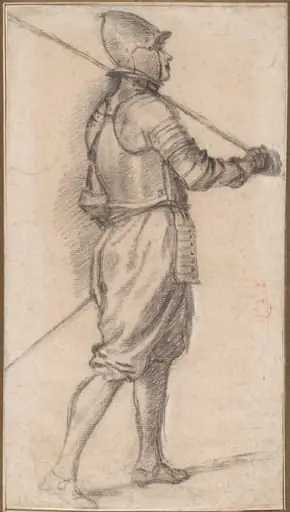 Standing Soldier, Facing Right
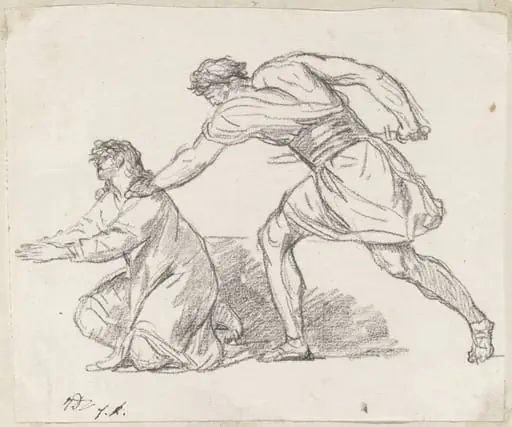 Warrior Seizing a Kneeling Figure
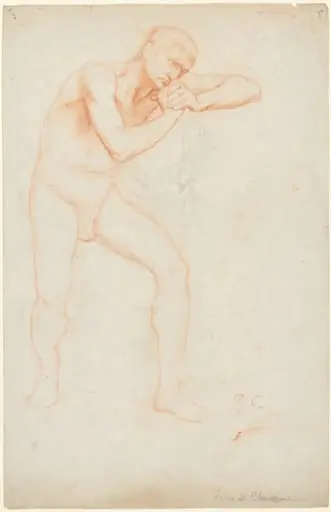 Male Nude
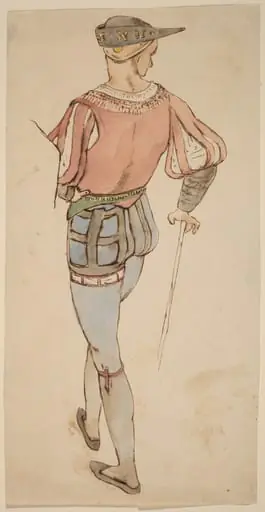 Study after Old Master
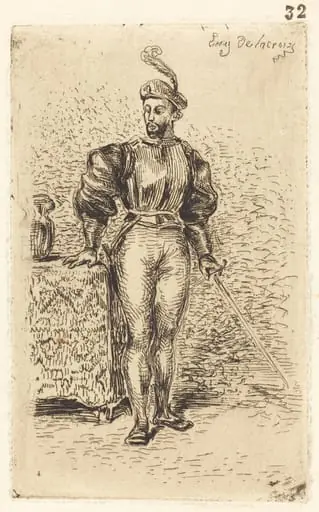 A Man with Weapons (Un Homme d'armes)
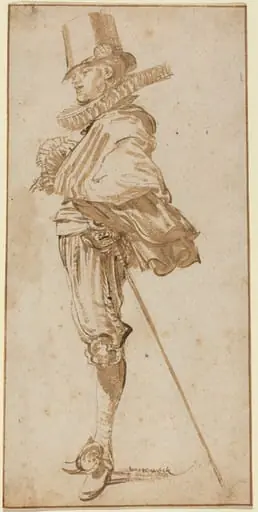 Standing Cavalier Wearing a Sword
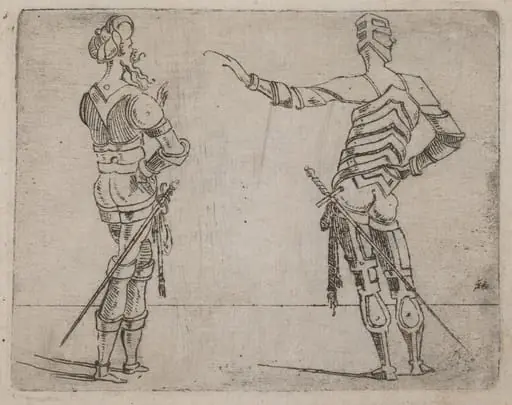 From "Bizzarie di varie Figure"
 A Bearded Man with a Staff
![A Turk [recto], by Giovanni Battista Cipriani](https://artifactworldgallery.com/img/giovanni-battista-cipriani--a-turk-recto--12cde5f9bac9a966-w320.webp) A Turk [recto]
A Turk [recto] A Triton Blowing a Conch Shell
 Archer Drawing His Bow
 Statue of a Male Nude with Hand on Hip