Artwork
Camp at Aveen near Tehran
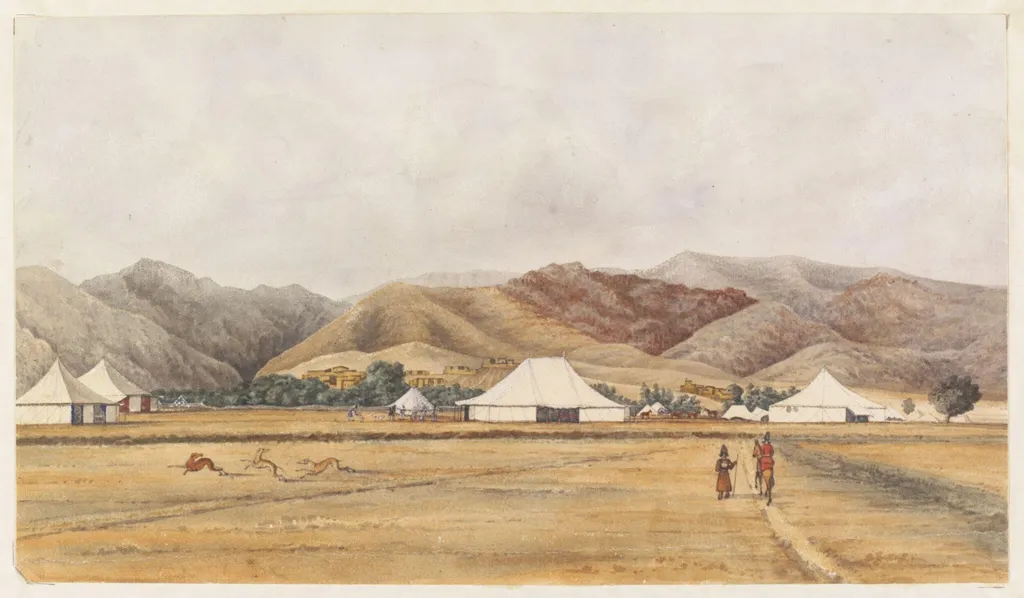
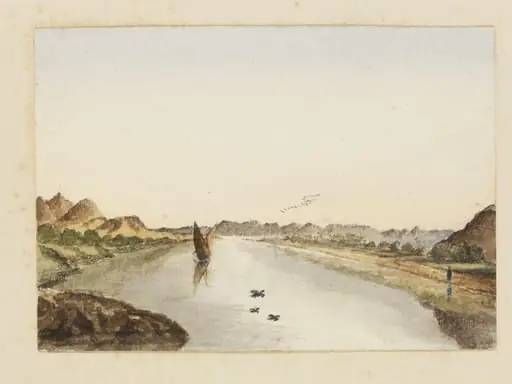
Camp at Aveen near Tehran is a watercolor work on paper by the Orientalist artist Godfrey Thomas Vigne. It dates from 1833 and is held in the collection of the Victoria and Albert Museum.
About this work
Overview
The scene is rendered with delicate washes and restrained detail, emphasizing the quiet scale of human presence against a vast, arid landscape.
This watercolour, created by Godfrey Thomas Vigne in 1833, captures a temporary encampment near the village of Evin, just north of Tehran. Executed during his journey through Persia, the work is part of a broader visual record of his travels in Central Asia. The scene is rendered with delicate washes and restrained detail, emphasizing the quiet scale of human presence against a vast, arid landscape.
Subject & Meaning
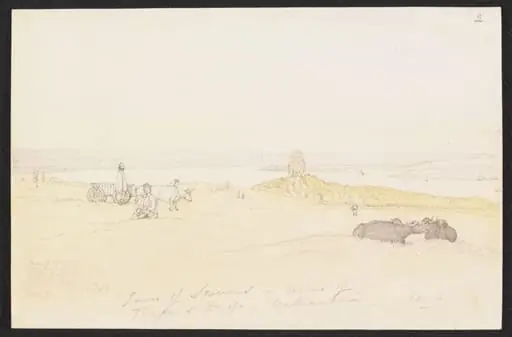
The painting portrays a nomadic or transient encampment, with clustered tents, scattered livestock, and figures moving along a dirt path. The arrangement suggests a temporary settlement, possibly linked to trade, pilgrimage, or seasonal migration. The absence of architectural permanence underscores the transitory nature of life in the region, while the quiet activity conveys daily routine rather than spectacle.
Technique & Style
Vigne employed transparent watercolour washes to suggest atmospheric depth and dry terrain. Soft gradients in the distant mountains convey mist and distance, while the foreground is defined by sparse, dry brushwork to mimic cracked earth and sparse vegetation. The figures and animals are rendered with minimal detail, prioritizing overall composition and mood over individual precision.
History & Provenance
The work was produced during Vigne’s extensive travels in Persia and the Himalayas, later referenced in his published accounts. It remained in his family’s possession until 1971, when it was acquired from his great-nephew as part of a group of drawings and documents. Its preservation within the family suggests personal significance, though it was never exhibited publicly during the artist’s lifetime.
Context
In the early 1830s, European travelers like Vigne were among the few outsiders to document remote regions of Persia. His work contributed to Western geographical knowledge at a time when detailed visual records of Central Asian life were rare. The painting reflects both scientific curiosity and the aesthetic conventions of topographical drawing popular among British travelers of the era.
Legacy
Vigne’s watercolours serve as historical documents of a region undergoing gradual change. While not widely known in art history, his images provide insight into the material culture and landscape of 19th-century Persia. The survival of this piece, alongside his written records, offers a rare dual perspective—visual and textual—on a world largely inaccessible to most Europeans at the time.
Artist & collection


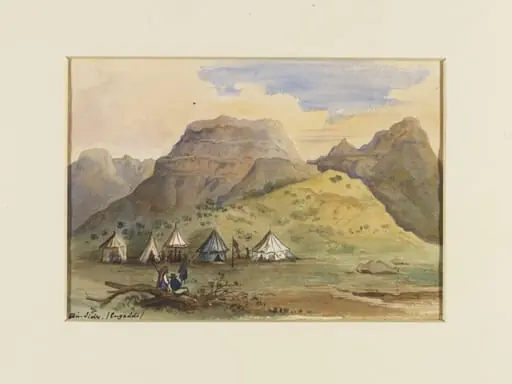 Ain-Jiddy./Engaddi
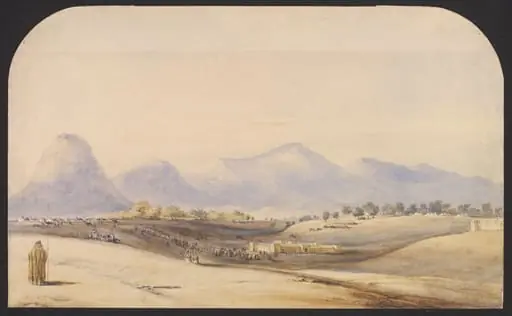 Arabs and their Camels surprised by Cavalry
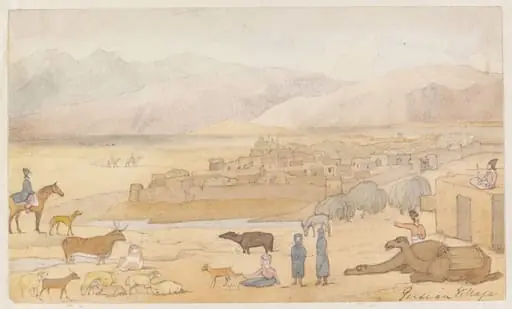 Persian Village
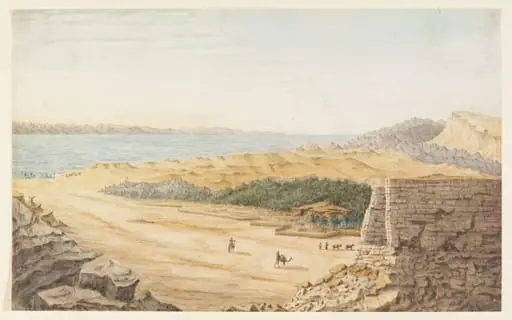 Ancient Ruins in the land of Edom above the bed of a valley and Arab Date gardens
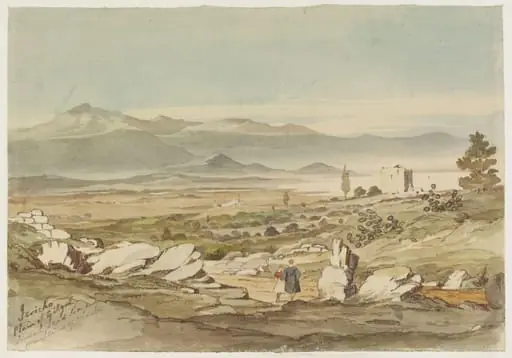 Jericho Plain of Gilgal, Jordan, Dead Sea, and Mountains of Moab
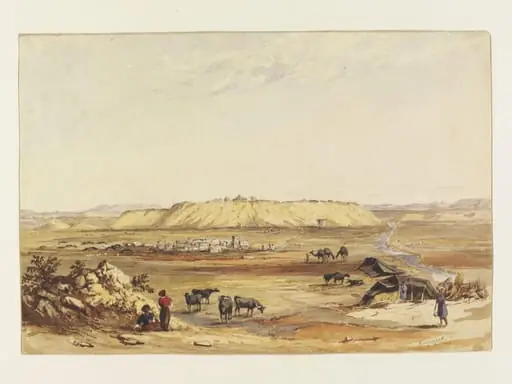 Kouyunjick
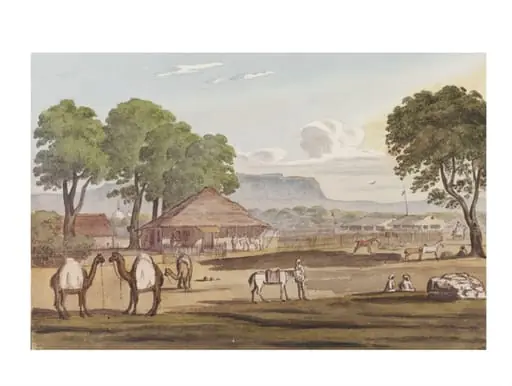 Panwell Tavern
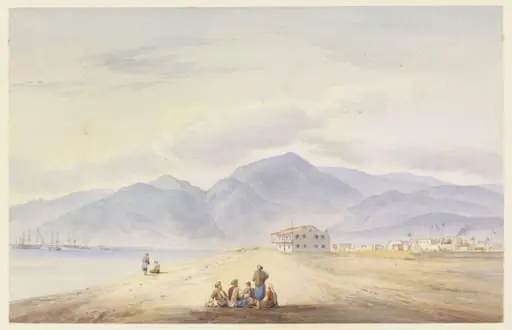 Alexandretta (Gulf of Iskanderoon)
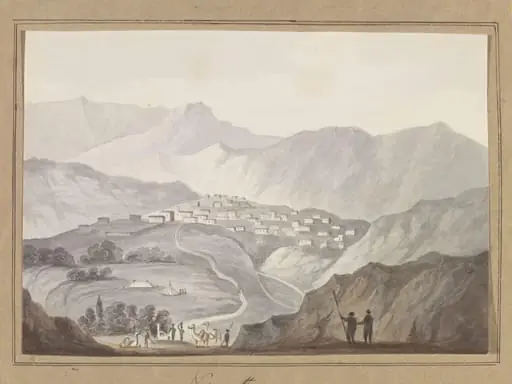 Nazareth
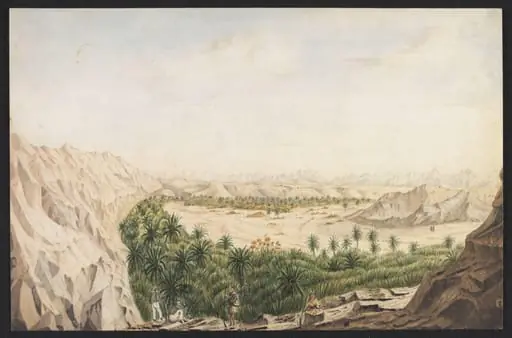 View of the valley of Eynounah. Coast of Arabia in the Red Sea
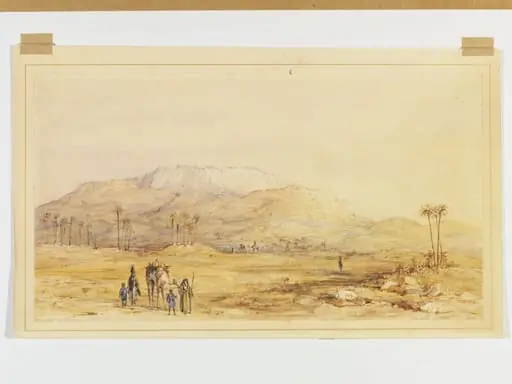 Pyramid of Abu Roash from the Village of Kerdassy
 View of the Nile