Artwork
Upton-on-Severn
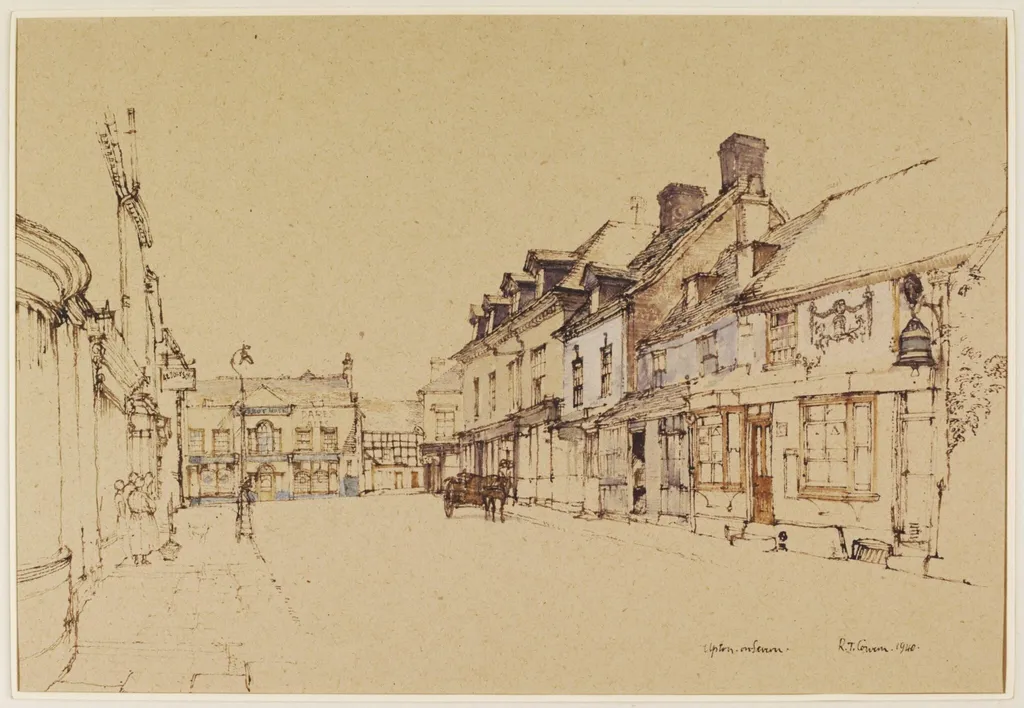
Upton-on-Severn is a watercolor work on paper by Raymond Teague Cowern. It dates from 1940 and is held in the collection of the Victoria and Albert Museum.
About this work
Overview
Upton-on-Severn is a watercolour painting by Raymond Teague Cowern, created in 1940 as part of the Recording Britain project.
Subject & Meaning
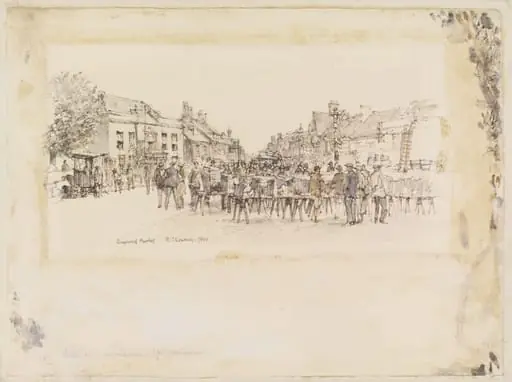
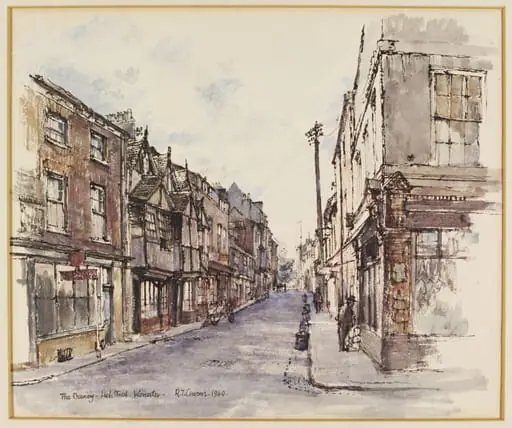
The painting depicts a quiet street in Upton-on-Severn, a market town in Worcestershire, capturing a moment of everyday life with a horse-drawn cart and pedestrians amidst traditional buildings.
Technique & Style
Executed in muted colours with loose, quick brushstrokes, the work conveys a sense of immediacy and captures the character of the scene.
History & Provenance
The painting was produced under the Recording Britain initiative, a wartime project funded by the Pilgrim Trust and organized by the Ministry of Labour and National Service, with Sir Kenneth Clark overseeing the collection.
Context
The work reflects the concerns of the time, documenting landscapes and settlements at risk from conflict and modernization, and supporting artists during a period of uncertainty.
Artist & collection
Artist
Raymond Teague Cowern painted quiet watercolors of mid-century Worcestershire life during the Second World War.

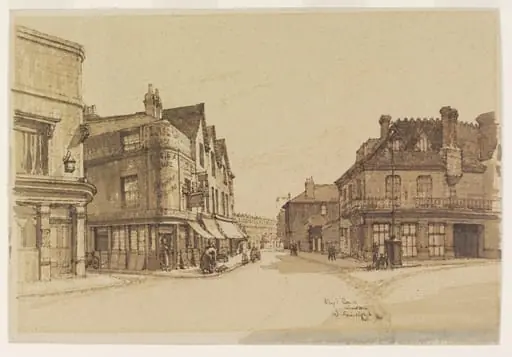 King's Road, Windsor
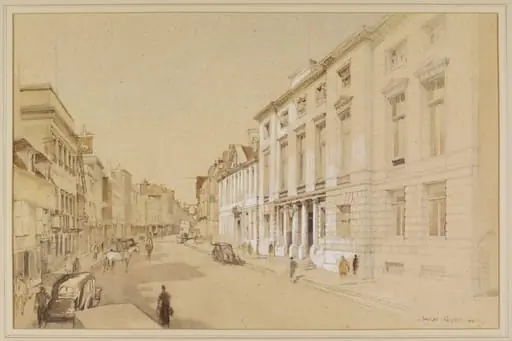 The County Hall and High Street, Lewes
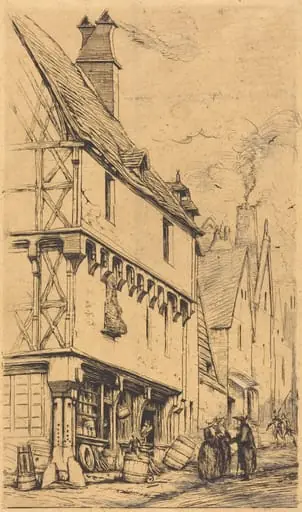 Ancienne habitation à Bourges, dite "La Maison du Musicien" (An Old House at Bourges, Sometimes Called the "Musician's House")
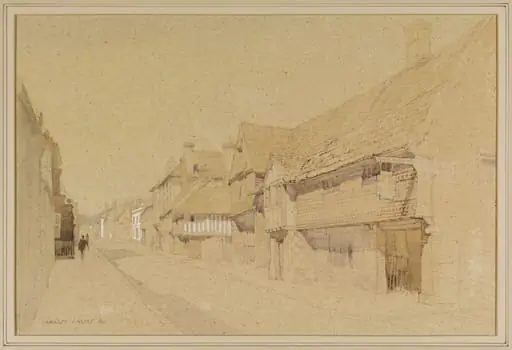 High Street, Southover, looking West
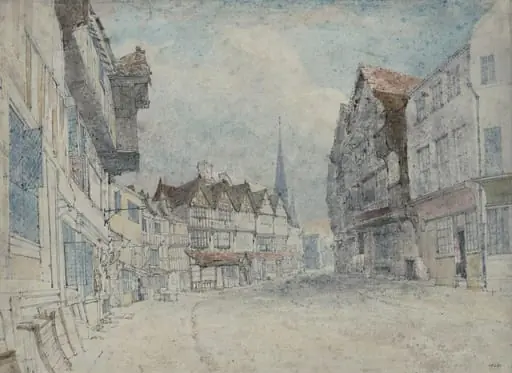 Street view in Hereford
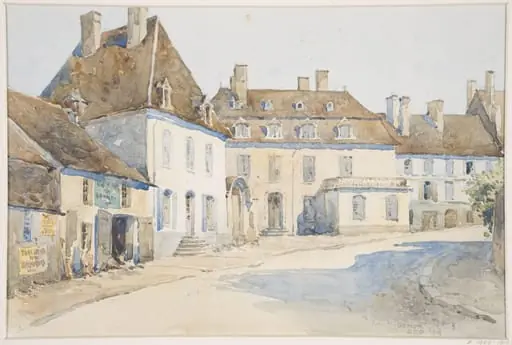 Semur, France
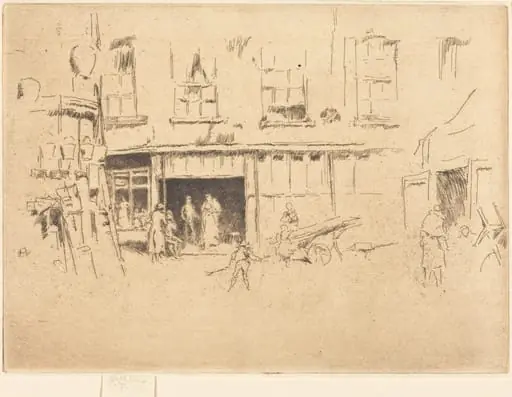 Little Court
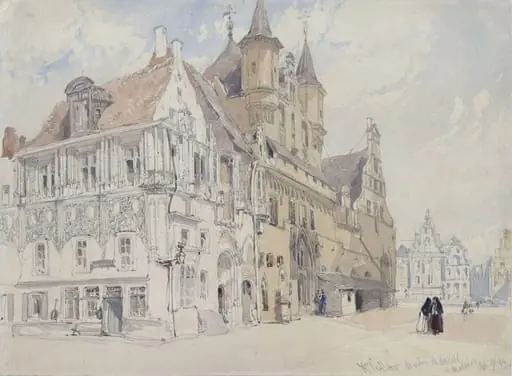 Malines, Maison du Conseil
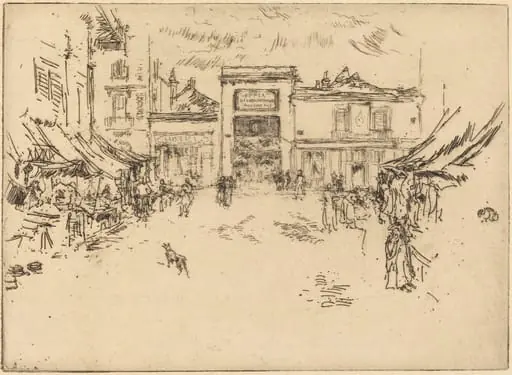 Little Market Place, Tours
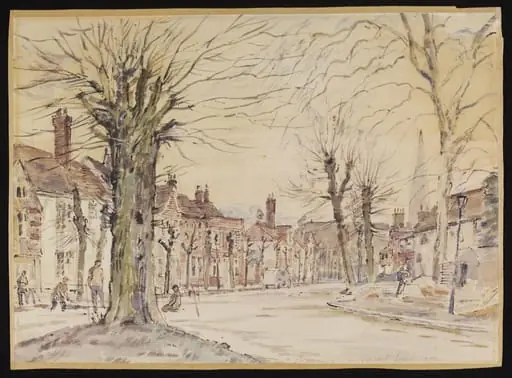 The Causeway, Horsham
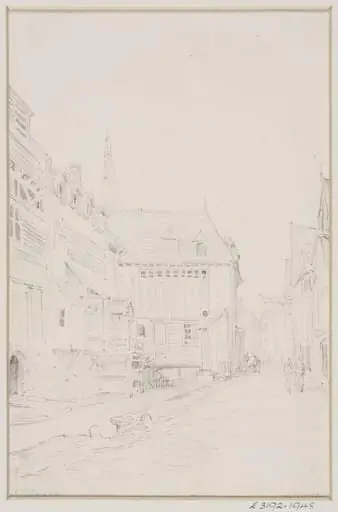 Topographical drawings
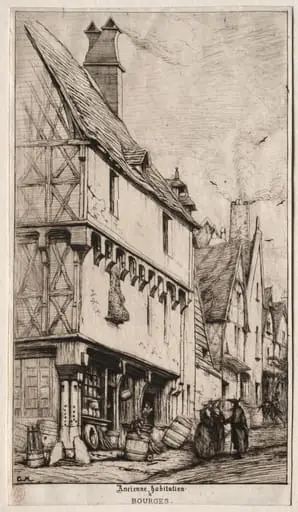 An Old House at Bourges, sometimes called the Musician's House