Artwork
Philip Melanchthon
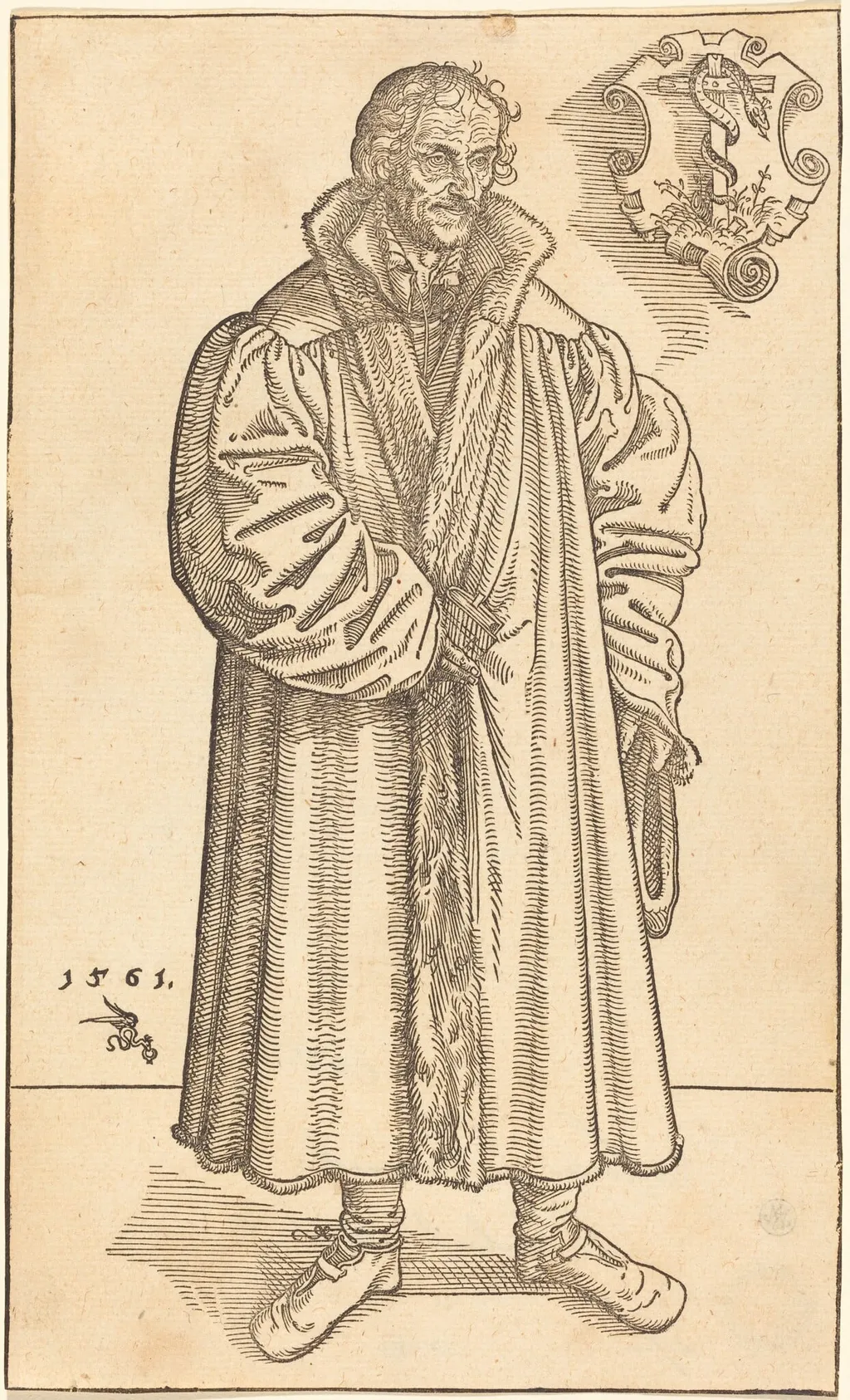
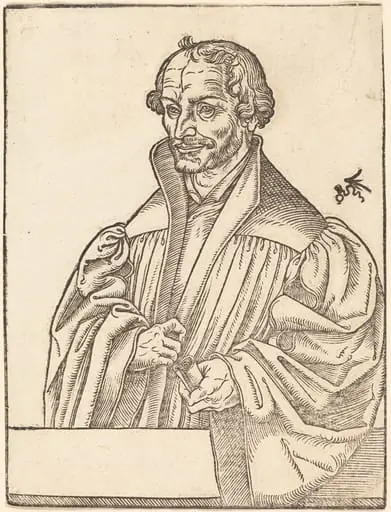
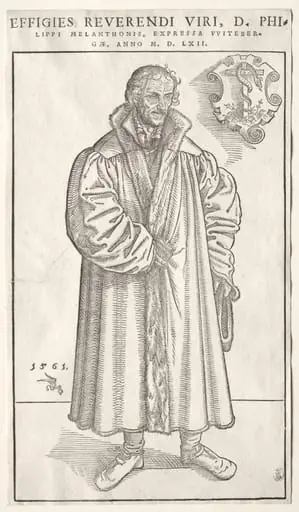
Philip Melanchthon is an ink print by the Renaissance artist Lucas Cranach the Younger. It dates from 1561 and is held in the collection of the National Gallery of Art.
About this work
Overview
The composition is formal and restrained, emphasizing the subject’s intellectual presence through precise engraving and minimal background detail.
This black-and-white woodcut, produced in 1561 by Lucas Cranach the Younger, depicts the German theologian and reformer Philip Melanchthon. Executed on laid paper, the print uses carved wooden blocks to create sharp, linear contrasts typical of 16th-century printmaking. The composition is formal and restrained, emphasizing the subject’s intellectual presence through precise engraving and minimal background detail.
Subject & Meaning
Philip Melanchthon, a close associate of Martin Luther and key figure in the Protestant Reformation, is portrayed with solemn dignity. His attire—a long robe with puffed sleeves and a fur-lined collar—signals scholarly status and clerical authority. The hand tucked into his garment, a conventional pose of contemplation, reinforces his role as a thinker and educator, aligning the image with humanist ideals of quiet intellect.
Technique & Style
The image is rendered in the woodcut technique, where lines are incised into a wooden block, inked, and pressed onto paper. Cranach the Younger employs fine, controlled strokes to define texture in fabric and hair, while the flat background isolates the figure. The absence of tone or shading relies on line weight and contrast, characteristic of Northern European printmaking of the period.
History & Provenance
Created in 1561, the print likely served as a portrait for distribution among Protestant circles, reinforcing Melanchthon’s influence after his death in 1560. It was produced in Wittenberg, where Cranach’s workshop was central to Reformation visual culture. The small heraldic motif behind him may reference his academic or civic affiliations, though its exact symbolism remains unconfirmed.
Context
In the mid-16th century, woodcuts were a primary medium for disseminating images of religious and intellectual leaders. Cranach’s workshop, long tied to the Lutheran cause, produced numerous portraits to support the Reformation’s ideological goals. Melanchthon’s likeness, circulated widely, helped solidify his public identity as the 'Praeceptor Germaniae'—teacher of Germany.
Legacy
This woodcut contributed to the standardized visual representation of Melanchthon in later historical and educational materials. Its clarity and formal composition made it a model for subsequent portraits, ensuring his image endured beyond his lifetime. As a product of a major Reformation-era print shop, it reflects the strategic use of visual media in shaping religious identity.
Artist & collection