Artwork
Capstone. John XX, 29
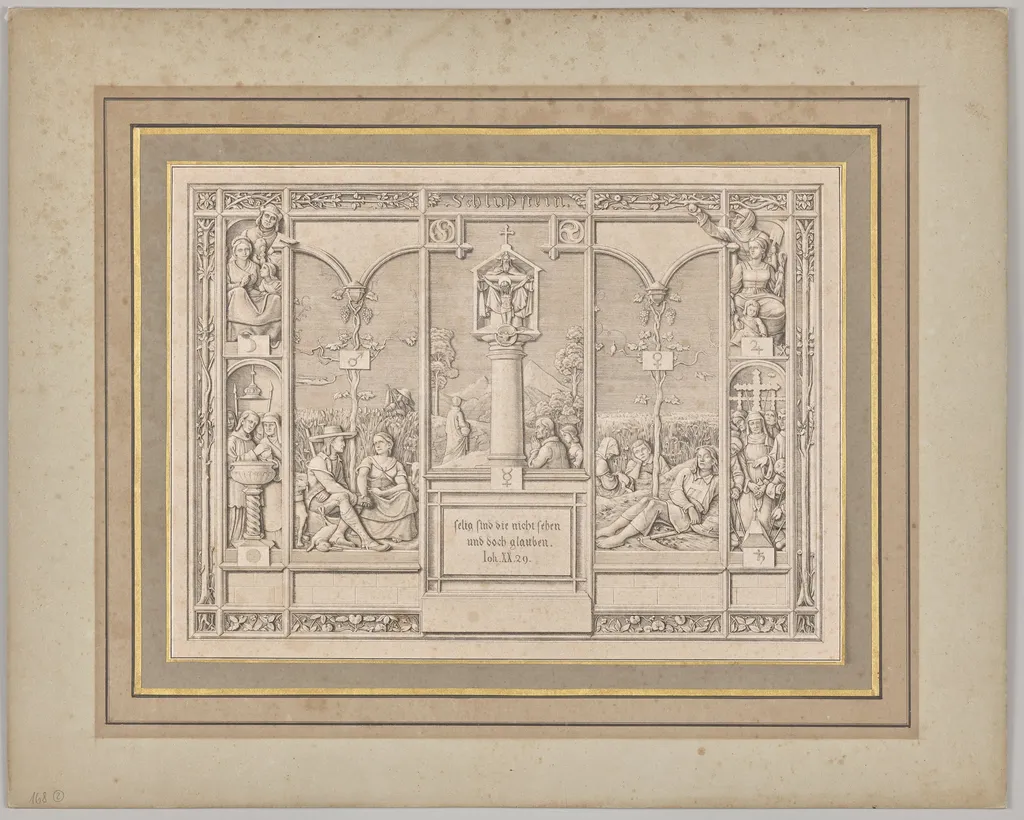
Capstone. John XX, 29 is a print by the Romanticist artist Ferdinand Olivier. It dates from 1820 and is held in the collection of the Cleveland Museum of Art.
About this work
Overview
Created in 1820 by Ferdinand Olivier, Capstone. John XX, 29 is a printed triptych that mimics the structure of a devotional altar. Its three panels are arranged to evoke sacred space, blending natural imagery with religious symbolism. The work is part of the collection at The Cleveland Museum of Art and reflects the artist’s engagement with spiritual themes through a Romantic lens.
Subject & Meaning
Together, they frame belief as a quiet, internal state rather than a visible miracle.
The triptych presents a narrative of faith: the left panel shows a woman and child in a garden, suggesting innocence and divine presence; the center bears a crucifixion above the Latin phrase 'Blessed are those who have not seen and yet believe'; the right depicts figures resting beneath a tree, perhaps in contemplation. Together, they frame belief as a quiet, internal state rather than a visible miracle.
Technique & Style
Olivier employed fine linear detail and tonal gradation to create a serene, atmospheric quality. The composition is symmetrical and framed like a medieval altarpiece, yet the landscape elements—trees, water, soft shadows—reveal Romantic influences. The restrained palette and delicate rendering emphasize introspection over drama, aligning with the era’s interest in emotional depth and natural harmony.
History & Provenance
The print was produced in 1820 during Olivier’s active period in Germany, where he engaged with religious and literary subjects. It entered the Cleveland Museum of Art’s collection through documented acquisition, though its earlier ownership history remains unrecorded. Its survival as a single print suggests it was likely part of a larger series or devotional set now dispersed.
Context
Emerging in the early 19th century, Romanticism in art turned toward emotion, nature, and spiritual longing. Olivier’s work aligns with this movement by merging biblical text with pastoral scenes, rejecting rigid classicism. The Latin inscription, drawn from the Gospel of John, was commonly used in Protestant devotional contexts, reflecting the era’s renewed interest in personal faith amid secularizing trends.
Legacy
Capstone. John XX, 29 exemplifies how Romantic artists reimagined religious iconography through intimate, naturalistic settings. While not widely reproduced, it contributes to understanding how 19th-century printmakers translated theological ideas into accessible visual forms. Its preservation in a major museum underscores its role as a quiet artifact of spiritual inquiry in an age of transformation.
Artist & collection

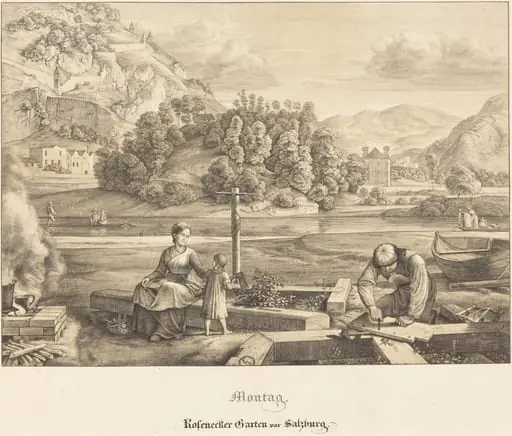 Montag - Rosenecker Garten vor Salzburg (Monday - Rosenecker Garden near Salzburg)
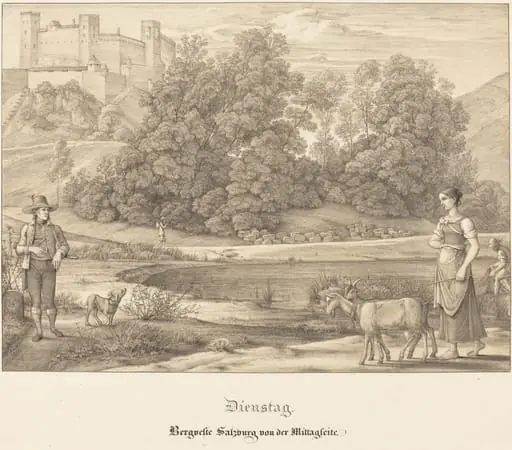 Dienstag - Bergveste Salzburg vor der Mittagseit (Tuesday - The Castle of Salzburg from the Noontime Side)
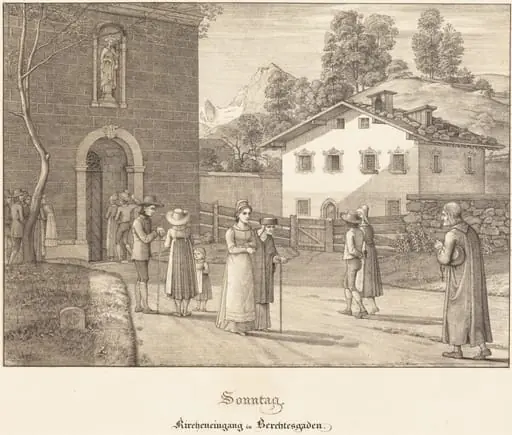 Sonntag - Kircheneingang in Berchtesgaden (Sunday - Going to Church near Berchtesgaden)
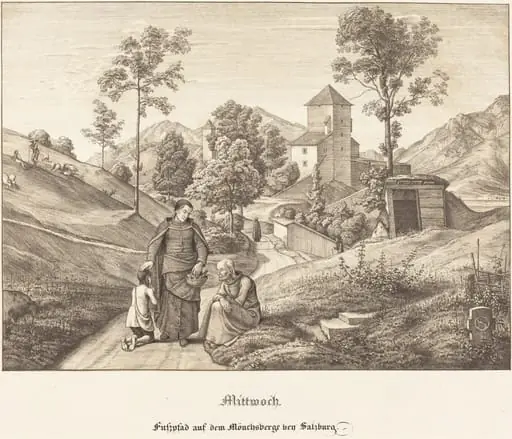 Mittwoch - Fusspfad auf dem Mönchsberge bey Salzburg (Wednesday - Footpath on the Mönchsberge near Salzburg)
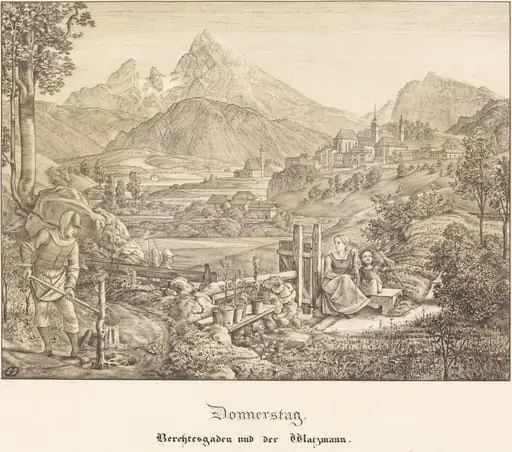 Donnerstag - Berchtesgaden und der Watzmann (Thursday - Berchtesgaden and the Watzmann Mountain)
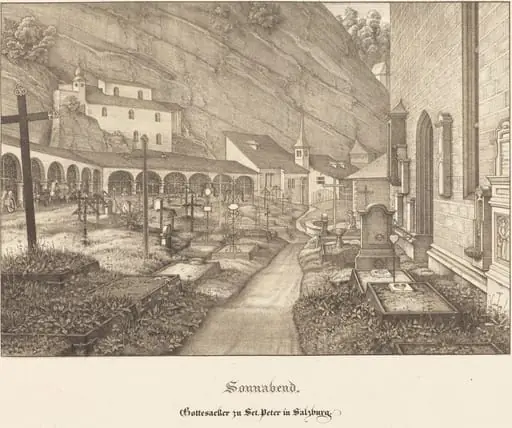 Sonnabend - Gottesacker zu St. Peter in Salzburg (Saturday - Graveyard of St. Peter's in Salzburg)
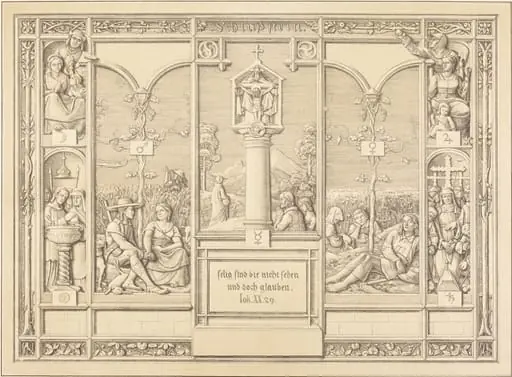 Tailpiece: Selig sind die nicht sehen und doch glauben (Blessed are those who do not
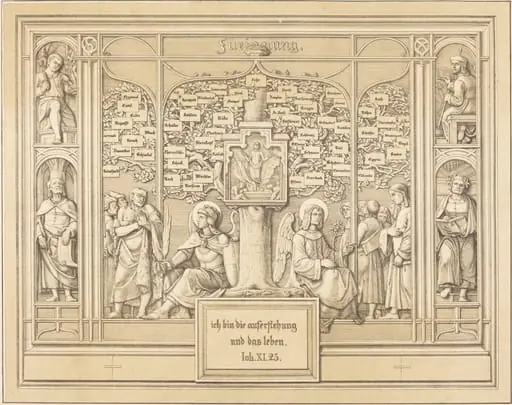 Dedication: Ich bin die Auferstehung und das Leben (I am the resurrection and the life)
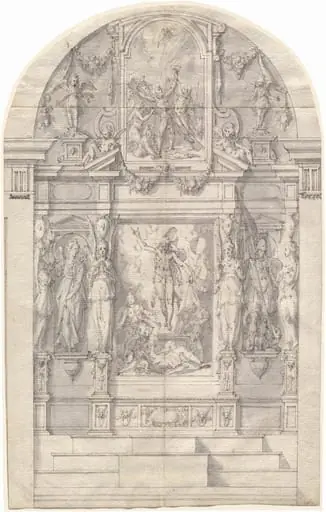 An Elaborate Altar with the Resurrection of Christ and the Martyrdom of Saint Andrew
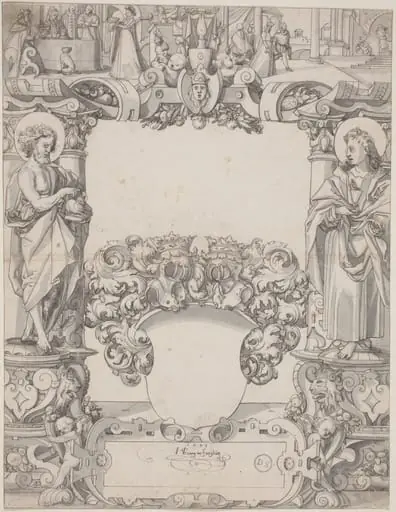 Glass Design with Saint John the Baptist and Saint John the Evangelist
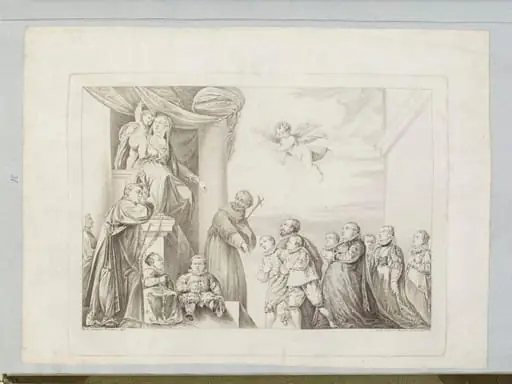 Virgin Enthroned
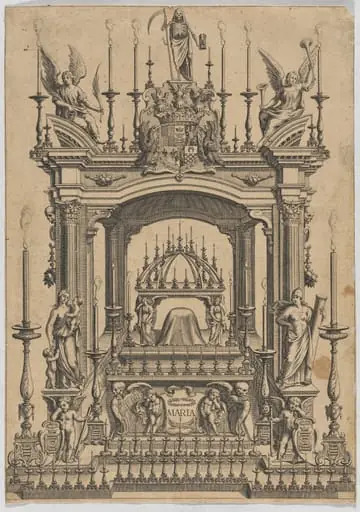 Catafalque for an Unknown Woman Named Maria
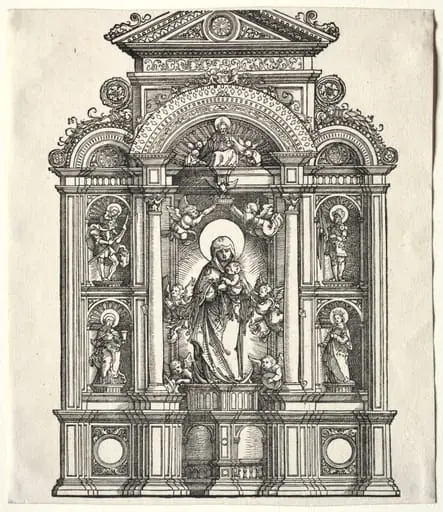 Great Altar with the Virgin, in a border with SS. Christopher, George, Barbara, Catherine
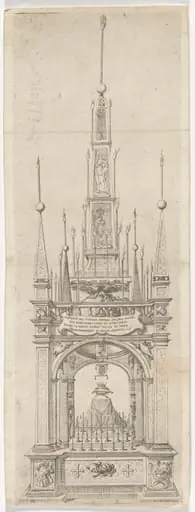 Catafalque for the Funeral of Giulio Thieni, Marquis of Scandiano
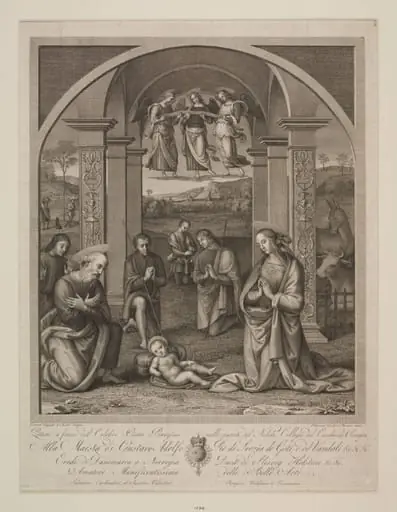 The Adoration of the Shepherds
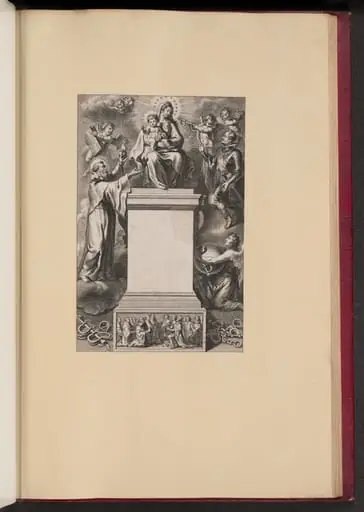 Title Page for B. De Los Rios, De Hierarchia Mariana Libri Sex
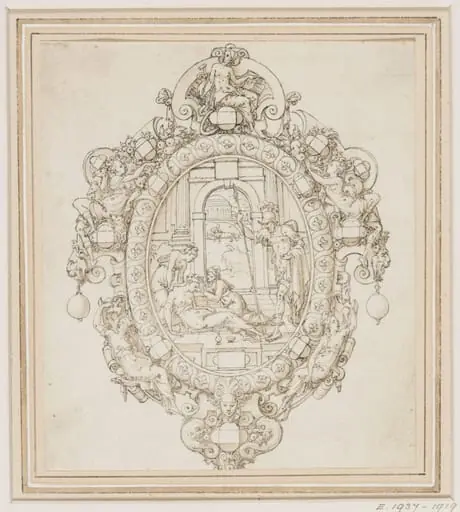 Design for the back of a gem-set handmirror
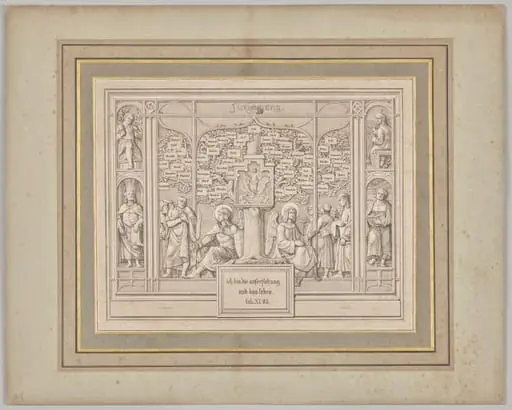 Dedication. John XI, 25