Artwork
Recipient din lut de formă sferică, prevăzut cu două orificii la partea superioară și toartă. Sub gură, frontal, sunt incizate motive vegetale - o creangă cu frunze și anul ”1967''. La capătul opus, țuțul subțire este încadrat de două flori incizate cu tulpini și frunze. Cromatică: brun închis.
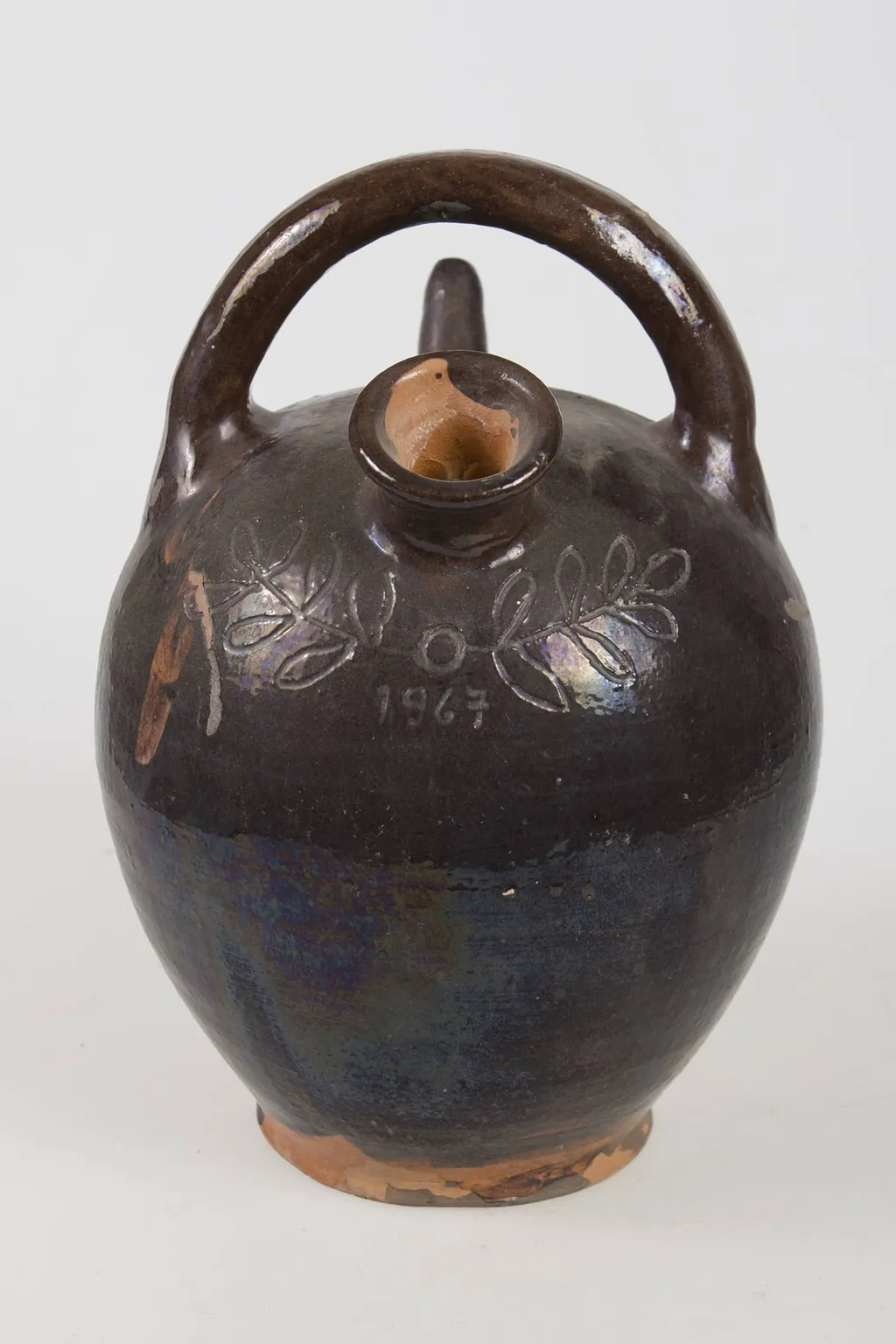
Recipient din lut de formă sferică, prevăzut cu două orificii la partea superioară și toartă. Sub gură, frontal, sunt incizate motive vegetale - o creangă cu frunze și anul ”1967''. La capătul opus, țuțul subțire este încadrat de două flori incizate cu tulpini și frunze. Cromatică: brun închis. is a photography by Toc Gheorghe. It is held in the collection of the ASTRA National Museum Complex. A dark brown ceramic jug with a spherical body and two small openings at the top.
About this work
The surface has simple carved designs: a small branch with leaves on one side and two flowers with stems on the other.
This is a dark brown ceramic jug with a rounded shape and two handles on top. The surface has simple carved designs: a small branch with leaves on one side and two flowers with stems on the other. The year "1967" is also carved near the bottom. The jug looks worn, with some chipped edges and a slightly uneven surface.
The jug’s design keeps things basic—just plants and a date. It’s not fancy, but the way the carvings stand out against the dark background makes them noticeable.
If you like this kind of handmade pottery, check out the Museum of Ethnography for more pieces like it.
Overview
A dark brown ceramic jug with a spherical body and two small openings at the top. Its surface is minimally decorated with incised plant motifs and the year 1967, suggesting a functional yet personally marked object. The form is utilitarian, with a narrow neck and a slender spout, and the ceramic shows signs of wear, including chipped edges and an uneven texture, indicating regular use.
Subject & Meaning
The incised decorations feature a single branch with leaves on the front and two flowers with stems on the opposite side. These natural motifs, combined with the carved date, imply a connection to a specific moment in time, possibly commemorating a personal or seasonal event. The absence of ornamentation beyond vegetation suggests a quiet, deliberate focus on organic forms rather than symbolic or ceremonial intent.
Technique & Style
The vessel was hand-thrown and fired to a deep brown hue, with surface designs carved directly into the leather-hard clay. The incisions are shallow but clear, executed with a simple tool, resulting in a rough-hewn aesthetic. The lack of glaze or paint emphasizes the raw quality of the material, aligning with a vernacular pottery tradition that values function over embellishment.
History & Provenance
Created in 1967, the jug likely originated in a rural or artisanal setting where handmade ceramics remained in daily use. Its wear patterns and unrefined finish suggest it was not produced for display but for household purposes. No documented ownership history exists, but its style is consistent with regional folk pottery traditions in Eastern Europe.
Context
This piece reflects a broader practice in mid-20th century Eastern European households where utilitarian ceramics were often personalized with simple carvings. The inclusion of a date and plant motifs aligns with customs of marking domestic objects to signify creation, harvest, or personal milestones, distinguishing them from mass-produced alternatives.
Legacy
As an example of unassuming, handcrafted pottery, it represents a fading tradition of domestic ceramic making in rural communities. Its preservation in museum collections underscores its value as evidence of everyday material culture, offering insight into the quiet, personal rituals embedded in ordinary objects.
Artist & collection
Artist
Gheorghe Toc made earthenware jugs, bowls, and pitchers with geometric or floral patterns and rich colors like brick red, cream, and green.

 Castron mic de formă tronconică, cu baza marcată printr-un inel proeminent. Buză cu contur rotund în exterior și ascuțit în interior. Decorul floral ce constă dintr-o floare pictată cu cornul în interior, pe fundul vasului. Cromatică: fond: alb-crem; motive: galben; negru; verde.
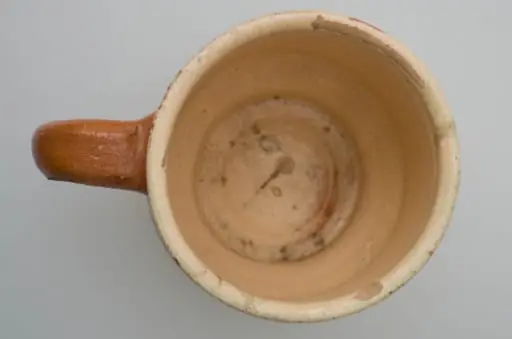 Cană de formă ușor tronconică cu inel răsfrânt în exterior. Prezintă toartă ce pleacă de sub buză și se unește cu corpul spre bază. Smălțuită în interior și exterior. Decor: floare cu patru petale realizată cu cornul din hume naturale; brâu de dungi scurte. Cromatică: fond maro; motive: alb; negru; verde.
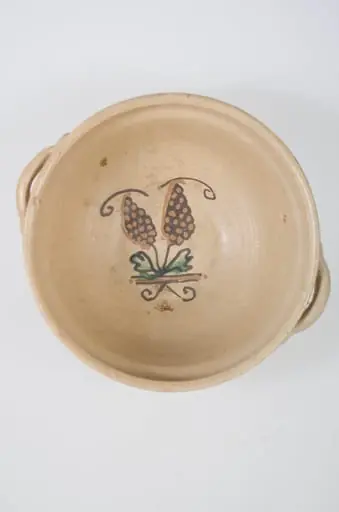 Farfurie de formă tronconică cu buza răsfrântă. Vasul este smălțuit atât la interior cât și la exterior. Decorul este amplasat pe fundul vasului motive florale (buchet) și motive fitomorfe (vrej). Cromatică; fond: alb-crem; motive: galben; negru; verde.
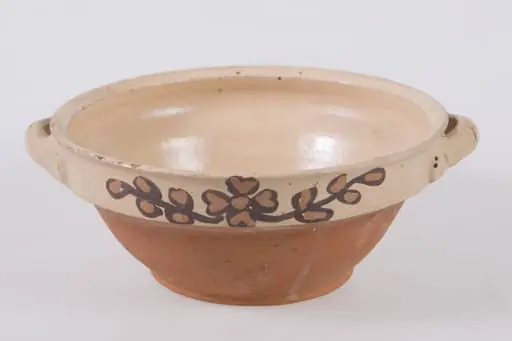
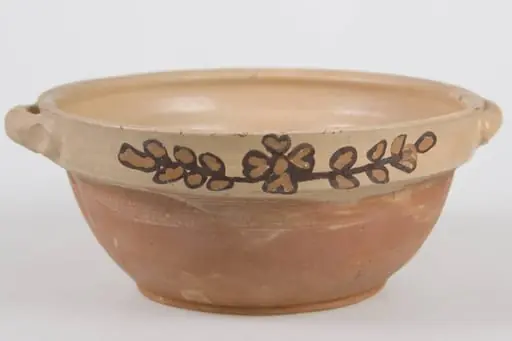 Vas tronconic cu buza răsfrântă. Prezintă două toarte mici fixate diametral opus la nivelul buzei. Decorul este poziționat într-un registru central format din motive florale (buchet) și motive fitomorfe (vrej). Cromatică: fond: crem; motive: maron deschis; maron închis; verde.
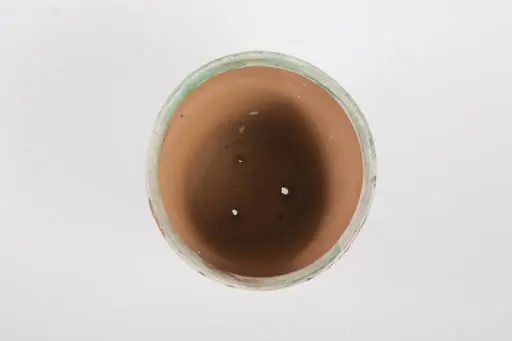 Vas de mici dimensiuni de formă tronconică cu baza mai mică; manșon sub gură lat de 4 cm, decorat cu motive geometrice: șir de romburi înscrise realizate cu cornul. Fund perforat pentru scurgerea apei. Cromatică: fond: cărămiziu; motive: galben; negru.
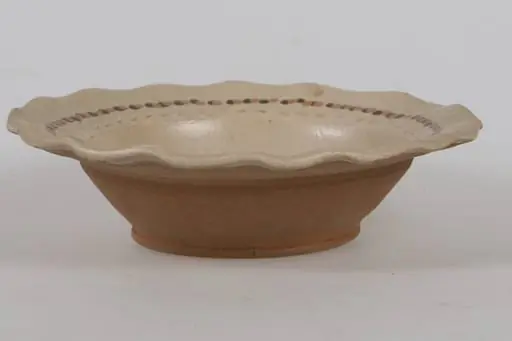 Farfurie de formă tronconică cu baza marcată printr-un inel proeminent perforat pentru atârnare pe perete cu buza lată, mult înclinată în afară și ondulată. Decorată cu un motiv central: floare; brâu alveolat pe buză realizat cu unghia si un alt brâu de puncte realizate cu cornul. Smălțuită la interior și la exterior. Cromatică: fond: bej; motive: maron închis; maron deschis.
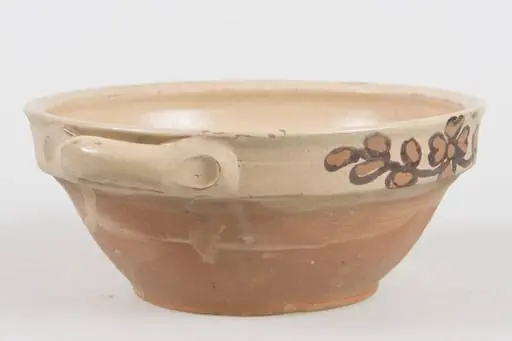 Vas de formă tronconică, cu baza marcată printr-un inel proeminent, buza ușor răsfrântă continuată cu o bandă lată, de care sunt fixate două torți dispuse orizontal ce au la capete impresiuni alveolate, rămase de la lipirea lor prin apăsare cu degetul. Cromatică: fond: crem; motive: verde; maron deschis; maron închis.
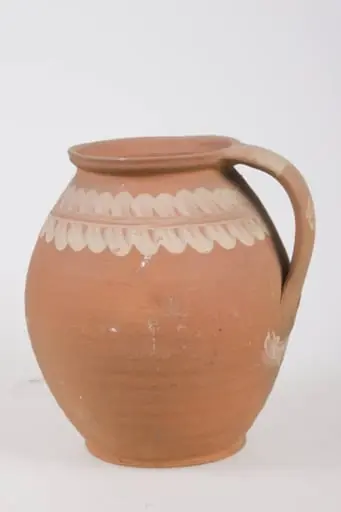 Oală ce are corpul bombat simetric cu diametrul maxim la mijlocul vasului, gâtul scurt și gura dreaptă. Buza este răsfrântă în exterior și toartă între buză și mijlocul vasului. Decor pe umăr cu linie ondulată realizată cu degetul și două linii paralele realizate cu fichieșul; dungi paralele pe toartă.
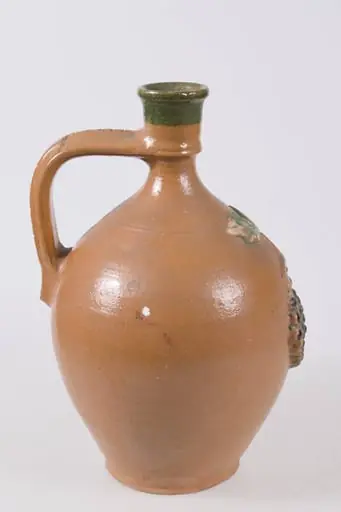 Recipient de lut de formă sferică cu gâtul lung și buza rasfrântă. Prezintă o toartă ce pleacă de la baza gâtului spre partea mediană a vasului. Decorat frontal, în relief, cu doi ciorchini cu frunze. Smălțuit la gură. Cromatică: fond: cărămiziu; motive: verde; negru.
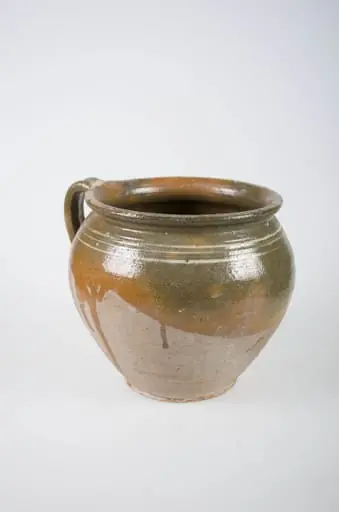 Vas cu corpul foarte bombat în partea superioară, cu un gât scurt și profilat, cu gura foarte lată, buza evazată și rotunjită. Din buză pornește o toartă care se unește cu corpul sub diametrul maxim. Vasul este smălțuit în interior și exterior (doar partea superioară). Este decorat cu motive geometrice: trei linii concentrice pe umăr și o linie scurtă orizontală pe toartă. Cromatica: fond: cărămiziu; motive: alb,.
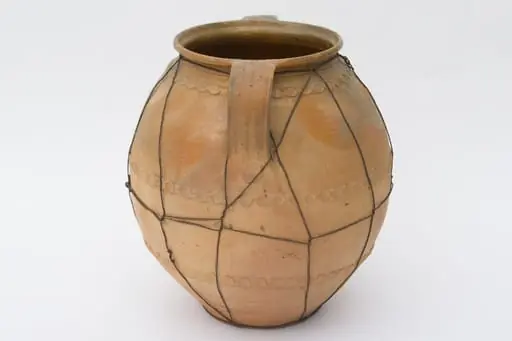 Vas din lut de mari dimensiuni cu corpul sferic; bombat la mijloc. Marginile gurii sunt ușor evazate spre exterior. Prezintă două toarte dispuse diametral opus, care unesc gura cu partea superioară a vasului. Pe suprafața vasului există trei "brâie alveolate" realizate în relief dispuse circular, unul în partea superioară pe pântec și celălalt în partea inferioară, amprentate cu degetul. Vasul prezintă smălțuire în partea superioară și urme de culoare verde. Oala este îmbrăcată într-o rețea de sârmă. Cromatica: fond: maro deschis.
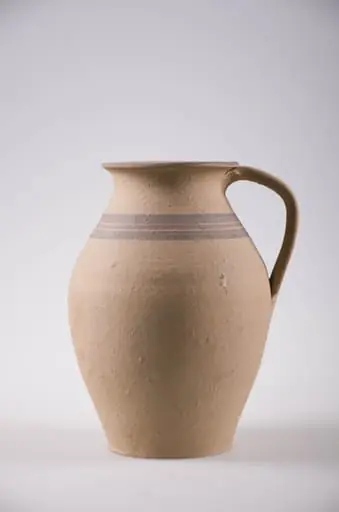 Oală borcan cu gât foarte pronunțat și buză evazată; de sub gât pleacă o toartă, unindu-se cu corpul în zona diametrului maxim; este decorată pe umeri cu cinci linii - două negre încadrează trei linii maro. Cromatică: fond: cărămiziu; motive: negru, maro închis.
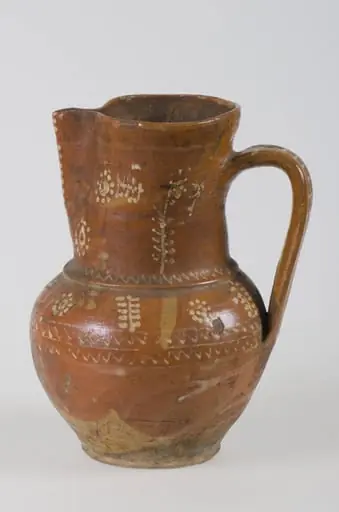 Cană înaltă cu o toartă și gura ovoidală terminată cu un cioc pe partea opusă torții. Toarta pornește de sub gură și se termină sub diametrul maxim al vasului. Smălțuită exterior. Decorată pe toată suprafața cu motive florale stilizate, motive fitomorfe (frunze stilizate) și motive geometrice: linie, linie ondulată, punct. Cromatică: fond: maroniu; motive: alb.
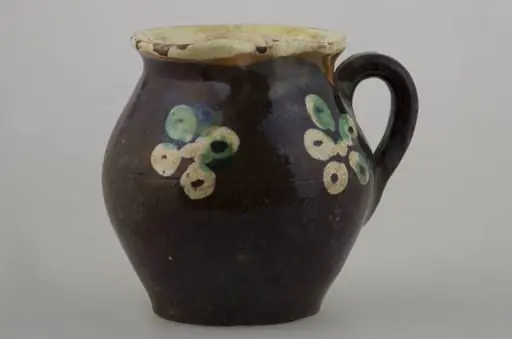 Vas de lut de mici dimensiuni de formă bitronconică și cu cioc de scurgere a apei la partea superioară cu gât scurt și buza evazată. Prevăzută cu o toartă care pornește de pe umărul vasului și se unește cu corpul sub diametrul maxim. Smălțuită în interior și exterior. În jumătatea superioară este decorată de o parte și de alta a torții cu motive florale: flori cu patru respectiv cinci petale. Toarta este decorată cu o linie albă. Cromatică: interior: alb; exterior: maro; motive: alb; verde.
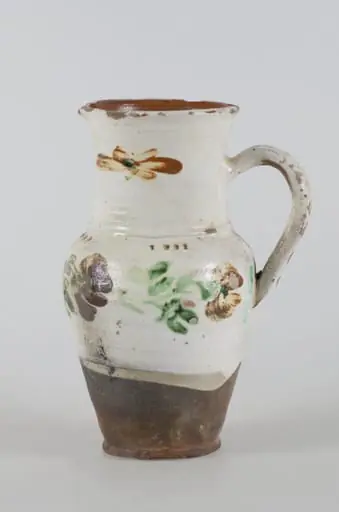 Recipient din lut de formă bitronconică, cu un gât cilindric și buza evazată. Smălțuit două treimi din partea superioară. Buza are o țuguiere pentru scurgere. Prezintă motive geometrice, vegetale, florale, pictate cu pensula. Prevăzut cu mâner în partea superioară, pentru manipulare. În interior, vasul este cărămiziu, la exterior fond: crem; motive: maro; verde; galben.
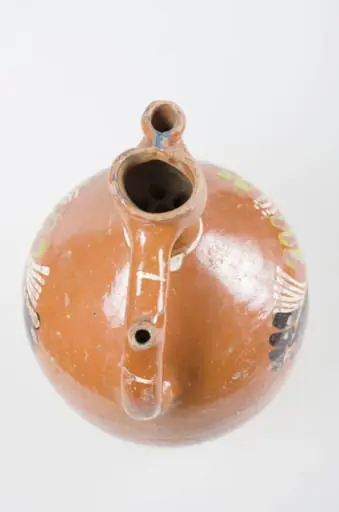 Ulcior mic cu corpul de formă sferică, smălțuit (80-85% din suprafața exterioară). Prezintă un orificiu lângă gură (pentru turnat) și unul pe mâner (pentru băut - ”țâță”). Este ornamentat cu motive geometrice: linii drepte și curbe și motive fitomorfe (flori și frunze). Cromatică: fond: maro deschis; motive: alb; negru; verde; albastru.