Artwork
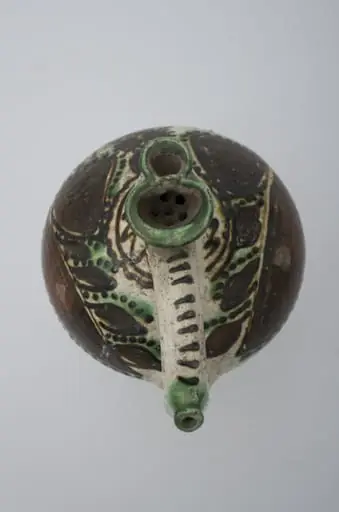
Recipient bitronconic cu gura bilobată. Prezintă mâner cu ”țâță”. Smălțuit până aproape de bază. Decorul este amplasat pe toată suprafața și este format din motive geometrice (linie); motive florale (pansea); motive fitomorfe (brad). Cromatică: fond: cărămiziu; motive: verde; maron; alb.
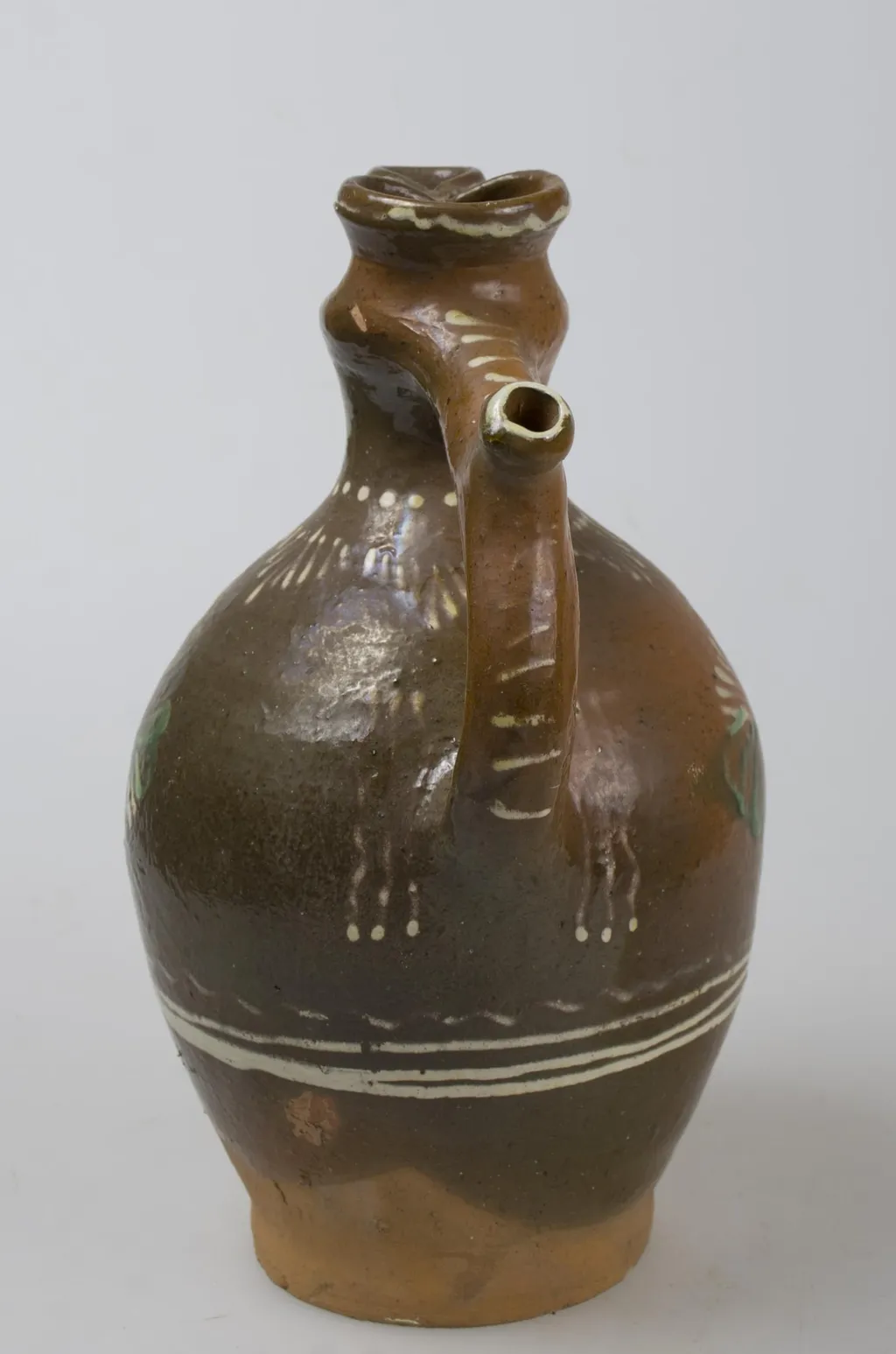
Recipient bitronconic cu gura bilobată. Prezintă mâner cu ”țâță”. Smălțuit până aproape de bază. Decorul este amplasat pe toată suprafața și este format din motive geometrice (linie); motive florale (pansea); motive fitomorfe (brad). Cromatică: fond: cărămiziu; motive: verde; maron; alb. is a photography by Dănilă Ion. It is held in the collection of the ASTRA National Museum Complex. The object is a dark brown ceramic vessel with a rounded body and two modest handles.
About this work
Overview
The object is a dark brown ceramic vessel with a rounded body and two modest handles. A twisted lip crowns the opening, and a thin white band encircles the midsection, distinguishing the darker upper portion from a lighter base. The glaze is uneven, displaying patches of green, reddish tones, and occasional white streaks that suggest long‑term use.
Subject & Meaning
The decorative program covers the entire surface, combining geometric lines, stylised floral motifs resembling pansies, and vegetal forms that evoke pine needles. These elements reflect a traditional aesthetic that intertwines abstract patterning with natural imagery, possibly intended to convey fertility, abundance, or ritual significance.
Technique & Style
The jug is glazed almost to the base, leaving a thin white band that separates the darker body from the lighter foundation. The glaze application results in a variegated surface where green and brown pigments intermingle, while the white streaks may be the result of water runoff during firing or later use.
History & Provenance
The piece belongs to a ceramic tradition that favoured functional containers for liquids such as wine or oil. Its stylistic features and glaze composition suggest it originates from a regional workshop where such motifs were customary, though specific provenance details are not recorded.
Context
In its cultural setting, vessels of this type served both practical and ceremonial roles, often appearing in domestic and ritual contexts. The combination of geometric and botanical decoration aligns with broader decorative vocabularies found in folk pottery across the area.
Artist & collection
Artist
Ion Dănilă shaped clay in a rural workshop where the morning light turned the red dust on his hands the same color as the pots he made.

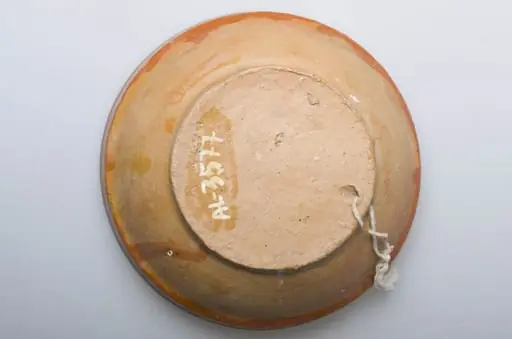 Blid de formă tronconică, cu gura largă, înaltă și dreaptă, smălțuit integral în partea interioară și în exterior doar la nivelul buzei. Este decorat din interior cu motive florale: trei flori - una albă central încadrată de doi brăduți și două verzi lateral; motive geometrice: trei linii ondulate deasupra florii albe și unghiuri de diferite dimensiuni între cele două flori verzi. Fundul este circular și prezintă un orificiu pentru agățare. Cromatică: fond: cărămiziu; motive: alb; verde; negru.
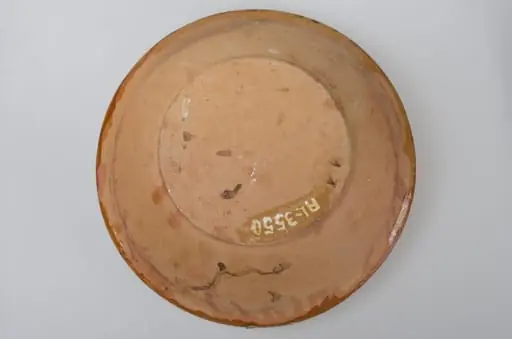 Vas de formă tronconică cu buza dreapta. Decorul este amplasat pe toată suprafața interioară și parțial în exterior, pe buză. Acesta este compus din motive geometrice (val); motive fitomorfe, plasate pe fund (frunza) și motive florale, tot pe fund (pansea). Blidul este smălțuit la interior și pe zona exterioară a buzei. Cromatică: fond: maron; motive: alb, verde.
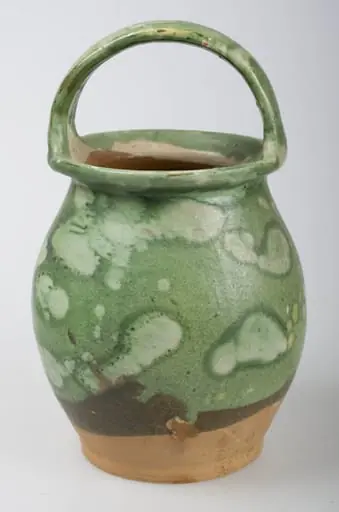 Oală de formă bitronconică cu baza plată cu pereții puternic arcuiți îngustându-se ușor în partea superioară. Buza este puțin răsfrântă la exterior. Prezintă o toartă de susținere plasată diametral, peste gură (mănușă). Angobat, stropit cu verde, smălțuit în interior și exterior. Cromatică: verde; maro; alb.
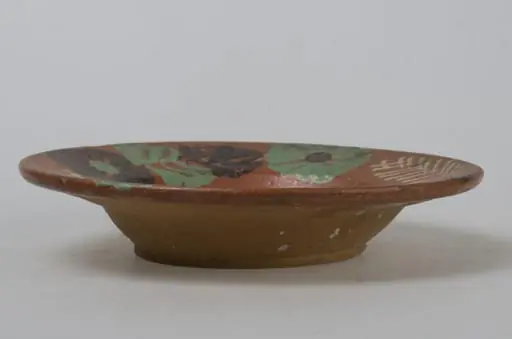 Vas de formă tronconică cu buza largă și evazată. Decorul este amplasat pe toată suprafața interioară a farfuriei. Acesta este compus din motive florale. Blidul este smălțuit la interior și pe zona exterioară a buzei. Cromatică: fond: maron; motive: alb, verde, maron închis.
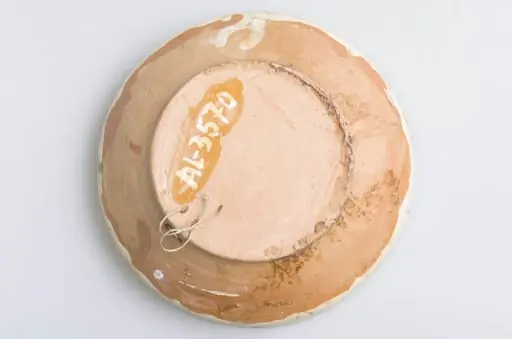 Vasul are forma tronconică, având buza înaltă și ușor evazată. Obiectul este smălțuit în interior și exterior numai la buză. Acesta este decorat în interior și exterior cu pete realizate prin stropire. Cromatică: fondul este alb în interior, cărămiziu în exterior, iar motivele sunt pictate cu verde și maro.
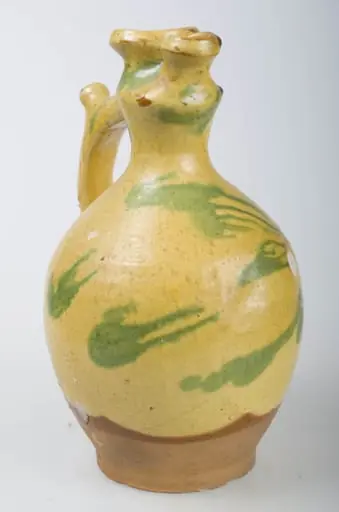 Recipient sferic cu gât îngust, gura bilobată, toartă cu țâță, piatră sunătoare și ciur. Ornamentat prin stropire cu smalț. Cromatică: fond: galben; decor: dungi verzi stropite.
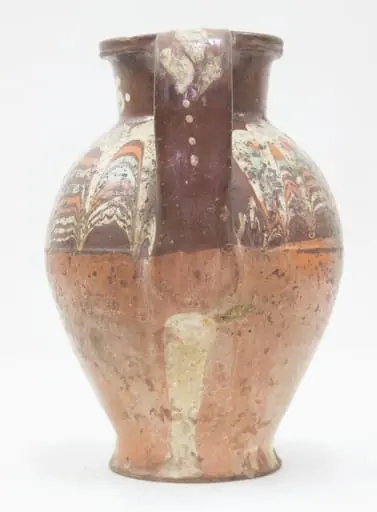 Recipient de formă bitronconică cu buza evazată, cu o toartă și „țâțână” pe cealaltă parte. Pe gât, inscripția „1936”. Vasul este smălțuit și decorat pe jumătatea superioară cu motive policrome liber desenate. Cromatică: fond - maro, decor - alb, maro, verde, gălbui. Jumătatea inferioară a obiectului este nesmălțuită.
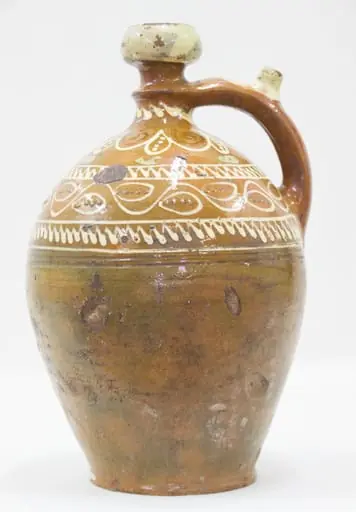 Ulcior de formă bitronconică cu gura îngustă și rotundă, cu o toartă și un orificiu pentru scurgerea lichidului, smălțuit și decorat pe jumătatea superioară cu motive vegetale (ghirlande) și geometrice (spirale; patru cercuri concentrice cu o linie șerpuită între ele).Cromatică: maro (fond), decor - galben, bej, alb, verde. Jumătatea inferioară a obiectului este nesmălțuită.
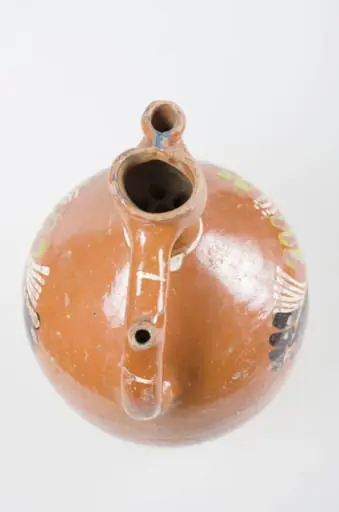 Ulcior mic cu corpul de formă sferică, smălțuit (80-85% din suprafața exterioară). Prezintă un orificiu lângă gură (pentru turnat) și unul pe mâner (pentru băut - ”țâță”). Este ornamentat cu motive geometrice: linii drepte și curbe și motive fitomorfe (flori și frunze). Cromatică: fond: maro deschis; motive: alb; negru; verde; albastru.
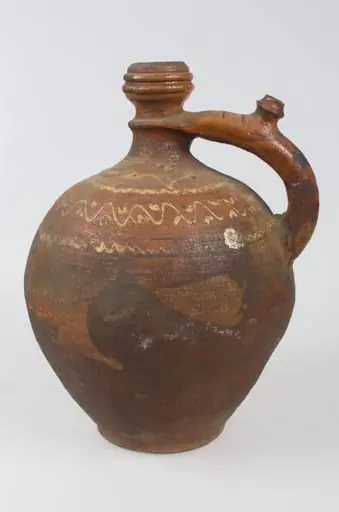 Vas de formă bitronconică prevăzut cun un gât ușor alungit și cu buză pe care se identifică două brâuri profilate. Pe toarta de formă semicirculară se identifică un orificiu pentru consumarea lichidului (”țâță”). Toarta pleacă din zona mediană a orificiului de umplere și se unește cu corpul vasului pe zona diametrului maxim. Vasul prezintă smalț la exterior cu urme de degradare. Decorul se identifică la baza gâtului și constă din motive geometrice: linii curbe, brâuri și motive vegetale. Cromatică: fond: cărămiziu: motive: crem; maron închis
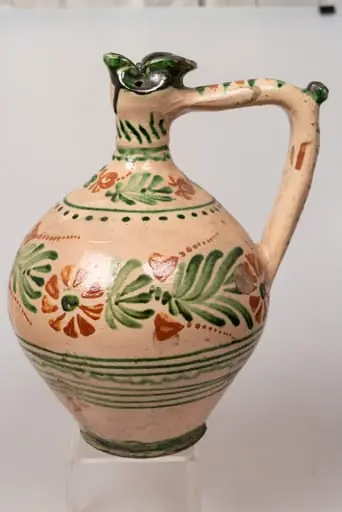 Piesă cu corp sferic bombat, cu gât profilat, cu gât și gură îngustă, bilobată, cu cior. Din pântecul vasului pornește o toartă tubulară cu orificiu pronunțat pentru băut (cu țâță), care se unește cu vasul sub buza acestuia. Fața exterioară a ulciorului este acoperită cu un strat de angobă albă peste care este pictat decorul, cu pensula și cu cornul, astfel: pe partea superioară a vasului apare o bandă decorată cu motiv floral (o floare rotundă cu multe petale) alternând cu motivul fitomorf caracteristic centrului: frunze alungite, de culoare verde. Pe cant, delimitată de banda decorativă de pe burta vasului de către o linie și un șir de puncte concentrice, este dispusă o bandă decorativă mai îngustă cu motiv floral și motiv fitomorf, delimitat de gât de un brâu colorat. Sub buza bilobată sunt realizate o serie de linii oblice paralele pictate, care continuă pe toată suprafața torții. Partea inferioară a vasului este decorată cu linii orizontale și o linie în valuri dispuse concentric. Cromatica: alb, maro, verde. Vasul este smălțuit cu un strat de smalț transparent.
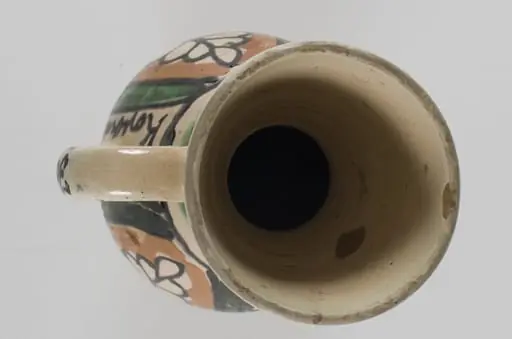 Cană cu gât lung, cu buza evazată și o toartă. Este smălțuită în interior și în exterior. Prezintă decor pe toată suprafața cu motive fitomorfe, motive florale stilizate și motive geometrice: linie, linie ondulată, punct, tablă de șah. Pe toartă scrie ”Jozsa Janos”, iar pe corp, chiar lângă toartă, scrie ”Korond 1974”. Cromatică: fond: alb; motive: bej, maro, verde, negru.
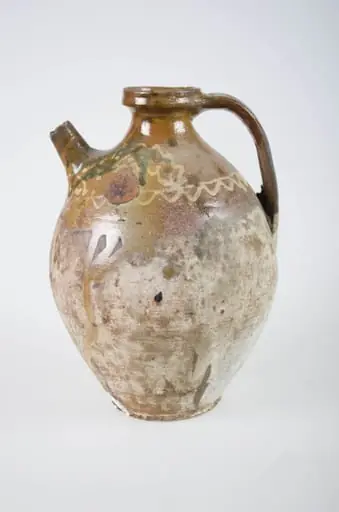 Vas de formă ovoidală cu gât lung, cu gura largă și buza înălțată. Prezintă o toartă care pleacă din gura vasului și se unește cu corpul în zona diametrului maxim. Din umăr, în partea opusă torții pleacă o țâță scurtă (burciuc). Vasul este smălțuit pe exterior în partea superioară unde prezintă și un decor format din motive geometrice: linie și linie în val deasupra cărora se regăsesc motive florale. Cromatica: fond: cărămiziu; motiver: alb-gălbui, verde. Prezintă uzură funcțională.
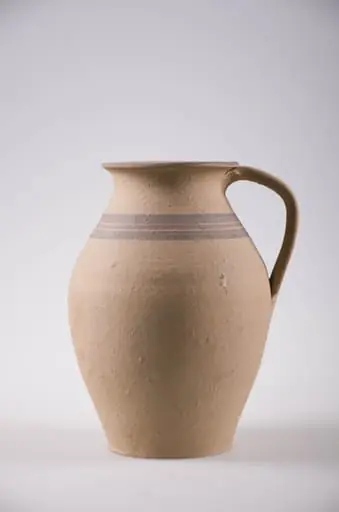 Oală borcan cu gât foarte pronunțat și buză evazată; de sub gât pleacă o toartă, unindu-se cu corpul în zona diametrului maxim; este decorată pe umeri cu cinci linii - două negre încadrează trei linii maro. Cromatică: fond: cărămiziu; motive: negru, maro închis.
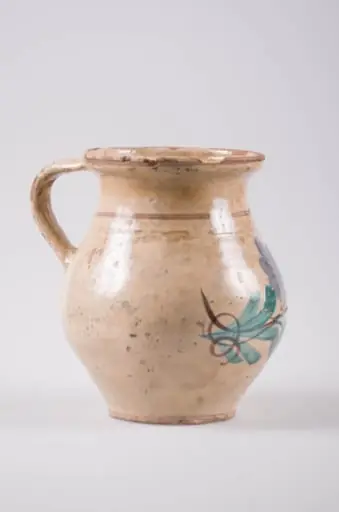 Oală de formă bitronconică de culoare bej. Decorul este reprezentat de motive florale: floarea este încadrată de linii albe realizate cu degetul; motive vegetale, motive geometrice: în partea superioară decorație circulară, linii. Prezintă toartă curbată. Smălțuită. Cromatică: fond: bej; motive: verde; albastru; maroniu.
 Ulcior cu corpul bombat și gura bilobată. Are o toartă cu țâță ce comunică cu interiorul. Decorativ, în partea superioară are două cercuri ce încadrează o linie frântă; pe partea bombată sunt motive florale. Cromatică: brun, alb; verde.