Artwork
C'est unique! j'ai pris quatre tailles...
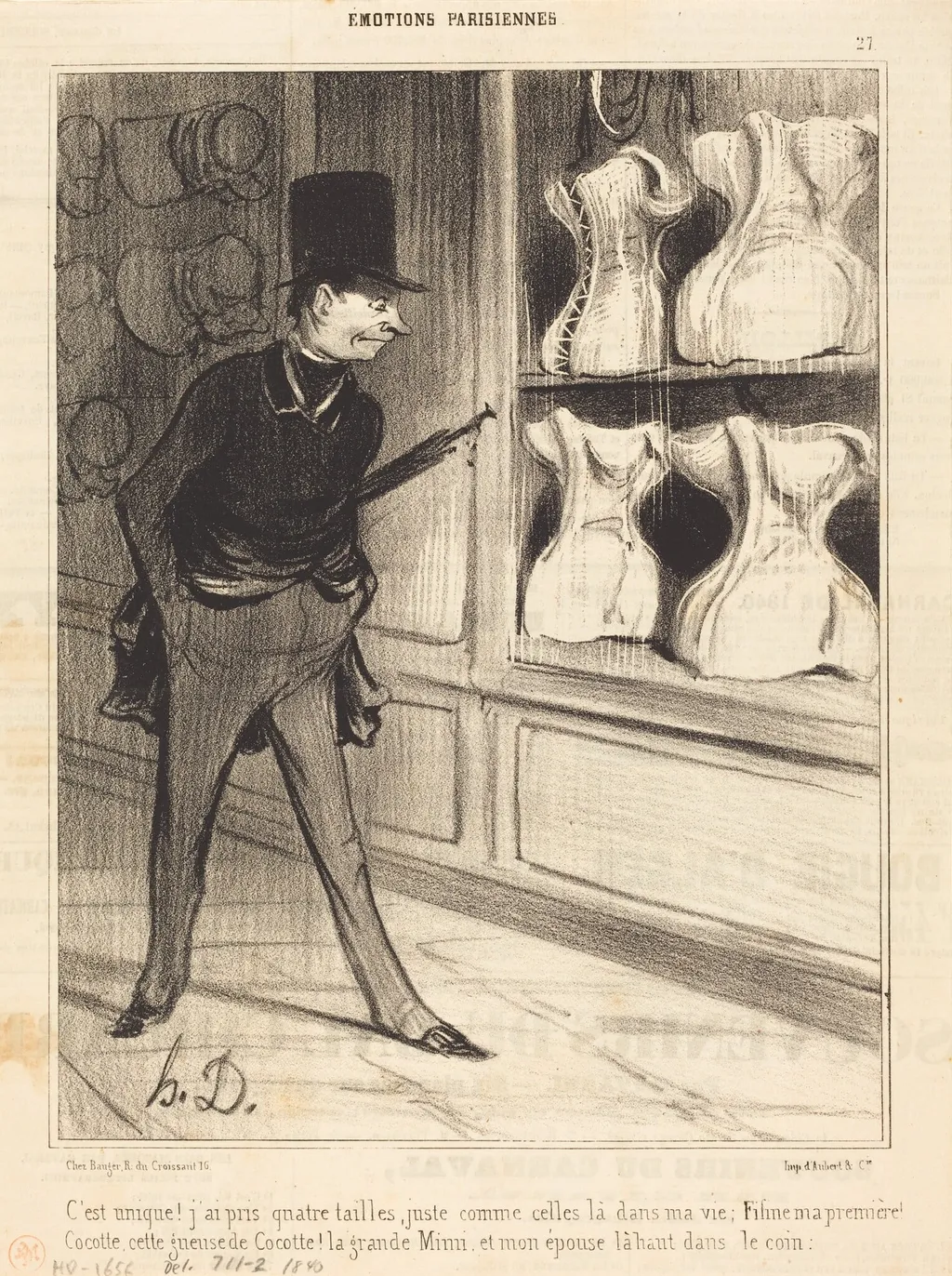
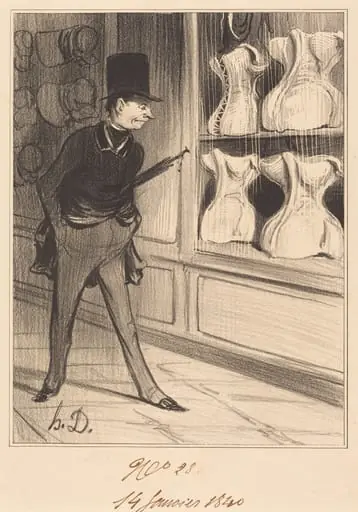
C'est unique! j'ai pris quatre tailles... is an ink print by the Romanticist artist Honoré Daumier. It dates from 1840 and is held in the collection of the National Gallery of Art.
About this work
Overview
Created in 1840, this lithograph on newsprint by Honoré Daumier is one of many informal studies produced during his prolific career as a political cartoonist.
Created in 1840, this lithograph on newsprint by Honoré Daumier is one of many informal studies produced during his prolific career as a political cartoonist. Unlike finished illustrations for publications, this piece appears to be a working sketch, capturing the artist’s experimentation with composition and scale. Its casual medium and handwritten annotations suggest it was made for personal use rather than public distribution.
Subject & Meaning
The image and its accompanying note—'C'est unique! j'ai pris quatre tailles...'—reveal Daumier’s self-reflective process as he tests variations of a figure or scene. Though the visual subject is minimal, the text implies a deliberate engagement with form and proportion, possibly in response to editorial demands or stylistic challenges. It reflects his habit of refining ideas through iterative drawing, a practice central to his satirical method.
Technique & Style
Daumier employed lithography, a technique allowing rapid reproduction on stone, to produce images quickly for newspapers. Here, he used newsprint, a low-cost material suited for daily circulation. His line work is economical, relying on minimal strokes to suggest form and movement. The handwritten note, integrated into the composition, blurs the boundary between private thought and public art, emphasizing process over polish.
History & Provenance
This work likely originated in Daumier’s studio during his years contributing to *Le Charivari* and *La Caricature*. As a prolific draftsman, he produced hundreds of such studies, many of which survived as personal records rather than published works. Its survival suggests it was retained by the artist or a close associate, offering rare insight into his preparatory methods outside the constraints of commercial publication.
Context
During the July Monarchy and early Second Republic, France experienced intense political unrest and censorship. Daumier’s prints, though often veiled in humor, challenged authority and social pretension. This sketch, though seemingly minor, belongs to a broader body of work that used accessible imagery and print media to reach a wide audience, turning everyday paper into a tool of social critique.
Legacy
Daumier’s informal studies like this one have become valuable for understanding the evolution of modern graphic satire. They reveal the labor behind his public caricatures and underscore the role of the artist as both observer and technician. Today, such works are recognized not merely as drafts but as intimate documents of artistic inquiry, bridging the gap between private thought and public commentary.
Artist & collection
Artist
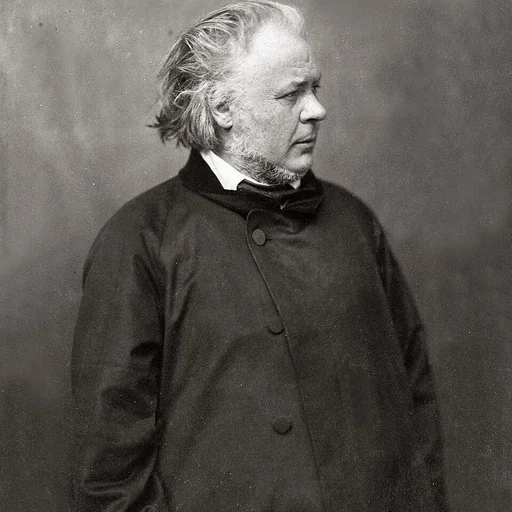
Honoré-Victorin Daumier was a French painter, sculptor, and printmaker, whose many works offer commentary on the social and political life in France, from the Revolution of 1830 to the fall of the Second French Empire in 1870.









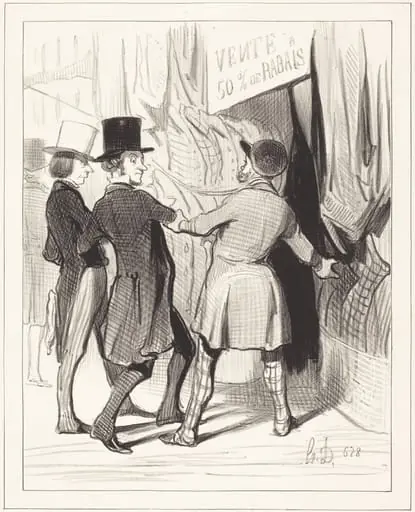 Entrez Messieurs... voici de magnifiques...
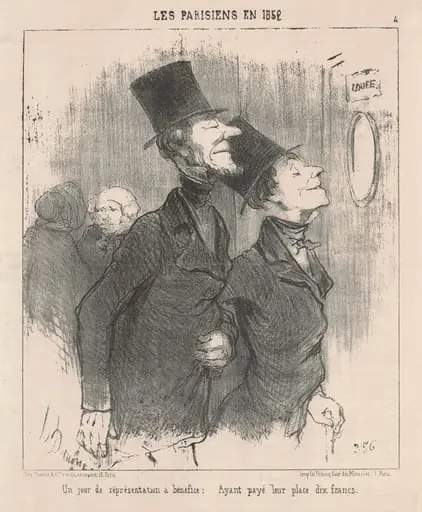 Un jour de représentation a benéfice
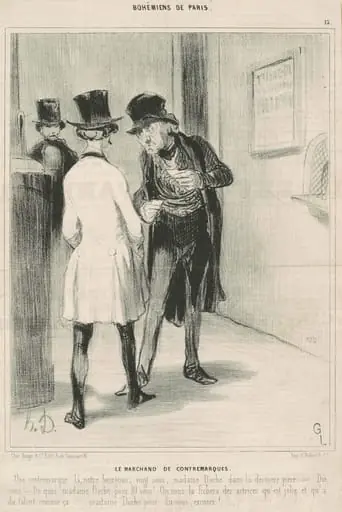 Le marchand de contremarques
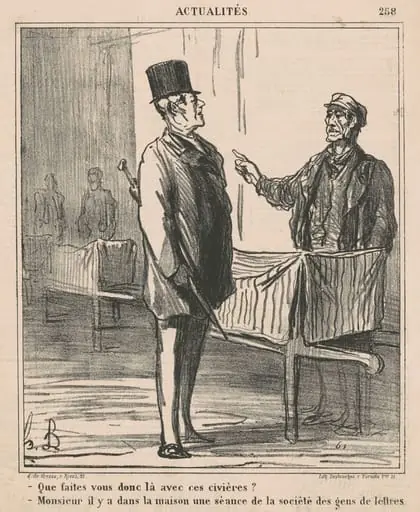 Que faites-vous donc la avec ces civières
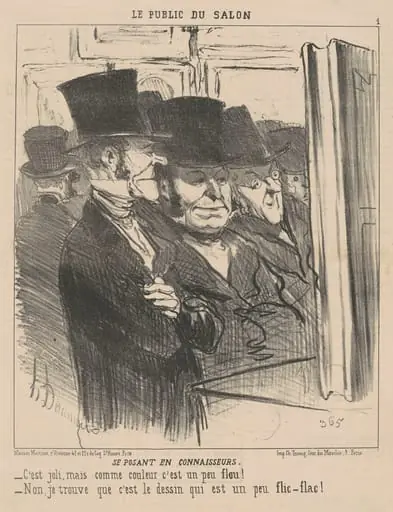 Se posant en connaisseurs
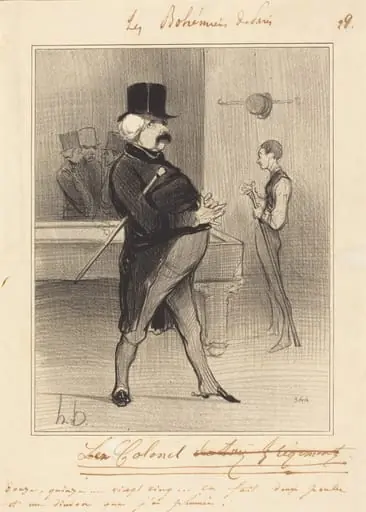 L'Ex-Colonel
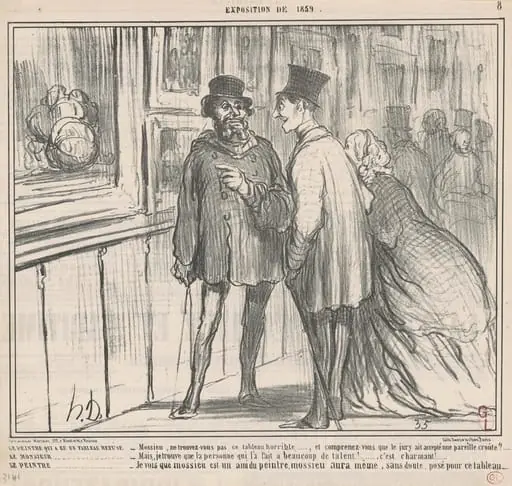 Le peintre qui a eu un tableau refusé ...
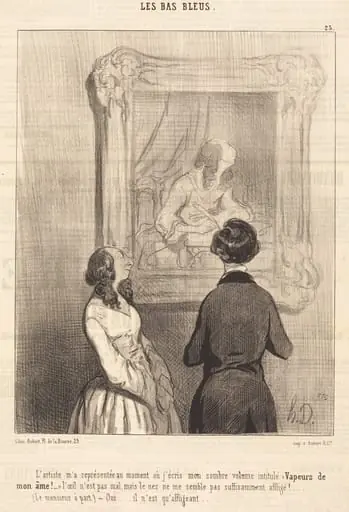 L'Artiste m'a représentée au moment ou j'écris
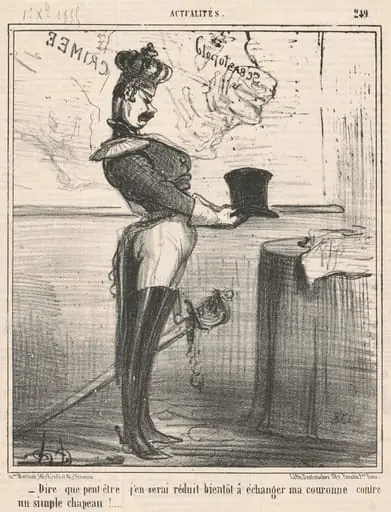 Dire que peut-être j'en serai réduit ...
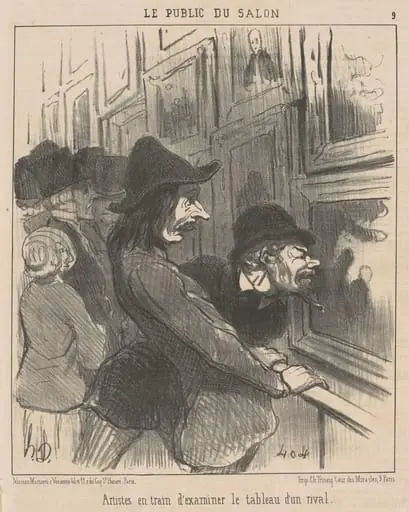 Artistes en train d'examiner ...
 Le Crocodile
 C'est unique! j'ai pris quatre tailles...