Artwork
Enée et Didon
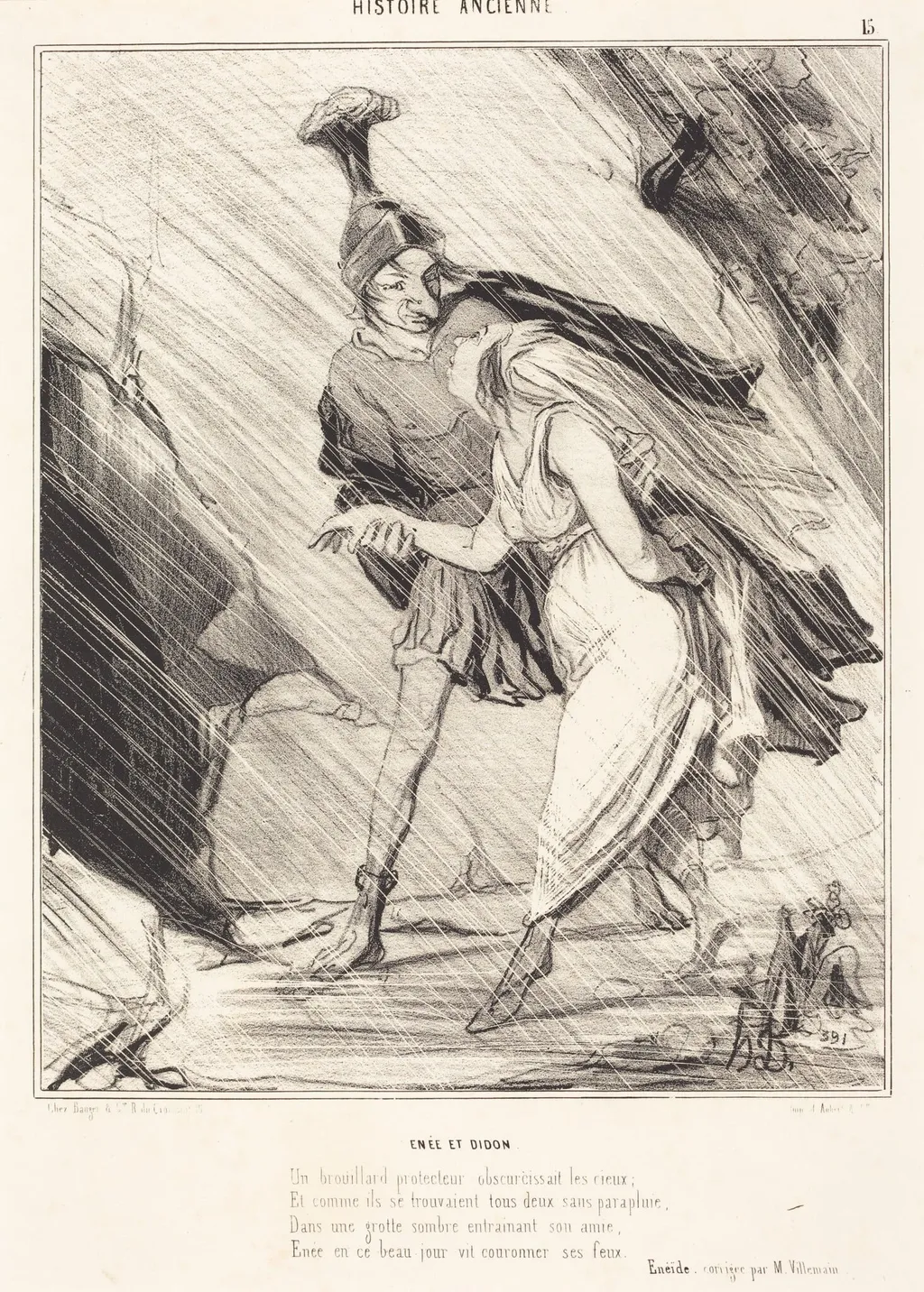
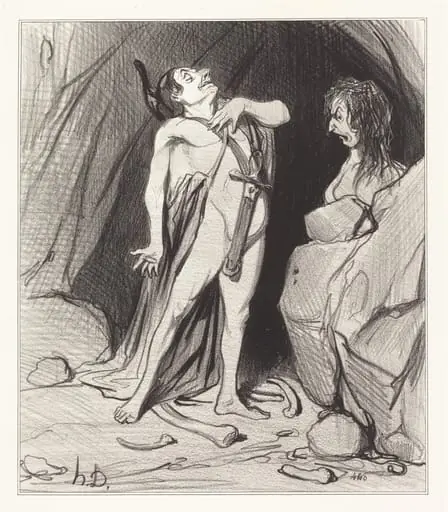
Enée et Didon is an ink print by the Romanticist artist Honoré Daumier. It dates from 1842 and is held in the collection of the National Gallery of Art.
About this work
Overview
Honoré Daumier’s 1842 lithograph *Enée et Didon* presents a dramatic reinterpretation of the mythic episode from Virgil’s *Aeneid*. Executed as a single‑sheet print, the work combines the artist’s characteristic wit with a visual tension that underscores the conflict between the two figures.
Subject & Meaning
The image shows a woman in a white, torn gown being seized by a helmeted man whose cape billows in the wind. Her face is turned away, her body rigid with resistance, while the man’s expression is fierce, suggesting a forceful, perhaps unwanted, advance. The composition evokes the legendary love‑and‑loss narrative of Aeneas and Dido, but Daumier’s rendering emphasizes struggle over romance.
Technique & Style
Created with lithographic techniques, the print relies on bold line work and stark contrasts to convey movement and tension. The swirling drapery and the rugged backdrop of rocks and trees are rendered with expressive strokes, aligning the piece with Romantic sensibilities that prized emotional intensity and dramatic scenery.
History & Provenance
Daumier, known for his caricatures in periodicals such as *La Caricature* and *Le Charivari*, produced this print during a prolific phase of social and political satire that spanned from the 1830 Revolution to the Second Empire. While primarily a commentator on contemporary French society, he occasionally turned to classical subjects, using them as vehicles for his critical eye.
Context
In the early 1840s, French art was increasingly influenced by Romanticism’s focus on passion and the sublime. Daumier’s *Enée et Didon* reflects this trend, yet it also incorporates his habitual satirical perspective, juxtaposing a classical narrative with a visual language that hints at contemporary critique.
Artist & collection

Artist
Honoré-Victorin Daumier was a French painter, sculptor, and printmaker, whose many works offer commentary on the social and political life in France, from the Revolution of 1830 to the fall of the Second French Empire in 1870.









 Aeneas and Dido
 Landscape with Men in Armor, Tree Stump
 Victims of the Lightning (Victimes de la foudre)
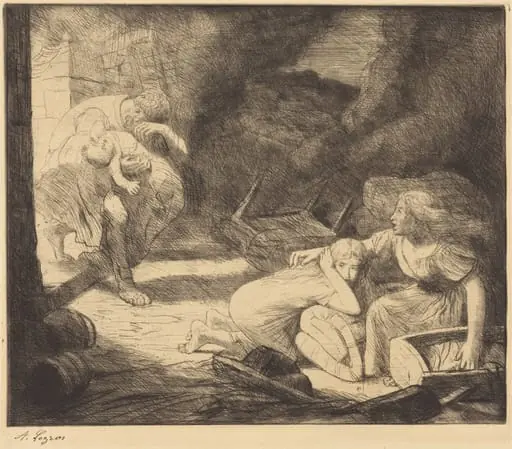 The Fire, 2nd plate (L'incendie)
 Martyrdom of St. Agatha
 Martyrdom of Saint Agatha
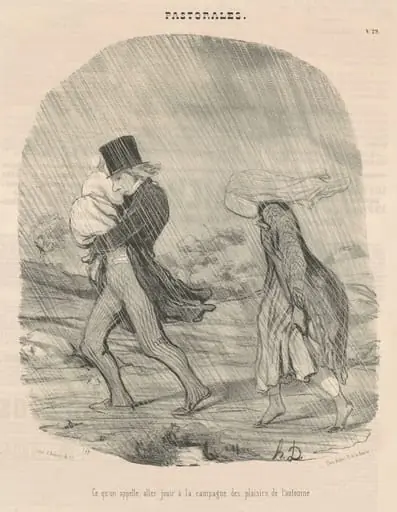 Ce qu'on appelle, aller jouir a la campagne ...
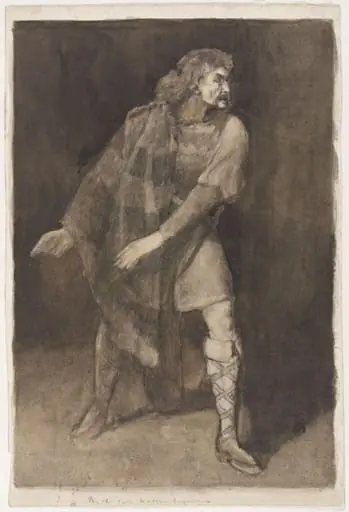 Untitled
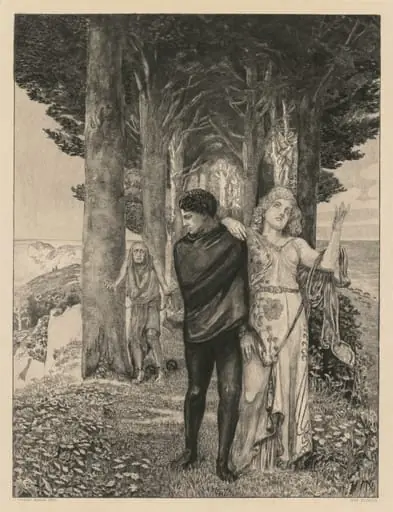 On Death Part Two, Opus XIII Print 4: Genius (Artist)
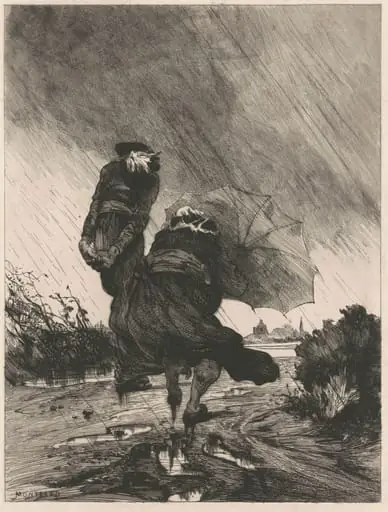 Retour d'une bonne action
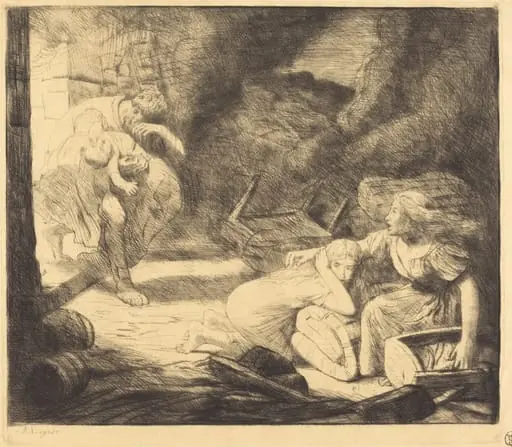 The Fire, 2nd plate (L'incendie)
 Oedipe chez le Sphinx