Artwork
Le supplice de tantale... eau comprise
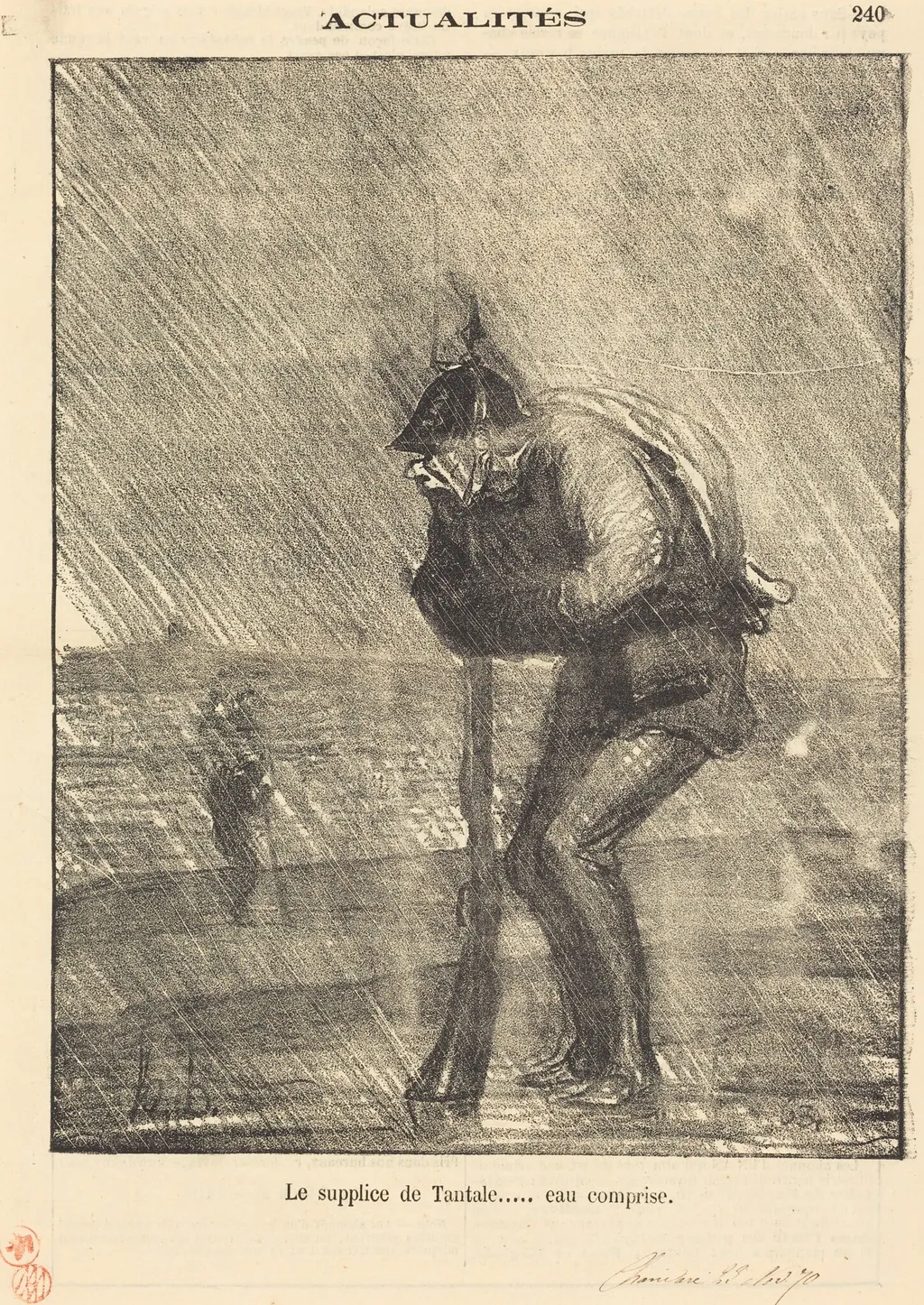
Le supplice de tantale... eau comprise is a print by the Impressionist artist Honoré Daumier. It dates from 1870 and is held in the collection of the National Gallery of Art. Created in 1870, *Le supplice de tantale… eau comprise* is a gillotype print executed on newsprint.
About this work
Overview
Created in 1870, *Le supplice de tantale… eau comprise* is a gillotype print executed on newsprint. The image presents a solitary figure on a quay, leaning forward with a long pole that reaches into the water, his coat and hat rendered in subdued hues against a muted, earthy background.
Subject & Meaning
The lone man appears to be probing the depths, a visual metaphor that aligns with Daumier’s habit of using everyday scenes to comment on broader social conditions. The contemplative posture and the title’s reference to Tantalus suggest an exploration of unattainable desire or the frustration of unfulfilled needs.
Technique & Style
Daumier employed the gillotype process, a variant of lithography that allowed for fine tonal variation on inexpensive paper. The print’s texture emerges from visible strokes and the contrast between dark foreground elements and the lighter, almost misty water, reinforcing a somber atmosphere.
History & Provenance
The work was produced during a turbulent year that saw the collapse of the Second French Empire. Daumier, an outspoken republican, often contributed to satirical journals; this print reflects his continued engagement with political discourse, though it was not originally intended for a museum setting.
Context
The year 1870 marked the end of imperial rule and the rise of the Third Republic in France. Within this climate of upheaval, Daumier’s prints served as visual commentary on the shifting power structures, using ordinary figures to embody collective anxieties.
Artist & collection
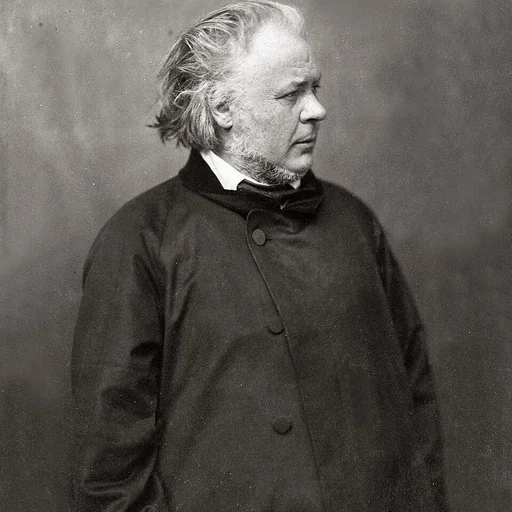
Artist
Honoré-Victorin Daumier was a French painter, sculptor, and printmaker, whose many works offer commentary on the social and political life in France, from the Revolution of 1830 to the fall of the Second French Empire in 1870.


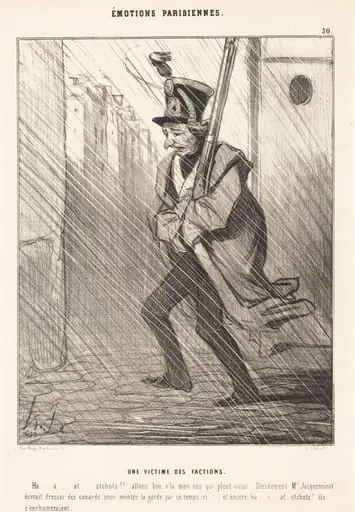 Emotions Parisiennes: Une Victime des Factions
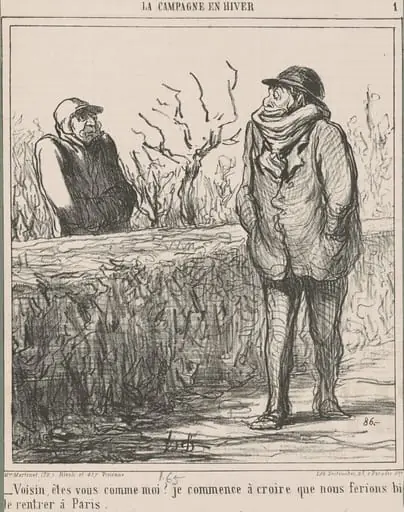 Voisin, êtres-vous comme moi? ...
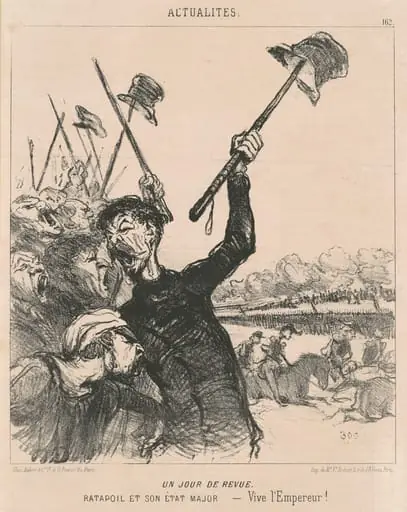 Un jour de revue
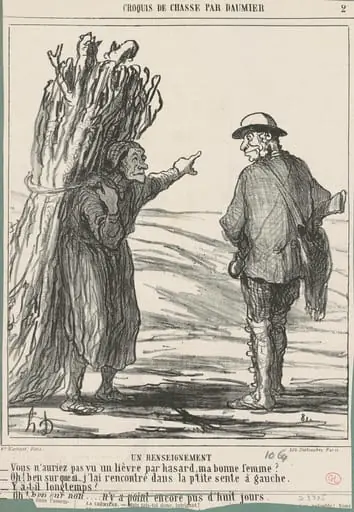 Un renseignement
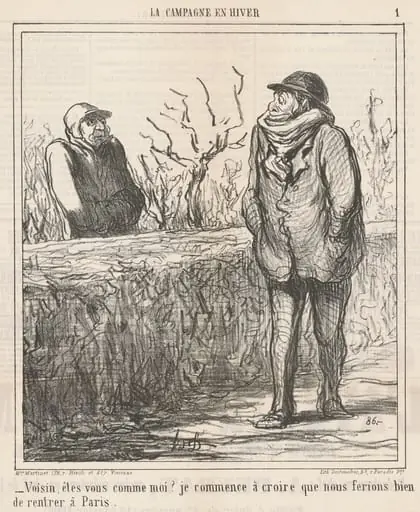 Voisin, êtes-vous comme moi? ...
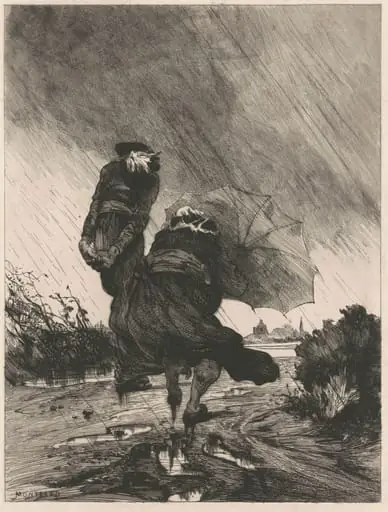 Retour d'une bonne action
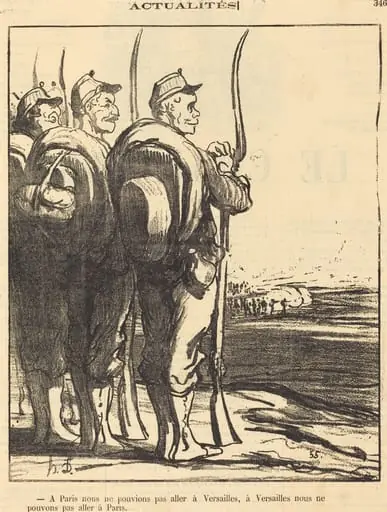 A Paris nous ne pouvions... aller a Versailles...
 Tiens Dorothée ... Voila où m'a conduit ...
 Ou Venise commence a espérer
 Ou allez-vous donc?
 Les Honnêtes femmes; Conférence, Poésies inédites d'Henry Becque; La Parisienne
 On the Floor of the Barn